Pixar has been on something of a strange trajectory in recent years. The studio that constantly set the standard for Western animated films was constantly topping itself. There was a four year period where it went from Ratatouille to Wall-E to Up to Toy Story 3. Yet almost ten years since Disney bought out the studio, it's been a little touch and go. It's sort of been a rotation of unnecessary sequels and slightly underwhelming original titles. Looking on the horizon as well and it's hard to not notice franchising has become a staple of Pixar's model. Toy Story 4, The Incredibles 2, Finding Dory, and - somehow - a third Cars film are all on the docket.
Despite an incredibly strong start to the Disney era, Pixar has since fallen into the trappings of modern Hollywood fare, often to the detriment of its films. I must admit that the initial trailers for Inside Out made it look pretty much in the same vein. Working for it was the cast, namely starring Amy Poehler. The animation style looked generic and uninteresting, and it seemed like the plot wouldn't work for the type of epic adventures the best Pixar movies are known for.
I was quite impressed though! Inside Out might very well be one of the best entries to date. All Pixar movies are touching, but few feel as personal as this one did. For starters, it deftly balances the epic adventures happening inside Riley's head with the emotionally challenging real world issues she deals with outside it. This perfectly blends the two elements together. The somewhat boring real world stuff feels more epic because of the internal action, while the epic adventures inside feels far more personal because of the familiar real world stuff.
Outside, young Riley has to deal with moving from her beloved Minnesota - where she spent all of her childhood so far - to San Francisco. Though perhaps not everyone has experienced such a dramatic move in their lives, everyone can relate to that basic premise. It's always tough going from what you've always known to something completely new and scary. You have to make all new friends and learn the town all over again to find what you enjoy. It is a difficult transition that will bring out a lot of mixed emotions.
And that is the cause of action Inside. Taking place in Riley's brain, five key emotions are responsible for driving the ship, as it were. Joy (Poehler) is the head honcho. She's the dominant emotion here. Also present is Fear (Bill Hader), Anger (Lewis Black), Disgust (Mindy Kaling), and Sadness (Phyllis Smith, who straight up nails the voice acting here, possibly even upstaging Poehler!) Joy attempts to keep things together during the move, but Sadness begins take center stage. Most of this is by accident, which makes total sense. No one really wants to be sad. It just sort of happens.
After some shenanigans, Joy and Sadness are launched out of the control center and must hurry to find their way back, or poor Riley will become basically emotionally stunted, unable to balance emotions in a healthy manner, and destined to become adrift.
The adventure of Sadness and Joy making their way back isn't perfect. Though they do a good job creating that adventurous feeling, it ultimately does all take place in a relatively limited area. At times, the road blocks feel a bit forced. Perhaps there's just one too many moments of the characters being all set to return, only to have something crazy happen out of nowhere at the last minute.
Still, what the pacing maybe lacks is more than made up for in pure entertainment value. The action is fun, but more importantly, the world is highly intelligent and clever. Apart from obvious gags like the Train of Thought or the Abstract Zone, but there's a good amount of legitimate psychological science in the cracks as well. I'll just guide you to this article explaining what they got right, rather than listing it all myself. Suffice it to say, for the adults in attendance who have studied - to some extent - psychology and the human brain, it's really fun to watch.
At the end of the day, Inside Out is so great because of how relatable it is. We are all just a giant mixed bag of emotions, and sometimes we don't know how to handle them. Inside Out tells us that we need them all. Sadness saves the day, not Joy, which contradicts what we always hear about how we should just "be happy." Sometimes you can't, and sometimes that's not what you need. Quite literally, the message is simple, "it's ok to be sad." We're bombarded by images of happiness and pleasantries in our daily lives. We are often taught at a young age that no one likes sad people, which can be kind of damaging.
It's a great message for all in the audience. Helping matters is that the movie is entertaining, funny, and extremely touching. (In the spirit of the film, I'll admit that I teared up a little bit.) It's also very clever, and the animation style is actually a lot less generic than it may appear in the previews. It has to go on the short list of best movies of the year so far.
What I didn't "lava" about "Lava."
If Inside Out was a great tale with a worthwhile message, the preceding short feature "Lava" was the opposite. Admittedly, I can't totally remember all of the shorts before every single Pixar film, but "Lava" has to be one of the worst.
"Lava" tells the story of a male volcano in the sea as he just sits there, doing his volcano thing, watching all these couples around him. Basically, he's jealous that everyone around him is part of a couple, but he's just by himself. As a result, he literally prays for the Heavens to send him someone to love. ("Lava," in this case, because oh man they're so witty!)
Things get a little dark as time goes on and the sea levels rise. Unbeknownst to him, there's a lady volcano just in front of him, but hidden in under the surface. She can hear his prayer song and desperately wants to rise above the water to meet him. Yet as he is slowly sinking and becoming less active, she is rising and becoming more so. By the time she's finally able to sprout up over the water, he has sunken below it. It appears as though they have missed each other, and both volcanoes are destined to be alone.
Of course, this being a thing for children, the he-volcano manages one last eruption that is strong enough to lift him back to where he was, and the two volcanoes embrace to form an island. They're now a couple, finally happy to be part of the couples club around them.
Ok, so listen: I totally understand they were never ever going to make a short all-ages movie wherein the romantic characters just miss each other and it's all sad and dreary. Just because that's how I like my movies doesn't mean they're going to do that here - or really, ever. But maybe you can see where my problem might lie with the message of this one.
Let's just think about this for a second: the he-volcano has no idea the she-volcano even exists until the very end. And then POOF! They're in love? Quite literally, they're only together because they don't have any other volcano dating options. They're together because they hate the idea of being single. I put forth the idea that neither volcano is actually in love with the other; rather, they're both in love with the idea of being in love.
Think about it. The he-volcano just sits around watching all these other creatures in pairs. He's a single person in a world full of couples. Even though he's surrounded by potential friends, he still feels lonely. That itself seems to cause him to re-evaluate his self-worth. It's literally at the point where he's praying for a deity to send him someone to love. He's not praying "to meet someone." He's praying for them to "send him someone."
Meanwhile, the she-volcano sits below the surface, listening to his prayers. She doesn't know who this guy is, or if he's a good volcano or a jerk of a volcano. For all she knows, he could be the next Mount Tambora. Yet she desperately wants to rise to the surface to meet him. Why? She can't possibly have feelings for him. No, she's in love with the idea of being the object of someone's affection. All she knows about this guy is that he wants to really love someone.
On that matter, for all he knows, she didn't put her energy into meeting him. The gods sent her. Both of those mentalities seem totally healthy and like a good foundation for a completely reasonable romantic relationship...
Ok, again, I totally get that I'm probably the only one reading - well, anything really - into this, but just hear me out. As a perpetually single person who sometimes struggles feeling worthwhile in a world constantly telling you something's wrong with you if you aren't in a relationship, I find it tiresome and problematic that we're constantly bombarded by an overvalue in romantic relationships. Couldn't that he-volcano been totally happy being the only volcano in the area and having tons of whale and bird friends? Why was he an incomplete volcano until he found his she-volcano? What kind of message is that to send to people? Whether you read into it or not, the premise of the film is quite literally that this volcano is incomplete on his own. And it's only until he finds his romantic partner that he is complete.
But that's incredibly flawed, because as corny as it sounds, it is still true that if you can't love yourself, how can you possibly truly love someone else? If he can't be happy on his own, how will he be happy with another person, never mind make the other person happy?
It's a crappy message, and it's damaging. And it had no place as the short film preceding a film that teaches a great and healthy message.
Oh, and that song got pretty bad. It started off fine, but halfway through, it lyrically started falling apart and sounded pretty clunky. My sister tends to sing the first verse (or rather, the opening), and that's about as good as the song gets. It's fine for a while, but then the novelty runs off and the lyrics get messy for the sake of singing the story.
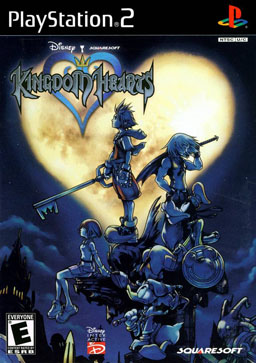
Kicking off a new bi-weekly series talking about just one thing. This week, I look back at the first Kingdom Hearts for the Playstation 2. How does it stand up? Is it worth checking out now, nearly thirteen years after its release? Is the Disney thing enough of a put-off for perhaps some older folks?
I'd say the following video adequately sums up the feeling of watching Fantastic Four while simultaneously being far more entertaining:
Although I can only think of one other movie in the past few years that I thought was far worse. And that was Teenage Mutant Ninja Turtles, which I would sum up with this Michael Scott video (make of it what you will):
You ever play a Squaresoft RPG and think to yourself, "I really enjoyed this, but ya know what this game could have used? Disney characters." No? Fair enough, but someone clearly did. Kingdom Hearts was one of the more memorable games released on the PS2, combining original, Squaresoft-y elements with classic Disney characters and worlds. Now a bit removed, and with Kingdom Hearts III on the horizon, it seemed like a good time to revisit the original game and see how it stands up.
The graphics are a bit dated, but actually don't look too bad. This is largely because of the stylized world everything takes place in. It's cartoonish and unique, foregoing realism for more of a Disney aesthetic. You control Sora, a young boy stuck on an island with his best friends Riku and Kairi, where everyone dreams of visiting other worlds. One night, the island is attacked by mysterious dark beings called "Heartless," and before you know it, you're exploring other worlds.
Kingdom Hearts has a fairly complex story in all, but for most of this game, it's pretty straight forward. A group of Disney villains are trying to steal the hearts of each world so they can open the door to the darkness. Teamed up with King Mickey's noble (and annoying) knights Donald and Goofy, you go to each world to lock their hearts up with your keyblade (a sword that is just a giant key - you have to be ok with silliness going into this game). Yadda yadda princesses are the key to opening the door. Yadda yadda, you have to save the princesses. Yadda yadda, you're strong because your heart is good.
The strength of the game is not its narrative, really. It's the worlds you visit. Most of the worlds you visit are from Disney movies. There's Wonderland and Atlantis and Halloween Town and more. Each world allows you to team up with a character as well. In Neverland, for example, you can team up with Peter Pan. In Agrabah, you team up with Aladdin. There ultimately isn't that much diversity though, as each character it pairs you with tends to lean more toward the physical power side. Some worlds even have their own unique dynamics, such as Atlantis allowing you to ascend and descend on top of your typical forward/back, left/right movements, or Neverland allows you to fly around as well.
Not all the worlds are great. Atlantis is such a drag, and if your television isn't that great, Halloween Town is pretty dark. Still, most of the worlds are as colorful and fun as their film counterparts. What's cool is that for a PS2 game, it feels fairly big. Ultimately, each world is small, but you don't just go from corridor to corridor. Sometimes, things connect. When you fall off a balcony that took you several screens to get to, you wind up where you landed. It doesn't often go through load screens to bring you back. As annoying as it can get to keep falling off of higher areas, it is pretty cool to see that these "screens" are connected in-game.
As for the game play, it's pretty much your general hack and slash kind of RPG. The combat is fun, and most bosses are designed well so that you develop skill (you won't be able to just overpower yourself and then hack away mindlessly to victory). It takes a little getting used to using magic and items and special attacks though. It's still a menu-based system, which is kind of strange. X isn't the "attack button." It just selects the Attack option from your menu. To use other skills, like magic, you have to select a different menu option using the right analog stick or the arrow keys. It's mostly fine, but when you're engaged in a battle against tons of Heartless, it can get tricky to run around, move the camera, and select a new menu item all at the same time.
Really though, the only part of the game play I found to be incredibly irritating was the camera and lock-on function. You control the camera with R2 and L2, which feels a bit clunky by today's standards, but it's mostly fine. It just gets kind of hectic when in the middle of a big battle with a number of enemies. Accuracy seems a bit off too. Often, enemies will somehow avoid your attack, even when they seem dead to sight. Locking on doesn't seem to increase your aim much, and often causes the camera to tweak. All of that could be ironed out a bit, but it rarely gets to the point where you feel overwhelmingly frustrated.
Overall, the game is fun and visually interesting. The only thing that ever starts to become unbearable is Donald's voice. The level and boss designs are pretty great, and the story is just intriguing enough to keep driving you. It's maybe less incredible than some people make it out to be, but it's still good.
WARNING: MAJOR SPOILERS PRESENT. If you have not played Life is Strange at all yet, or started and aren't caught up, be warned that there are major spoilers. Go and catch up, then come back! You'll probably want to talk about it.
I was initially waiting for Dontnod's episodic game Life is Strange to conclude before writing anything up about it, but the events of Episode 3 were pretty haunting, and Episode 4 featured one of the most nauseatingly difficult decisions I've ever had to make in a video game, and then proceeded to take an incredibly dark turn that was almost unforeseeable. By the end of the game, I was feeling more concerned for a fictional character than I have in a long, long time. Additionally, the post-credits scene disturbed me more than anything I've seen in shows like Game of Thrones or comics like The Walking Dead.
So I need to talk about it because god damn it, I cannot quite process everything that just happened.
Backstory.
Before going into what made the latest episode (Episode 4) so impacting and disturbing and brilliant, it's important to take a brief look back.
It's hard to remember at this point, but Life is Strange began as this innocent little point and click adventure game about a teenage girl at a prestigious private school trying to live her life while being something of a social outcast. One day, she discovers she has the power to rewind time. It allows her to change the outcome of certain circumstance. During the day, you witness a drug deal gone bad and an old friend is shot, which you promptly rewind time to save the day. The rest of the game is ultimately about young Max Caulfield reconnecting with her old childhood bestie Chloe. For much of second episode, that's what you're doing.
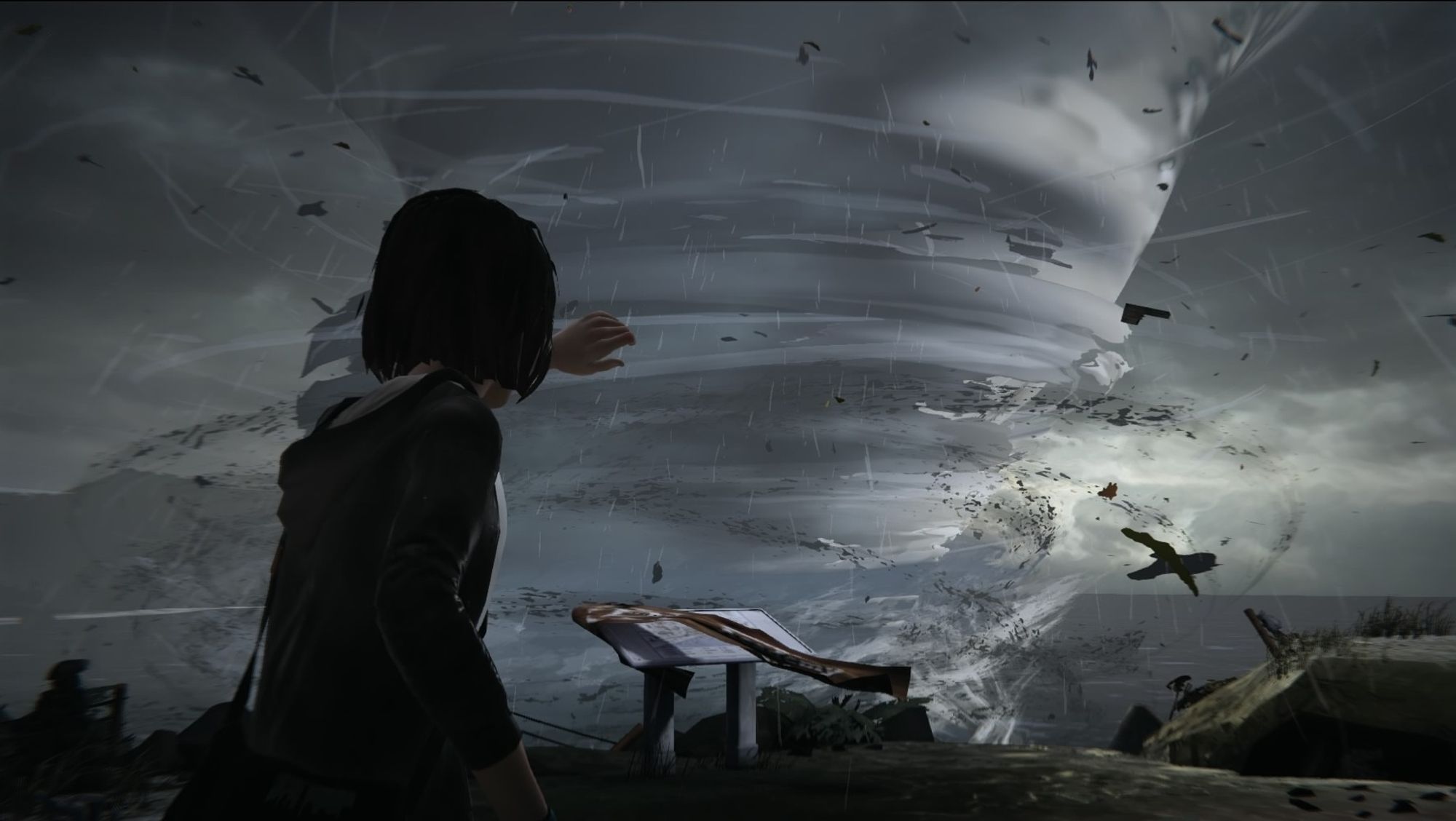
There are hints at what is to come: visions of tornadoes, a ghost deer, an unscheduled eclipse, beached whales. Mystical elements to the game pop up at this stage; it is just smaller and often just a background thing. Also there is the story of a missing girl, Rachel Amber, who you find out was connected to Chloe. She's been missing for some time, but again, it doesn't jump out as a major plot point. Instead, you're focused largely on events surrounding poor Kate Marsh, a girl so bullied she was going to attempt suicide. She had been drugged at a party and videos posted later online ruined her. Eventually, Chloe and Max make a connection between Kate and Rachel.
By episode 3, you're in full Hardy Boys mode, trying to track down clues and unravel the mystery of Rachel's whereabouts. The girls also start putting together a larger mystery. Max and Chloe start looking into Nathan Prescott - an erratic and troubled young man with more power and wealth than is good for him - who has long caused problems for them. (He was the one who shot Chloe way back in episode 1).
SECOND WARNING: Going into pretty huge details for Episode 4 right now! The Toughest Choice
Before moving onto the mystery element of the episode, I want to just address what might just be the most horrible decision a player has to make in any game. At the end of Episode 3, you attempt to use your time manipulating powers to save Chloe's father, who died years ago in a car accident. When you awake in this altered reality, you rush to visit the Price family to see what your good deeds accomplished. Her father answers the door.
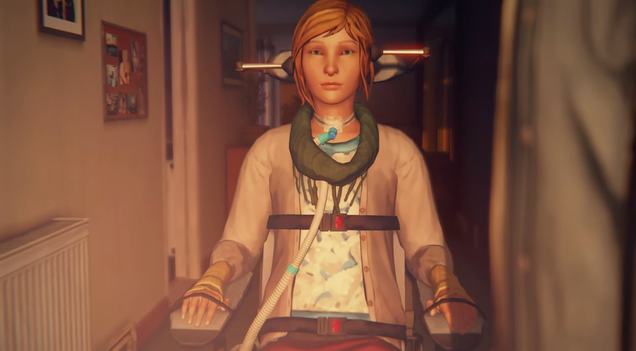
Altering the time line to change William Price's fate fundamentally alters Chloe's though. In this reality, Chloe was the victim of a horrible car accident. She is still alive, but completely paralyzed with a failing respiratory system. She knows she's dying, plus has largely been miserable since the accident. Right when you couldn't feel any more guilty, she pops one totally gut-wrenching question. She asks you to inject her with an overdose of medication, effectively putting her to sleep. Chloe wants to die, and the worst part is? You can totally understand why.
You're presented a choice as to whether to accept her request or refuse. I refused, opting to go back and change the timeline back to the way it was. This meant that her father died a second time, in a sense. Though Chloe has no knowledge of your actions here, it's hard to shake the guilty feelings in the "fixed" reality.
It was a bit harrowing. While it's ultimately just a game, I've always been a theoretical supporter of right-to-die policies. I believe in a person's right to make that choice. Yet presented here, in a video game, with completely fictional characters, I was given the opportunity to help someone achieve that, and I balked.
Though I could completely understand the character's motivation behind the request, and I've always believed in the idea theoretically, I just couldn't appease her. I did not want to see her die. I didn't want to see her give up, even though she was totally right. Her death was impending and in her near future. But I couldn't oblige. I couldn't be a part of it.
And this is a video game! What am I going to do if I ever encounter this situation in real life? (This is the power of interactive media. It's also one of the things I love about Life is Strange. If good art challenges us, then this game has definitely accomplished that.) It sounds silly, but this game provided the tiniest of sampling into what being a part of that situation - something that happens in the real world - might be like. It still tears me up thinking about it.
Back to the Mystery
Episode 4 marks the apparent conclusion of the mystery. The game actually does a pretty good job turning you, the player, into a pseudo-detective. At one point, you're literally staring at a board with tons of evidence, looking for ways to connect things. While not overly difficult, it's still satisfying when you start piecing things together by looking at time stamps on texts as well as surveillance information. All of the evidence you collected points you to a location that should reveal the whereabouts of Rachel.
It is a barn owned by the Prescott family, and it has a dark secret. While exploring, you come across a secret bunker with some disturbing stuff. Long story short, you discover that somebody has been drugging girls, bringing them to this "Dark Room," taking pictures of them in forced bondage or tortured positions, and filling out binders as trophies. It's some real Dexter type stuff. It's an extremely creepy and dark turn for the game, and suddenly you start to realize that Rachel Amber hasn't just disappeared. What started as an effort to find where Rachel went suddenly becomes an effort to find where she's been hidden.
Sure enough, you find Rachel's body buried in the junkyard - a location you've visited several times in previous episodes. Quite literally, she was right under your nose the whole time. With all of the evidence pointing towards Nathan Prescott, an enraged Chloe sets off for revenge.
THIRD WARNING: OK, for real! This will kill the mystery so you've been warned! The Bread Crumbs
At some point, it isn't hard to start feeling a bit suspicious as a player. All of the evidence seems to fit a bit too nicely. The pieces connect a bit too cleanly. Suddenly, Nathan becomes inherently less suspicious because it all feels a bit too obvious. Of course, it makes sense that Max and Chloe - the characters in the story - are certain of Nathan's involvement. As a player though, sitting neatly on the outside, it all just feels a bit too easy.
If you felt the same on that front, you'd be right. At the end, it is revealed that Nathan was not behind all these things. Instead, it was Mark Jefferson, the photography teacher at Blackwell Academy who everyone seems to love.
What's funny is that though it might take some time and a lot of reflection, but you can eventually figure out why Nathan Prescott was not a particularly compelling suspect to begin with. Some of these bread crumbs might be a stretch, but here are things I keep coming back to (all of which is indicative of great writing).
1. The Dark Room is too tidy.
Before you get to the eerie Dark Room bunker, you spend some time in Nathan's dorm room. Though not a total sty, his room wasn't exactly the tidiest of rooms. He's got stuff sprawling across his desk and dresser, and one of the things you investigate is a bottle of wine next to a pill bottle knocked over. Basic point - his bedroom is relatively neat, but it shows that he isn't exactly the most organized person.
Contrast this with the Dark Room, where everything is pretty tidy and well organized. There isn't much of a mess. The binders are proof enough that the owner of the creep-factory is thorough and tidy, something that Nathan's room does not indicate.
2. The survivalist supplies.
The first thing you notice entering the Dark Room is the stack of canned food and water sitting on the shelf. It is very reminiscent of the stack kept by David (Chloe's step father). Max even brings up the idea that Nathan must shop at the same store as David.
This seems a little fishy though. Although there are some strange letters lying around throughout the episode hinting that Nathan's father is preparing him for some major upcoming event, it seems strange that Nathan would be collecting food for his bunker. Nathan's father has expressed great dissatisfaction with his son for failing to do what he's asked. Plus, Nathan seems more interested in partying and drugs than buying canned food.
A minor hint, but my take away was that David - who we know is very suspicious and had been following several people - had been at some point trailing Mark Jefferson. The canned food doesn't imply the photographer at all, but the idea here is that David was onto someone else. Suddenly his motivation is called into question. Was his spying actually a huge overreach? Was he looking into Kate Marsh because he was suspicious of her? Or did he realize there was a connection between her and Jefferson? Was David actually on the right track? Was he stocking up on canned foods because he was a survivalist nut, or because he followed someone to the store and didn't want to blow his cover? It seems unlikely that person was Nathan.
3. The tripod.
One of the objects you can examine in the Dark Room is a tripod. When you look at it, Max's internal monologue refers to it as a "fancy tripod." On the surface, this isn't that suspicious. The Prescotts are filthy rich and could probably easily afford the best equipment.
However, it seems to very well connect to Mark Jefferson. Think back - way, way back - to the beginning of Episode 1. After the students empty out of the classroom, you can look around. You'll see all sorts of fancy gear lying around, including a carbon fiber tripod, which very much impressed Max the photo nerd.
For keen observers and folks with incredible memories, seeing that tripod - and the very fact that you can examine it - in the Dark Room is a connection to the one in Mr. Jefferson's classroom.
4. Jefferson's introduction.
Also way back in Episode 1, Jefferson asks his class which photographer tried capturing the human condition in black and white. Victoria answered by saying Diane Arbus. His response is actually quite telling (in retrospect, of course.)
"She saw humanity as tortured, right? And frankly, it's bullshit," he says. He also claims that capturing moments of desperation or being pinned in a dark corner is "too easy."
This one is easily the most hindsight-driven clue, but given what we learned at the end of Episode 4, it seems pretty clear now that Jefferson was likely trying to keep people off his trail. It appears as though he actually finds her particularly influential on his work, as he is forcing the that very thing for the sake of his own photography.
5. The connection with Rachel Amber.
The most glaring issue with Nathan Prescott as a suspect is that his connection to the missing Rachel Amber is pretty weak. There is one, as he knew her a little bit from a few parties, but largely had little to do with her. Frankly, the idea that he would drug her, take her to the Dark Room, murder her, then hide her body seems like quite a stretch given that he barely had much interaction with her.
Meanwhile, word had it that Rachel and Jefferson had slept together. Though unconfirmed, it is heavily implied that Rachel's attraction for her teacher caused them to become involved in some capacity. This rumor also provides a much clearer motive for Jefferson being the culprit than Nathan. While possible that Nathan was just a psychopath picking targets he barely knew, it stands to reason that Jefferson had more to lose with Rachel still roaming around. Were someone to find out he slept with a student, it could ruin his career.
At any rate, Max also discovered photos of Rachel among Jefferson's works. Again, word was that she was his favorite model. This could also provide a motive for murdering her, given that she was gearing up to leave Arcadia Bay at the time of her disappearance. Perhaps Jefferson was upset at the prospect of losing his favorite model.
6. The Kate Marsh connection.
There's also the issue of connecting Kate Marsh. The line between Nathan and Kate was pretty clear. They were in the same class, and Nathan was a big part of the bullying force against Kate. Being from a very religious family, she was an easy target. After she was drugged and the video went viral, things just got exponentially worse.
If Jefferson were particularly interested in capturing moments of despair, Kate is a great subject for him. In Episode 2, he was even unnecessarily mean to her, perhaps as an effort to push her over the edge, hoping she would disappear. Either way, the connection from Jefferson to both Kate and Rachel is substantially stronger given they were both prominent students in his class at some point.
7. Nathan is erratic.
It seems perfectly reasonable to think Nathan could kill someone, but it also is made clear from his characterization throughout each episode that it would be from impulse. He might be in desperate need for psychiatric help, but he is erratic.
Consider how much planning needs to go into one of those drugging and kidnapping events. Even more, mix murder into the equation. To get away with it cleanly, one must have a pretty solid plan. Lacking foresight is not an option. This doesn't inherently hint at Jefferson, but it does raise concern with the idea that Nathan was behind everything.
Looking back at the evidence on the board from earlier in Episode 4, we see the text exchanges between Nathan and Frank. Nathan generally did obtain some drugs prior to parties, but the bulk of his messages were last second scores. By and large, he had to annoy Frank to get drugs after a party had started. Most of his purchases occurred late night, indicating a lack of foresight and planning. It's hard to imagine someone who can't figure out how much stuff to bring to a party is capable of planning a kidnapping and murder. At least, not cleanly and efficiently.
Of course, there are also hints that Nathan might be in cahoots with Jefferson. For starters, the Dark Room exists on Prescott property, and features some mighty expensive equipment. Then there is Kate's report of her abduction. She remembered Nathan offering to take her to the hospital. Next thing she knew, she woke up in a bright, white room and heard Nathan's voice and an unknown second voice before being pricked and knocked out again. At the end of episode 2, we see a mysterious figure working on Kate's red binder in the Dark Room. An alcoholic drink and a bottle of pills lay next to it, which is similar to the glass of wine and spilled pill bottle Max found in Nathan's room. Finally, there are a number of elements to Episode 4's finale that seem like they could have only occurred if Jefferson had help from Nathan.
This element remains up in the air, but will presumably be answered in the final episode.
The Rewind Mechanic
One of the complaints that seems to be making its way through some reviews is the idea that in Episode 4, the time rewind mechanic has practically vanished. The reviewer for Gamespot, for example, questioned why Max couldn't use her powers at moments that seemed like an obvious moment to do so. This is pretty misguided, however.
The application and availability of rewinding has actually been one of the most brilliant design elements of the entire series so far. It's true that you don't get to use it that much in Episode 4, but it isn't random. The game established two episodes ago that using the power takes a physical toll on Max. It causes stress, headaches, and nose bleeds. They've been pretty clear that Max needs to take it easy with it. She can't just use it any time she wants.
Max even says it outright a handful of times throughout the episode that they can't rely on her time manipulation powers too much. At times, Chloe represents gamers. She knows her friend has this power, so she rushes off carelessly, figuring if anything happens, Max will just rewind time and fix it, easy peasy. Max, however, is constantly pointing out the flaw in this logic. She can't always use her powers, and her control over them is pretty limited. Throw in the toll its taking on her body and you have a perfectly reasonable narrative-driven explanation for why there aren't too many moments in Episode 4 that have you rewinding time.
It's not a weakness with this particular episode, but rather a strength with this narrative. When I think back to the first episode - after Max learns she can rewind time - I seem to recall just how frequently I used this power. With no idea of what was to come, I used it a lot for conversations. I kept rewinding so that I could converse with classmates in order to get them to like me more. Or to joke around with Chloe, your friend. It was petty and immature, but also something you might expect a 15 year old to do.
Over time, players came to learn that this power is not the same as the laser beams of Superman. She can't just use it whenever she wants at no cost. During the dramatic finale of Episode 2, you find yourself suddenly weakened from using the powers a lot. Flash forward to Episode 4 and you can't help but think back about how dumb you were by wasting your powers for childish things.
All of this serves the narrative by increasing the drama and urgency. Now that access to this power is limited, it makes everything that happens feel more important and nerve-wracking. Even more, the story's reasoning for the diminished ability increases the sense of regret and guilt and responsibility for helping things spiral out of control like this. It's easy to look at this episode and see the one mechanic that changes up the point and click nature of the game, but to do so would be a bit off point.
The change in tone.
It's also easy to look at the disturbing and harrowing end of the episode and hate it. After all, our hero who we've come to love has been kidnapped and things aren't looking good for her. Meanwhile, Chloe - who we've also come to love - lies dead from being shot. (Interesting note, if I'm not mistaken: there are three occasions in which Chloe can be shot throughout the game. Hard not to notice that she wears a necklace with three bullets attached. It is also really starting to seem like there's just no saving her, ultimately.)
Of course you hate it. You're supposed to. Some players have said this finale has caused them to no longer want to play the game. They've said it sucks. Thing is, art shouldn't be only fan service. We as players, viewers, or readers should be challenged to deal with difficult happenings. We aren't meant to feel comfortable with this ending. It's dramatic for a reason. When bad things happen to our favorite characters, we tend to react with anger towards the writers instead of the characters within the story. This is entirely unfair though because we don't have the finished product yet. We don't know what will ultimately happen with Chloe and Max. Let's let them finish their story before we claim it sucks. Shouting, "it sucks," is more often than not an immediate emotional response rather than an well thought out one built around the perspective of the story's context and point.
Still, it is hard to ignore the huge tonal shift. Things were already getting a bit bleak with the Kate suicide attempt in Episode 2 and the finale of Episode 3, but the end of Episode 4 goes full blown twisted. It feels a little out of place because the previous episodes were grounded in a very relatable reality. Apart from the underlying supernatural happenings, everything about Arcadia Bay seems realistic. It feels like a normal town, with normal people. You play as a normal girl (minus the time powers), befriend normal classmates. This gives the game a sort of innocence.
Suddenly, we are forced to confront a whole new reality - one in which a serial killer is on the loose and seemingly irrevocable things are happening. It completely changes the world. And that's why it works.
This shift in tone would not nearly be as tough to swallow if the game hadn't been so meticulous in crafting a perfectly grounded reality. It's because this world seems so normal and unsuspecting that it falls into chaos when something horrible does happen. It isn't hard to see why this dramatic mood swing - lacking any remaining innocence the game had as part of its initial charm - might be a turnoff for some players. I'm still trying to remember how exactly the game got to this point! It feels like such a different game now.
However, this is what makes its story so compelling. By and large, the cliffhanger endings to each episode have not been solely to hook players for the next episode. They carried over in a meaningful way. This one feels more like both than ever. I'm still disturbed thinking about that post credits sequence, and I'm super irritated that it will be about a month and a half to find out what happens. Then again, it would hardly be as impacting if I could just play the next episode. (Which admittedly is what I tend to do with The Walking Dead games.)
While the game has not been perfect, it has done plenty of things really well and has remained one of my favorite games of the year. And it only sinks further into that top spot with each new episode.
Let's get one thing out of the way here; we need to stop with this stupid narrative about Marvel taking "risks." There has been this weird idea that every new Marvel film is somehow a risky proposition. Yet twelve films in, they've yet to release a complete dud that totally bombs at the box office. Even more, they've firmly asserted themselves as the brand name of Hollywood blockbusters. Even if you don't care about superhero movies, you can't escape it. You know when Marvel is putting out a film. And at this point, it's pretty much a given it will do well.
Please don't confuse making weird movies with making risky movies.
Ant-Man is a weird Marvel movie, but not for the reasons one might think. It isn't weird because of its basic plot and unusual powers. It's weird because in post-Avengers Hollywood, the scale has to just get bigger. The fate of the world always has to be on the line. You need bigger, faster, and louder action set pieces. You need to go all out.
Yet Ant-Man stands out by not doing that. Instead, it keeps the focus smaller and more intimate. It stays zoomed in on the characters and their arcs, not just meandering from action set piece to action set piece. In many ways, this film is a lot more like the first Iron Man than the more recent Guardians of the Galaxy. You aren't overwhelmed by the loud noises and fast-moving shaky cam zeroed in on hard-to-distinguish CGI figurines all that often. Really, this film is weird because it falls into Marvel's Phase 2 despite feeling far more at home in Phase 1.
If The Avengers is a sports movie and Guardians of the Galaxy is sort of Marvel's version of The Dirty Dozen, then Ant-Man is their heist film. It pits a team of misfit thieves with the theoretically obsolete Dr. Hank Pym (Michael Douglas) and his daughter Hope van Dyne (Evangeline Lilly) together to steal Pym's secret suit and destroy Cross's research to prevent it from falling into the wrong hands. Oh yeah, and there are lots and lots of ants. They can't break in without them! It's goofy and ridiculous, but thoroughly entertaining and enjoyable.
Perhaps the most interesting part of the film is how they mix the old Ant-Man lore of Hank Pym with the newer history of Scott Lang (Paul Rudd). While Scott is the primary Ant-Man of this feature, by no means is Hank sitting on the sidelines. There's a slight tendency in these films to hire an older, more distinguished actor to come on set and just do a lot of talking or dispense a lot of wisdom or literally just stand there watching for no reason other than to say, "look who we cast!" (see Robert Redford, Anthony Hopkins, and Glenn Close in Captain America: The Winter Soldier, Thor, and Guardians of the Galaxy respectively).
Here, Michael Douglas's Dr. Pym is every bit a part of the team. Sure, he functions as Scott's mentor, but he's also a part of the heist plan at the end. He's not reduced to the sidelines (well, at least not from the outset). Every team member brings something to the heist plan, including Hank. It's always nice to see them let these actors be a part of the action.
While Iron Man movies tend to go globetrotting and Thor movies go between the real and fantastical, Ant-Man stays at home. There are really only about five major locations in the movie, and two of them are Scott's home and Hank's home. This is greatly refreshing as it helps keep it feeling personal in scope. It also helps viewers really buy the parallel between Scott's trying to redeem himself for his daughter and Hank's trying to reconcile with his daughter. When all is said and done, Ant-Man is really a film about fatherhood.
Marvel still seems to struggle with villains, but Darren Cross is largely pushed to the side in the film. Instead of seeing much of his antics, the focus is more on Scott's training to become the Ant-Man. Villains aren't the only thing Marvel seems to struggle with. For all the great female characters they've pushed in the comics, they've largely failed to do much with them in the movies. Hope is a solid character, but stop me if you've heard this one: a totally capable woman who is intelligent and can take care of herself is pushed to the sidelines for "her protection," and oh yeah, she gets flustered the moment she sees the male hero's six pack abs. (Seriously, this is the third time they went out of their way to make this joke - Jane Foster in Thor, Agent Carter in Captain America: The First Avenger, and now this.) Hope van Dyne fairs much, much, much better here than Jane Foster does in the Thor movies, and she's a bit more of a badass than Agent Carter from the first Cap film. By and large, she actually is handled pretty well, and she and Scott do develop more naturally than any other Marvel couple. Still, it's starting to get a bit repetitive.
The script, casting, acting, and action are the selling points of a film that - from a visual and film making perspective - are pretty generic and bland. There isn't much that sets it apart from anything else Marvel has done, which is probably why such a stylistic director like Edgar Wright inevitably left the project. The structure of the film is predictable and boring, but they make up for that with a funny, heartfelt script and some of the most interesting action sequences.
At the end of the day, Ant-Man came at the perfect time. It had been in the works for a long time, originally to be part of Marvel's Phase 1. It's good that it came out now though, because the smaller scope and more personal focus is exactly what the comic book superhero movie needs to break up the monotony of world-in-peril action-fest that it has become for the past few years.
Plus, for those of us of a certain age, it brings back memories of Honey I Shrunk the Kids, minus awesome sets (replaced here by CGI). While it looks like Ant-Man is poised to be one of Marvel's weaker efforts at the box office, it might actually be one of their stronger films in recent years. Certainly, it's one of the more enjoyable.
I had this long piece discussing some of the issues facing women in a lot of the things I love - gaming, movies, comics, and sports - but then I was watching the Women's World Cup and then this happened. The response of fans has been largely supportive and empathetic, so while I felt horrible for poor English defender Laura Bassett, I did love that the fans actually acted like fans. It's a strange notion, I know, and for all of the sexist thoughts that go against the women, there is at least one that is kind of positive.
See, there's a good probability that if Bassett were a man playing on England's team, and had he lost a World Cup semifinal on that sort of horrible luck, he would have been subjected to extremely mean-spirited headlines. Twitter would probably be filled more with anger (and death threats). Fans would be raging. You don't have to dig too deep to find this sort of reaction. Bill Buckner, anyone? In the world of men's sports, mistakes are often responded to with irrational and almost inhuman behavior. Yet when it's the women? It's followed by support and empathy.
The reality is, we tend to be a lot harsher towards male athletes who make mistakes than toward the female athletes in the same position. And it's hard not to see that as a little bit sexist, both toward men and women. I'm not quite sure where it comes from. Maybe it's that old idea that women are more emotional, and thus more mentally fragile than men and so we need to treat them almost like children in order to protect them. Or perhaps fans recognize that unlike the men, they're not just playing for their club or country.
In the Men's World Cup, all of the athletes are merely "athletes." They aren't seen as ambassadors for their sport in the same way. They aren't trying to sell the world on soccer. With the exception of the United States, the world has pretty much already bought soccer - hook, line, and sinker. When Neymar steps onto the pitch, he is really only representing Brazil. When Marta steps on though, she represents Brazil...and women...and women's athletics as a whole. Female athletes have an uphill battle everywhere. They've been often ridiculed and demeaned. They often struggle to keep leagues active because a large portion of the public doesn't care about women's sports. There's always the bump for women's soccer during the World Cup, but they're always playing for more than just a title.
They're playing to win. They're playing for respect. They're playing to prove a point. They're playing to inspire. And they're playing to survive, basically.
Male athletes have a privilege that often gets ignored. The truly hard work has already been done for them. To be clear, this is not to suggest making it to the NBA or NFL or Major Leagues is easy. It can certainly be argued that it's never been more difficult to make the pro-level. However, at the end of the day, they have the benefit of only needing to think about the game. With the exception of maybe the NHL and MLS, the major sports leagues don't need to worry about "growing the game," or "being taken seriously." Peyton Manning is a superstar in the NFL, but let's be honest: the NFL can and will survive when he's out of the game. In fact, despite all that has gone on in the past year, the NFL is more popular than ever! The league is self-sustaining. The best players don't really grow the sport anymore. They might push sales of jerseys or Reebok deals, but the major leagues have a strong foothold in our society.
Yet there is a bit of concern when the likes of Mia Hamm retire (or the upcoming Abby Wambach retirement, although I think they're in better shape this time around with the advent of other stars stepping up). Female athletes are widely not as popular as their male counterparts. Sure, people can probably pick out Hope Solo or Alex Morgan from a line up, but what about Brittney Griner or Elena Delle Donne, or even the likes of Kelley O'Hara or Shinobu Ohno, who we've seen in this very World Cup?
Maybe the real reason people are kinder and more empathetic when women athletes make mistakes or come up short is that the women's game reminds us what sports is really about. The men's game is often too serious for its own good. All that matters is winning (something that matters to all athletes, but generally, the men don't have the pressure of the entire public losing interest if they don't win). Mix in all of the fantasy sports and the money that ties into that, plus all the gambling that happens, you get fans who feel they have more personally on the line. When a male athlete screws up and costs his team the game, "fans" are primed to be unreasonably hostile.
Basically, they lose sight of the human element to sports.
If there's one edge that women's sports clearly have over men's, it's that the fans rarely seem to lose sight of that. Because the leagues are so much smaller and they're trying to grow the league, the athletes are much more accessible. For example, the Boston Breakers have "autograph ally" after the games, where fans can meet the players, shake their hands, and get an autograph. This is part of the charm for baseball fans, who have the chance to get autographs before the games during batting practice. You don't see this sort of thing in the NBA and certainly not the NFL. While organizations will sometimes have events giving fans the chance to meet their favorite players, they're ultimately few and far between.
The end result is more relatable players in the women's game. This further pushes the human element. Sure, guys like Rob Gronkowski are goofy and fun to watch, and people can gravitate toward Peyton Manning's sense of humor, but by and large, male athletes seem - in a sense - larger than life. As a Patriots fan, I can't even hope to ever meet Tom Brady. I can't even begin to relate to him. Yet whenever Julian Edelman posts a YouTube video, I become a bigger fan, probably because you get a weird insight into him as a person. Sure, there's still zero chance I'll ever get to meet him for even a second, but it feels like I know him as a human being a little bit.
We all want our sports heroes to be decent human beings. We don't want to believe that the person whose jersey we bought murdered several people, or killed a bunch of dogs, or beat their fiancees, but so many male athletes are all "business" about everything that we never really get to see anything other than the athlete. With the women's game, they're sort of selling themselves. The reason I came to love the USWNT was not because they're great (although that is part of it, for sure). It's also that they seem so cool. They seem so close. They approach the game seriously, but they also clearly have fun with it too. It's often less about the individuals and more about the greater team, something we always want to see in team sports.
There's also just something about being at a women's sporting event that seems to connect the fans a bit more. I don't want to say that men's sports are not fun. I believe quite the opposite. I don't even care about baseball, but I would always go to a baseball game in person because they are very fun. It's usually a great atmosphere. Yet there is something a bit more exciting about being part of a smaller crowd. Sitting in the nosebleeds with tens of thousands of other people for far over-priced tickets can actually make one feel a bit more removed from the action.
To be clear here, I do hope that the women's game grows to similar points. Tens of thousands in attendance for a NWSL game would be awesome! It would be so meaningful and exciting. That might admittedly be a part of what makes being a women's sports fan so fun. Personally, I feel more important as a fan. Sure, I don't ultimately make that much of a difference, but I definitely feel more like I'm helping by being there and buying tickets and all. So as it grows, it feels a bit like I helped it grow in some small way. I can't imagine ever feeling that way about going to an NFL game or NBA game.
However, these smaller crowds do actually help feel more a part of the "fan community." There's always a good seat, close to the action. You're surrounded by people who are in the same boat as you. It feels a bit like you're all in on a big secret that you want everyone to hear about, but weirdly no one seems to know of. But then also, it really just feels like a more fun, casual atmosphere.
A lot gets made about the fact that women's sports tend to draw families and kids especially. Somehow, this is a knock on the sport. I guess "real sports" draw mostly adult audiences. This seems a bit flawed though. Shouldn't "going to the game" be a family activity? Isn't going to the game with your mom or dad supposed to be a quintessential childhood experience? Aren't athletes role models to children? Here in New England, two tickets to a Patriots game will cost you over $200, especially with parking and anything you might buy in stadium. Shouldn't attending games be a more accessible experience?
In all, I think the reaction to Laura Bassett's horrible, terrifying error is something we should bring back to the men's game. Why shouldn't we empathize with men? They're humans too, and it's highly unlikely he who makes game-costing mistakes doesn't fully understand their impact. It's not to say, "stop being critical." Criticism and scrutiny are totally fine. A cool element to this year's Women's World Cup has been the fact that more people than ever have been criticizing the USWNT's play and coaching. For the first time that I can remember, the focus has been on actual, technical soccer. This seems like a small thing, but it's actually huge for the women's game. It means it's being taken seriously by fans. Just look at how many reporters have been covering the event here in 2015, then consider that in the early to mid 1990s, there were about two sports writers from the US covering the same event. That's pretty clear progress.
It's another thing entirely to become hostile and mean. Bostonians ought to be ashamed of the way they treated Buckner. There's a pretty ugly history of "fans" becoming monsters. Is that really what we want sports to be about? Isn't part of being a "fan" being supportive? Yes, it sucks to lose games on critical errors. But we so often forget that these are humans trying their best. We as fans have significantly less to gain or lose in a victory or loss than the athletes.
Basically, there's something wrong if we're complaining about the fact that an athlete was sent flowers as an act of compassionate support instead of death threats anonymously online for making a critical in-game error. We shouldn't be trying to mold the women's game to be more like the men's in this case. It's the other way around. We need to bring the compassion and empathy from the women's game to the men's game.
For me, when people ask why I sometimes prefer the women's game, it ultimately comes down to this: women's sports seem to be much more in the spirit of sports than the men's. The latter often takes itself way too seriously, and in some cases is too big for its own good. But when I watch women's teams - especially women's soccer - it reminds me of the experience I wanted when I was younger and playing sports.
Sports are supposed to be fun and entertaining. It's supposed to highlight the highs and lows of the human spirit. We as fans have such a small role in the outcome of games, with the stakes insanely low for us - no matter what some fans want to think.
When I watch or attend a women's soccer game, from the way the players play to the way the fans react, I can't help but think, "Ya know, this is what sports is supposed to be."
Addendum: Oh yeah, Andy Benoit is totally right. There's nothing worthwhile about women's soccer...