It is difficult going back to play an old game for the first time, especially if that game came out in the early to mid-aughts. Beyond Good and Evil was a 2003 action-adventure game that quickly drew a loyal fan base, with good reason. It is, however, extremely dated - even with an HD remaster released for XBox Arcade years later.
Still, there is plenty of reason to revisit it or check it out if you haven't. Most impressive is its execution of AI allies. Future games would be critically acclaimed for working in teammates to help the player - games like The Last of Us or BioShock: Infinite - but it speaks volumes of the developers of Beyond Good and Evil that they managed to effectively do the same thing a decade earlier. AI allies are useful in combat and, when applicable, required for puzzle-solving in levels.
Often working with a teammate goes a long way to making your partnership feel more real. When Pey'j gets kidnapped by the evil DomZ, his absence is notable. A new character pops up to assume the role of ally, but the powers and movesets are a bit different. They're similar enough in combat, but in puzzles, they provide different attributes according to their characters.
That segues nicely into the other strength of the game: it's world. The mid to late aughts really saw a push for more realistic-looking graphics and styles, but Beyond Good and Evil really went for a cartoon-like look. Anthropomorphic animals and humanoids exist in this world, along side alien invaders and robots. That visual style lends itself to more of the humorous tone throughout the game, too. In terms of its atmosphere and style, it's a fun, cohesive look aided all the more by a stylish, memorable score.
The weaknesses, though, make it a challenge to play today and - frankly - probably then as well. Combat is clunky, and its apparent indecision to allow player-controlled cameras or fixed camera angles makes it nauseating to get through some stretches of dungeons. At times, the hardest part of the game is struggling with the camera. The stealth elements of gameplay are appreciated, but it would have been better if they committed to one camera or player-controlled cameras. It seems a little unsure if it primarily wants to be a stealth or an action game. While the style and tone are cohesive and in tune with one another, the gameplay is often confused. Even the hovercraft races are clunky.
That applies to the inclusion of the in-game camera. To earn money, players are asked to snap photographs of the local wildlife. Story missions include elements of photojournalism as well. For the story stuff, it works out pretty well. To increase your cash-flow, it is entirely distracting and chops up the flow of battle. Does it want to be an action game, or Pokemon Snap?
None of it makes the game wholly unplayable, and indeed the notion of a sequel on modern consoles is promising because it implies they will iron out the controls and camera problems. However, it does make it feel very dated and sloppy. It takes a little while before the awkward controls and camera starts to show itself as problematic, but when it does, it never goes away.
Beyond Good and Evil was ambitious for the time, poorly executed in some important ways, but also clever and fun. It's odd that it will ultimately be about a decade and a half between the first and its upcoming sequel. This is one of those games that, like Spider-man 2: The Video Game, can be hard to truly gauge because of the year it came out versus how poorly it plays today. There's a lot to like about the game and, subsequently, a potential franchise, but it's probably not worth it to go through the whole thing at this point.
Reductive Rating: It's fine, but dated.
Available on: PS2, PS3, XBox, XBox 360, GameCube, PC
Xenosaga was always going to be a hard sell. A long, cut-scene heavy turn-based RPG with a ton of thematic narrative that is often confusing and a bit too "intellectual" for its own good, the series did see generally positive reviews yet failed to truly capture an audience the way other franchises had. The biggest problem facing the third installment of the trilogy was that it was never planned to be a trilogy. The original concept had called for a six-part story, so after the middling success of Episode II, they dramatically re-worked Episode III.
It feels exactly that way, as well. At times, the story unfolds in a natural pace. Half of the game takes place in the past, having players revisit events we had already been exposed to in the previous game. That stretch seems absurdly long given all the major points of the final three games had to be condensed into one. Why waste time showing us this thing that appears to have so little to do with anything?
Admittedly, Xenosaga's story is itself inherently a mixed bag. It is dense and heavy on many different philosophical themes that can easily be appealing to players looking for more thought-provoking stories. Conversely, it is so cryptic for so long that it can be difficult to follow. When a ten minute cutscene starts playing after a battle, it is easy for players to simply zone out or, in today's time, double screen. Episode III wisely includes a database in the menus - a source of information players can refer to when they don't exactly remember who was who or what organization was what. The writers often do a poor job explaining things in a way that makes any sense to viewers, though the characters in-game seem to have all the knowledge in the universe.
In fact, the push for religious and philosophical themes often comes at the cost of the characters. Despite some neat design and a few of them being overall "cool," they hardly exist as anything other than pawns in the larger focus of the story. Jr. got a fair amount of attention in the second game, as did MOMO, but plenty of characters don't get adequate exploration or explanation - especially chaos.
By virtue of compressing more story into a single game, Episode III also manages to feel a lot less technically special. Cutscenes are still prominent, but the bulk of the narrative and dialogue now gets displayed through motionless text-boxes. It almost plays more like a comic book than a video game, with speech appearing next to an image of the character. Clearly, this was done to maximize the amount of space they could use for additional levels, cutscenes, and other elements of the game, hoping to elongate it.
That isn't the only shortcut it appears to have taken. The ultimate strength of the previous games were their somewhat unique gameplay systems. Episode I had a fun combat system built off its predecessor Xenogears that made it stand out from other RPGs like Final Fantasy or Breath of Fire. Episode II introduced the boost and break system, as well as add elements of chaining series of attacks together for added damage. Here, the game takes a much more traditional approach to battles. It plays almost exactly like any other RPG with the exception of the "break" bar. Every combatant on the screen has a health bar and a break bar. When a player's break bar is filled, they essentially get knocked out for a couple of rounds. Turns are skipped and, more importantly, any damage taken is amplified. Managing health and break stats during the battle adds a small amount of complexity to fighting, but it's still ultimately very simple and streamlined. Similarly, leveling up takes a pretty linear approach as well.
Mech battles are a little smoother than in the previous two games, but still sees some of the problems. Really, the big issue present in the first game never gets even remotely addressed throughout the trilogy. If the most egregious design issue is that the rules that apply to players do not apply to the AI enemies, especially bosses, then Episode III takes those to almost new heights. Bosses, in particular the last set of them, are so full of unfair cheap shots that it can really test one's resolve to even keep trying.
On some level, it's frustrating to get through all of three games, over sixty hours of game, and then get a string of "final bosses" that feel so incredibly unfair that you just decide it's not worth it to bother trying. Or, alternatively, grind. Side quests are so tedious throughout the series that it often feels like homework.
In many ways, the entirety of Xenosaga is noticeably dated, yet the trilogy did have moments of promise. There are combat elements that could have been more widely used and adapted throughout the genre that the turn-based RPG could have continued on. The concept of mech fights with their own separate mechanics could have resulted in something better. Yet it still suffers from poor level design (Episode III seriously has some of the most tedious levels in any game reviewed on this blog), a battle system and leveling system constantly watered down, and an over-reliance on cutscenes - all some of the worst aspects that the game industry had to offer in the early aughts.
There are interesting aspects to the trilogy. And to be sure, there are plenty of older RPGs worth revisiting that, yes, do still feel a little dated, but don't feel negatively so. However, the Xenosaga trilogy is not one of them.
Braid was a 2008 indie game from designer Jonathan Blow that served as a critique of gaming trends, as well as a thought-provoking and, at times, intellectually stimulating puzzle. Like another indie darling years later, Thomas Was Alone, the strength of Braid is in how the narrative is interwoven with the mechanics and level design. With an ambiguous conclusion, players effectively get to work out the meaning of the game just as they had to work out the solution to each puzzle.
Built like a Mario game, players control the character Tim on his quest through worlds to save the Princess. At the end of each one, someone appears from a castle to inform you that the Princess isn't here and has, predictably, been taken to another one. The levels are complete with little goomba-like creatures, keys, and collectibles (including stars and puzzle pieces). Structurally, it plays a lot like a Mario or other classic game. It plays off of Shigeru Miyamoto's own admission that rescuing a princess provides a quick and simple motivation for the gameplay.
Worlds are constructed around particular mechanics that are connect to the story, however. They begin with some text to provide background into Tim and the Princess's history, as well as his feelings and motivations. World 2, for example, starts with the feeling of regret and desire to simply take back the mistakes he made during their relationship. Players then proceed through a series of levels introducing a time-rewind mechanic, which is the prominent mechanic of the game.World 4 features insight into Tim feeling empowered and in control, that he should be able to just go out and find the Princess just as he had managed to reinvent himself from his younger years. These levels introduce the mechanic that time moves along with and in the direction of the player. Moving forward moves time forward. Moving backwards moves time backwards, highlighting that sense of agency.
World 6 is perhaps the most clever. The pre-level books tell a story implying Tim and the Princess might have been married; that indeed whatever mistake Tim made that lost the Princess occurred during this time. It also provides insight into how Tim felt about it. Suggesting an uncertain attitude towards marriage, it talks about "the ring" and how it often made him feel as though it kept people away, and so he would sometimes choose to hide it rather than wear it so they would approach him. These levels see the introduction of a literal ring that emits a barrier that dramatically slows time within it. In essence, the ring you use in game has the exact impact the ring in the story had, according to Tim.
It is important to recognize that last part: "according to Tim." The bulk of the game reminds you that you are in his shoes, just as players are always taking the role of Mario. It is also aware of the fact that by that very nature, players are likely to assume they are fulfilling some heroic role. We've seen it in Mario games, Zelda games, Final Fantasy games, and countless others wherein players assume the role of the hero on a journey to rescue the damsel in distress. Decades of video games have classically trained players to default to expecting that role to be a heroic one, full of courage and bravery - traits deemed worthy of love and affection as a reward.
Braid goes a very different route with it. The last level features a traditional left-to-right platforming sequence that makes it appear as if the Princess has gotten away from the Bowser-like bad guy and is helping you get to her so you can run off together, safe and in love. When you get to the end, it is revealed that, in fact, you have been reversing time. It then sends you right-to-left to reveal that, in fact, the Princess has been running from you! It's a smart twist on the damsel-in-distress trope, as well as basic game design. For much of visual media, left-to-right is viewed as progression. Moving right is moving forward. Braid presents that for the bulk of the game, only to reveal that in actually, it is moving backwards. Basically, everything you thought you knew was wrong.
It's easy to see why some might find Jonathan Blow a pretentious intellectual too clever for his own good. He clearly has a keen mind for puzzles, and they range in difficulty throughout the game. Admittedly, there were plenty of times I felt like a complete idiot or that I must just be too stupid for this game. (This is always a risk for puzzle games, and I felt similarly at times throughout The Swapper, which is another game I loved for how clever it was.) Blow goes beyond the puzzle aspect to play with and subvert expectations of the medium.
The conclusion itself is, perhaps, his best puzzle. Deliberately left on the more ambiguous side, the game asks players to come up with meaning based on their own interpretation. Some have used this pretense to claim the game is actually about scientists who created the atom bomb (complete with the Princess being a literal metaphor for the bomb itself), and one must credit them for that creativity, but it's a substantially smaller, more personal story than that implies. It is full of complex emotions to shift through and perspectives to consider and reconsider later.
Often credited among the creations bringing rise to a more well-established indie game culture (indeed, Blow himself appears in the documentary, Indie Game: The Movie - which is good and you should watch it!), the math adds up. Puzzle games aren't for everyone, and the designs can wrinkle your brain getting you to think outside the box. However, it isn't a long game and is also designed so that you don't have to be a completionist to get the basic experience. If you can't solve how to get certain puzzle pieces and get the most absolute ending, you will not find a disappointing ending by just getting through it. Blow is one of the most intriguing game designers out there. Fans of games in general should look forward to his next project, whatever brain-aching puzzles he comes up with for it.
REDUCTIVE RATING: It's Great!
Available On: XBox360, Playstation 3, OS X, PC, Linux
The folks at EA DICE decided the best way to freshen up the market of first-person military shooters was to go backwards, to World War I. The entertainment industry has never quite fallen in love with the War to End All Wars like it has with World War II, and it makes sense. Not quite as massive (though fighting occurred on most continents), primarily trench warfare, the technology wasn't as good, and there wasn't exactly a clear case of who the "bad guys" were, given so much of it was nationalism driving nations to war as imperial Europe came crashing down.
Not many games take place during World War I for those reasons. Off the top of my head, I can think of Red Baron, Sky Kid, Valiant Hearts, and Wings of Glory. Of that list, none are first person shooters, and for good reason. It is hard to turn World War I into a fun, action-packed shooter when the most common weapons of the conflict were slow, and enemies often fought hand-to-hand in muddy trenches.
DICE managed to get around that issue by effectively making it a World War II game. The speed and pace of battles is fast and furious, almost no different than previous Battlefield or Call of Duty games. Often, you find yourself running and gunning from checkpoint to checkpoint, just the same as any other military shooter before it. It feels a bit like a missed opportunity to try something wherein anxiety in combat stems from weapons that do not fire in rapid succession. It would be a complete change to the formula, but imagine a FPS wherein movement and accuracy were significantly more important than just wildly spraying shots after popping out of cover?
To be fair, they do add a little bit of that thanks to a key upgrade for the genre: larger, more open maps. There's so much space to maneuver, and because of that, more opportunities to flank or be flanked. The addition of artillery off in the distance of the map encourage motion. Staying in place too long can get you shelled. Additionally, they at least attempt to give players the choice to approach a level as they would like. Some campaign missions allow you to choose the order of checkpoints to take, for example. The size and space of the maps goes a long way to increasing the sense of scale of each battle.
Even more, stealth is encourage from time to time as well. During missions wherein you are completely alone, rushing into an area can be a horrible idea. The trenches can be filled with well-armed enemies, and the artillery and machine gun nests will make quick work if you're not careful. It isn't always the easiest, and first-person stealth can be a bit clunky, but this also works to give players more control. There are missions wherein you get to choose which outposts to take first and how exactly you want to go about it: quietly, or guns blazing.
The addition of stealth gameplay enhances the World War I setting somewhat. Given that you are frequently pressing on established enemy outposts, it makes sense that you would be at a huge disadvantage with just a bolt-action rifle while the enemy has fortified positions. Taking out some guards quietly makes a world of difference even if you get caught and the alarm blares.
That said, there are also plenty of missions that essentially betray the setting. The finale of T.E. Lawrence's campaign devolves into a chaotic event that is tedious and, at times, unfair. Artillery shells you from a distance while airplanes drop bombs above. Yet there isn't always adequate warning that you are in danger of being hit. Because the only way to damage the armored train is to shoot it with heavy weaponry, you are constantly running from one cannon to the next. When the game is at its most action-packed is when it decides to introduce more of a slow-loading element to the play. Every shot you take requires a time-consuming reload, which leaves you vulnerable. Getting out of the reload animation can itself take a moment as well, so you are liable to die before you even realize anything is headed your way. The slow loading makes sense, of course, but is an element completely absent from the game except for that point.
It feels a bit like the stories within the campaign are a bit try-hard as well. They're brief and not super compelling, often attempting to be emotional or profound without actually doing the narrative leg-work to earn it. The very first mission is great! You can't win it. All you can do is keep fighting until the game decides you get the point. Players jump around from soldier to soldier, fighting off a charging wave of Germans. When you finally get killed, a name and the birth and death year appears on screen. Then, the game thrusts you into the next soldier where the process is repeated. It is a shockingly powerful moment in a military shooter. Suddenly, these people who are dying on screen aren't nobodies. They aren't just avatars. The names and the continued failure really highlights the sense of futility soldiers must have felt during the Great War!
One can't necessarily fault DICE for not continuing that throughout the campaigns, but it would have been so much more meaningful if every time the player dies, they essentially transport into another soldier. Imagine if, rather than having death represent the player failing, each one represented another soldier dying. And imagine if after players clear the objectives, the game informs players of how many soldiers they got killed. What a profound statement that would be from a military shooter!
Instead, we get single-person stories that are too brief to earn the emotion they try to hit at the end. There's a bit of ludonarrative dissonance when you are playing a story in which the character you control is recounting a story from the war. Thus, players are playing an event that has already happened, yet the name and life dates show up whenever you fail. It feels extremely "gamey," and takes you out of the moment. Seeing the same name show up with their years of life really loses its power after the third or fourth time it pops up. In that way, the campaign stories all miss an opportunity to highlight the futility of WWI, or say anything meaningful about war itself.
The game is fun to play, with the maps and stealth elements key to improving the genre. That said, it fails to offer anything interesting as a result of its setting. It's really a WWII game. There are more automatic weapons than bolt-action rifles. The action is really fast-paced. And, when all it said and done, the Germans are still presented as the "bad guys." While not every member of the German national military was a Nazi, Call of Duty games largely presents battles with SS troops. The evil associated with that makes killing them almost cathartic.
This becomes a bit more problematic in a game set in World War I. I have no reason to feel satisfied killing German troops in this setting. They had no more desire to fight the stupid war than the Allied troops. There really could have been an interesting element wherein players control, say, a British soldier in one story, then a German in the other, to really get a sense of how bleak and futile and awful the war was. Instead, we are presented - yet again - with Germans and the Ottoman troops as the only bad guys. In one campaign, they are comic book villain-type evil.
Perhaps the best thing to say about Battlefield 1 is that it is fun, but could have been so much more than what we got. It's a solid military shooter to pick up if you are like me and haven't played one in a long time, but otherwise, completely fails to do anything half as profound as they appear to want to do. In some ways, it's the perfect game for World War I: a forgettable game centered on the Lost Generation.
Survival horror has seen a bit of a comeback in recent years. It is a bit hard to look at Resident Evil 7: Biohazard without seeing influence of other popular games like Alien: Isolation or the incredibly horrifying experience that was P.T.
Visually, it appears to take a lot of cues from Hideo Kojima's brilliant P.T. With a slow-moving character in the first person perspective, players must cautiously explore the creepy, disquieting Baker family mansion. Obviously, where it deviates is in the gameplay. P.T. was meant to be a single, relatively quick interactive experience. Because they wanted to make the game as horrifying as possible, they needed it to be quick. Designers have to create a delicate balance with horror games. Make it too scary; players are liable to drop out and stop playing. You want the game to be frightening, but not so much that players don't want to keep going for fifteen hours. So, P.T. can be completed within an hour, which is perfect.
Resident Evil 7 is a relatively short game itself, capable of being finished in anywhere from eight to twelve hours. That's actually a pretty good duration for it, frankly. (I enjoyed the game quite a bit, but was glad to be done playing it by the time the credits rolled.) The pacing is solid, with stretches being incredibly tense and slow-going - particularly when a member of the Baker family is giving chase - but also periods of relative calm and quiet, allowing players to explore with only the occasional run-in with the Molded monsters.
In terms of the gameplay, it might be more appropriate to compare it to Alien: Isolation. To be completely fair, these games do different things for different goals, and any comparison isn't an exact 1-to-1 situation. Still, the similarities are noticeable. First person shooter in which a big, bad, indestructible enemy will give chase while you find your way through the map. Instead of a xenomorph stalking you through the levels, it's Jack or Marguerite. You can't kill them, although you can inflict enough damage to take Jack down for a few moments. Instead, you have to try and escape their notice while advancing through the level. You also collect items that you can combine to create useful resources.
None of this is pioneered by Alien: Isolation, of course. And this is where the two games really diverge. Alien: Isolation does a good job balancing a sense of powerlessness against the alien with the empowerment of objects you can create and deploy to distract it. It's always tense, but there's always a variation of actions you can take. Resident Evil 7 leans more to the tension in powerlessness. There isn't a whole lot you can do. You walk and even run slowly. Ammunition is limited, so every shot feels significant. (There is no worse feeling than completely whiffing on a head shot.) The materials you can craft primarily contribute to boosting a few stats or creating special ammo. Otherwise, it's largely just a shooter.
This isn't inherently a bad thing, obviously. Again, different games doing different things. The more player actions in Alien: Isolation allows the game to be a little more interactive and, thus, a little more fun. It's tense, scary, and entertaining while Resident Evil 7 is mostly just tense and scary - which means the game is successful at what it does. It's hard to fault anyone who subsequently finds the gameplay a bit boring, but these elements work to creating the atmosphere of terror and intensity. Late in the game, it sort of devolves into a bit of a generic first person shooter, but because it lacks the speed and smoothness of an action game in order to achieve its tension, it still feels overwhelming to be shooting at multiple enemies.
However, there is one aspect of Alien: Isolation has that makes it a better horror game overall: randomization. Sure, there are certain stretches in which Resident Evil 7 randomizes where one of the Bakers is, but overall, every level is the same. It's the same layout with the same enemies spawning at the same locations. This effectively means that each level is intimidating...once. Running through the basement of the main house for the first time is suspenseful and scary. You don't know when and where Molded will come out from. When they suddenly drop from the ceiling right as you enter the door, it is startling and will force you to react quickly. It's great! But if you manage to get killed and have to restart (or if you run out of ammo and have to restart - since there's no real way to actually take out Molded with your knife, even on "easy"), well, the second time through is substantially less tense. You can take it slow, but you still know where everything is. You can plan a lot more effectively, and the sense of fear is completely removed.
Boss fights are another area where this can be a problem. Firstly, the controls work for the normal levels, but their clunkiness doesn't really feel at home facing off against the bosses. Often, they feel designed for normal FPS mechanics, which the game doesn't have because the ordinary levels are designed for the slow, tense, survival-horror mechanics. The bosses are there because it's a video game and there needs to be bosses, but it can easily feel like you're fighting the controls more than the enemy (especially in most of the Jack fights). Horror games lose something when that fear turns into confusion as to what to do, which turns into frustration. Constantly repeating fights goes a long way to removing the terror from the game.
Alien: Isolation avoids both of these issues. It doesn't have traditional "boss fights" at all. Easy fix to that one. And while many stretches of Sevastapol have the same enemy lay-out (a section, for example, will always have X number of androids in one room, or the same humans show up in another room), but the xenomorph appears at random. You can get a sense of where it tends to show up more frequently, and you can help yourself by keeping tabs on the vents and ducts, but even when you know it can show up, you never really know when it will, or where it will. Repeating the same stretches still feels tense because of this randomization, which is relatively constant through the entire game, save the early part and a few small stretches later. In essence, if Resident Evil 7 is a tad scarier upon initial playthrough (and I think it is), Alien: Isolation retains that tense atmosphere upon repeated playthroughs.
The story of Resident Evil 7 is somewhat forgettable. One doesn't exactly pick this game up for its narrative. Perhaps the worst thing it does is leave one plot thread dangling so openly for some DLC that it feels a bit sleazy. It doesn't help that that particular thread is kind of uninteresting, and that the character in question isn't exactly a presence throughout the game. Players might even struggle to remember that there was no conclusion to his storyline, which, for as blatantly as they did that for DLC, is indicative of poor execution. Watching video tapes is an interesting, yet confusing addition. Occasionally, you will find a VHS tape and can pop it into a VCR to play a new level of someone apparently holding a video camera. These can be tense moments given no one has any items, so you are completely defenseless. Still, in terms of the narrative, it makes no sense. If you are watching the tapes as Ethan, why do you then have to play the tapes as the player? More, why is it possible to fail and effectively get a "Game Over" screen during one of these side quests? They try to use the tapes as quasi-puzzle solutions, to inform players of where to go next, but it still feels unnecessary and often tedious.
One area the game excels generally is in its implementation of VR. Unlike most games, which incorporate only a few levels for the virtual reality experience, Capcom opted to make the entirety of Resident Evil 7 playable in VR. The game overall relies too often on Hollywood jump scares, which is actually pretty annoying, but it's still extremely discomforting to walk around the Baker house in the VR environment. Honestly, I had to stop with the VR after the first hour because it was borderline traumatizing. It really highlights the potential of the technology for particular experiences. The graphics for VR still aren't great enough to merit being the preferred way to play, but if it's possible to experience a little bit of it, definitely give it a shot!
I've never played any other game in the franchise, other than a little bit of Resident Evil 4, so I have nothing to offer in regards to its standing in the series. It is a solid survival horror game that has a number of noticeable flaws, but still succeeds in creating tense moments. It isn't amazing or anything, but it is easily a good choice if you're looking to pick up a spooky game for Halloween.
, I decided to make the review of Cuphead a more time-consuming one to do. Instead of a too-wordy and incoherent written review, here's a ten minute video analysis.
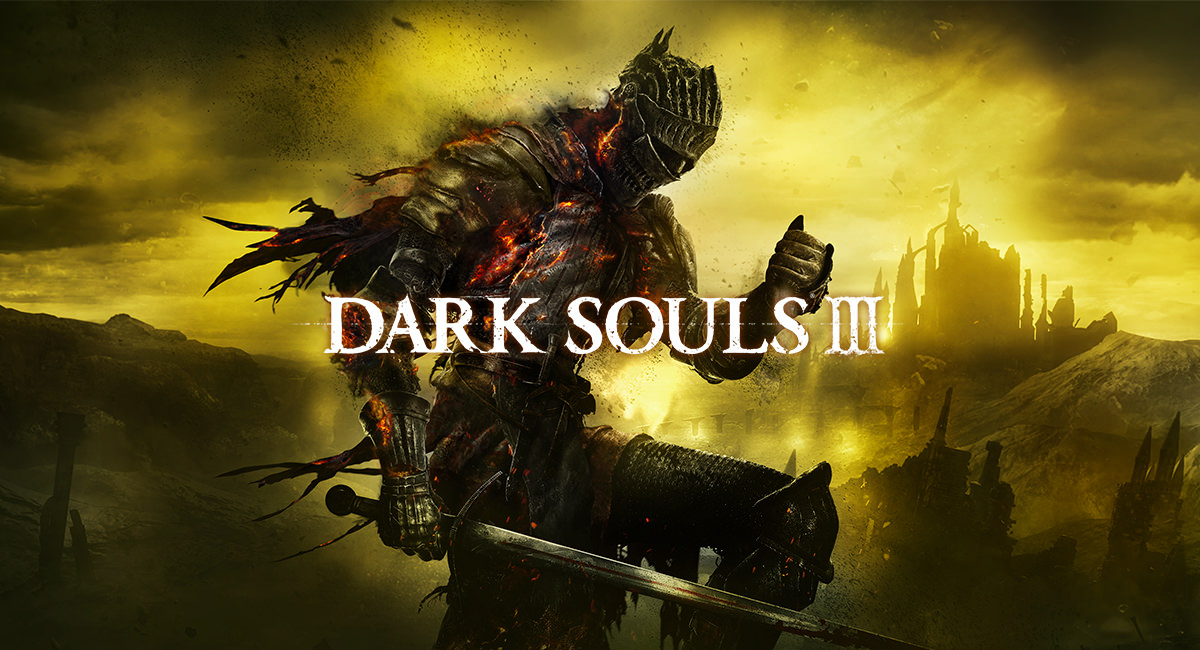
Each installment in the Dark Souls franchise improves upon the last in various ways. Dark Souls III often feels like the culmination of everything From Software had been building towards for years, from Demons Souls to Bloodbourne. The old adage that the game is "tough, but fair" isn't always the truest statement; Dark Souls III is as close to that as a game can get.
Apart from how visually polished it is compared to the previous games, it also does a bit to improve upon the level design. A bit element to the game - in terms of environments, narrative, and gameplay - is the theme of cycles. There are a lot of repeated aspects brought back to the third game, but done with enough differences that it doesn't feel identical. Most notably, players might suspect things look familiar before running into the title for Anor Londo. There's enough there to be clearly recycled, but also enough changed that it feels different.
Cycles are perhaps the central theme to Dark Souls III, in particular its story. Of course, the narrative of a Souls game isn't pushed front and center. Players are encouraged to figure it out themselves through very brief interactions with NPCs, or by reading item descriptions. Once you notice the cyclical nature of the world and its story, it's hard not to see meta-commentary about gaming itself in there. After all, the core experience of Dark Souls III is the same as the core experience of Dark Souls II, Dark Souls, and Demons Souls. It's the best of the bunch, but being a popular game franchise means the experiences aren't going to be drastically different. Fans of the series ultimately buy the next game to get more of that thing they really liked before. And with the public admission that Dark Souls III would be the last one, the whole plot arc of trying to break the cycle becomes even more meta.
While Dark Souls II was criticized for lackluster bosses and Dark Souls was a bit clunky at times, Dark Souls III manages to toss in some of the most challenging, yet gratifying bosses in the series. Each boss has "stages," with the fight often taking up a different dynamic. If, for example, the first stage could be handled the old fashioned way of putting up your shield and circling around to stab them in the back, the second stage would turn into a chaotic offensive onslaught that required mastery of dodge-rolling. Some could be handled through rolling, but the second stage could be incredibly difficult unless you master parrying.
Not every boss is great. Some are gimmicky to a fault - one such case features the only way to really beat it is to rush past the boss to pick up a weapon specifically designed to damage it. Others require taking out groups of enemies, which isn't always the most fun part of a Souls-game, although combat is noticeably more polished. In these, and most fights, speed and agility is key.
That is the true strength to the design of Dark Souls III. Every section seems intentionally designed to encourage players to learn a more aggressive style of action. You can get through the first two games pretty fine by over-relying on a shield. In Dark Souls III, the shield can sometimes be a complete waste of time. An underrated aspect to the series that makes each game so satisfying is figuring everything out. One of the most clever ways the game highlights your improvement is by introducing early bosses into the game later as common enemies. By that point, players are both powered up and skilled enough that these enemies that could cause frustration for days became regular old enemies that could be taken out within seconds.
Conveying my own personal experience with one boss in particular highlights exactly what I love about the final installment. The Dancer of the Boreal Valley gave me fits for weeks, and yet, was perhaps my favorite boss in any of these From Software games. Apart from just how haunting she is, her attacks were such that I had to completely re-adjust the way I play Dark Souls to stand a chance. Though still equipped with a shield, I didn't make much use of it. Rather, I had to adapt by being more mobile, relying on accurate reading of her moves so as to properly dodge them. It took weeks of trying before it really started clicking. Defeating her was unreasonably satisfying. It was immense relief mixed with a strange sense of self-assurance. I "got good," as it were. In fact, the frequency at which I died dropped significantly after that boss fight. The Dancer is a perfect example of a boss designed to be challenging, yet is completely fair. All of her attacks are adequately telegraphed (and, having spent weeks watching her moves, it's almost laughable in hindsight to see how easy they are to read - definitely doesn't feel that way as you are learning!) And most importantly, the fight had taught me how to play in a style that I would otherwise have never felt confident enough to try.
That sums up the Dark Souls III experience. I'm absolutely not the first person to notice this, but it does appear that the primary focus of the game's design was to discourage relying on shields. It's still possible to get through the game playing in that slower style, just circling and stabbing, tanking as you go. Yet it is both easier and more gratifying to play in the style they design for. It would be completely false to suggest I am "good at Dark Souls," but I am good enough at games to get through them. When I go back and watch the footage I recorded of defeating the Dancer of the Boreal Valley, it almost looks as if I were good at it! It's a more entertaining style to play, and it's more entertaining to watch.
I've taken the opportunity to go back and revisit the first game, and it's hard not to notice just how much better I am now. Sure, I did marathon three and a half Souls games (1 through 3, with about half of Demons Souls), so the entire experience should mean improvement. I do, however, think the bulk of it is owed to Dark Souls III for the way it altered my behavior as a player. I played with more agility and speed, with more aggression, and felt empowered enough to try new strategies I would not have had the confidence to try in the past.
Some might argue that it's really just more of the same, and sure, the core experience is: a challenging, but fair game that is gratifying because of said challenge, as well as leaving it up to the players to figure it out on their own. In some ways, it feels like a puzzle game. However, the specifics of it cannot be overstated. Dark Souls III is the crescendo From Software has built towards. Lead director and designer Hidetaka Miyazaki has been a little confusing about the future of the franchise - at one point stating that this would not be the end, only to suggest it was time to move away from it a few months later - but each game has seen improvement, and there's still room for the Souls games to grow. Whether it comes back as a Souls game directly, or just as this new "Souls-like" genre it's helped popularize, suffice it to say that it will be one to check out. Meanwhile, Dark Souls III is a great send-off for the series.
In an age where major studios are obsessed with cramming too much stuff into a game, there is still truth in the philosophy of do one thing really well instead. Superhot is a good example of a simple game with a unique mechanic, and focusing on that. A first person shooter/puzzle game, the "schtick" is that time only moves when you do. This single mechanic allows for an interesting array of level designs with various degrees of difficulties.
It's not entirely accurate to say that time only moves when you do. Standing still just slows it down a lot, but doesn't halt everything. The natural inclination when picking up a shooter is to run and gun, but that can be a death sentence here. Depending on where enemies spawn and what kind of weapons they have, you could be dead before you even know it. The more you go through a level, the more confident you might feel going quickly, but odds are that you'll want to take it slow. Learn the level while you stop to plan out your next move. It's an FPS with a meticulous, deliberate sensibility.
Everyone takes just one hit to be killed, which adds tension to movement. One hit and you're gone. On the flip side, a single well-placed shot will take out enemies as well, which can make a big difference while planning your next move. Of course, getting those shots just right is shockingly tricky. Most players experienced in the shooter genre are familiar with leading their targets. It takes a fair amount of getting used to when those targets are moving in a very stop and go fashion. You have time to take aim, but it can be difficult to judge how far you have to lead a moving enemy when they aren't moving a normal speed, or how you won't know if you hit them until you start moving again, which then often exposes you to enemy fire.
Suffice it to say that Superhot can get challenging at times. Many levels feel substantially more like a puzzle game than a shooter. Frustration can mount as you struggle to dodge bullets, find enemy spawn points, and figure out the best routes to take to succeed. While bullets are easy to track, thanks to long, red tracer tails, how close they need to come to actually hit you is sometimes infuriating. Being in the first person perspective, it can be hard to tell when a bullet is going to hit the body you can't see. Rounds don't actually have to hit you head on to kill you, which sometimes feels a little unfair. Still, it doesn't take long to figure out proper adjustments to avoid enemy fire. Some enemies are more troublesome than others (like ones with shotguns that spray multiple rounds at once), but the difficulty is pretty solid to provide for a sense of great satisfaction upon solving the levels.
Perhaps the most surprising element of Superhot is it's narrative. People will be drawn to the time altering mechanic, and they might be grabbed by its art style. However, the story is worthy of attention, too. Fans of meta-commentary about a medium - like how Undertale makes comments about games or Community makes comments about television - will likely be interested in Superhot, itself a game about playing a game. Every few levels, you are kicked out of "the game" to have a text chat with a friend about it. As you get deeper into it, mysterious things start happening outside your control. Someone or something is watching you, both in the game and out of it. A series of chanting "The mind is software," and "Bodies are disposable," culminates in the "in-game" you killing the "out of game" you. At this time, they introduce a new body-switching mechanic that is shades The Swapper. It doesn't get enough time in the game for players to use, really, but it still adds to the gameplay.
There is a VR version out there that actually is pretty awesome. Superhot lends itself to the VR experience pretty well. They continue with the meta in game/out of game story element (you have to pop a disk into the computer and then put on a VR head set in game to start the game), and its stylized white environments with red enemies makes for a less disorienting VR experience than a game like, say, Resident Evil VII which goes for realistic graphics. Virtual reality isn't quite graphically there yet, so the more realistic the look, the more off it feels. While the first few levels of Superhot VR are surprisingly fun, there is definitely a wall you slam into. Since time slows down when you stand still, it's actually much harder to control that mechanic with your head than with a traditional controller with two analog sticks. Even more, the game requires the use of Sony's motion controllers, which are frustratingly unreliable in their accuracy. When it only takes one hit to get game over, and when they set it up so that each level has multiple parts that you have to repeat when you start over, the lack of accuracy is devastating to the experience. It is worth checking out Superhot VR, and it does maybe highlight the potential of the technology, but it still has a long way to go before gaming because equally fun with it.
When you finally beat the game, the mysterious people behind it all in the story tell you that it is now your responsibility to spread the word and get more people to play Superhot, so their ranks can grow. I'd love to say I'm not part of their meta-advertising campaign, but the game is fun and interesting enough that it's hard not to recommend it. Perhaps the biggest problem with it is that it is so short, which just goes to show how good it is. "Innovative" gets thrown around a lot as a term to describe games, but it might not be so accurate to describe it as such. It is, however, quite unique and worth playing regardless.
The idea of a suspenseful horror mystery game in a two-dimensional, cartoon-ish animation style doesn't sound like it would work out too well, but Oxenfree manages to pull off an eerie atmosphere with great effect. An indie game from 2016, it has generally fostered positive reviews for accomplishing so much with so little. Some might find it a tad slow and boring, but it executes a number of things really well.
Playing a bit like a teenage coming-of-age movie, the primary focus is the narrative. Five young adults go onto this abandoned island for a night of celebratory drinking and rabble rousing. Along the way, they discover strange radio signals that, when picked up using a radio, distorts reality. For a while, it is unclear what exactly is happening. Is it ghosts? A tear that connects to a parallel universe? A time loop? Friends get possessed, situations and conversations repeat, and new mysteries and backstory about the island are uncovered.
Oxenfree is a game easy to recommend to fans of Telltale games like The Walking Dead or Game of Thrones. In fact, one of the co-founders of this game's studio specifically worked on The Wolf Among Us. The influence is obvious from the core mechanic of the game: making choices through dialogue options. What's nice about Oxenfree compared to other decision-driven games is that conversations occur without interrupting. Players can walk and talk at the same time, no longer beholden to cutscenes or restricting conversation sequences that trap players in that moment until the talk is over. Speech bubbles appear above the protagonist's head, adding to a cohesive art style as well. It looks a bit comic book-like, so the speech bubbles enhance that.
The downside, however, is the same as it always is for these types of games. As intriguing as the story might get, there still isn't ultimately that much for the player to do. There is even less to interact with in the world of Oxenfree than that of a Telltale game, or Dontnod's fan-favorite Life is Strange. While Telltale has made efforts to expand a bit beyond the basic mechanic of choosing and Dontnod introduced time rewind powers to the formula, Oxenfree offers little else beyond walking and, well, talking.
The flip side: it handles decisions more organically. One of the problems with something like The Walking Dead is how unnatural some of the dialogue is, and how "gamey" it feels once you go from walking around, pointing and clicking, to engaged in conversation with a character. They also get pretty obvious when you are making a choice clearly meant to impact the story. In many cases, decisions are pretty binary as well. Save Doug, or save Carli? While some of the writing and voice acting in Oxenfree is less than stellar (undoubtedly connected to the fact that it is a small studio indie game), dialogue and choices are presented in a more realistic fashion, with a more natural flow. The best choice-driven games don't make it so obvious when you're making key decisions. Oxenfree doesn't completely avoid this trap, but it manages to create a more honest mechanic.
Perhaps the most impressive aspect of the game is how unsettling it is. One would not expect a side-scrolling, 2D walk-and-talk game to create a disquieting atmosphere, but Oxenfree manages to do so through audio design and some image distortions to great effect. The use of radio and television static is surprisingly efficient at crafting an eerie environment. It can be startling to be playing a game that suddenly cuts out and starts looking warped, as if something has possessed your television and the game, just as the other beings possess the friends. "Terrifying" isn't an accurate way to describe it, but it is shockingly off-putting.
It is a little tricky determining who to recommend Oxenfree to. It isn't so amazing that I would recommend it to anyone and everyone, the way I would, say, Little Nightmares or Horizon: Zero Dawn. At the same time, it does things a little more subtly than something like The Walking Dead and has fewer mechanics than Life is Strange, so there might not ultimately be a ton of crossover there (although, certainly, if you are into Telltale games, you will likely be more receptive to Oxenfree). The pacing is a little inconsistent, and it takes a little while before the good, weird stuff breaks out in earnest. Even then, many might still find it a bit boring. If you're into narrative-driven games with choice-based mechanics, however, and a single, cohesive style and spooky atmosphere, then this is a game you might want to check out.
REDUCTIVE RATING: Pretty Interesting / Worth Checking Out
Available On: PS4, XBoxOne, Nintendo Switch, Steam, iOS, Android
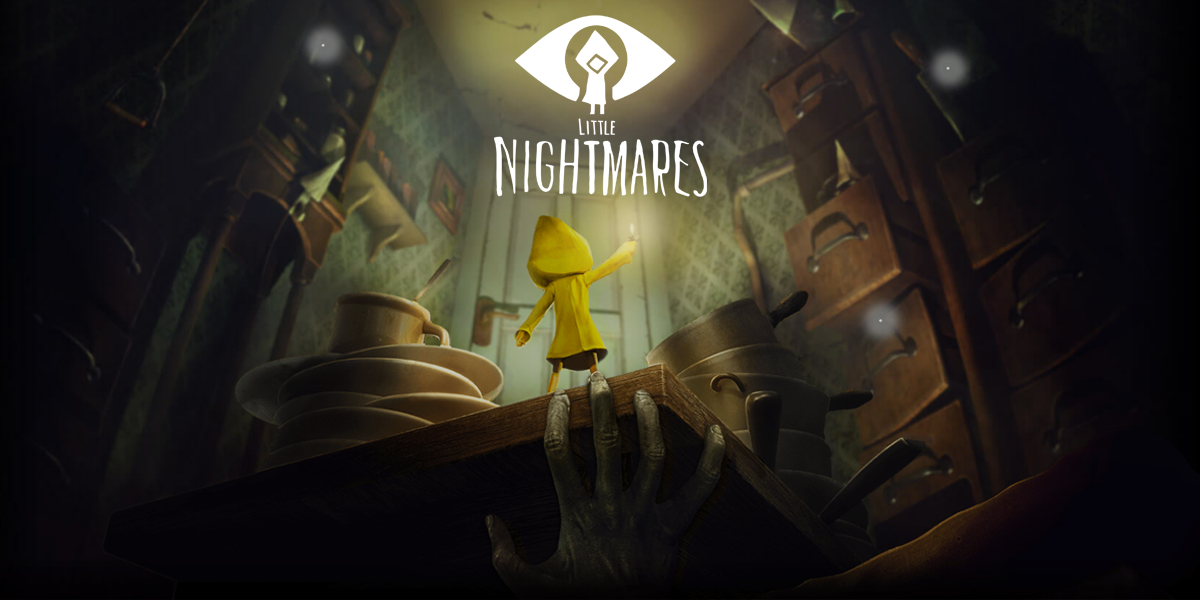
Every once in a while, a game comes out of nowhere and completely blows you away. I can't even remember how I heard about Little Nightmares, but it very quickly shot up the ranks of favorite games of 2017. It has all of the ingredients necessary for being an indie darling, and it lives up to the standards established by other, similar horror/platformers like Limbo or Inside.
In fact, it is almost impossible to discuss Little Nightmares without comparing it to Inside. There are many noticeable similarities between the two. Both are ultimately side-scrolling, horror, puzzle platforms that are mechanically simple, yet shockingly challenging. You will fail a fair amount. Both also rely heavily on background and world design to convey a dark, discomforting environment. What either game is actually about is open to interpretation, but there is no shortage of environmental design elements that push a disquieting atmosphere. If the world in Inside is mysterious and subtle, however, the world of Little Nightmares is a bit more upfront. Creepy humanoids giving chase are replaced by disfigured and disgusting beings that are only slightly human.
What Little Nightmares has going for it is a bit more cohesion in its art style and tone of adventure. Most impressive is the effectiveness of an almost claymation-like look to both the characters and their movement. It almost feels as if you are playing in a darker, somehow stranger Tim Burton movie. It's astounding how such a style can create so many terrifying and discomforting creatures and moments. Not only does it give the game a unique visual element that separates it from so many other games; it goes a long way to making players feel anxious.
A key difference from comparable games (like the aforementioned Limbo or Inside) is that it uses the foreground and background, whereas those other games have you move only left and right. The end result of allowing front and back movement is a depth that makes platforming moments more challenging. That, in turn, also adds to the tension since screwing up an angle can result in being caught by one of the pursuing monsters.
As the game progresses, things get even more twisted and frightening. The penultimate "level" involves sprinting by a group of fat, gigantic, disturbing people hellbent on eating you. They spill down the stairs and crash into the hallways in pursuit, almost as if they were in a Dark Miyazaki universe. I found myself gripping the controller so tightly that my fingers were sore, all because I had turned into a ball of stress! And, somehow, the final section gets legitimately scary! (I had yelped out lout a few times trying to beat the last monster/boss.)
Like Inside, one of the best aspects of the game is how little information it actually feeds you. Upon completion of the game, I immediately dove down the internet rabbit holes for theories of what it all meant. The game is filled with messed up concepts - like the consumption of children - and even a fair amount of Holocaust imagery. The little kid that is controlled by the player even has moments that are startling! Additionally, the complete lack of clues or pesky control reminders makes advancing feel even more satisfying. Many major games tend to hold your hand, making sure you never get stuck. This - like Inside - never gives clues. It never explains anything outside the basic controls at the very beginning of the game. Getting through the next section is incredibly satisfying because you can feel your brain putting it all together.
Perhaps the hardest thing to talk about is just how surprising it was. While a comparatively short game, it is also one of those things where the less you know, the better it is. For me, it started strong and finished stronger. I had no idea what the game was or what was in store; I loved every second of it. It's a small game that came out of nowhere to become one of my favorites in years. In fact, I'd argue it's better than Inside (even if just slightly). I want to rave about it more, but I also don't want to ruin any part of it. Suffice it to say, this is one that I will regularly recommend to people.
As an aside, I would also recommend checking out the DLC. "The Depths" was one of the most tense levels of any game I've played. Essentially, recall how horrifying and stressful the "mermaids" were from Inside, then stretch that out for an entire DLC package. (It's also cool in the way that it sort of recycles levels from the main game, but in different ways.) I'm not a big fan of DLC overall, but it's definitely worth it.
Naughty Dog had already wiggled their way into the top spot of cinematic gaming experiences through the Uncharted series, but they cemented it with 2013's The Last of Us. Building off of the adventures of Nathan Drake, they provided a surprisingly refreshing take on the action adventure genre by mixing it with survival horror. To top it all off, they provided some of the best writing and acting seen in video games to date.
It is ultimately difficult to discuss The Last of Us without bringing up spoilers, so be warned that there will be pretty big ones present throughout the piece. Additionally, it is a game in which two aspects are both intrinsically connected and divorced from each other: the gameplay and the narrative.
On the game side, it does a number of things incredibly well. Taking from the survival horror genre, it does a nice job creating tension through tough enemies. Effectively a "zombie" game, it takes its cues from the likes of Resident Evil in that you don't exactly want to run into them. The satisfaction does not come from mowing down endless rows of mindless bodies rushing as a hoard. Rather, getting through the section in relatively good health is ideal. To do so often requires a mixture of stealth and action. Some enemies are nearly impossible to avoid, and thus, you must be ready for a fight. Others give you every opportunity to either sneak by or quietly take them out. Players have to get comfortable doing both to succeed.
Resource management plays a role in the atmosphere as well. Looking around the maps, items can be collected to use for things like molotov cocktails or pipe bombs. Melee weapons can be reinforced, and med-kits can be crafted. To build them, though, requires a safe space out of trouble. The game does not pause while in the crafting menu, so players must be aware of their surroundings, lest they be attacked unprepared. Plus, all items have dual purposes. The ingredients required for a molotov are also required for med-kits. The necessary goods for nail bombs are also required for shivs. It effectively forces one to make key decisions about how to allocate those sources. Shivs are important for opening locked doors filled with items, as well as to escape the clutches of Clickers (which insta-kill you). Yet nail bombs are extremely effective for dealing with large numbers of enemies.
Ammo supplies are also limited. While there are various types of firearms to be found and used, there isn't a ton of ammunition to be found. This, mixed with limited resources, encourages players to act more deliberately or use stealth as much as possible. Confronting enemies - both human or infected - can go very poorly, very quickly.
While these are fun components that maximize the tension and dread, they are also limited. It would not be unfair to argue that there aren't enough ways to utilize the resources collected, or that the AI of enemies isn't exactly smart enough to feel all that exposed when crafting. On "Normal" difficulty, the game also provides more than adequate amounts of resources and ammo to make it through. Then, there's also the "listening" ability that allows players to see where enemies are, if moving.
The game works completely fine as a stealth adventure horror one, and it does these things really well, but it is not off-base to argue it is also pretty limited in scope. This doesn't mean it's bad; just that it isn't quite as revolutionary as many critics make it seem.
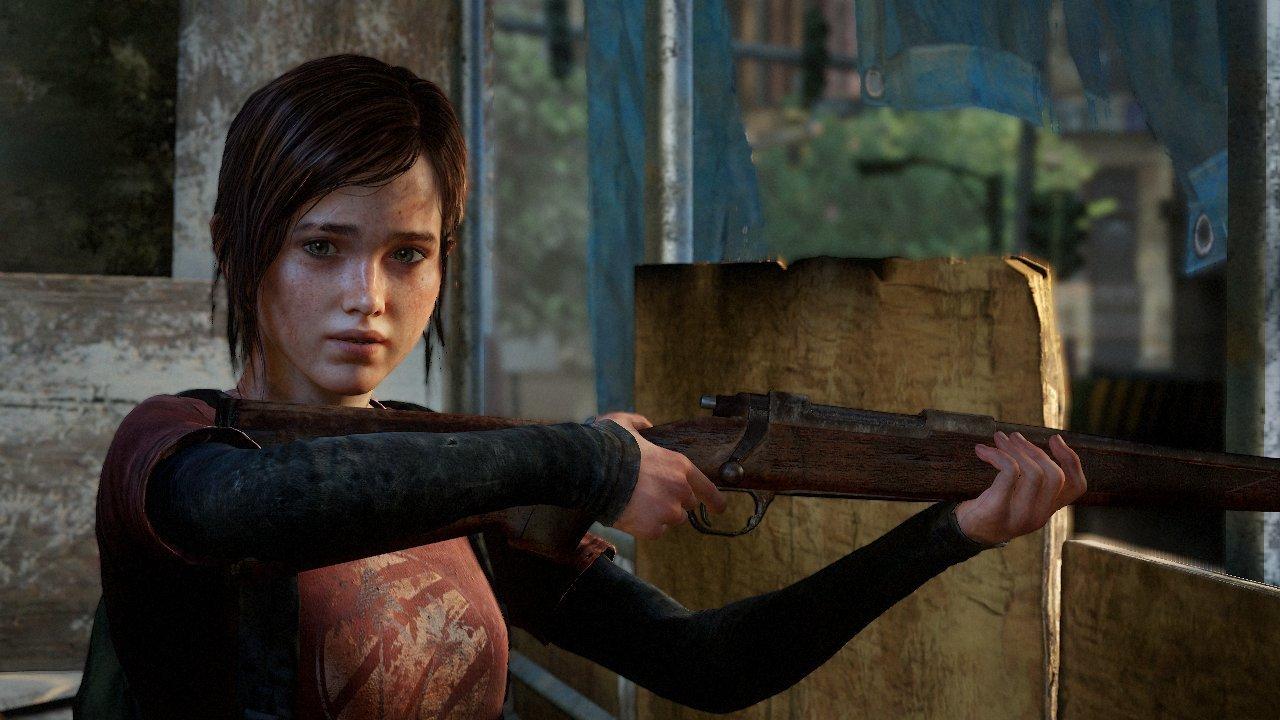
Gameplay itself is pretty tight, especially for a game reliant on an AI companion. Ellie, the young girl Joel (the player) is charged with escorting to Salt Lake City, becomes increasingly empowered throughout the game. At first, she mostly just runs around shouting profanities at enemies. Eventually, she is a full-fledged partner, throwing bricks and stabbing/shooting them as well. This, interestingly, does not make the game ever feel easier. Sometimes, there are some awkward moments of trying to get around each other, but it's overall really smooth.
Perhaps the most well-done aspect is in the level design. Where Uncharted games often feel exactly like the hyper-linear corridor it is, The Last of Us feels a lot wider. It is true that there is only ever one direction to end up in. There is no backtracking, nor are there multiple exit points from a level. It is, by every measure, a linear, narrative-driven game. That said, maps are often large and detailed enough that there is plenty to explore. The world within the game provides many narrative context clues, as well as exposes players to optional conversations and notes left behind, which also provide a shocking amount of emotional impact and insight into the history of this place. In combat scenarios, the open spaces go a long way to the feeling of insecurity. There are very few places to hide in which there isn't a "behind you" to watch out for. It feels both realistic and dangerous, getting players to really observe their environment.
The worst aspect of the game, as is a bit typical of Naughty Dog, is how often it forces players to play a particular way. For most of the game, the agency is in how to approach an area. Just sneak by? Try to go all Predator on them and take them out one by one? Set some traps and then go all Rambo on them? The choice is yours! Except when it isn't. For "cinematic" purposes, the game will often throw you into a scenario that allows for only one style of play. These aren't necessarily "bad moments," but they do sort of run counter to the design of the rest of the game, with its combat and maps that are very in-tune with one another and satisfying.
Of course, The Last of Us would not likely be considered an all-time great if not for its story and characters. Without question, it provides one of the most well-written narratives, filled with parallels and subtleties. Characters are surprisingly well-defined, given most of them are only in it for a stretch. And, of course, the relationship between Ellie and Joel develops in a truly organic, believable, and compelling fashion. It's easy to look at it from just Joel's perspective, being that of a father who's lost everything finding something to care for in a surrogate daughter (Ellie). It is not just his story though. Ellie doesn't exactly fit that perspective, as Joel never quite feels like her surrogate father. Instead, he is just someone who has been able to stick around in her life. Given her rather quick bonding to Tess and Sam, she's substantially more balanced as a person. More welcoming and empathetic than Joel, it isn't even ultimately a story in which both must learn from each other: Joel to be more empathetic and caring from Ellie, and Ellie to be tougher and colder for the sake of survival.
It seems that, too often, more is made of these dynamics than are truly there; at the end of the day, it is about two people making an unlikely connection. The characters are written and performed incredibly well, which breathes further relatability into everything. Under it all is a dark sense of humor, too. Overall, the story is structured intelligently. Broken into seasons to function as "acts," it gets progressively darker before finally having it all fall under them. The opening and ending sequences serve as nice, opposing book-ends. And every character introduced along the way has some thematic relevance to the two central characters.
The Last of Us is aided by having one of the best endings, leaving a ton of room for interpretation and discussion. Does Ellie know? She's had such good bullshit detection the entire game, surely she has to know Joel is lying? Is Joel the bad guy? Did he just screw over humanity for selfish purposes? What about the Fireflies? Up until the end, they were presented as humanity's last true hope. Were they in the wrong? Did they have a point? Was Marlene a sympathetic figure? There is so much to go over. The abrupt, unsatisfying ending is perfect in the way it generates player interpretation. A nice, succinct, simple ending is nice once in a while, but give me the dark, deep well, the juicy, meaty ending I can sink my teeth into any day.
As a whole cohesive unit, the narrative and design often work well together. The epic adventure aspect of the story fits perfectly with the linear design of the game. The story creates an urgency to get through it, which perfectly distracts from any desire to really do greater exploring. Everything about the game keeps pushing you forward. The way Ellie grows as an AI companion in conjunction with her growth as a character is great, and further provides context for her and Joel's bond. The limited resources and tough enemies match the dark, intense, and disturbing world.
There are some missteps, to be sure. The inclusion of "puzzles" to do with Ellie or another AI partner are never difficult and feel very "gamey." A misguided "boss fight" near the end is a bit disruptive. There are even some cutscenes that run contradictory to the rules of the world, such as that Clickers can't see you - they follow you through sound - but you are encouraged to hide when they show up. There are other elements that remind you you're playing a video game, but it isn't inherently bad. It just creates a little bit of dissonance between the narrative and gameplay.
Most of the problems are incredibly minor and don't distract from the game. Everything is made substantially better with an original score from Academy Award-winning composer Gustavo Santaolalla. The game is aided even more with a great piece of DLC in Left Behind, which actually improves the basic gameplay in a few ways. The game might not be for everyone, with its horror roots making it both a bit harder than an adventure game and a lot more violent (in fact, it features one of the few video game moments in which I actually cringed from it), but for those with an appreciation of what the medium holds for the potential of writing, director/writer Neil Druckmann has offered up a master class.
It's hard to talk about games like Abzu or anything from studio thatgamecompany without getting into arbitrary definitions about what constitutes a "game." For some, they do not qualify. Instead, only games like Dark Souls or Furi or Horizon Zero Dawn qualify for such status because they are built upon the notion of challenges. Can't be a game if there is no fail condition! For others, that might not be such a central part of what makes something a "game." It can be a little trendier to instead label these types of things as simply, "interactive experiences," but that admittedly never made sense to me given that games are inherently that. Have you ever played something that wasn't? For me, Abzu is a great example of the diversity of functions video games can provide, and I label it a video game because I just don't personally care about that. "Video game" is just easy, and really, who cares?
Distinguishing that Abzu is not actually from thatgamecompany - the studio behind meditative games like Flower and Journey - can sometimes be tricky. It has many of the same elements of their games. However, it does come from studio Giant Squid. You would be forgiven for making the connection, though, as several key members of Journey worked on Abzu. Both share a director and composer, for example.
Most prominently, the art style closely resembles the distinct cel-shaded style of Journey. Given the game is meant more as a meditative experience, the visuals are perhaps more important than a typical game (not that it's ever not significant, of course). Levels feature areas where players can press a button specifically too meditate while observing the world around them, so if the environments aren't beautifully realized and rendered, that wouldn't exactly work out well. Additionally, the simplicity of the controls is another shared aspect. Simulating a submarine world, it can take a little getting used to the camera, since players can move up and down in addition to left/right and forward/backwards, but it isn't designed to be complicated. Everything about the game - from its art design to its wonderfully composed score to its gameplay - is designed to be relaxing. Perhaps the worst part of it is that to move forward, you must hold down the right trigger. It might depend on which console you play it on, but holding down the trigger for minutes at a time can actually be a bit physically uncomfortable, which is especially problematic in a game built for relaxation.
Story elements connect to previous thatgamecompany works as well. As was the case with Flower - a game in which players control flower pedals on the wind, smashing man-made structures - the central goal is to free natural life from dark, destructive man-made forces. In Flower, destroying the structures freed the world from its darker and drearier colors. Bright green grass and new flowers with vibrant colors bloomed across as cheerier music blared. Abzu has players looking to free oceanic life, and as more of it is released back into the world, the more uplifting and dynamic the world became. Director Matt Nava clearly has an affection for the natural world, and enjoys meditating on the symbiosis required of us for an enduring and enjoyable world.
Indeed, that love and admiration of the natural world is a common theme among these games, but the creators also use that to connect us to our own history. The respect for the oceans and bodies of water is apparent in just the name. In Sumerian mythology, the ocean goddess Tiamat and fresh water god Abzu united to form all life. Of course, that is scientifically the ultimate origin of all life on Earth as well. Without the seas, we would not be here. More, the further we destroy our bodies of water and their delicate ecosystems, the more we endanger ourselves. Fresh water is literally required for our own survival. Water is an essential need to our bodies, as well as for animals and plant-life that we consume as well. For many, marine wildlife is a critical part of their diet or economy as well. Once upon a time, these creatures and the water itself was revered with religious vigor. In Abzu, people have meddled so much and have simply taken advantage of the ocean's supplies with no respect to it that it is becoming uninhabitable. When you first encounter the great white shark, it is - classically - scary! It attacks one of your robot companions, then runs off into the tall seaweed. For half of the game, you are meant to fear the shark, as we have long been taught to do in our own culture. Yet at some point, it becomes clear that the shark is merely protecting its habitat. It dies attacking the central mechanical pyramid that is destroying the ocean. Life and the ecosystem will return to a healthy state only when people become respectful of it again, and you take up the task of ridding it of those devices.
The background of this world also tends to come from images painted on walls below the surface. Frequently, players will discover Egyptian-like paintings of the human world, wherein it appears ancient peoples once worshiped the oceans and its wildlife. The great white shark, a prominent character in the game, is revered almost like a god. At some point, however, people began harnessing the power of the ocean. That symbiotic relationship between people and sea started to dissipate, and it came at the cost of the ocean and its wildlife. The beauty of its story, even if nothing completely unique or original, is in its unfolding through imagery and exploration. Players are rewarded for taking the time to really look at the world around them, and for spending some time considering their implications.
The meditative, exploration-driven nature of it gives it a similar vibe to Journey, while the love of nature and the goal of revitalizing it (including by soaring through some quick streams) give it more of a gameplay connection to Flower. It might not technically be thatgamecompany, but it practically is. It's a gorgeous game with a beautiful score, and it is a good way to unwind from a hard day's work (or after an hour or two of Dark Souls III). For me, an avid lover of sharks and marine wildlife, with a profound respect for the ocean, it is a surprisingly meaningful game considering there is no dialogue whatsoever. These folks are pretty great at utilizing the "visual" side of video games to tell a narrative. It might not be as emotional or compelling as Journey, but it is still a solid game. If you enjoy those slower, relaxing, more meditative games, you'll likely enjoy Abzu.
(I know, Abzu technically has a circumflex over the u. I don't know how to add that from this Chromebook.)
If the narrative of Xenosaga Episode I were a bit chaotic, convoluted, and mysteriously confusing, Xenosaga Episode II doesn't exactly make things much clearer. There's a large story going on, continuing the events of the previous game (whatever they were), but the focus is primarily on the backstory of Junior, Sakura (the child MOMO was modeled after), and Rubedo. Gnosis aren't a super big part of the world anymore, although they're still there on occasion as the enemies. It all provides a surprisingly compelling character story, even if it's still filled with confounding elements at times. Rubedo is actually a pretty entertaining villain, so to have some light shed on him, even providing a reason to empathize with him, is a pretty good direction to take the story.
One of the biggest issues people may have with Xenosaga as a whole is how much of the game is comprised of cutscenes, most of which make no sense. Even fans of this style of JRPG - the kind where you line up a party of three or four characters and select actions through menus - might wind up having a hard time staying focused. Cutscenes are often so long and cryptic that it can actually get a bit boring. It doesn't help that a number of characters use a completely emotionless, monotone voice. From the newly introduced Canaan and Jin to the replaced voice actor for chaos, it almost seems like they're trying to lull you to sleep sometimes.
On the flip side to the dragged out, kind of boring story is the combat system, which takes the core experience of the first game and makes it a bit more fun. The basic idea is the same: in a turn-based order, each character has different attack options. Stocking allows you to build up a series of attacks to unleash at an onslaught of combo attacks. Doing the right combination of strikes can send opponents airborne or knock them to the ground, exposing them to greater damage. It adds a fun element to battles in a similar way that dual and triple tech attacks did in Chrono Trigger. It's hard to say if, in the end, the combat here is more fun than in the first game, but either way it is still fun.
However, some of the problems plaguing the first game return in full for the sequel. Probably the most egregious aspect of the gameplay is that the rules that apply to the player do not apply to the computer-controlled enemies. Bosses are often difficult - and large groups of enemies as well - because they get to function outside the established rules. They can boost on top of boosts, opening the way for a wave of uninterrupted attacks that never feels fair. Indeed, sometimes, they boost without losing one of their stored up boosts, which also opens the door for such non-stop attacks. Their boost also will override yours if you select one, making it difficult to properly plan and execute a strategy to inflict a break. It gets extraordinarily frustrating to be fighting a normally difficult enemy or boss, one capable of inflicting plenty of damage in its own right, only to get destroyed because it managed to pull off a series of three boosts in a row, even though they appear on the move list (which your characters can't boost when they are on there). It feels cheap, and if you die, feels like the game just beat you by cheating.
Becoming more like Xenogears, Xenosaga Episode II works in segments of the game that require battling in the mechs. These can sometimes be the toughest battles in the game given that it can be difficult to heal substantially in battle. They're better and more fun than in Xenogears, thanks in part to being able to use ether abilities of their pilots, but it can still be a challenge. Fighting in gears requires a bit of a shift in planning. Each gear is open to certain potential pilots, and since they require two of them, this gives some more room for party experimenting, even if still ultimately limited. Different duos provide different special abilities. Requiring the use of gears at times is a good idea if they're going to bother putting them in the game. Gears were never really a major part of the first game, and you were never really required to use them. If you're going to include them, it's good to design certain sections around them.
There are, however, some strange design choices as well, such as having you momentarily run around even though you're just literally moving from one area for a cutscene to the next area for a cutscene. One supposes they realized it might be worthwhile to have the player do something in that half an hour exposition dump, but just moving the character around the map doesn't exactly entail too much action or make the player feel any more involved. It often just feels like a waste of time. Then, there are smaller decisions, like the classic JRPG trope of the final Final Boss being more of a narrative-driven fight: one you can't lose. It's fine to do this, of course, but it feels strange that - if they're going to - they would give Albedo 5,000 HP, meaning it can take ten minutes to kill him. Even more, they make sure that Albedo gets a turn after every one of Junior's, and it's literally nothing but a taunt. Since it is impossible to lose the fight, why not let the player get a few turns in a row before interrupting with a taunt? Or at least making the boss have less HP, so it only takes three or four rounds to finish? It goes on unnecessarily long, and feels absurdly tedious and boring.
Plus, to unlock many abilities, players are expected to do an obnoxious number of literal chores in its strange "Good Samaritan" campaign. These "side missions," (and calling them that is quite generous), require players to seek out random NPCs who will provide them with some ridiculous chore to do - from destroying a certain number of boxes to hanging up fliers to finding dates for people. These are especially tedious and mind-numbingly boring. It's the worst kind of padding developers can do.
The game came out before the importance of a consistent voice cast was firmly established in the gaming industry. As a result, a number of characters have a change in actors. It's a little unfortunate that chaos, MOMO, KOS-MOS and Shion (the central protagonist of the previous game) have all been replaced. If you're keeping track, that's literally more than half of the original cast being replaced. Only Junior and Ziggy retained their voice actors, and that actually does make a difference. It gives them more consistency and makes them more recognizable. Everyone else takes a little bit to adjust to.
It might not be entirely accurate to call Xenosaga Episode II the better game when compared to its predecessor. There isn't much of a drop-off in overall quality, though. It still requires a fair amount of patience, from the extremely long cutscenes to the cheap boss battles, but it's never insurmountable. If the first game was something you enjoyed just fine, the second will likely do that too. The advantage it truly has is a more compelling character-driven central story, which can help ease the apprehension of going into another cutscene.
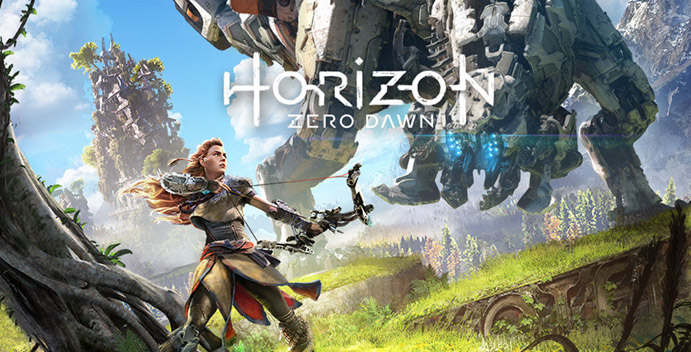
In the age of franchises, remakes, reboots, sequels, and spin-offs, it can be hard for a new property or idea to find a foothold in the market. Studio Guerrilla Games, known for their Killzone series, decided to develop such a game. It drew attention at E3 where it's unique look stood out. A video game in which the world is a blend of hyper futuristic technological wildlife, but a tribal, caveman-like civilization of humans? An open world game wherein you fight robot dinosaurs? Seems legit!
Horizon: Zero Dawn surpasses most expectations established. It is fun, interesting, engaging, and gorgeous. It's got solid music and atmosphere, and a good amount of depth to the world worth investigating. The combat is diverse and exciting, while also providing a good enough challenge that even after all the upgrades, players still need to be on their toes. Any number of enemies could do some damage!
It is easy from ads to focus too much on the "robot dinosaurs" aspect of the game. There are some in there, such as watchers and thunderjaws (who look like raptors and t-rexes), but the bulk of the enemies are based on a variety of modern day animals as well. There are some that are horses, oxen, or rams, others that are ostriches or crabs. There are over two dozen creature types in the game, each with their own strengths and weaknesses. Each one can kill you if you're not careful, even the low-level ones.
Perhaps it isn't even quite right to describe these creatures as "enemies" either. Sure, they can be extremely deadly if you are not careful - many are outwardly aggressive and will attack you on sight. However, these creatures really do feel more like wildlife than "enemies." In the early stages, everything is new and threatening. They do a solid job working that into the game's narrative as well, so that players and main protagonist Aloy are essentially in the same boat. When you come across that first rockbreaker, for example, that is the first rockbreaker Aloy has seen as well. As you become more familiar with the world, the game, and the combat, you start to notice behavioral patterns of certain creatures. Grazers, for example, seem aggressive when they are introduced, but you soon realize that they only really become aggressive when desperate. Most of the time, however, they are skittish and will flee if they hear noise. Striders will charge and buck if backed into a corner, but they are also not particularly keen on fighting. Meanwhile, the larger sabretooth-like sawtoothes will pounce, charge, and attack almost instantly if they spot you. And then there are some like the broadheads that can be a bit unpredictable. They are more likely to charge you if they see you, but they will also try to flee at some point.
The different behaviors and attack patterns of these machine creatures really goes a long way to making them feel like actual organisms. Even late in the game, when you're pitted against thunderjaws and stormbirds, it becomes a bit difficult to see these as your "enemies." The AI of the machines is really solid and breathes life into the robots. At some point, I noticed I even avoided killing grazers, striders, or broadheads just because I felt bad for them. The experience received for killing one of them just didn't feel worth the guilt for killing something that was no longer a thing I found threatening.
The real "enemies" of the game are the Shadow Carja, a tribe of barbarian warriors hellbent on digging up old, violent machines and potentially destroying the world. These enemies you can chop down without remorse or any thought about whether they deserve it or not. Human enemies lack the same kind of variances as the synthetic wildlife, but they do present their own challenge. There are different weapons they are equipped with, as well as armor that can protect them from silent strikes. Plus, the game has a tendency to throw a lot of them at you at one time. And I mean a lot.
The strength of the game is probably the gameplay. Combat is tight and diverse, giving players a variety of ways to approach a given combat scenario. The melee attacks and dodge rolling is comfortable enough that, for skilled players, that is a good and challenging way to go. The bow sometimes has strange tracking habits, but is overall reliable - especially within a closer range. There are a few different bow types with different strengths, so odds are you will mix melee and close-range bow attacks with dodge rolling. Alternatively, you can stick to the high grass and take out enemies one at a time in secret. Stealth is my favorite way to play a game, when given the opportunity, so this was a much appreciated inclusion. Whistling or throwing rocks can draw enemies to a desired location, ripe for you to pounce and strike from the shadows and kill them in isolation. This is especially helpful when confronted with large groups of enemies, like the herds of lancehorns, chargers, or scrappers. Additionally, you can obtain or craft traps. This is helpful for stealth, of course, but once a trap is set off, it generally gets the attention of nearby enemies who go on high alert. Often, you will benefit from a combination. Stealth gives you the opportunity to take out a few enemies while setting up traps, and then you can spring a surprise attack and send them into those traps. Action, stealth, and strategizing makes for an incredibly fun and challenging game. One most always be cautious, too. A group of scrappers can kill you just as easily as a thunderjaw!
I never had much of a problem with melee myself, but I have read some criticism of it. I can see arguments that it is a bit on the clunkier side. It does seem like the game wants you to rely more on your bow than your spear. Probably the worst part of combat is when you have to deal with flying enemies, like glinthawks or stormbirds. The problem is with the camera. In order to aim up to hit them when they're airborne (which is pretty much the entire time they attack you), the camera will often clip nearby environmental objects, like rocks, bushes, or even tall grass. This can make it difficult to accurately aim, since you can't exactly see what you're shooting at. The trick is to try shooting at more of an angle; give some distance between you and the enemies. Easier said than done, of course, as flying enables them to cover ground much faster.
One other way to approach a situation is to try and isolate one machine, then override it. Getting overrides at secret lairs throughout the world allows you to hack a machine. Doing so can be quite beneficial. Some machines, like striders, become completely docile to you, allowing you to mount and ride them. Others, like ravagers, will become hostile towards any machine in the area. Hacking these machines is often an incredibly useful option when surrounded. It can also be used to provide distractions if you'd actually rather just get away than fight.
As an open world game, it does fall into many of the same shortcomings of the trend. It is overloaded with side quests, and many of them are not ultimately that different from previous ones. You will spend a fair amount of time "tracking" people and then fighting a group of machines. There are also the same tried-and-boring outpost liberation missions typical of open world games. Those are especially tedious given how many enemies they load each area with. There are plenty of collectibles - many of which don't actually do anything at all, although some do provide some story background. And, of course, there are "radio towers," but these are actually done in a fun and unique way. Rather than just climbing towers like in Far Cry or Assassin's Creed, you will likely need to clear out an area, then climb up a special type of machine creature called tallnecks. It's a small change of pace, but one that actually does make that otherwise menial task feel more engaging and interesting. It is a bit rewarding at the end when you can see all the allies you've made by doing a lot of the side quests show up at the end to help out. It's not as satisfying as, say, being able to call in the allies you made at the end of Dragon Age: Origins, but it's still neat.
The story has some great characters, and a lot of forgettable ones. The writing is also a bit all over the place. Sometimes dialogue is fine; sometimes it feels really forced. The story is fine (even if some of the "big reveals" are as predictable as can be), but the writing of it can be considered one of the weaker aspects of the game. It wasn't bad; just don't expect a Neil Druckmann-level of writing. At its core, it does build up Aloy properly. She's such a great character, even if traditional in a lot of ways, and easily could be a new character mascot to sit on the Sony mantel to push consoles. (A lot of this might also have to do with voice actor Ashly Burch, who continues to show her worth after having given life to Chloe in Life is Strange and Tiny Tina in Borderlands 2.)
Still, once you get to the last stretch, the game does become very dragged out. Probably about the last five or six hours of the game feels like you've just got one more hour left, yet it keeps going. It gets heavy on exposition dumps and information overload, while providing little diversity in play. You essentially just run through old research stations and find out what exactly has been going on. Even the finale - which gets pretty bonkers! - does that typical RPG thing of, "boss in stages." Except the order is kind of strange. First, you fight Helis, a human baddie from the beginning, who also kind of disappears for a long time. Then, you repeal wave after wave of invading machines. Finally, you go and fight HADES, the AI program that is the true villain. It probably should have gone "waves of machines," then Helis, then HADES, but it probably doesn't make that much of a difference. Regardless, it's just another way that they manage to stretch out the final chunk of the game.
It does end on a bit of a cliffhanger ending, which seems a little ambitious for a new property that had equal potential to fail as it did to succeed. The post-credits scene actually is a little unsatisfying, but then again, the game is definitely good enough to merit a sequel - perhaps with tightening up melee combat, adding new weapons and more human enemy types, environmental hazards, and some better writing. It's just a tad unfortunate given that the game is otherwise its own complete thing.
Though it does suffer many of the issues that all open world games seem to have, the game is just fun and visually interesting enough to make up for it. Horizon: Zero Dawn might very well be my favorite game of the current generation so far. It's probably not for everyone, but its definitely worth checking out. That it has done well, selling almost three million copies to date, is a pretty good thing for the industry. Hopefully, we get some more studios going off to try and make a new IP, rather than just doing sequels or new installments of an existent franchise.
And yes, the title will make sense at some point in the game.