Saturday, February 17, 2018

Black Panther (2018)


It's easy to roll one's eyes whenever a new Marvel movie comes out and all the reviews come back positive, with everyone claiming it's the best Marvel movie yet and it changes the game. They say that about every one of these things that gets released! And sure, sometimes they are great and change things up for that character (a la Thor: Ragnarok), but none of them are really revolutionary.

And yet, Black Panther is the best Marvel movie yet and could potentially change the game, with its very existence itself being revolutionary.

It's hard to know if superhero fatigue is genuinely kicking in as these films continue to do well at the box office, but Marvel has largely been good at staying ahead of the curve in a way that Warner Brothers, Sony, and Fox have definitely not. When grounded origin stories were getting old, they gave us more genre flicks. When that started getting a bit dull, they started embracing the weirdness of properties like Dr. Strange and Thor: Ragnarok. And when the bland visual and musical styling of the franchises started getting stale, they gave us Black Panther. They are not always successful at doing this, of course, but it is generally why Marvel Studios continues to stay relevant and popular while other studios struggle to figure it out.

Much will be made about the representation aspect of its release. While not the first blockbuster starring black characters front and center, or even first superhero film centered on a black character (lest we forget Blade effectively kicked off the modern obsession with the genre in Hollywood), it is the first in the post-Marvel Studios world, where studios are constantly pouring hundreds of millions of dollars into these properties. Even more, this is a Hollywood blockbuster film featuring a predominantly black cast. Other than Andy Serkis and Martin Freeman, the only other white characters are nameless henchmen. As a white person, it does not feel like my place at all to comment on the power this alone has for people, but for all the overly-represented people saying representation in media doesn't matter, just a quick scroll through Twitter indicates it very much does.

Representation does not make a good film alone, however. And that doesn't mean anything about the entertainment value of a superhero flick. Fortunately, Marvel hired Ryan Coogler, a director whose first three feature films are Fruitvale Station, Creed, and now Black Panther. (If RottenTomato scores are something you value, his first three features garnered ratings of 94%, 95%, and 97%.) What we got was a complex story about identity and the struggle to find it in a rapidly changing world, all wrapped up nicely in the fun and exciting superhero package.

Put simply: this is exactly what the genre needs more of.

Marvel movies do a great job weaving in emotional moments using lovable characters in an entertaining world, but largely avoid dealing with anything too complex or challenging. Stripped to their basics, most superhero films, especially Marvel ones, are primarily just about characters learning to accept responsibility. The main theme of Iron Man is the same as from Spider-man is the same as from Man of Steel is the same as from Thor is the same as from Ant-Man, Dr. Strange, Guardians of the Galaxy, The Avengers, X-Men and really, most superhero flicks. Maybe The Incredible Hulk is a bit more "self-acceptance" and Captain America is more "power comes from character" than "with great power there must also come great responsibility," but that's still a major part of it.

With Black Panther, T'Challa doesn't need to learn the concept of responsibility. He has trained his entire life to become king of Wakanda. He is well aware of his responsibility and does not shirk away from it at any moment of the film. For him, it's a question of what exactly that responsibility calls for him to do. Many would have him maintain the status quo. Defend the old ways. Remain isolationist and continue what has always made Wakanda a strong, independent nation. For others, it would be to reach out. Create a new way of Wakanda, one that includes outreach to help neighboring nations and the oppressed people of the world. They have the means and knowledge, so they should. Others want expansionism through force, using their skill as warriors and superior weapons to shape the world according to their will.

The question of Wakanda's future stems from one of identity the central theme of the film. When you really boil it all down, the love interest and the villain kind of want the same thing. Both Nakia and Killmonger want to use Wakandan knowledge and resources to help people. And it is our hero, T'Challa, who stands opposed. It is the protagonist who doesn't think Wakandan resources should be used to help outsiders because Wakanda needs to remain secret for its own safety and prosperity. It is not a question of him failing to be responsible; rather it is a question of what his responsibility dictates he do. Many in Wakanda would see his defense of isolationism as the right and responsible course of action for the nation.

Themes of identity get tied up in here pretty heavily. Killmonger has no real place to call "home." Wakandan by blood, he has been forced to live in America, with its rich history of disenfranchising and oppressing people of color. He is unwelcome where he grew up, but also where his ancestors are from. "Black" is the primary identity, and it has a global bond. He relates to "his people" because of the common struggle. For T'Challa, that isn't how he sees himself. He is the leader of Wakanda. His national identity takes precedence, thus he does not help people of color around the world in order to protect the national interests. He is a leader of Wakandans, and no one else.

Coogler brilliantly crafts a story that can have deeper meaning and relevance for certain audience members while incorporating themes just universal enough to resonate with everyone. Though I can't personally relate to the questions of black identity, I can relate to the questions of globalism vs. isolationism. What is our responsibility in America as a wealthy, powerful nation to the rest of the world? Am I defined purely by arbitrary geographical and political boundaries? Even within the United States: am I a Massachusetts man first and an American second? There has never been a superhero film this specific and universal all at the same time.

Killmonger is, without question, the most compelling villain in a Marvel film yet. Granted, that doesn't necessarily mean anything, but that speaks to the movie's quality and why so many are raising it above the rest. Loki might be more entertaining and memorable; Killmonger is a bad guy who you listen to when he speaks. He makes you hate him for acting pure evil to then reflecting and thinking, "I mean...he kinda...does...have a point though..." While he's never likable, and the vengeance element of his goal separates his desire from Nakia's, you definitely understand where he's coming from. He isn't one of these monster-of-the-week villains who is just there to destroy the world or craves power. The ability to understand the antagonist's motivation is key to a compelling villain and, thus, a compelling story within the superhero genre.

Of course, it helps that Michael B. Jordan was conceived by the physical manifestation of Screen Presence and Charisma. Everyone knows where Wallace is now. The cast is amazing, but Jordan just brings it in a way no Marvel villain has yet.

While the obvious subtext will be about identity and how we define ourselves especially in regards to race and nationality, there is criticism of masculine society too. For starters, it could easily be argued that Killmonger represents toxic masculinity. He and Nakia both want Wakanda to help people, but Nakia seeks to do so with peaceful means. She doesn't mind fighting if the need arises, and indeed involves herself in affairs across the border to help the oppressed, but she doesn't go out with vengeance in mind. Killmonger, conversely, wants revenge on a world that has seen rampant colonization of Africa and systematic oppression of black people across the globe. He doesn't just seek to uplift his people. He seeks revenge and subsequently channels his anger through violence in a way that Nakia does not. The look of Killmonger speaks to this notion as well. Jordan is as finely tuned a machine as you will find in a human, and yet he has scarred his own body. Without his modifications, he would very much resemble the ideal male form. Yet it isn't, because he's sense of vengeance and inability to appropriately channel anger made him scar it up.

While Wakanda is full of kick-ass women warriors, it is the men who actively want to enact violence. It is Okoye, the woman leading the royal vanguard, who initially wants to protect the old way of isolationism and order. It is her lover W'Kabi, the man in charge of the rhino corps, who seems interested in expanding Wakandan influence through war. While both embrace a new future by the end, it is still Okoye fighting for future peace.

Additionally, it's hard to ignore that during the final battle, it starts off essentially as a battle between men (who want to use violence to expand Wakandan political influence and power) and women (who are fighting to protect more traditional and peaceful means). It should also be noted that T'Challa is, without question, the most emotionally healthy hero in the MCU. He often tries to talk opponents down, plans on violence as a last resort if necessary, and even when having a momentary lapse in judgment because of an emotional response, will listen to those around him. T'Challa is the most emotionally mature and healthy male character in these superhero movies. It would be hard to ignore the reality that he is constantly surrounding himself with women as his closest advisers.

A nation of five tribes, each with their own leadership that advises the king, Wakandan society is at the heart of every good Black Panther story. It is no different here. And in Wakandan society, women are equally important. T'Challa has a group of female fighters around him at most times, including the head of the vanguard and Nakia, a spy who is also well-trained for combat. But more, the king's council is comprised of a number of women, including his mother. His sister, Shuri, is head of technological development (and in the comics, took up the Black Panther mantle for a few years). Recognizing that makes it really understandable why Wakandan women would want more defense of tradition. This would be a hard motivation to understand in western societies that have largely been built to elevate men over women.

In essence, it could even be said that the film isn't even about it's titular character. T'Challa does have an arc and experience growth, sure. Yet the primary character actually seems to be Wakanda itself. Though T'Challa is a likeable character outright (and Chadwick Boseman is a killer Black Panther), we ultimately care about his fate because we care about Wakanda. Killmonger might have a point sometimes, but we know he's bad for the nation. We want T'Challa to come back and save the day because we know he would be a better, more fair king. And when all is said and done, his experience with Killmonger even gets him to agree that Wakanda needs to do more for people, especially of color, around the world. Yeah, it's a Marvel movie in which the villain actually succeeds in influencing the actions of the hero.

One of the few criticisms I have for the film is actually that I wanted more Wakanda. By no means is it poorly done or even mediocre in its execution. However, I would have enjoyed maybe ten more minutes during Act I wherein T'Challa has to deal with internal political issues. Maybe one of the tribes requests certain resources for help fixing a flood, but the other tribe feels that it would remove resources they need to handle a problem of their own. Something wherein T'Challa would have to hear conflicting opinions about what should be done and having to make a decision of his own using that information and insight of advisers. Could have fleshed out Wakandan politics a little bit more while also highlighting the complications he will face and the struggle to be the good king he wishes to be.

But at the end of the day, "I wanted even more" isn't exactly a bad sign for the film. (I also wanted more Killmonger, and as great as he was, he could have stood a little more fleshing out. But really, I just wanted more Jordan on screen.)

The only other criticism was in its action. To be sure, it's still solid superhero action. However, the problem with its action are identical to every single superhero film's action to date: too much CGI. When you've got a fight between two costumed, masked humans conducting hand-to-hand combat, it would have been nice to have actual martial artist stuntmen performing choreographed fights. Instead, we get a lot of poorly lit CGI characters punching CGI characters, all with quick and shaky camerawork. This is a constant problem of the genre and really stands out because its ultimately an action film. I kind of want to actually see the action.

Other than that, Black Panther really seems to have an answer to every criticism I've personally had about Marvel films. Absolutely, I have enjoyed every Marvel movie except Iron Man 3 and Thor: The Dark Thor. I love the basic character-driven action that pushes the genre, and that's why I love the comics as well. But I've long felt like they could at least attempt something with substance. It makes sense, really, that Black Panther would do that, given the comic itself was born out of a cultural and political movement. The creation of Black Panther as a comic book was itself a political act. (And famously, his second solo storyline was "Black Panther vs. the Klan.") It only makes sense, especially given the current political and social climate, Black Panther would be the first Marvel film to really try to tackle meaningful, substantial, and challenging themes.

It does that in the neat casing of a superhero flick. Even if you want to tune out and not think, the film is still enjoyable as a "dumb superhero movie." It's got well-defined characters, solid action, cool gadgets and outfits, and a great sense of humor. More importantly, Coogler knows when to cut it out. It's not as funny as Thor: Ragnarok, but Taika Waititi built his film to be more of an actual comedy. There isn't "relief" in the film so much as there is occasional breaks in the comedy for seriousness. The humor in Black Panther is great, but never crosses the line. He knows when to stop cracking wise, so - one meme-based joke that won't age well aside - the comedy works really well.

On top of wanting a fun superhero flick with some thematic substance and weight, it also finally gives us interesting cinematography. A big criticism of Marvel films is its muting of colors. Everything is just a drab brown, gray, or otherwise dark color. These movies aren't exactly known for being all that colorful, despite being comic book movies. We started to get more of it in Dr. Strange, and then again in Thor: Ragnarok, but even those films make sure to subdue its colorization some. In Black Panther, colors really pop. The best scene transition takes us from Wakanda, with its rich, vibrant colors where the outfits are colorful, the sky is bright blue, the greens are pure, and even the browns are light and stand out - to London, where all color has been washed out and it's just foggy, dark, and grey.

Finally, the thing Thor: Ragnarok did in letting its composer Mark Mothersbaugh actually inject some classic Mark Mothersbaugh into the score is expanded on. Criticizing Marvel scores has been pretty popular online lately, as they are always these generic orchestral sounds that are indistinguishable from one another and are ham-fisted in how it hits an emotion. The greatness of Kendrick Lamar's album inspired by the motion picture cannot be understated, but composer Ludwig Goransson does a great job in his own right balancing classic orchestral scores with traditional African music. It shouldn't be a surprise that Goransson excelled at creating a great original score. After all, he was key as co-producer of three Childish Gambino albums and has been signed to Jay-Z's label as a composer. (He also scored Community, as well as Coogler's previous two films.)

It would have been easy for Marvel to just tell a generic, yet fun action story, cast mostly black actors, and called it a day. They would have gotten credit and a big payday at the box office for just that. Yet they appear to have allowed Ryan Coogler to make the film he wanted, just as they seem to have let Waititi make his Thor as well. What we ended up with was easily the most compelling, substantive, challenging, and thematic superhero film since The Dark Knight.

Marvel's last two films - Black Panther and Thor: Ragnarok - have been helmed by people of color. Before this, Warner Brothers finally made a well-liked film with Wonder Woman, directed by a woman. It's almost as if diversifying your creative team can lead to new ideas and original visions stemming from the differing life experiences, and that those creators can tell stories that speak to a wide audience that has generally felt under served in media.

And with Black Panther poised to just wreck the box office this weekend, it's almost as if diversifying and trying to appeal to wider audiences (instead of just whiter audiences) is actually...*gasp*...good for business!

REDUCTIVE RATING: Loooooved it!


Wednesday, February 7, 2018

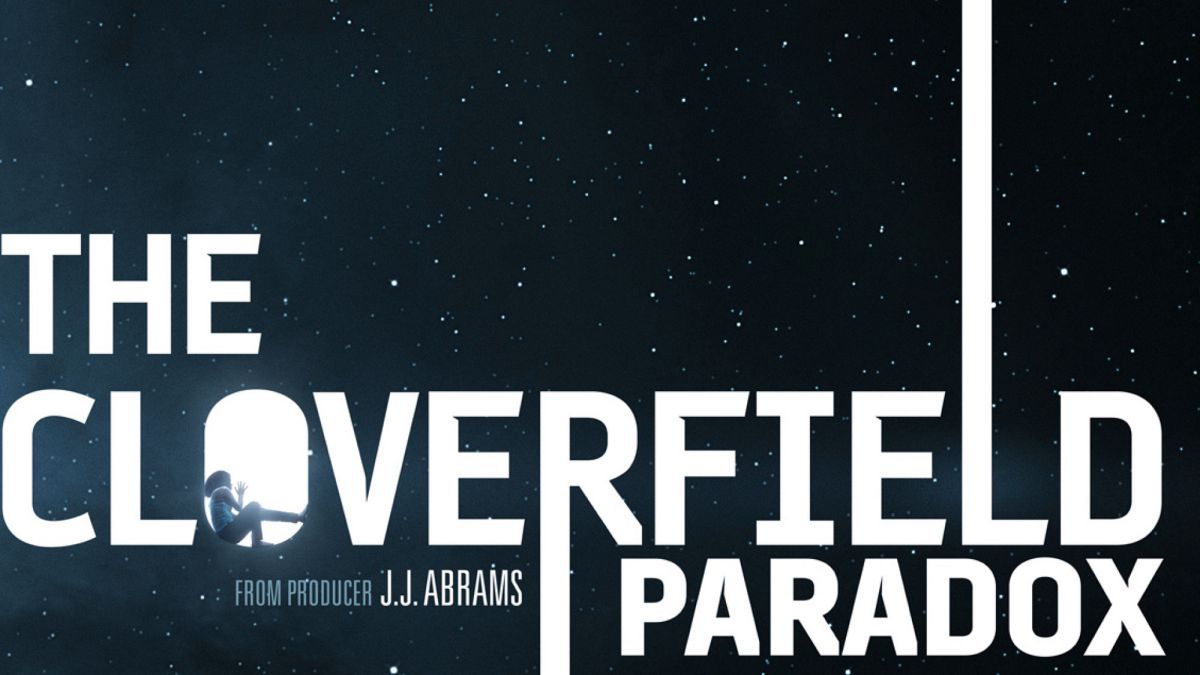
The Cloverfield Paradox (2018)


Did you feel like Event Horizon was a little too scary and didn't spend enough time explaining another completely separate movie? Did you find Sunshine could have been better with less compelling characters and a more poorly defined inter-character dynamic, in addition to providing unnecessary exposition for a totally different movie in the process? Well, if you did, then The Cloverfield Paradox might just be your dream movie!

In many ways, it shouldn't come as any surprise that The Cloverfield Paradox went about the same way as the first installment in the "Cloverfield" franchise. Way back in 2007, a mysterious trailer appeared before Transformers that featured a decapitated Statue of Liberty head landing in the middle of a New York City street. And that was about it. What ensued was a viral marketing campaign the likes we've not seen before in Hollywood. Fans searched studio-created websites to suss out what the film could be. Was an the long-rumored Voltron film? (Where is that, by the way?) Was it another American attempt at Godzilla? Turned out, those rumors weren't terribly off-target. Mystery box lover J.J. Abrams had produced a kaiju film with a unique thought: what if we made a kaiju film in which you never see the monster or the attack? Basically, what would a kaiju movie look like if you stripped it of all the cool stuff that makes people like kaiju movies.

The "found footage" approach is ultimately what makes the first Cloverfield so disappointing despite featuring some interesting components. The strength of the film overall was it's marketing campaign. A similar thing occurred years later with 10 Cloverfield Lane, only with two key differences. First, the marketing wasn't exactly "mysterious" as much as it was secretive and delayed. A trailer did not come out until about a month and a half before the film's release. (There was a website and a game created for that "viral" feel, but it was pushed far less than Cloverfield.) Second and most importantly, it was backed by a genuinely good film.

The Cloverfield Paradox very much borrows from the first film, only with perhaps more troubling implications for the industry overall. Though rumors had been circulating for some time about a third installment, no one knew anything until a trailer was released in the first half of the Super Bowl. Even more, it turned out that the film would be dropping on Netflix later that night. Putting out a trailer and releasing the film on a streaming service during the most watched television program of the year is marketing brilliance. It sacrifices long-term build up and anticipation with a quick reminder of this franchise and giving a freshly informed audience immediate access.

A tactic like that is especially significant for a film like this. As many have noted, the film isn't exactly good. Anything following 10 Cloverfield Lane would have been a bit of a letdown, but The Cloverfield Paradox is a jumbled mess of a film that never quite seems sure of what it wants to be, what it wants to do, or even what tone it wants to strike. The acting is good, but that can't save it from a mediocre script filled with cheesy dialogue, extraordinarily contrived action sequences, and borderline comical death scenes. Worst of all, it fails primarily because it never establishes the characters or their relationships enough to merit concern once they hit the metaphorical storm.

It borrows a lot from Event Horizon, but never quite commits to be as thrilling or horrifying. In fact, everything revolving around Chris O'Dowd's arm is almost hilarious. Yet it also borrows a lot from Sunshine, Danny Boyle's underappreciated sci-fi film (that might actually be my favorite of his films). Boyle spends a good amount of time establishing his characters and depicting the social dynamic on the Icarus II. That effectively establishes a reason to care about the cast and feel scared when they are in peril, as well as sad when someone dies. Director Julius Onah never quite does any of that. Indeed, he conjures up some visuals that kill the desired emotion, and late in the film, moves on quickly from a character death. It is also nowhere near as focused as those other sci-fi thrillers.

That might be because of the most intriguing mystery of it all. Was The Cloverfield Paradox meant to be part of the "Cloverfield" brand from the start? It sure doesn't feel like it. Sporadically throughout the film, they cut back to Earth with Michael, the husband of our protagonist Ava Hamilton. At first, it seems as if this serves to connect us to Hamilton's reason for fighting so hard. She's already been gone a while, and when she ends up in a parallel universe, she desperately tries to get home to her husband. Except it doesn't take long to figure out that Michael's primary purpose has nothing to do with this film; rather, he is providing more connective tissue for the original Cloverfield.

The Super Bowl trailer made heavy use of Cloverfield footage, likely figuring that would help lure people in after the game. With the reminder of this - at a minimum - interesting sci-fi franchise and the promise of explanations, fans hoped to get some explanation as to the cause of events for the first film. Michael's entire story is centered around the monster's initial appearance. The Cloverfield Paradox attempts to explain that the monster probably came to Earth from a different dimension when a tear in space-time opened up (the result of the Shepard's experiments to create new energy). But none of that is, in any capacity, relevant to the main plot of this movie.

As a result, it feels crammed in there after the fact. Even more, the very title of the film feels jammed in there as well. One character is watching a news interview with crazy author Donal Logue, who drops a very conspicuous line of dialogue about how this experiment could open up a portal to monsters or demons. He then calls...something...the "Cloverfield paradox," but the film never makes much of an effort to explain what the paradox is. Or even, really, what's paradoxical about any element of the story.

What feels like forced inclusions of Cloverfield references only harm the focus of this film. Those sequences and moments aren't the main reason the film fails in whatever it is trying to do, but they certainly don't help it. At the same time, those sequences don't even succeed at providing adequate explanation for the "Cloverfield universe." They don't even make sense chronologically. In case you don't remember the events of the initial film, this universe appears to take place in our own. Everything is totally normal. It's just a normal world with normal friends going to normal parties in normal New York City, and then a giant monster happens to attack it. There is no information about what the monster is or where it came from. It just appears. (This is actually the most interesting thing that film does, for the record.)

Here, they try to explain that the world was in a desperate search for renewable energy, with global oil wars on the verge of outbreak. Global catastrophe is on the horizon, which prompts the nations of the world to construct a super particle collider in space (which itself doesn't make any sense in its own right). There are lines at the gas station reminiscent of the Carter administration, and power outages are just a normal part of life.

Apart from the fact that the monster "came from another dimension" doesn't make any sense in the context of The Cloverfield Paradox (seriously, they just go to another reality where everything is pretty much the same and there are no hints at monsters or aliens); it makes no sense in the chronology of Cloverfield lore either. This film tries to explain Cloverfield by reversing the sequence of events. That film ends with older footage from earlier in the year when the main couple was at Coney Island. The keen observer would notice a small object that appears to crash into the ocean far in the background. Previously, the rumor had been that that object must have been the monster itself, or that whatever it was woke it up. Yet The Cloverfield Paradox heavily implies that the escape pod holding Hamilton and Scmidt was that object.

With just about ten seconds of thinking about it, this can't be the case according to the previous films. In Cloverfield, the sequence of events was this: thing crashes into the sea behind them, everything is normal for a while, a monster attacks, the world breaks out into chaos. According to this film, however, it goes like this: nothing is normal, the world is on the brink of chaos over oil and power outages happen all the time, a monster attacks, the world breaks out into chaos, and then a thing crashes into the sea - literally right next to the beast. (And god help us if we even try to figure out where the events of 10 Cloverfield Lane fit into this. I am choosing to segregate it because it's such a great film and seems pretty clearly its own thing.)

If someone wants to argue that the "paradox" in question is that, much as two realities can't occupy the same space-time, the larger implication of these events in the same universe can't also be true at the same time, well, that's pretty shoddy storytelling that comes straight out of a '90s comic book. Perhaps the paradox is that "Cloverfield" is so interesting as an anthology series that explore similar themes through a sci-fi/thriller lens, and yet by virtue of being a franchise, the creators feel a need to connect the (nonexistent) canonical dots between them. "Cloverfield" is now at once an interesting and stupid thing at the same time.

On a slightly different level, the marketing and release of The Cloverfield Paradox also highlights a glaring weakness with streaming distribution - something many of us gamers might have already been wary of: quality control. The Cloverfield Project feels like a film the studio knew would bomb. It's hacked up and ambiguous about what its function is. Is it a stand-alone film, or a "Cloverfield" film? Is it trying to do its own thing, like 10 Cloverfield Lane, or is it trying to provide answers for Cloverfield? It's hard to imagine this thing was planned to be what it was. It is equally difficult to believe that this film would have done particularly well at the box office. It would presumably have had a relatively healthy opening weekend because of the brand, but when reviews start coming out and word of mouth spreads as to how bad it is, it likely would have been a financial bomb for Paramount Pictures.

So, distribute it through Netflix directly! For starters, people are more likely to give it a shot since it comes at no extra cost to them. They pay that $11 a month (or whatever Netflix costs now) either way. And if it's terrible, they can just turn it off. (I suspect this would also be true of Bright - which I still can't bring myself to watch after seeing how awful the first five minutes were.) Even more, they released it the same day they announced it, which is perfect! Rope people in before critics can see it, or anyone can tweet about how terrible it is. Because Netflix needs publicity rather than box office returns, it works out for them. Because Paramount undoubtedly figured the film would bomb at the box office, they could sell it to Netflix for a profit. It's a win-win for everyone (well, minus the consumer). It's genius.

To be sure, there is no shortage of hacked up films that studios know won't do as well as they need it to that still see the light of day in theaters. It wasn't that long ago that Justice League hit cinemas everywhere, and yes, I did bring myself to watch the dumpster fires that were Suicide Squad and Batman v. Superman: Dawn of Justice. However, studios should feel the financial pressure of those missteps. If they want to greenlight a bad idea and then struggle to fix it through excessive meddling, they probably should lose money on it. The biggest reveal of The Cloverfield Paradox is that, especially with a franchise label attached, studios now have a mighty convenient exit strategy for films they know are bad.

REDUCTIVE RATING: It's bad.


Wednesday, January 31, 2018

Three Billboards Outside Ebbing, Missouri (2017)


Few films manage to find a balance between extremely difficult subject manner and dark, twisted humor on the side. Director Martin McDonagh has, somehow, largely been able to have that lightning strike twice. In Bruges also found a way to be both darkly entertaining while being challenging to watch. Standing Outside a Broken Phone Booth with Money in my Hand Three Billboards Outside Ebbing, Missouri is simultaneously a lot darker and funnier, which is a testament to McDonagh's skill as a director.

Starting months after a horrific rape and murder, the film follows Mildred, the victim's mother, as she is still devastated and dealing with the loss. Seeing several broken down billboards outside the town, she opts to rent them out to make a statement. Essentially, she asks the police chief why there have been no arrests, or really, why there has been no progress in the case at all. The billboards set off a conflict within the town, pitting the good ol' boys of Ebbing against a heartbroken mother and, subsequently, a number of other people who have too often themselves found reason to hate the police department.

In some ways, the bulk of the film is a bit like Jaws, where there's a bigger story at play but the focus is on town politics. Half of the film is zeroed in on the town folks' disdain for her efforts. Police Chief Willoughby is beloved in the town and considered an upright citizen, worthy of the mantle as head of police. He oversees an otherwise incompetent force, however, full of racist, homophobic, sexist, and often violent officers that are constantly enabled by virtue of being part of "the club." More, he seems unreasonably fine with these colleagues, even though he appears to recognize the trouble they bring. Sure, he is hesitant to defend Officer Dixon - a man with a reputation for torturing and harassing people of color - but he still defends him anyway.

This highlights the best aspect of the film: a believable complexity of its characters. Though Willoughby is the target of Mildred's billboards, one doesn't get the impression that he himself never cared about the case or trying to find the killer. However, as he mentions, some cases just don't leave enough evidence to really solve. Many murders don't get solved for that very reason. This happened to be one of them. Even more, though Mildred doesn't care to hear his excuses, she still has empathy for him. While Mildred is being held at the station, Willoughby coughs up blood while interrogating her. He goes from tough guy to frightened while she goes from annoyed and cold to concerned and compassionate in a moment. The story is personal, and not personal all at once.

Perhaps the biggest talking point to emerge from Three Billboards is the arc for Dixon, one of the most disgusting characters in ages. This is an officer who frequently abuses his power and represents only the worst of the department. He harasses Hispanic workers, calling them "fucking beaners." He apparently is known for beating a black man pretty badly. We even see him beat a local advertiser responsible for the billboards brutally, including tossing him out of the window. Eventually, he decides to try and straight his act and finds a way to potentially track a suspect in the rape/murder case center to the story. By no means is this a character worthy of redemption, and the take that the film tries to give him one, to make him suddenly likeable or acceptable is problematic is perfectly valid.

However, I would argue that - while it has all appearances of a redemption arc - it isn't really one. The film structures his character thread to look like he is getting one, and certainly his motivation shifts and becomes more acceptable in some ways; I'm not so sure his is really a true redemption story.  (And here is where it's impossible to talk about it without mentioning specifics, so spoiler warning going forward.)

See, after being fired from the police force (because Lester Freamon took over as chief of police and is very much focused on tightening the ship), Dixon receives a letter of support from Willoughby. In it, the former chief offers the advice of calming down in order to become a true detective. One night, Dixon is at the bar and hears someone bragging about what sounds awfully much like the crime committed on Mildred's daughter. He picks a fight specifically to try and get the guy's DNA, hoping that if he submits it, they will find a match and solve the crime. Thus, redemption!

Except that the DNA doesn't match any on file, for any crime across the country either. This guy is clearly made to seem like a horrible person, and we are meant to suspect he did something horrible, but there's the undeniable reality that none of us really know. Dixon is convinced that this person must have done something horrible to someone. He goes on to tell Mildred about that, and the film ends with the two of them driving off to Idaho to track this guy down so they can murder him in the name of vengeance.

This is where I think Dixon's arc isn't truly one of redemption. Mildred's mindset is completely understandable. She is clearly dealing with grief, regret, and loss, and we can totally sympathize with her. Additionally, she gets treated pretty awfully by the town. Many are not happy that her billboards call Chief Willoughby's integrity into question, and those even go on to blame her for his suicide. Despite all that, she engages in some pretty unacceptable ways. She commits assault on her dentist, a bunch of teenagers, and even commits a literal act of terrorism against the police department, lighting it up with molotov cocktails. Her pain is understandable, but she is lashing out in some problematic ways.

And yet, it is because of Dixon's efforts to do Willoughby proud that she speeds off to commit murder on someone that, for one, we don't actually know committed a heinous crime, or any crime. For another, she's so distressed at the lack of justice for her daughter that she is willing to murder someone else for potentially a different crime to fill that hole. In essence, Dixon's "redemption" arc ends up pushing Mildred down an even darker path than the one she was on. It is because of Dixon's "redemption" arc that Mildred speeds down the path of herself becoming irredeemable. I would argue that while Dixon does indeed seem to himself regret some of his actions, he's still the same problematically violent person he was before. What, really, is the difference between him tossing Red out the window in a fit of emotional rage, and loading a shotgun in the back of a station wagon to run off to murder someone who might have committed a crime.

In essence, it seems to me that Dixon's "redemption arc" ends in a place where both he and Mildred can't come back from. And yes, it's presented ambiguously as though they are reconsidering it. Still, it's hard to get around the fact that is Dixon's actions that push Mildred to this point. She did a number of horrible things herself (including nearly killing Dixon with the molotovs). Dixon doesn't help her find peace, or bring justice. And he still acts according to a more violent mindset, one in which he still clearly views himself above the law.

The alternative take - that he got a redemption arc while being unworthy of one - is certainly valid and understandable. But to me, it wasn't a real redemption arc. He does see change as a character, but the main problems (feeling above the law, a penchant for violence) are still there at the end. It's a big part of why I love the film: I can understand most of the characters, and they are either complex in their own motivation, or develop in complex ways. I didn't grow to like Dixon at all by the end. I actually felt like he stayed awful, but changed the way he was.

Other people might disagree. It's really easy to see that other interpretation of the film, and how that would ruin it for many. The ambiguity and complexity of each character and plot thread is a big part of why I really liked the film. Mix in excellent acting from Frances McDormand and Sam Rockwell, it's easy to see why it's in Oscar contention. It's, at times, really heavy and hard to watch, but it's surprisingly well done given the subject matter.

REDUCTIVE RATING: It's Good!


Sunday, January 28, 2018

The Post (2017)


It would be easy to knock Steven Spielberg's career path, going from fun action-adventure films to historical dramas, but The Post actually accentuate's his roots in surprising ways. With Lincoln, he attempted to make the mundane passing of a bill exciting, seeing mixed results. In his latest film, Spielberg is actually successful in making the mere printing of a newspaper feel dramatic and exciting. This, in large part, due to editing and sound design, but those are tools he has been utilizing well for ages.

Top-tier acting talent is front and center of the period piece, with Tom Hanks and Meryl Streep as the headliners. However, it would be a mistake to ignore the contributions made by the other actors with much less screen time. Bob Odenkirk, Bradley Whitford, Tracy Letts, David Cross, Carrie Coon, and Michael Stuhlbarg all excel given their limited appearances. (It's a big time of year for Stuhlbarg, who was excellent in The Shape of Water, Call Me By Your Name, and The Post, all currently in theaters and getting Oscar buzz, and yet he has received no attention!) Bruce Greenwood stands out as a supporting actor for his portrayal of Robert McNamara. Still, despite the huge cast - including some recognizable David Simon players like Stark Sands and Deirdre Joy - it really is the Hanks/Streep show, and largely, their chops are on full display.

Centered around Daniel Ellsberg release of the Pentagon Papers - a study conducted by Secretary McNamara examining the missteps of the Vietnam War - it plays a bit like previous Oscar darling, Spotlight. We follow reporters as they track down possible leads and try to gather sources. The goal is to out-scoop the New York Times, their more successful and popular rival. Along the way, they are met with constant threats from the government and additional road blocks. What makes The Post a bit different is that it tackles other elements of the story as well. Streep plays Kay Graham, the majority owner of the Washington Post and the only woman in those board meetings. She struggles with the desire to protect the paper's (and, by extension, her father's) legacy, what is best for the employees who would benefit from a sale of the paper, and the journalistic responsibilities as a newspaper. Where Tom Hanks's Ben Bradlee is only focused on publishing the story, and this a more simplistic, Graham has a much, much larger issues to balance. 

With the swarm of men around her to tell her what to do, Graham is constantly being pulled every which way. Bradlee jumps down her throat for possibly passing on the story because of her relationship with McNamara, feeling as though she is trying to protect a friend. Arthur Parsons (Whitford) is constantly focused on the reputation of the paper amid a large public sale, recognizing that leaking government secrets and engaging in a legal battle would harm the company's value and cause investors to pull out. Fritz (Letts) is similarly advising her about the best course of business action, but is one of the few men around to recognize it is her paper and her decision. He's, perhaps, the only adviser who advises, and then respects her decision. 

As tiring as it might be to constantly see Streep at the Oscars, we see yet again that is with good reason. She is believably conflicted, and even her moment of empowerment feels grounded. While dictating her decision to a furious board, she still appears to hold anxiety about voicing her opinion in this male-dominated room. She still puts her foot down, yes, and that moment is earned through her compelling acting. That she appears to be forcing herself to speak up, despite her feelings of insecurity, makes that moment even more significant. 

Of course, it is hard to ignore the meta-narrative of the film. Unlike Spotlight, or even previous Spielberg historical dramas like Bridge of Spies, Lincoln, or War Horse, The Post resonates primarily because of its timely release. In an age with an authoritarian President constantly attacking the very concept of the free press, Spielberg deliberately chooses to explore another time not that long ago in which a similar thing occurred. The biggest "heroic moment" of the film is at the end when the staff at the Post receive a package of several other prominent newspapers around the country publishing the same Pentagon Papers in solidarity, after the government threatens to shut down any organization doing so. 

While the film is ultimately about a few timely concepts - the advancement of women into traditionally male industries, the responsibility of the press, and the corruption of American government throughout the years - the biggest note it wants to push is the idea that an attack on one freedom is an attack on all. Bradlee himself tries to sell Graham on the notion that this is about more than just out-selling the Times. He constantly pushes the narrative that this is a fight for the First Amendment, and for the basic idea of the free press and constitutional rights at large. 

As it stands, it's hard to imagine anyone leaning to the right at this moment in time will appreciate any aspect of the film. They will very likely chide it as just "liberal propaganda," reinforced when we get the progressive speeches as the Academy Awards. Still, the real life story was one that shook America to its core, and the film itself is pretty solid, even if a little slow at times. It does, on occasion, get a little preachy, but given the current political climate, it probably isn't a bad idea to hit people over the head with history. 

REDUCTIVE RATING: It's Fine. 


Monday, January 22, 2018

Random Encounters Special #2 - Star Wars: The Last Jedi - Part 2: Canto A'ight

Part two of our two-part conversation about Star Wars: The Last Jedi. Late to the party, we do discuss more of the criticisms and why we think they are maybe a tad off base.


Sunday, January 21, 2018

Braid (2008)


Braid was a 2008 indie game from designer Jonathan Blow that served as a critique of gaming trends, as well as a thought-provoking and, at times, intellectually stimulating puzzle. Like another indie darling years later, Thomas Was Alone, the strength of Braid is in how the narrative is interwoven with the mechanics and level design. With an ambiguous conclusion, players effectively get to work out the meaning of the game just as they had to work out the solution to each puzzle.

Built like a Mario game, players control the character Tim on his quest through worlds to save the Princess. At the end of each one, someone appears from a castle to inform you that the Princess isn't here and has, predictably, been taken to another one. The levels are complete with little goomba-like creatures, keys, and collectibles (including stars and puzzle pieces). Structurally, it plays a lot like a Mario or other classic game. It plays off of Shigeru Miyamoto's own admission that rescuing a princess provides a quick and simple motivation for the gameplay.

Worlds are constructed around particular mechanics that are connect to the story, however. They begin with some text to provide background into Tim and the Princess's history, as well as his feelings and motivations. World 2, for example, starts with the feeling of regret and desire to simply take back the mistakes he made during their relationship. Players then proceed through a series of levels introducing a time-rewind mechanic, which is the prominent mechanic of the game.World 4 features insight into Tim feeling empowered and in control, that he should be able to just go out and find the Princess just as he had managed to reinvent himself from his younger years. These levels introduce the mechanic that time moves along with and in the direction of the player. Moving forward moves time forward. Moving backwards moves time backwards, highlighting that sense of agency.

World 6 is perhaps the most clever. The pre-level books tell a story implying Tim and the Princess might have been married; that indeed whatever mistake Tim made that lost the Princess occurred during this time. It also provides insight into how Tim felt about it. Suggesting an uncertain attitude towards marriage, it talks about "the ring" and how it often made him feel as though it kept people away, and so he would sometimes choose to hide it rather than wear it so they would approach him. These levels see the introduction of a literal ring that emits a barrier that dramatically slows time within it. In essence, the ring you use in game has the exact impact the ring in the story had, according to Tim.

It is important to recognize that last part: "according to Tim." The bulk of the game reminds you that you are in his shoes, just as players are always taking the role of Mario. It is also aware of the fact that by that very nature, players are likely to assume they are fulfilling some heroic role. We've seen it in Mario games, Zelda games, Final Fantasy games, and countless others wherein players assume the role of the hero on a journey to rescue the damsel in distress. Decades of video games have classically trained players to default to expecting that role to be a heroic one, full of courage and bravery - traits deemed worthy of love and affection as a reward.

Braid goes a very different route with it. The last level features a traditional left-to-right platforming sequence that makes it appear as if the Princess has gotten away from the Bowser-like bad guy and is helping you get to her so you can run off together, safe and in love. When you get to the end, it is revealed that, in fact, you have been reversing time. It then sends you right-to-left to reveal that, in fact, the Princess has been running from you! It's a smart twist on the damsel-in-distress trope, as well as basic game design. For much of visual media, left-to-right is viewed as progression. Moving right is moving forward. Braid presents that for the bulk of the game, only to reveal that in actually, it is moving backwards. Basically, everything you thought you knew was wrong.

It's easy to see why some might find Jonathan Blow a pretentious intellectual too clever for his own good. He clearly has a keen mind for puzzles, and they range in difficulty throughout the game. Admittedly, there were plenty of times I felt like a complete idiot or that I must just be too stupid for this game. (This is always a risk for puzzle games, and I felt similarly at times throughout The Swapper, which is another game I loved for how clever it was.) Blow goes beyond the puzzle aspect to play with and subvert expectations of the medium.

The conclusion itself is, perhaps, his best puzzle. Deliberately left on the more ambiguous side, the game asks players to come up with meaning based on their own interpretation. Some have used this pretense to claim the game is actually about scientists who created the atom bomb (complete with the Princess being a literal metaphor for the bomb itself), and one must credit them for that creativity, but it's a substantially smaller, more personal story than that implies. It is full of complex emotions to shift through and perspectives to consider and reconsider later.

Often credited among the creations bringing rise to a more well-established indie game culture (indeed, Blow himself appears in the documentary, Indie Game: The Movie - which is good and you should watch it!), the math adds up. Puzzle games aren't for everyone, and the designs can wrinkle your brain getting you to think outside the box. However, it isn't a long game and is also designed so that you don't have to be a completionist to get the basic experience. If you can't solve how to get certain puzzle pieces and get the most absolute ending, you will not find a disappointing ending by just getting through it. Blow is one of the most intriguing game designers out there. Fans of games in general should look forward to his next project, whatever brain-aching puzzles he comes up with for it.

REDUCTIVE RATING: It's Great!

Available On: XBox360, Playstation 3, OS X, PC, Linux


Sunday, January 14, 2018

Jumanji: Welcome to the Jungle (2017)


There are a few key differences between the original Jumanji and its updated quasi-reboot/sequel. First and foremost is the basic concept. Instead of elements of the game being brought into the real world, the kids of the real world get sucked into the game. It's fundamentally opposite to the original, which goes a long way to making it feel surprisingly fresh. Second: the game is a video game rather than a board game, giving it a more modern appeal (although, despite what one kid says, plenty of people still play board games).

It might be tempting to pass off the update to a video game as just modernizing the story now that video games are a multi-billion dollar industry. (Lord knows, Sony was hardly shy about promoting their games - yes, I know I still need to play The Last Guardian, Sony! Sheesh!) At the same time, sending the kids into a video game allowed the screenwriters (including Community's Chris McKenna) the opportunity to make some clever gags. The "three lives" element was sometimes used well to advance the plot, or to make for a decent gag, and at times, to provide for compelling character moments. The strengths and weaknesses, while sometimes random and other times under-utilized, still provide some solid comedic bits as well. Naturally, there are some missed opportunities (rendering jokes or glitches would have been neat), but largely, it feels like a story by someone at least casually familiar with the medium. 

The film is ultimately about stereotypes, in a sense. Each of the four new kids fulfills some cliched high school movie role. Spencer is the nerd. Bethany is the hot, shallow, popular girl. Martha is the shy, awkward girl. Fridge is the dumb jock. Even Alex, the first kid to get sucked into the video game in 1996, is a stereotypical metal head. It's not a super original idea, but it allows for the film to have a shockingly cohesive structure. 

See, the strength of this movie is in seeing these actors play against type. You've got the attractive Lara Croft-type Karen Gillan playing Martha in game. Then, you've got Jack Black as Bethany, Kevin Hart as Fridge, and Duane Johnson as Spencer. Everyone except Kevin Hart essentially plays the opposite of who they really are. Your enjoyment of the film will definitely depend on how funny you think it is to see the Rock constantly amazed at how strong and powerful he is. Jack Black does a pretty good job playing the popular teenage girl as well, provided you can live with the stereotype of millennial teenagers. For my money, Karen Gillan was a joy to watch, showing off some comedic chops. Her "flirting" scene was among the highlights.

Kevin Hart, however, largely just does the same Kevin Hart role he always does. This might not bother many, of course. Hart is good at what he does. However, it does run counter to the purpose of the film. The bulk of his time is making comments about his size compared to the Rock's, something we saw plenty of in Central Intelligence. It's also a bit disappointing because we get a pretty good arc for each character except for Fridge. Martha learns to love herself as she is and to not just pre-emptively reject other people to avoid the possibility of being rejected because of her appearance. Bethany learns the value of empathy and consideration of other people. Spencer learns to be brave. On a technical level, there is reason for Fridge to learn the value of studying and caring about school subjects. We see him put his avatar's attribute of knowledge to good use. Unlike the other characters, though, we never see him have a real "a-ha!" moment that implies he will carry that back with him into the real world.

It should be noted that - perhaps to assuage the anger of '90s kids - the film does not retcon the original. Though it serves functionally as a relaunch, it is implied through a somewhat clever reference halfway through that the events of the original Jumanji did take place in this world. That said, it virtually doesn't matter. If continuity is a thing for you, you can rest easily knowing that they didn't just wipe out a beloved childhood movie. That said, there's a fair amount of difference. Liking one won't necessarily mean liking the other. 

Jumanji: Welcome to the Jungle is an enjoyable film with some solid comedic acting and a few great bits. At times, poignant and clever. At others, shallow and disappointing. Your entertainment from it will likely depend on how much you like the cast. By no means amazing, or one you should rush out to see, it's not as terrible as the trailers make it seem - even if they do spoil what would have been some of the best gags. 

REDUCTIVE RATING:  It's fine.