Sunday, January 14, 2018

Jumanji: Welcome to the Jungle (2017)


There are a few key differences between the original Jumanji and its updated quasi-reboot/sequel. First and foremost is the basic concept. Instead of elements of the game being brought into the real world, the kids of the real world get sucked into the game. It's fundamentally opposite to the original, which goes a long way to making it feel surprisingly fresh. Second: the game is a video game rather than a board game, giving it a more modern appeal (although, despite what one kid says, plenty of people still play board games).

It might be tempting to pass off the update to a video game as just modernizing the story now that video games are a multi-billion dollar industry. (Lord knows, Sony was hardly shy about promoting their games - yes, I know I still need to play The Last Guardian, Sony! Sheesh!) At the same time, sending the kids into a video game allowed the screenwriters (including Community's Chris McKenna) the opportunity to make some clever gags. The "three lives" element was sometimes used well to advance the plot, or to make for a decent gag, and at times, to provide for compelling character moments. The strengths and weaknesses, while sometimes random and other times under-utilized, still provide some solid comedic bits as well. Naturally, there are some missed opportunities (rendering jokes or glitches would have been neat), but largely, it feels like a story by someone at least casually familiar with the medium. 

The film is ultimately about stereotypes, in a sense. Each of the four new kids fulfills some cliched high school movie role. Spencer is the nerd. Bethany is the hot, shallow, popular girl. Martha is the shy, awkward girl. Fridge is the dumb jock. Even Alex, the first kid to get sucked into the video game in 1996, is a stereotypical metal head. It's not a super original idea, but it allows for the film to have a shockingly cohesive structure. 

See, the strength of this movie is in seeing these actors play against type. You've got the attractive Lara Croft-type Karen Gillan playing Martha in game. Then, you've got Jack Black as Bethany, Kevin Hart as Fridge, and Duane Johnson as Spencer. Everyone except Kevin Hart essentially plays the opposite of who they really are. Your enjoyment of the film will definitely depend on how funny you think it is to see the Rock constantly amazed at how strong and powerful he is. Jack Black does a pretty good job playing the popular teenage girl as well, provided you can live with the stereotype of millennial teenagers. For my money, Karen Gillan was a joy to watch, showing off some comedic chops. Her "flirting" scene was among the highlights.

Kevin Hart, however, largely just does the same Kevin Hart role he always does. This might not bother many, of course. Hart is good at what he does. However, it does run counter to the purpose of the film. The bulk of his time is making comments about his size compared to the Rock's, something we saw plenty of in Central Intelligence. It's also a bit disappointing because we get a pretty good arc for each character except for Fridge. Martha learns to love herself as she is and to not just pre-emptively reject other people to avoid the possibility of being rejected because of her appearance. Bethany learns the value of empathy and consideration of other people. Spencer learns to be brave. On a technical level, there is reason for Fridge to learn the value of studying and caring about school subjects. We see him put his avatar's attribute of knowledge to good use. Unlike the other characters, though, we never see him have a real "a-ha!" moment that implies he will carry that back with him into the real world.

It should be noted that - perhaps to assuage the anger of '90s kids - the film does not retcon the original. Though it serves functionally as a relaunch, it is implied through a somewhat clever reference halfway through that the events of the original Jumanji did take place in this world. That said, it virtually doesn't matter. If continuity is a thing for you, you can rest easily knowing that they didn't just wipe out a beloved childhood movie. That said, there's a fair amount of difference. Liking one won't necessarily mean liking the other. 

Jumanji: Welcome to the Jungle is an enjoyable film with some solid comedic acting and a few great bits. At times, poignant and clever. At others, shallow and disappointing. Your entertainment from it will likely depend on how much you like the cast. By no means amazing, or one you should rush out to see, it's not as terrible as the trailers make it seem - even if they do spoil what would have been some of the best gags. 

REDUCTIVE RATING:  It's fine. 


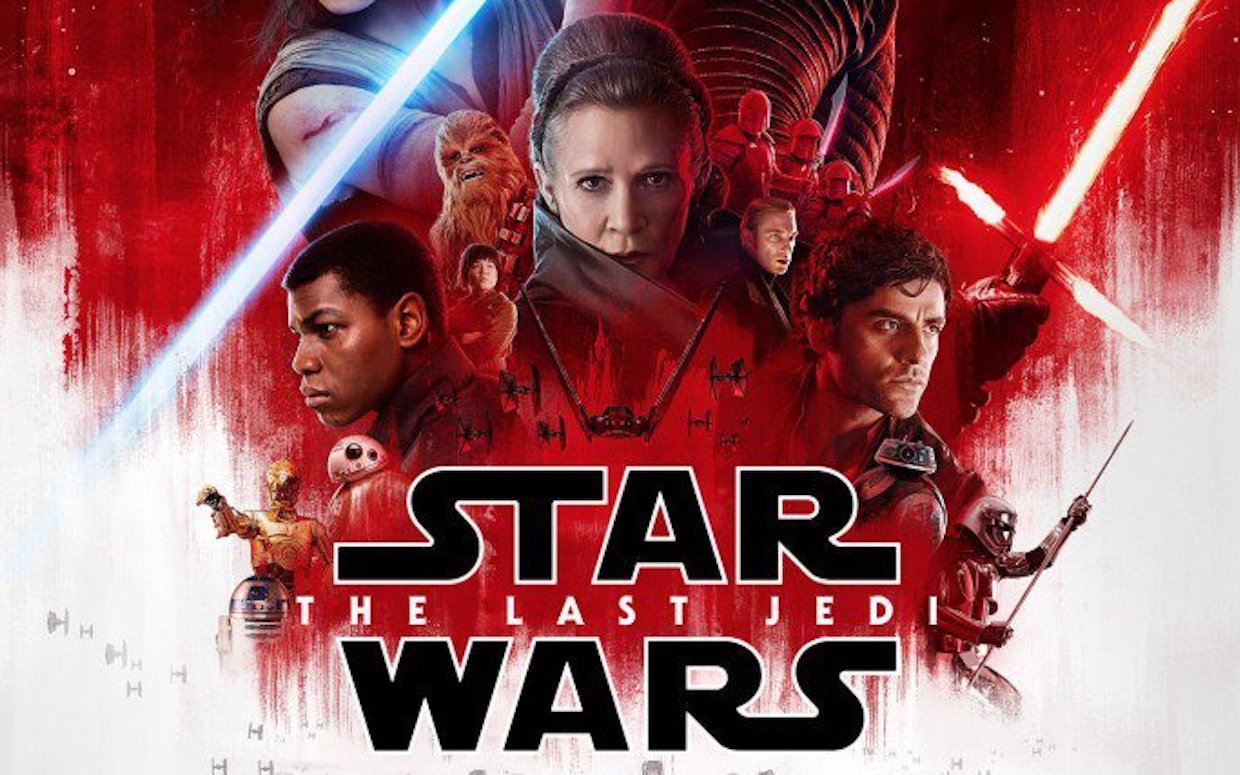
Random Encounters Special #1: Star Wars The Last Jedi - Episode 1 - What Did You Do, Rey?

Hey! After a nearly two-year hiatus, we are back for a Star Wars special! But, not a holiday special. Rather, we talk - at length - about Star Wars: The Last Jedi. We enjoyed it a lot, but still had to address some of the biggest controversies surrounding it, and why it is one of the most divisive films for a fan-base in ages.

Since we talked for over two hours, we opted to break it up into two episodes. This is the first part.


Thursday, January 4, 2018

Battlefield 1 (2016)


The folks at EA DICE decided the best way to freshen up the market of first-person military shooters was to go backwards, to World War I. The entertainment industry has never quite fallen in love with the War to End All Wars like it has with World War II, and it makes sense. Not quite as massive (though fighting occurred on most continents), primarily trench warfare, the technology wasn't as good, and there wasn't exactly a clear case of who the "bad guys" were, given so much of it was nationalism driving nations to war as imperial Europe came crashing down.

Not many games take place during World War I for those reasons. Off the top of my head, I can think of Red Baron, Sky Kid, Valiant Hearts, and Wings of Glory. Of that list, none are first person shooters, and for good reason. It is hard to turn World War I into a fun, action-packed shooter when the most common weapons of the conflict were slow, and enemies often fought hand-to-hand in muddy trenches.

DICE managed to get around that issue by effectively making it a World War II game. The speed and pace of battles is fast and furious, almost no different than previous Battlefield or Call of Duty games. Often, you find yourself running and gunning from checkpoint to checkpoint, just the same as any other military shooter before it. It feels a bit like a missed opportunity to try something wherein anxiety in combat stems from weapons that do not fire in rapid succession. It would be a complete change to the formula, but imagine a FPS wherein movement and accuracy were significantly more important than just wildly spraying shots after popping out of cover?

To be fair, they do add a little bit of that thanks to a key upgrade for the genre: larger, more open maps. There's so much space to maneuver, and because of that, more opportunities to flank or be flanked. The addition of artillery off in the distance of the map encourage motion. Staying in place too long can get you shelled. Additionally, they at least attempt to give players the choice to approach a level as they would like. Some campaign missions allow you to choose the order of checkpoints to take, for example. The size and space of the maps goes a long way to increasing the sense of scale of each battle.

Even more, stealth is encourage from time to time as well. During missions wherein you are completely alone, rushing into an area can be a horrible idea. The trenches can be filled with well-armed enemies, and the artillery and machine gun nests will make quick work if you're not careful. It isn't always the easiest, and first-person stealth can be a bit clunky, but this also works to give players more control. There are missions wherein you get to choose which outposts to take first and how exactly you want to go about it: quietly, or guns blazing.

The addition of stealth gameplay enhances the World War I setting somewhat. Given that you are frequently pressing on established enemy outposts, it makes sense that you would be at a huge disadvantage with just a bolt-action rifle while the enemy has fortified positions. Taking out some guards quietly makes a world of difference even if you get caught and the alarm blares.

That said, there are also plenty of missions that essentially betray the setting. The finale of T.E. Lawrence's campaign devolves into a chaotic event that is tedious and, at times, unfair. Artillery shells you from a distance while airplanes drop bombs above. Yet there isn't always adequate warning that you are in danger of being hit. Because the only way to damage the armored train is to shoot it with heavy weaponry, you are constantly running from one cannon to the next. When the game is at its most action-packed is when it decides to introduce more of a slow-loading element to the play. Every shot you take requires a time-consuming reload, which leaves you vulnerable. Getting out of the reload animation can itself take a moment as well, so you are liable to die before you even realize anything is headed your way. The slow loading makes sense, of course, but is an element completely absent from the game except for that point.

It feels a bit like the stories within the campaign are a bit try-hard as well. They're brief and not super compelling, often attempting to be emotional or profound without actually doing the narrative leg-work to earn it. The very first mission is great! You can't win it. All you can do is keep fighting until the game decides you get the point. Players jump around from soldier to soldier, fighting off a charging wave of Germans. When you finally get killed, a name and the birth and death year appears on screen. Then, the game thrusts you into the next soldier where the process is repeated. It is a shockingly powerful moment in a military shooter. Suddenly, these people who are dying on screen aren't nobodies. They aren't just avatars. The names and the continued failure really highlights the sense of futility soldiers must have felt during the Great War!

One can't necessarily fault DICE for not continuing that throughout the campaigns, but it would have been so much more meaningful if every time the player dies, they essentially transport into another soldier. Imagine if, rather than having death represent the player failing, each one represented another soldier dying. And imagine if after players clear the objectives, the game informs players of how many soldiers they got killed. What a profound statement that would be from a military shooter!

Instead, we get single-person stories that are too brief to earn the emotion they try to hit at the end. There's a bit of ludonarrative dissonance when you are playing a story in which the character you control is recounting a story from the war. Thus, players are playing an event that has already happened, yet the name and life dates show up whenever you fail. It feels extremely "gamey," and takes you out of the moment. Seeing the same name show up with their years of life really loses its power after the third or fourth time it pops up. In that way, the campaign stories all miss an opportunity to highlight the futility of WWI, or say anything meaningful about war itself.

The game is fun to play, with the maps and stealth elements key to improving the genre. That said, it fails to offer anything interesting as a result of its setting. It's really a WWII game. There are more automatic weapons than bolt-action rifles. The action is really fast-paced. And, when all it said and done, the Germans are still presented as the "bad guys." While not every member of the German national military was a Nazi, Call of Duty games largely presents battles with SS troops. The evil associated with that makes killing them almost cathartic.

This becomes a bit more problematic in a game set in World War I. I have no reason to feel satisfied killing German troops in this setting. They had no more desire to fight the stupid war than the Allied troops. There really could have been an interesting element wherein players control, say, a British soldier in one story, then a German in the other, to really get a sense of how bleak and futile and awful the war was. Instead, we are presented - yet again - with Germans and the Ottoman troops as the only bad guys. In one campaign, they are comic book villain-type evil.

Perhaps the best thing to say about Battlefield 1 is that it is fun, but could have been so much more than what we got. It's a solid military shooter to pick up if you are like me and haven't played one in a long time, but otherwise, completely fails to do anything half as profound as they appear to want to do. In some ways, it's the perfect game for World War I: a forgettable game centered on the Lost Generation.

Reductive Rating: It's fine.

Available On: XBox One, PS4, PC


Wednesday, December 20, 2017

Star Wars: The Last Jedi (2017)


WARNING: SPOILERS PRESENT THROUGHOUT


Star Wars: The Last Jedi is a bit messy, entertaining, oddly paced, and gets pretty meta. It also manages to pull off being very derivative while also functioning as a deconstruction of the original trilogy. It isn't hard to see why the film has been polarizing among fans, particularly the bigger, more die hard ones. Sometimes, it feels like writer/director Rian Johnson is even trolling them. Much of how one views it might boil down to how seriously they take classic Star Wars lore.

Characters are noticeably improved upon from The Force Awakens. Poe Dameron gets a substantial arc this time, as they somehow manage to balance his Luke/Han hybrid persona. (Arguably, he comes off more as a Han Solo type here, but there's still a little Luke in him.) Rey gets more meat here as well, largely because of her connection to Kylo Ren. These two characters work so well together, making each other more interesting. Leia and Luke, obviously, get more to do, too. Luke sort of reverts back to his self-absorbed nature we saw at the beginning of A New Hope, mixed with a little bit of cranky curmudgeon Yoda for good measure. A few new characters are introduced, but don't ultimately leave much of an impact.

It suffers some typical late-Star Wars structure issues, namely the need to split up into too many separate story threads at once. At one point, there are four completely separate plot threads occurring, and none of them reconnect particularly well. Pacing is also an issue. The Rebel fleet moving just out of range of the Star Destroyers lasts for a shockingly long duration of the two and a half hour film. The entire final sequence - while certainly awesome in many ways - also drags on a bit too long for its own good. And everything with Finn and Rose, and their overly convoluted plan, feels a bit disruptive.

Like its predecessor, this installment borrows a ton of beats and visual references from the original trilogy. They move pieces around a little bit - the "join me to rule the galaxy" happens before the final act, the Hoth battle happens at the end, we begin the film with the Rebels evacuating their base rather than by the end of the first act - but it largely takes a lot from past films. It's hard not to see where it's referencing the originals, and can sometimes induce a good eye-rolling.

However, where it comes off differently than The Force Awakens - and undoubtedly what many fans will get held up on - is in its function. JJ Abrams specifically structured his film as something of a Star Wars Greatest Hits because he was trying to capture the original's feel; to distance the new trilogy from the divisive prequel trilogy. Johnson, however, often uses these things to break down and deconstruct the preconceived expectations of fans.

Take, for instance, the big reveal regarding Rey's parents. One look at an internet comment section will show just how controversial the answer to this is. During the conversation between Rey and Kylo Ren at the climactic Good/Evil Force battle, like with Empire Strikes Back, we get a lineage revelation. We find out that Rey's parents were actually nobodies - some junkies who sold her off for a quick fix. To the biggest Star Wars fans, this feels like a total affront to the nature of the universe. For a long time, bloodlines have mattered a great deal. The prequels didn't help matters much by suggesting the Force is related to one's literal blood cells, thus making it evidently genetic. For the past two years, all we heard was how Rey had to be connected to some powerful Force user, like a Skywalker or a Kenobi, because that was the only way to explain why she was so quickly able to utilize its abilities. Here, we are told her parents are no one of any significance. "You have no place in this story," Kylo tells her.

This is presumably where many hardcore fans will get off. For so long, randomness has been absent in the Star Wars universe. As Obi-Wan said in A New Hope, "there's no such thing as luck." Destiny and prophesies, Chosen Ones, and balance was always preached. But that wasn't the case at the beginning.

When you go back and watch A New Hope, you can't help but realize how it is constructed to be a stand-alone film. Try to forget everything we know that happens after.  Luke is plucked from obscurity to go on and do great things. Sure, we learn that his father was a Jedi, but we know nothing else. At this point, we don't know he was Vader's son (and I'm still unconvinced Lucas did at this point either). We also know nothing of midichlorians in the blood. While training on board the Falcon, Obi-Wan says that the Force is what binds all living things together in the universe, implying that anyone can access it. Luke gets to obtain Force abilities in that film because he is the central protagonist undergoing the hero's journey. He isn't actually fated to do anything. In fact, Obi-Wan never makes him leave Tatooine. He's prepared to leave without Luke, until the Empire kills his family and takes away the only reason he had to stay.

The Last Jedi serves to remove all of that "destiny" stuff. Rey's lineage doesn't matter. She wants her parents to be special because we all want to feel special, to feel destined for greatness. Somehow, her parents being "somebodies" would put context on her place in the world. Sure, it creates more forced connections among characters, but the entire point of this trilogy is to get away from Skywalkers. It's to open up the doors for new Star Wars.  Kylo Ren isn't just talking to Rey when he says, "The Empire, your parents, the Resistance, the Sith, the Jedi...let the past die. Kill it, if you have to. That's the only way to become what you are meant to be."

This is ultimately the central theme of the new trilogy. It's really a series about fans. You've got Kylo Ren who wants to kill the past, and then you've got Luke Skywalker reaffirming that the past can never truly be killed. "Strike me down in anger," he tells his nephew, "and I'll always be with you. Like your father." On the meta-narrative level, this appears to obviously refer to fanboys. You've got some who have been railing against George Lucas for years because of the prequels, and you've got some who have been reaming Disney as well. No one hates Star Wars quite like Star Wars fans. No matter how much fans might try to disown the prequels, or how much they might hate the current trilogy, Star Wars is still clearly a part of their lives. The prequels didn't actually ruin anyone's childhood. The message here is that we can move forward without giving up the past. It is part of us, but it does not need to control us. This idea is also reinforced through Luke and Yoda's belief that the time has come for the Jedi Order to end (wait...was...was Count Dooku the good guy in the prequels?). It both gives us one last awesome Luke Skywalker moment (preserving elements of the past) while depicting the destruction of the Skywalker family lightsaber (letting go of others). (Subtlety has never really been Star Wars's forte.)

It is also worth taking a step back to re-examine The Force Awakens in this light. In essence, Kylo Ren and Rey - the two main characters - are themselves Star Wars fans. Consider the fact that when we are introduced to Rey, she is literally playing with a homemade Luke Skywalker action figure. She wears a Rebel helmet. It is clear that she has heard all of the stories about Han Solo and Luke Skywalker. She is, herself, a fangirl. The same is true of Kylo Ren. From his basic costume design, we can see a Vader influence. The black helmet, despite no scarring, and the vocal distortion all serve as examples of his fandom. At one point, we even see him talking to Vader's charred helmet. Where Rey is obsessed with the adventures of Luke, Kylo Ren is absorbed in the stories of Darth Vader. Rey hopes to fulfill a Luke-like role, while Kylo Ren spends the whole film trying to be the next Vader.

This theme also re-contextualizes all of the arguments about Rey being a Mary Sue character. Apart from those comments showing a slight misunderstanding of what actually makes one a Mary Sue exactly, it ignores the fact that this new generation of Star Wars characters - like us - grew up on Star Wars stories. Rey knows a lot because she - like us - is obsessed. One can only imagine how many times a Star Wars fan has "well, actually"-ed George Lucas. I mean, how many fans have wound up learning more about why Han Solo claimed the Falcon made the Kessel run in twelve par secs than what a par sec actually is in the first place? Any amount of time spent in nerd circles will reveal a number of hardcore fans presenting elaborate, highly specific questions posed to creators who often don't know the answers themselves. This does work in the context of this modern trilogy because this is the central theme. The current Star Wars trilogy is subtextually about fandom.

Many will still argue that Rey's parentage is structurally weak because they built it up in The Force Awakens as this huge mystery. It was all anyone could talk about for the past two years. To set up this big mystery, only to say that it doesn't matter, feels cheap. It feels like cheating. Certainly, people are entitled to that opinion, and it is not an unreasonable take. However, how much of these mysteries were actually established within the confines of The Force Awakens as a film? We wonder who Rey's parents are because she has never known them, and because there are a couple of occasions in which a character asks who the girl is before cutting away without an answer. These obviously make it seem like that matters.

But The Force Awakens kind of spells out how silly we are for making a big deal about it. Maz suggests Rey knows the truth about her parents, and that they aren't coming back (read: it doesn't matter now.) She even puts it pretty concisely, "The belonging you seek is not behind you, but in front."

It could not be more clear. Though there is value to remembering the past, we are not beholden to it. This trilogy gets back to what kicked off the franchise: it isn't about destiny and prophesy, it isn't about privileged bloodlines. It is a hero's journey for a new generation who grew up on tales of the past, just like Luke did. The Last Jedi serves to deconstruct the fandom. Rey's parentage is only a mystery that matters because we made it matter. Her parents don't matter to this story. The only thing her being a child of Luke would do is add some additional connection between her and Kylo Ren, but they're intrinsically connected by the Force anyway that it doesn't matter. Her being a child of Obi-Wan (as was occasionally theorized) matters even less. It "explains" her abilities with the Force, but only for those obsessed with canon and the expanded universe.

The same thing is true of Snoke. Many fans have complained that he also turned out to be nobody. And yet, The Force Awakens makes his backstory seem even less significant. What his origin story is literally does not matter to the story they are telling. He fulfills the role of a modern Emperor Palpatine. No one wondered about Palpatine's backstory when he first shows up in The Empire Strikes Back. We know everything we need to know for that story: he is in charge of the bad guys, he is powerful with the Force, and he managed to convert Anakin Skywalker. That's it. We genuinely did not need an entire seven hours in prequel films to explain more details. We know that backstory is unnecessary because we survived for over a decade without it. It fills out the expanded universe and the larger lore, sure, but it is virtually unimportant to the main story or the primary themes of the original trilogy.

Moreso than Rey's lineage, the mystery of who Snoke "really was" turned into a two-year debate exclusively because of the fans. Some will argue that given the "rule of two" as established in the original and prequel trilogies, Snoke couldn't have existed. How could there have been this third super powerful Force user on the Dark Side if there were already Palpatine and Maul, followed by Palpatine and Dooku, and then Palpatine and Vader? Thing is, it is pretty well established that the Force is accessible to many people. The current trilogy has already set up that just about anyone can become in tune with it (see: Rey, or the boy at the end of The Last Jedi), regardless of bloodline. (This itself is both canonically reasonable and creatively liberating for writers, by the way.) We also know the Knights of Ren are a group of Dark Side Force users, so there can, in fact, be multiple Dark Side users in existence (which was also true in the expanded universe, not that that matters). Is it really so unbelievable that Snoke was just a Force-sensitive nobody during the previous trilogies, who became more powerful over time and then took advantage of the power vacuum left by the Emperor's demise?

In fact, Snoke being a nobody is absolutely thematically relevant. This trilogy is all about giving new characters a chance to enter the fray, to send a message that anyone can be empowered to rise above their station. Snoke being a nobody who rose to prominence in the decades after Return of the Jedi thematically connects to Rey's rise as well. Sure, if you hate that Rey is a nobody who is powerful with the Force, you're going to hate the same thing being true of Snoke, but you can't ignore that this is consistent within the context of the films they are making.

Rian Johnson deliberately subverted expectations. Aware of what the conversations were, he chose a path in which no one was right in order to push the universe forward. Star Wars cannot continue as a film series if every film, every character, and every plot point has to somehow connect to the original trilogy. He and Abrams wanted to make something new while honoring the old, and you can't do that if nothing is ever going to be more important than the original. The future is built upon the past, but is not beholden to it. (In some ways, they seem to argue that obsession over order makes some fans similar to the First Order.)

This theme is also embodied through Luke's story. Like Kylo Ren, he opts to disown the past. Though also like his nephew, he still struggles with it. He spends much of the movie refusing to be the person he was in his previous arc. He, too, doesn't just address Rey when he says, "What did you think was going to happen?" He then describes a hypothetical situation in which Rey, being a fan, expected him to pick up his "laser sword," march on out there, and take on the whole First Order himself. It felt a bit like many fans wanted to see something similar, which might have been kind of neat fan service, but would not have been very compelling cinema. It is only at the end that he recognizes that renewing past legends will do more good than he can do now as an aging Jedi Knight.

You've got characters desperate to kill the past and characters aching to preserve it. Yet the film argues, like the Force itself, balance is important. The more Kylo Ren tries to escape the past by destroying it, the deeper he falls into the Dark Side. Conversely, Rey can't reach her full potential as a Jedi if she continues to obsess about her own past. Where Rey sees more upside is that she appears poised to find that balance. (Given the nature of Star Wars, it seems likely that Rey will complete her Jedi quest by letting go of her lineage hang-ups, while she also preserved the sacred Jedi texts that were destroyed. Seems likely this is where her arc goes.)

There are other things the film addresses, certainly to the chagrin of many fans. We do sort of get an explanation as to why Rey is so in tune with the Force, though many probably hate it. One of the biggest concepts talked about ad nauseum in the previous six films was "balance to the Force." No one has ever really known what that meant. Snoke specifically tells Rey that he warned Kylo Ren that the stronger he became, the more likely an equal power from the Light Side would rise up to meet him (balance). He thought it would be Luke, but it turned out it was her.

Criticism of this approach to balance is understandable, but it cannot be said that they don't attempt to explain it. Fans unsatisfied by the answer is not the same thing as the filmmakers not trying to answer. This concept further enhances the connection between Kylo and Rey (in a more interesting way than if it had turned out they were cousins). It also explains why Kylo Ren often appears more in control of the Force. For as much as people complain about Rey being too powerful, she is often depicted as becoming more unstable and unpredictable the more she taps into that power. She can do things other Jedi might not be able to, but she doesn't ultimately know how or why, and it comes at a greater risk.

The entire point of this trilogy is to move away from the Elites of the Star Wars universe. Consider that the prequels were about a literal messianic figure of a virgin birth, who falls in love with a princess, and drama unfolds. Then recall that the original trilogy is about the son of that messianic figure off to rescue a princess, who happens to be his sister. And then consider that the major drama set up in this new trilogy is about the nephew of the Messiah's son falling victim to the Dark Side because his uncle became self-absorbed with his own reputation as a savior figure.

By virtue of Rey and Snoke being nobodies capable with the Force (in addition to other main characters like Finn or Rose being nobodies on their own mini-hero's journeys), the new trilogy almost appears to indicate that something new is happening with the Force itself. As if the Force were seeing some kind of...awakening...That Rey has become so powerful to act as a counterbalance to Kylo Ren, and that we see that kid at the end use the Force, suggests that something bigger is happening than just the classic Jedi/Sith battle that's lasted ages. (It's as if Benecio Del Toro wasn't just referring to the Empire/Rebellion war as a "machine" that generates tons of income for elite profiteers... "They blow you up today, you blow them up tomorrow." That can't be the formula for an indefinite future of Star Wars films. The DJ stuff is a more obvious meta-commentary about Hollywood franchises.)

And about the Force: without question, one of the biggest talking points will be Leia's moment. People seem to be in agreement that it was poorly executed (it was), but torn on the concept of it. Blown out into the vacuum of space, we see her use the Force to protect herself from the cold, then uses it to pull herself back to the ship. As many say, she had a Mary Poppins moment. Visually, it looks pretty silly. Conceptually, the idea of her using the Force to pull herself to safety is fine.

The common complaint is that it feels like they're just making up the Force as they go along. Easily one of the strangest criticisms, this ignores the rich history of making it up as they go. In the six previous films, they have - at random - decided the Force lets people read other people's minds, lets them control other people's minds, lifts objects, gives people physical balance, shoots lightning out of their hands, chokes people, creates force fields around them,  lets people jump really high, dash off with super speed, and literally become ghosts! They've always made it up on the fly. Frankly, we should embrace the limitless possibilities of the Force rather than restrict it. The more it gets concisely defined, the less interesting it is.

Johnson also subverts classic Hollywood storytelling as well. Many describe Finn and Rose's story thread as being completely unnecessary, primarily because they fail in the end. (This is, interestingly, not a complaint of Empire Strikes Back, wherein Luke fails in his plan when he goes to Cloud City.) Like in Empire Strikes Back, though, it isn't so concerned with the plot itself as much as the character and thematic moments. While pacing in Canto Bight is clunky, and it does come of as disruptive to the main story of the fleet battle, we need this to get more character growth for Finn. Rose might ultimately be a unnecessary to the larger plot, but she is absolutely necessary to giving Finn growth as a character. It is Rose who opens up his eyes to the larger impact of the First Order's spread, to show him that the evils of the universe are not restricted to just their domain. That inequality and oppression exists outside the confines of the new Empire. It is Rose who shows Finn a greater reason to fight beyond, "My friends are here." He was all set to abandon the Resistance in order to protect Rey. It is because of Rose that he learns that the cause is worthy to commit himself to.

Poe's story arc is interesting, but misses one key line of dialogue that would prevent the main complaint people have with it. Many have been quick to note that his entire story becomes unnecessary if Admiral Holdo just tells him the plan. Hard to argue that poor communication led to that mutiny. It was indeed an easily avoidable situation. Personally, it didn't bother me because I've had bosses who could have avoided a lot of drama if they just told me what was going on. Given that they do establish that there is a chain of command, and that she appears early to be into that, it can be understood that she felt no need to explain herself, that indeed constantly being questioned sets a bad precedent. Look at how the real life military works. You better believe no Admiral in the Navy is going to tolerate that kind of behavior from a subordinate. Additionally, I enjoyed the idea that not every rebel Admiral was perfect. Not everyone is great at everything, and the idea of an Admiral who did not feel compelled to explain her plans to everyone just sort of makes sense.

That said, this is also a problem easily avoidable. Recall that the only ones who seem to know how the Empire is tracking them through lightspeed are Finn and Rose (and later Poe when they tell him their plan). Admiral Holdo has virtually no information about that. For all she knows, there could be a spy on board transmitting their location. Given the plan was to create a distraction, one can easily see why she would not shout out these secret plans in front of everyone. This is not conveyed at all on screen, however. A simple one liner from someone about how there may be a spy on board would actually completely absolve this thread of such criticism.

There are plenty of smaller things. The humor feels a bit contrived at times, which many have used to criticize it comparatively to the original trilogy. On this point, I feel part of the issue is that modern Star Wars films see a lot of modern Hollywood filmmaking tropes and techniques. Some have claimed there was too much slapstick (I'm not sure I saw anything particularly "slapsticky" here, really), but it is worth keeping in mind that they are still attempting to make Star Wars accessible to children. We adult fans cannot and should not lose sight of that. We loved Star Wars as children. That's sort of how we all became grown up nerds. If today's generation of youth like a little more slapstick (which is completely fine!), then it makes sense for them to include perhaps a bit more of that element than we adults might prefer.

I have to admit, The Last Jedi drew a very noncommittal response upon first viewing. I felt fine about it. Didn't love it; didn't hate it. It was fine. I had more complaints than praises. However, once it clicked upon review what the film was doing, how meta it was actually being, and what themes it was tackling, everything just worked a lot more. It completely re-contextualized everything both in this film and The Force Awakens. Two films in which, especially with the specifics of this one, we have a clearer image of what they're attempting.

If you can heed the advice of Jedi Masters, who essentially preach the need to just chill and relax, The Last Jedi might very well be the smartest, most complex, and most thematically ambitious Star Wars to date. Let go of your anger. Find that balance of the past and future. And just enjoy it, man. This is by no means as bad as the prequels, but honestly? If you enjoyed the prequels, great! The originals will always be part of our lives. We can watch them again at any time we want. That can and should be enough.

Anything else is just a nice benefit.

Friday, December 15, 2017

Resident Evil VII (2017)


Survival horror has seen a bit of a comeback in recent years. It is a bit hard to look at Resident Evil 7: Biohazard without seeing influence of other popular games like Alien: Isolation or the incredibly horrifying experience that was P.T.

Visually, it appears to take a lot of cues from Hideo Kojima's brilliant P.T. With a slow-moving character in the first person perspective, players must cautiously explore the creepy, disquieting Baker family mansion. Obviously, where it deviates is in the gameplay. P.T. was meant to be a single, relatively quick interactive experience. Because they wanted to make the game as horrifying as possible, they needed it to be quick. Designers have to create a delicate balance with horror games. Make it too scary; players are liable to drop out and stop playing. You want the game to be frightening, but not so much that players don't want to keep going for fifteen hours. So, P.T. can be completed within an hour, which is perfect.

Resident Evil 7 is a relatively short game itself, capable of being finished in anywhere from eight to twelve hours. That's actually a pretty good duration for it, frankly. (I enjoyed the game quite a bit, but was glad to be done playing it by the time the credits rolled.) The pacing is solid, with stretches being incredibly tense and slow-going - particularly when a member of the Baker family is giving chase - but also periods of relative calm and quiet, allowing players to explore with only the occasional run-in with the Molded monsters.

In terms of the gameplay, it might be more appropriate to compare it to Alien: Isolation. To be completely fair, these games do different things for different goals, and any comparison isn't an exact 1-to-1 situation. Still, the similarities are noticeable. First person shooter in which a big, bad, indestructible enemy will give chase while you find your way through the map. Instead of a xenomorph stalking you through the levels, it's Jack or Marguerite. You can't kill them, although you can inflict enough damage to take Jack down for a few moments. Instead, you have to try and escape their notice while advancing through the level. You also collect items that you can combine to create useful resources.

None of this is pioneered by Alien: Isolation, of course. And this is where the two games really diverge. Alien: Isolation does a good job balancing a sense of powerlessness against the alien with the empowerment of objects you can create and deploy to distract it. It's always tense, but there's always a variation of actions you can take. Resident Evil 7 leans more to the tension in powerlessness. There isn't a whole lot you can do. You walk and even run slowly. Ammunition is limited, so every shot feels significant. (There is no worse feeling than completely whiffing on a head shot.) The materials you can craft primarily contribute to boosting a few stats or creating special ammo. Otherwise, it's largely just a shooter.

This isn't inherently a bad thing, obviously. Again, different games doing different things. The more player actions in Alien: Isolation allows the game to be a little more interactive and, thus, a little more fun. It's tense, scary, and entertaining while Resident Evil 7 is mostly just tense and scary - which means the game is successful at what it does. It's hard to fault anyone who subsequently finds the gameplay a bit boring, but these elements work to creating the atmosphere of terror and intensity. Late in the game, it sort of devolves into a bit of a generic first person shooter, but because it lacks the speed and smoothness of an action game in order to achieve its tension, it still feels overwhelming to be shooting at multiple enemies.

However, there is one aspect of Alien: Isolation has that makes it a better horror game overall: randomization. Sure, there are certain stretches in which Resident Evil 7 randomizes where one of the Bakers is, but overall, every level is the same. It's the same layout with the same enemies spawning at the same locations. This effectively means that each level is intimidating...once. Running through the basement of the main house for the first time is suspenseful and scary. You don't know when and where Molded will come out from. When they suddenly drop from the ceiling right as you enter the door, it is startling and will force you to react quickly. It's great! But if you manage to get killed and have to restart (or if you run out of ammo and have to restart - since there's no real way to actually take out Molded with your knife, even on "easy"), well, the second time through is substantially less tense. You can take it slow, but you still know where everything is. You can plan a lot more effectively, and the sense of fear is completely removed.

Boss fights are another area where this can be a problem. Firstly, the controls work for the normal levels, but their clunkiness doesn't really feel at home facing off against the bosses. Often, they feel designed for normal FPS mechanics, which the game doesn't have because the ordinary levels are designed for the slow, tense, survival-horror mechanics. The bosses are there because it's a video game and there needs to be bosses, but it can easily feel like you're fighting the controls more than the enemy (especially in most of the Jack fights). Horror games lose something when that fear turns into confusion as to what to do, which turns into frustration. Constantly repeating fights goes a long way to removing the terror from the game.

Alien: Isolation avoids both of these issues. It doesn't have traditional "boss fights" at all. Easy fix to that one. And while many stretches of Sevastapol have the same enemy lay-out (a section, for example, will always have X number of androids in one room, or the same humans show up in another room), but the xenomorph appears at random. You can get a sense of where it tends to show up more frequently, and you can help yourself by keeping tabs on the vents and ducts, but even when you know it can show up, you never really know when it will, or where it will. Repeating the same stretches still feels tense because of this randomization, which is relatively constant through the entire game, save the early part and a few small stretches later. In essence, if Resident Evil 7 is a tad scarier upon initial playthrough (and I think it is), Alien: Isolation retains that tense atmosphere upon repeated playthroughs.

The story of Resident Evil 7 is somewhat forgettable. One doesn't exactly pick this game up for its narrative. Perhaps the worst thing it does is leave one plot thread dangling so openly for some DLC that it feels a bit sleazy. It doesn't help that that particular thread is kind of uninteresting, and that the character in question isn't exactly a presence throughout the game. Players might even struggle to remember that there was no conclusion to his storyline, which, for as blatantly as they did that for DLC, is indicative of poor execution. Watching video tapes is an interesting, yet confusing addition. Occasionally, you will find a VHS tape and can pop it into a VCR to play a new level of someone apparently holding a video camera. These can be tense moments given no one has any items, so you are completely defenseless. Still, in terms of the narrative, it makes no sense. If you are watching the tapes as Ethan, why do you then have to play the tapes as the player? More, why is it possible to fail and effectively get a "Game Over" screen during one of these side quests? They try to use the tapes as quasi-puzzle solutions, to inform players of where to go next, but it still feels unnecessary and often tedious.

One area the game excels generally is in its implementation of VR. Unlike most games, which incorporate only a few levels for the virtual reality experience, Capcom opted to make the entirety of Resident Evil 7 playable in VR. The game overall relies too often on Hollywood jump scares, which is actually pretty annoying, but it's still extremely discomforting to walk around the Baker house in the VR environment. Honestly, I had to stop with the VR after the first hour because it was borderline traumatizing. It really highlights the potential of the technology for particular experiences. The graphics for VR still aren't great enough to merit being the preferred way to play, but if it's possible to experience a little bit of it, definitely give it a shot!

I've never played any other game in the franchise, other than a little bit of Resident Evil 4, so I have nothing to offer in regards to its standing in the series. It is a solid survival horror game that has a number of noticeable flaws, but still succeeds in creating tense moments. It isn't amazing or anything, but it is easily a good choice if you're looking to pick up a spooky game for Halloween.

REDUCTIVE RATING: It's Fine.


Sunday, December 3, 2017

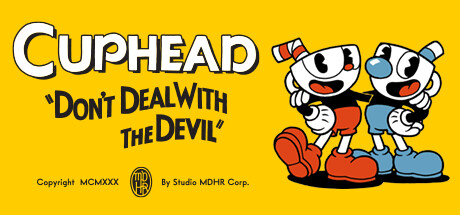
Cuphead (2017)


, I decided to make the review of Cuphead a more time-consuming one to do. Instead of a too-wordy and incoherent written review, here's a ten minute video analysis.


Sunday, November 26, 2017

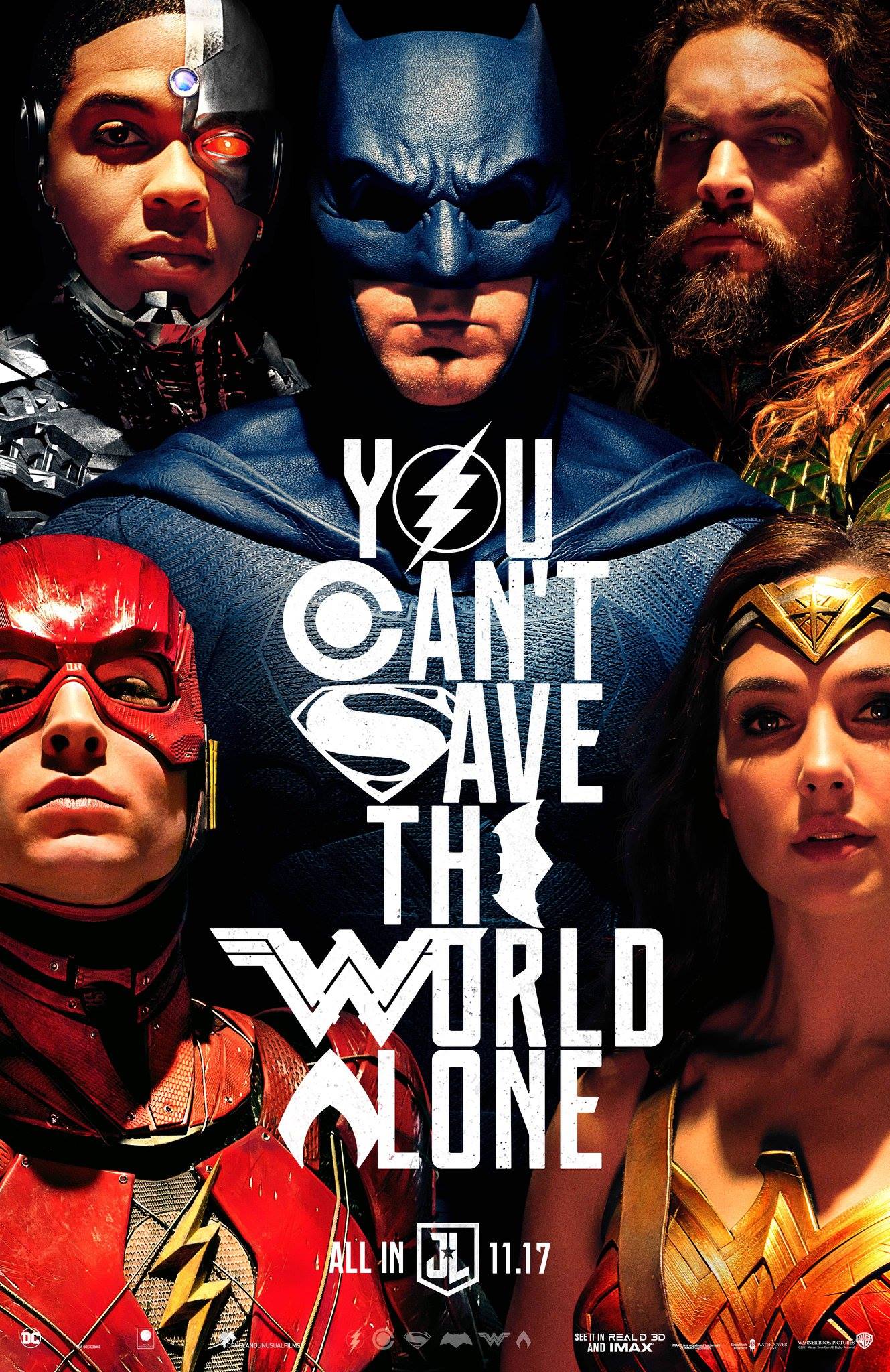
Justice League (2017)


Justice League is... ok? I guess? I keep trying to figure out a better way to start, but there isn't really much more to say about it. It's not the hot mess that Suicide Squad was. It isn't the fundamentally broken and jumbled disaster that was Batman v. Superman: Dawn of Justice. It isn't the misguided, but respectable effort that Man of Steel was. By no means is Justice League the worst effort in the DC extended universe. It is a very middling affair. Oddly enough, that is quite an accomplishment.

The production troubles for the film are well-documented. Zack Snyder, who was most successful at dividing audiences with Man of Steel and Batman v. Superman, appeared to launch a franchise to rival Marvel or Fox. Then, he stepped away after his daughter, sadly, committed suicide. Though much of the film was done shooting, Warner Bros. brought in Joss Whedon to finish the project. Whedon, likely under the guidance of studio notes, sought to bring a lighter and more fun sensibility to the Snyder-verse- itself likely the result of May's Wonder Woman, which was positively received. What we're left with is a film that doesn't feel exactly like a Whedon film, nor does it feel like a Snyder film either. Whedon wound up reshooting a bunch of scenes (famously requiring the CGI removal of Henry Cavill's mustache, which he had to grow for Mission Impossible 6, in post-production). It ultimately isn't difficult to tell which scenes were shot by Snyder and which were done by Whedon.

Continuity issues arise, inevitably. Sometimes, you've got someone with a different wig. Others, a character suddenly dons an additional article of clothing that seems impossible to have missed, but they did. There is also a strange look from scenes clearly adjusted in post. For example, when Superman returns and is confused so he attacks the Justice League, the trailers indicate that scene takes place at night. In the final cut, it's altered to take place in the day. This is clearly a Whedon change, given that Snyder has never framed an action sequence in clear daylight. Even when he does set things during the day, he puts the light through a filter to wash it out. Not dark and dreary enough, ya know?

The biggest issue is the tone, which is - at times - all over the place. In one scene, they focus on the Justice League planning to rescue hostages. Cut to Steppenwolf violently murdering a woman. Cut back to the Justice League with the Flash making a bad, inappropriately timed joke. What are we supposed to be feeling here? Are we supposed to be concerned about the safety of the hostages and the superheroes, given we just witnessed a pretty violent murder? Are we supposed to be just "enjoying the ride" and laughing because of the bad joke? In terms of narrative and characterization, the film is relatively consistent, but its conflicting, incoherent tone is something that sets it apart from the previous Snyder films - which are all awful, but Snyder at least keeps a consistent tone (on the most part).

Justice League might be more fun than Batman v. Superman and Man of Steel, but it is still inherently broken by virtue of functioning as a sequel. The film doesn't *really* work if you remember anything about Batman v. Superman: Dawn of Justice. They largely try to avoid issues with their current plot by ignoring that the last film even happened at all. For example, a central point of Justice League is that Superman was a beloved figure and without him around, the world is devolving into chaos and violence. There is no one to stop it, and no one to inspire the people to be their best selves. Ok, fine. As a starting point on paper, that's a fine set up. Except to start there, you have to completely ignore Batman v. Superman, in which the central source of conflict was around the fact that Superman was a very polarizing figure who was feared and hated by a huge chunk of the population. (It's the entire reason Batman wanted to kill him, and the source of Superman's own internal conflict about his role and standing in the world.) Well, ok, so just pretend like this is a new movie and it's fine. Except you can't really do that because Justice League itself references events in Batman v. Superman multiple times.

Which is the core problem right now with the DCEU. It's clear that they have no idea what they want to do with these properties or this universe. They hired a guy who obviously doesn't care much about Superman to kick things off, and have been trying to figure it out after that. The success of Marvel - the studio who has meticulously built a cinematic universe over the course of a decade, spanning seventeen films - has them desperately playing catch-up, thus not giving us enough background or insight into characters like the Flash, Cyborg, or Aquaman. There's also a tendency to want to stand out from Marvel, hence the darker, more brooding characterizations, allowing Zack Snyder to build his universe in earnest. Just before the release of the film, Warner Bros. came out to say that they weren't really building a singular "universe" and that each film should be viewed as its own thing.

Nowhere is this attitude more confusing than Justice League. If they truly aren't trying to build a "universe," then why launch Justice League off the back of Batman v. Superman? Why make it so that key plot points of this film (i.e. Superman is dead and the motherboxes are on Earth) are introduced in the previous film? Even more, if you cancelled the initial sequel to the film (which they did - originally this was going to be in two parts, but they reduced it to one), why add a post-credits sequence that set up a sequel?

Ok, well, we've seen stuff like this before. After all, Sony teased a Sinister Six movie at the end of Amazing Spider-man 2. We never wound up getting that Spider-verse that they had planned on. Plot points from that franchise were ultimately left dangling because it was so critically panned and under-performed at the box office that Sony cancelled all future plans for the series, ultimately giving the creative reins back to Marvel. What feels different about Justice League, however, is how openly troubled the production of the film was, and how confusing the future of the universe is. Granted, many casual viewers might not be aware of anything going on outside the film itself, but if you do follow movie news, then you would likely be going in knowing that Warner Bros. doesn't currently have plans to make a follow-up film, nor do they appear committed to universe-building. So when you get to the end and they tease a Legion of Doom sequel, it's...confounding. Am I supposed to be hyped for that? I mean, you just said you weren't making a sequel. Am I supposed to be thrilled you introduced Deathstroke? You just said you aren't building a shared universe!

Warner Bros. is still having trouble figuring out what they want to do. This is mirrored in the film by the Superman problem. Since the universe has been centered around creative forces that are obviously not big fans of the characters, there is a bit of a problem with Superman. They don't seem interested in getting his character right. On top of that, they don't seem able to figure out how to utilize him. Once Superman shows up to the final battle, he single-handedly retcons the need for a Justice League at all. He takes out Steppenwolf without taking a single hit himself. He even pauses to save a bunch of civilians trapped in the area.

Much has been made about how they finally got his character "right," and I guess that's true? Sort of, at least. He's definitely more like the source material than the previous films, but he's also only in the film for a few minutes and primarily serves as a plot device to save the day. This contributes to the popular idea that Superman is a bad character because he's overpowered. Steppenwolf is a bad, under-explored villain (who also looks like CGI garbage), but he's of another world and related to Darkseid. Why can't he get in even a few hits? You can still have Superman get punched or throw into a wall and have him win, ya know. It doesn't even call the Justice League into question if you spend more time getting their characters right.

See, in the comics and the animated series, the existence of Superman never rendered the Justice League pointless. Sure, Superman has more powers than everyone else and is stronger than everyone else, but he isn't usually presented as invincible. Other characters are also generally regarded more powerful. Wonder Woman, for example, is often presented as nearly as powerful. In the film, however, she gets in one headbutt that doesn't really phase him. This isn't a problem with the character of Superman; it's a problem with the writers. They don't like Superman, they don't care about Superman, and so they don't know how to write Superman.

The characterization of each member can be a little jarring as well. This has to be, without question, one of the dumbest portrayals of Aquaman ever. (Side note: can we please retire the, "You talk to fish" joke? I don't know how other fans feel, but it's getting really annoying to see so many writers act embarrassed about the material they're working with. Aquaman has been a great character for decades, and he's still being treated like a joke by creators.) The Flash is likely going to be polarizing. I enjoyed Ezra Miller's performance on the most part, but some of his jokes are forced and inappropriately timed. (He also looks like a person who has never run before. He runs weird, is what I'm saying.) The speed force looks pretty cool, though. We've now seen three speedsters represented in films, so it can be tough to present the same power we've seen before in a new way. Justice League provides that. And Cyborg is...not the fun character you might remember him being. He's solid, but is clearly the biggest victim of the director change and the studio mandate to be no longer than two hours. There's a lot of story missing for him, but given his significance to the plot, there has to be more on the cutting room floor. Ben Affleck, meanwhile, looks bored and eager to get out.

Wonder Woman unquestionably fares the best. She has stepped into the role of Superman, being the inspiration for many and the glue of the team. Her compassion and skill make her the beacon of light and hope that would normally be Superman's role had they bothered to get him right. It's what makes her the best character in the DCEU. (Of course, she and the Amazons don't escape the male gaze, in which her skirt is arbitrarily shorter, and they hold longer on slow-mo shots of her in motion to expose more of her legs and butt. Male objectification aside, Gal Gadot actually continues doing a good job in the role.) Surely, if the universe is going to move forward with some form of continuity foundation, Wonder Woman has to be the centerpiece.

As a film, there are a lot of problems. It's not as obtrusively bad as Batman v. Superman, but it's also not as try-hard as Man of Steel. You will likely forget almost everything about it once you've left theaters. It's bad, but it might have enough elements people might enjoy to be tolerable.

REDUCTIVE RATING: Bad.