Thursday, June 29, 2017

Baby Driver (2017)


WARNING: SPOILERS PRESENT THROUGHOUT THE WHOLE PIECE.


Edgar Wright is a fan of many genres. Every one of his films has included a heavy dose of nods, references, homages, and influences of previous classic films of a particular genre. Baby Driver is no different, lifting heavily from the heist/car chase repertoire. What makes it stand out, however, is the way it utilizes the soundtrack.

It's not quite accurate to call the film a musical, although it's easy to see why some have jokingly done so. It isn't even a movie about music, a la La La Land. Rather, the music drives everything, from the story pacing to the character beats, and especially the action. Everything is meticulously synced up to the soundtrack. We've seen this before from Wright. You can find little examples of this in prior works. Shaun of the Dead's scene in the Winchester pub, beating the zombie bartender to Queen's "Don't Stop Me Now" is a perfect example. In hindsight, that gag almost seems like practice for Baby Driver, which utilizes everything from gun shots to money being flipped through to car doors slamming in rhythm to the music. We can also look at Scott Pilgrim versus the World as a warm up, seeing as how that film had music central to the plot, characters, and action as well.

Overall, Baby Driver might lack the same amount of depth and number of layers that the perfectly crafted Three Flavours Cornetto trilogy had (especially The World's End), but it is very much as well structured. Wright is a master at setting everything up. It's little things, like Baby's ability to quickly memorize song lyrics and heist plans, which pays off in one of the most perfectly executed jokes in the third act. It's the scene about the bull on television coming back to apply to one of the characters. It's neat little side details, like the whole bit about how the "moment you catch feelings, you catch a bullet," paying off with Doc getting shot within minutes of deciding to help Baby (the first time he displays anything resembling human emotion).

It's also more interesting or significant things. Wright sets up the fallout with Buddy in a clever fashion that pays off with a genuine "twist" of sorts. Buddy seems to be one of the crew at the start that likes Baby, going so much as to share his earbuds, listening to "Brighton Rock" by Queen and being friendly with his driver. By the end, the actions are similar, but everything has been reversed. When he shares Baby's earbuds again, listening this time to Barry White, it is as an enemy. "Brighton Rock" comes back for the final showdown. Nothing gets thrown away. Even the name "Buddy" should have been an indicator. Wright loves playing around with character names as plot clues. By naming a character "Buddy," he is essentially subverting his own trope, which helps keep things fresh, unpredictable, and exciting.

This is the kind of stuff that makes me love Edgar Wright. His works have trained me to watch films in a very different way than I would, say, a Marvel Studios flick. I'm always paying attention. If it weren't Wright, I likely wouldn't have noticed things like the police lights colored clothing in every single washing machine at the laundromat while Baby and Debora were on their date. It serves as a subtle reminder to the audience that despite Baby's best efforts to get out of the heist business, he's still ultimately a criminal and can be discovered and arrested at any point. He might think he's out of the game, but he'll always be a fugitive.

References and subtle connections require a bit more obsessive diving into because of the soundtrack component as well. For the most part, I've been able to pick up on so many little things in his films just by watching them a bunch, whether it's the names of characters pertaining to their fate in Hot Fuzz or the Jackie Chan reference in the drunken action of The World's End. Here, I feel like I have to dive into the soundtrack as well. Doing so highlights the solid nature of the "B-a-b-y baby" repetition correlating to the song, or just how perfectly each song is selected. There are the obvious ones, like "Never, Never Gonna Give You Up" by Barry White, with the line being sung over by Buddy, "I'm never gonna quit. Quitting just ain't my stick." A bit on the nose, sure, but there are many examples of this made more clear by really digging deep into the soundtrack. He's careful to make sure you get it just by watching, of course, but there is enough there that for those who want to obsess over it, there's a bit more material to dig into.

Wright also loves to structure his films almost like visual essays. In pretty much every one of his films, the entire plot is explained in a manner of a few sentences by some character. Ed details everything that is about to happen in Shaun of the Dead while they're drinking in the Winchester post-break up. In Hot Fuzz, Danny basically describes every action that will happen in the end while bugging Nicholas Angel about action movies. None were as clearly stated as in The World's End. It isn't obvious until you re-watch the film, but the entire opening backstory literally spells out the entire plot of it. The same thing happens here. It comes from the briefly featured Griff, who essentially lays out Baby's character arc outright. It's one of those characteristics of Wright's films that train his fans to watch a bit more actively. People want to catch that stuff, but it's often so well woven into the fabric of the dialogue and acting that it can be difficult to suss out what is the "introductory paragraph" of the movie.

Baby Driver also stands out for somewhat similar reasons as Mad Max: Fury Road did: practical effects. In an age where relying on CGI cars for the "crazy stunts" is pretty common, these two films relied on stunt drivers. The rules are pretty clear because they abide by actual, real-world physics. (Mad Max: Fury Road occasionally embellishes this through CGI, but it's still centered around real vehicles doing real stunts.) When you see a car in Baby Driver drift, it's actually doing so in a manner that is possible. That reality-driven action gives everything more weight and makes it more exciting. Watching cars parachute out of an airplane is fun and all, but it's not nearly as exciting as watching one pick up truck push another underneath a tractor trailer before swerving out of it. Wright has always had a good sense of action, building things off of practical stunts and effects, and knowing when and how to properly embellish or utilize CGI. Scott Pilgrim actually used a lot of real stunt work as well, but was cleverly masked by the super stylized look of the comic book/video game nature of that world.

Even more, Wright really lets the audience do some of the work. Sometimes he resorts to cliche exposition dumps, although usually as it is a trope of the genre he's taking from. On the most part, though, he lets a lot of little details go unexplained. Baby Driver probably does that more than any of his past works. We get little hints of backstory or character revelations without having things spelled out in full. Was Bats right about Buddy and Darling? We don't know, but it isn't hard to imagine he is. Then there's the whole reversal of Doc, who reveals a ton just by saying one line of dialogue. "I was in love once," is all he says, and it explains so much without going into detail.


There's a ton of subtle stuff in there. Consider the scene in which Baby pulls out a pink and glittery iPod to play the song "Debora." They don't spell it out, but one gets the idea that he has never actually bought an iPod of his own. His died in the car crash with his parents. Rather, he has inherited iPods from the cars he stole as a younger boy. Those iPods aren't his, which explains why his playlist can go from the John Spencer Blues Explosion to Carla Thomas to Jonathan Richman & the Modern Lovers to the Damned to Queen to Young MC. He buys music, sure. His record collection probably stacks up with anyone else's in Brooklyn or the Pioneer Valley! But he's generally learning about new music through jacking cars (which is why he didn't know the band was T. Rex and not "trex").

It also applies to character traits. Griff pretty much hits the nail on the head when he describes Baby as someone who thinks he's better than the others. Constantly donning headphones and sunglasses, it's an attempt to place himself outside the goings-on of the thieves themselves. A young man, he clearly thinks of himself as more righteous and innocent, trying to create a mental wall between himself and the "real criminals." Ear buds in and shades on, he almost never seems to respond to anything. He is trying to tune out as a means of emotionally distancing himself.

We can see that change after his heist with Bats, when things start getting more violent and uncomfortable for him. When Bats goes in for some gum, he overhears Buddy and Darling talk about killing Bats like Buddy killed someone else. Baby doesn't have headphones or sunglasses at this point, and we can see him wince. At this point, he cannot continue to separate himself from the others. There's nothing to block out this world around him anymore, and it clearly impacts him, being a decent human being and all.

Of course, none of this happens without consequences. While Buddy is wrong about what exactly "facing the music" means when he threatens Baby, our protagonist does suffer consequences. He ultimately is arrested and spends several years in prison before getting the chance to live the life he actually wants. Griff was right that Baby can't wash his hands in the sink, and he was right that he'd eventually have blood on them! Yet he is able to eventually shed that life through his time in the clink. While in prison, there are even a couple of shots of him washing cars or mopping the floor. He is literally cleaning something while metaphorically scrubbing his past away. That he does get a harsh sentence initially and is able to get out in a reasonable amount of time gives us even more reason to cheer on our hero. There is the philosophical debate to be had about the ethics of doing bad things to horrible people doing worse things to others, but Baby further earns his happy ending by surrendering and doing his time. He faces the music, showing that he is a more morally upstanding person than the other crew members, who all died rather than give up their way of life.

And then, of course, there is the technical side of things. Wright builds off of things we have also seen previously in Shaun of the Dead when we see that early, complex, impressively choreographed and lengthy one-shot. If it's not longer than Shaun's trip to the corner store, it's certainly more insane! The amount of stuff happening in the sequence is mind-boggling. He does another one-shot that starts near the ground level as Baby enters his home building, then the crane lifts up three floors and waits from him to rush up those three stories and enter his apartment. There are a number of rotating shots and other angles that make Baby Driver a interesting film to watch on a technical basis.

Unique, well-structured, brilliantly paced and acted, Baby Driver is absolutely one of the best films of the year. Edgar Wright hasn't exactly had an amazing track record at the box office, despite only putting out critically acclaimed and obsessively adored films. (His previous four films are rated 92%, 91%, 81%, and 89% respectively on Rotten Tomatoes, yet they grossed $13, $23, $31, and $26 million at the box office. Respectable, given that Shaun of the Dead, Hot Fuzz, and The World's End all grossed more than their budgets, but Scott Pilgrim vs. the World only earned back about half its budget.) For such well regarded films, Wright hasn't quite been able to break into the mainstream. (Still cursing Marvel Studios for not giving us the Edgar Wright vision of Ant-Man we so very much deserved.)

While I'm not sure Baby Driver is better than The World's End, a film that is so much more layered and thematically substantial, it's very much at home in Wright's resume. It stands out a bit more because of how well everything is synced to the music. Sony Pictures seems to think they have a chance for a bit of a hit on their hands. They've really made a huge marketing campaign, with commercials and billboards all over the place (certainly, it's the most advertised Edgar Wright film to date). They also pushed the released date up several weeks to release in time for the 4th of July holiday weekend.

As a long time fan of Wright, it's always a bit tricky to see his films individually, and not retrospectively examine where it fits in with his previous films. There's a lot of Baby Driver that you can trace back to Shaun of the Dead or Scott Pilgrim. It makes sense he gravitated towards the later when you hear him talk about how he had the idea for his current feature for over two decades. While not thematically connected to any of those films (outside maybe the basic plot point of someone having to take responsibility for their life), each seems to build up to this. It's absolutely worth going back and watching all of them, then re-watching Baby Driver as well. Many might deride Wright's flicks as being too much of genre flicks, but they're so smart and well-crafted, even non-fans of the genre can appreciate them. I'm sure I'll see the film many more times and develop more thoughts on it.

The bottom line is that these are the kinds of films Hollywood studios need to invest more into now: unique ideas and original properties from writer/directors with a clear creative decision (that doesn't come from the studio itself for the sake of franchising) that trains the audience to be more active viewers, treating them as intelligent beings capable of interpreting things and not needing too much hand-holding. They aren't as lucrative as the mindless, thematically underwhelming world-building exercises that, say, Marvel Studios puts out, but something like Baby Driver really stands out as something entirely fresh and almost a revelation. These are the films that make people want to become filmmakers themselves.

And, oh yeah, good luck if you try to resist buying the soundtrack.

REDUCTIVE RATING: Possibly my favorite film of the year, or really, since Mad Max: Fury Road.


Tuesday, June 6, 2017

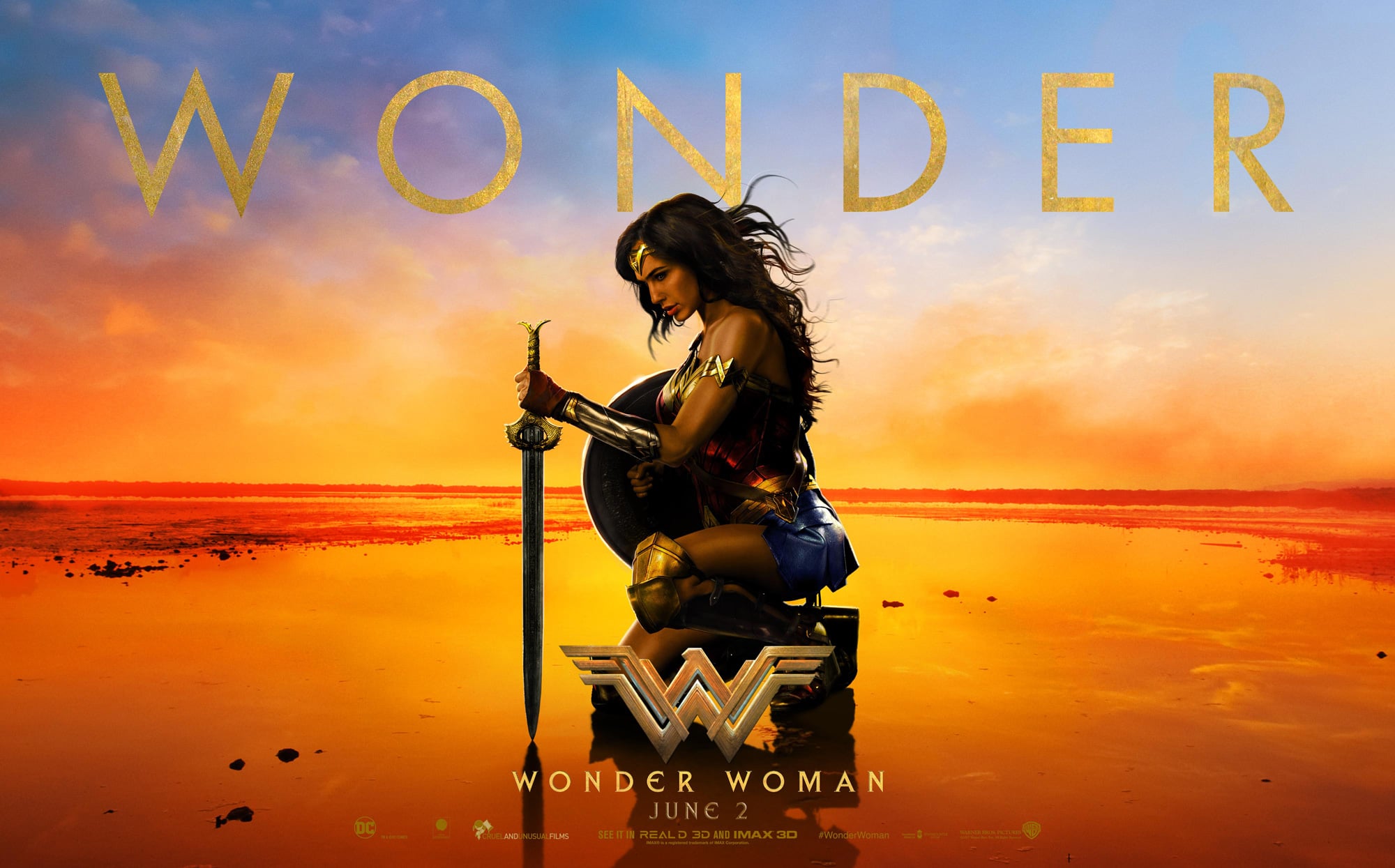
Wonder Woman (2017)


WARNING: SPOILERS


Wonder Woman is a fun superhero film that actually has some depth to it, and could very well be the saving grace for the critically panned DC cinematic universe. It'd be hard to blame anyone for worrying about it going in, given that Man of Steel, Batman v. Superman, and Suicide Squad were (at best) a mixed bag and (at worst) a hot mess. Wonder Woman arrives at the perfect time, not just in the general social context of 2017 (a world that has seen reproductive rights for women under assault, women athletes fighting for fair pay, GamerGaters waging harassment campaigns against women critics, and a President who has bragged and joked about assaulting and accosting young women). It comes at a perfect time in the DCCU as well. Snyder and Ayer attempted to make something different than their Marvel Studios competition, but those are directors that tend to be driven by testosterone and an obsession over the ideal male form.

Indeed, Wonder Woman winds up standing out from most superhero flicks. It offers a much needed respite from muscular dudes punching each other and dictating what is "right." She actually winds up fulfilling the role that Superman is supposed to play in being positive, loving, compassionate, and embodying all that is good and pure.The action in the film is good, which is an important aspect to a genre film, but it is the deeper themes that make it pop. As a character isolated from the world, there is an innocence to Diana that has been absent from the genre since Sam Raimi's Spider-man. Her innocence and ignorance to the outside world is the lens through which we, as the audience, get to see ourselves. Through the superhero genre, the film is surprisingly introspective.

With a villain like Ares, there was much room to tackle substantial themes about the nature of mankind or war. That he drives the film and serves as the primary foil, yet isn't actually forcing anyone to do anything, is what makes that story compelling and meaningful. As he tells Diana, he simply puts an idea into people's minds, and they do the rest. He isn't forcing anyone to create weapons of mass destruction or to go to war, yet they do. At the center of this conflict is the notion of whether people are inherently good or inherently bad. Diana was raised to believe that men were good, but that Ares corrupted their souls. She must confront the fact that her worldview - previously black and white (good/evil) - is actually more complex than that. Steve Trevor himself is a good person who, throughout the entire film, lies, kills, steals, and smuggles. He allows a situation to unfold which destroys a nearby town because he looks at the bigger picture. He sacrifices the town, in his mind, for the sake of the world. This enrages Diana, but in the end, he commits the ultimate act of selflessness, sacrificing himself to destroy the gas bombs, for the same reason.

Ares isn't just speaking to Diana when he informs her that he hasn't forced anyone to do anything. This is a line that should cut the audience as well. In these superhero films, the idea of "good" and "evil" are pretty cut and dry.  The "evil" perpetrated by villains might be large in scope, but is small in focus. There is always the central point. Take down the bad guy; you save the world. Centering the film in World War I is thematically smart here. It doesn't just provide a slightly different visual reference than Captain America: First Avenger (let's be honest, the look of WWI here and WWII there isn't that different); it allows that greater point that we as the audience know this isn't the end of war, and that Ares isn't the cause of it. When Steve Trevor describes gas weapons as "more terrible than anything you can ever imagine," we in the audience can immediately think, "Oh, no, it can get much, much worse!" We are aware of fire bombs, nuclear missiles, hydrogen bombs, and all manner of more deadly weapons of mass destruction. We also recognize the naivety of the characters who refer to WWI as the "war to end all wars." And in the end, when Ares is stopped and the war winds down, we know there is another war on the horizon. More to the point, if WWI ultimately ended because Wonder Woman brought down Ares, it would be reasonably safe to assume WWII ultimately began completely, earnestly because of mankind.

All of that speaks to the nature of man and war. Ares may have put ideas for weapons in the minds of people like Dr. Poison or General Ludendorf, but he didn't force them to do anything. The engaged in war on their own. Granted, this theme gets a bit undercut when Diana decides to show mercy to Dr. Poison. This was a great moment, highlighting the strength of Wonder Woman's character (empathy and compassion), but it does suggest that perhaps yes, she was a good person before she was corrupted. They don't go into her backstory, which is actually a brilliant decision. Horribly scarred, we are left to guess why she works for Ludendorf or even feels some allegiance to him. Perhaps the best scene of her story is when the undercover Captain Trevor compliments her and tells her that she is worth so much more. Wearing a mask to cover her scars, she conveys shockingly much through her eyes. One gets the impression that she is scarred because she has been mistreated by the German military, or has been a victim of this war. For a moment, it appears as though she is touched to feel genuinely appreciated - that is, until Diana walks in and Trevor's attention is drawn away to the beautiful Amazon. That moment, too, suggests much for the character. It is not hard to imagine that she is immediately made to feel inferior: a scarred, damaged woman, ignored when a gorgeous, slender, perfect woman appears. This is a person who presumably has every reason to be bitter at the world around her (arguably, the world of men - as it is men that are conducting the war effort that possibly damaged her, and it is men who seem to value women almost exclusively on appearances).

The end gets a bit thematically muddled. After highlighting that men were warring independently of Ares, it does ultimately end with his defeat. They show him whispering ideas to Dr. Poison and to Ludendorf, and presumably he secretly prolonged the war serving as a member of the British government as well, so what exactly is the cause of the war? On one hand, it's kind of brilliant to set it in WWI because it defies some superhero expectations. Normally, we know a villain is the source of the bad that happens. Here, the "bad" is war in general. Yet we also know that ending WWI does not stop war in general. WWII, Korea, Vietnam, et cetera, are all on the horizon after we see Ares brought down. We also know that nationalism was the driving force for WWI and prior wars. Yet once he is brought down, everyone stops fighting. Is the implication here that he did instigate the war and force people to do things? Or is it that men can be corrupted by all manner of forces, not just divine? If it weren't Ares compelling the German soldiers to fight, it was their ambitious, power-obsessed leaders. If that is the case, then was Diana correct in the first place that men are inherently good unless otherwise corrupted - by gods, by governments, by society? And if that is what it is implying, then what was the point of her having to come to terms with the idea that people are actually quite complex? That people aren't really "black and white" like that? That it isn't that we're "inherently" good, but that we have the capacity for good?

Either way, there are other themes present in the film as well, and it is refreshing to have a superhero flick that actually attempts something a bit more meaningful than the basic "with great power there must also come great responsibility" tagline. That is certainly part of it, to be sure, but it is hardly the only thing. Wonder Woman also balances the tone between the seriousness of those elements with the fun action and well-placed comedic relief that makes the superhero genre entertaining. For a film that is nearly two and a half hours, it's also paced well. It doesn't often feel like it's dragging outside the opening exposition dump, which is a prerequisite of the superhero film. The scenes in the present, which bookend the film, serve only to remind us that the character is part of a larger universe. To that end, it feels completely unnecessary; it doesn't hurt the film, though. Otherwise, the movie is entirely contained within itself, lacking much of the "universe building" that plagued previous DC installments.

The very existence of the film is something of a tent-pole event for feminism. The most popular female comic character in her own solo feature directed by a woman is itself a symbol. As for whether the content of the film is particularly feminist, well, that's going to vary depending on who you ask. It is perhaps unfair to expect it to mean something greater when all they are trying to do is make a fun, entertaining blockbuster film that adequately adapts a beloved character to the big screen. We shouldn't expect deeper meaning here than we do in, say, a Spider-man film. That baggage of "meaning something more" is unique here because, again, female character/female director is a rarity in the genre, and in Hollywood as a whole. They set out to make a good superhero film, and that's exactly what they've done.


Internal messages are a bit of a mixed bag. Some could easily look at it as very much substantially a feminist film: a woman saves the world from a war started and conducted by men in which their masculinity is ultimately the driving force, the savior is from an island of women warriors who are also compassionate and nurture life as much as they fight to defend it, an overqualified heroine is rarely listened to or respect and constantly has to call the patriarchy out on their bullshit, and all saving the day by exhibiting the more "feminine" traits of love, empathy, and compassion in the end. (My personal favorite quasi-feminist moment came with the discussion about the watch. When Captain Trevor steps out of the bath, he thinks Diana is asking him about his penis. She's actually talking about his watch. He explains that it is what he needs to know when to wake up and go to work and all of these other things. Diana responds, "You let that little thing tell you what to do?" Of course, I might be reading way too much into this. I got the impression that they do a switch here. He thinks she's talking about his junk, but she's talking about the watch. This leads the audience to laugh because of the misunderstanding. A relatively solid joke, but now we're thinking about his junk. Then she makes the comment about that "little thing" dictating what he does. I would argue the subtext is that they have swapped, where he's still on the watch, but her comment also refers to his dick. You know, men "think with their dicks"? I'm probably alone in taking it this way, but I thought that was pretty funny.)

Conversely, people might not see that much feminism outside those very basic premises. The ultimate conceit is that men are not to be blamed for their actions (they are good unless otherwise corrupted). Diana is freed from her temporary bondage by Ares after she sees Steve Trevor sacrifice himself (so she's driven to success by the actions of a man). Some have criticized the film for sticking to a traditional male gaze of the character, and her physical beauty is frequently framed in a manner that highlights it. From Steve Trevor criticizing her new outfit as being "too distracting" (because she's too beautiful) to one of his buddies asking for a photograph of her because she's so pretty, the film doesn't exactly do much to knock the objectification of Wonder Woman. These are all presented as little, harmless jokes. Even more, the origin story involving Zeus as her secret father makes some sense in context of this universe, but isn't exactly on point. Wonder Woman's origin has always been strange and has changed, but having her be the literal daughter of Zeus rather than a creation of the gods (or even being altered to be a child of a goddess) still ultimately adds this layer of male-driven action. She wouldn't be powerful without the male Zeus.

Probably one of the strangest moments is when Diana literally gets distracted and goes, "oooh, a baby!" It's easy to crap on this moment when viewing the film through the feminist lens, but I'd argue this is more just clumsy film-making than anything worse. I think the point of this scene was to two primary things. The subtext is that she is an Amazonian princess, a people that are nurturing, compassionate beings. It was perhaps meant to highlight that side of her character. On the surface, it was probably meant more as just a little joke, given that she had never seen a baby before. They don't have those on Themyscira, remember. She was the only child. Trevor says, "That one isn't made from clay," as he drags her away. I think this was meant more as a joke about never seeing a baby more than anything, but it isn't handled super well, and they don't really go too into it.

It might not be entirely accurate to argue Wonder Woman is itself a feminist film as much as it might be to argue it's more of a "feminine" film. It still engages in a number of the more "masculine" traits of its counterparts in the superhero genre, but the compassion, empathy, and desire to protect, mixed with almost more of a ballet-style of combat, make this a superhero film that maybe breaks out from the boy club in more subtle ways. Granted, I'm a CIS, straight, white dude, so you have to take everything I say on the subject with a grain of salt. (I don't think this disqualifies me from having a valid opinion on the matter, but having a life from a male perspective means I probably see things a bit differently than women, so I will refer to them for more insight on the topic.)

All in all, it isn't perfect, but it does enough things really well, and different from the rest of the superhero crop. By virtue of being self-contained and focused on the character herself, it provides fans with what they've been craving from DC movies for years now. It's strange that we had to wait until after Suicide Squad and fifteen separate Marvel movies to get this, but Wonder Woman lives up to its long-awaited hype. After three films that massively disappointed fans, it turns out that it is a woman director who could breathe actual life in this otherwise male-dominated spectacle that is the DC cinematic universe. And, of course, it is nice to finally get a recognizable musical anthem associated with a character.

Just as an aside, I do think it is important to acknowledge Patty Jenkins as the director, but not ignore that the bulk of the creative team was male. The story was conceived and written by a team of men, and it was based on comics largely written and drawn by men. Wonder Woman might be the most famous fictional female character, but it has been a rare occasion in which women have been given creative control over her. It was a bit strange seeing the "special thanks" part of the credits and seeing nothing but male comic book writers and artists. They are all great creators, of course, but it is a little jarring to remember that there have something like four women writers to pen a Wonder Woman series (a character that has been in existence for 76 years).  A solo Wonder Woman feature is great, but progress doesn't stop with its existence. It does little good if women still can't get their feet in the door for writing and directing gigs.

REDUCTIVE RATING:  Really good!   (But, if you were one of those dudes who complained about those select few shows for people who identify as women, you were going to hate this movie no matter what - and also, grow up.)


Sunday, May 28, 2017

Abzu (2016)


It's hard to talk about games like Abzu or anything from studio thatgamecompany without getting into arbitrary definitions about what constitutes a "game." For some, they do not qualify. Instead, only games like Dark Souls or Furi or Horizon Zero Dawn qualify for such status because they are built upon the notion of challenges. Can't be a game if there is no fail condition! For others, that might not be such a central part of what makes something a "game." It can be a little trendier to instead label these types of things as simply, "interactive experiences," but that admittedly never made sense to me given that games are inherently that. Have you ever played something that wasn't?  For me, Abzu is a great example of the diversity of functions video games can provide, and I label it a video game because I just don't personally care about that. "Video game" is just easy, and really, who cares?

Distinguishing that Abzu is not actually from thatgamecompany - the studio behind meditative games like Flower and Journey - can sometimes be tricky. It has many of the same elements of their games. However, it does come from studio Giant Squid. You would be forgiven for making the connection, though, as several key members of Journey worked on Abzu. Both share a director and composer, for example.

Most prominently, the art style closely resembles the distinct cel-shaded style of Journey. Given the game is meant more as a meditative experience, the visuals are perhaps more important than a typical game (not that it's ever not significant, of course). Levels feature areas where players can press a button specifically too meditate while observing the world around them, so if the environments aren't beautifully realized and rendered, that wouldn't exactly work out well. Additionally, the simplicity of the controls is another shared aspect. Simulating a submarine world, it can take a little getting used to the camera, since players can move up and down in addition to left/right and forward/backwards, but it isn't designed to be complicated. Everything about the game - from its art design to its wonderfully composed score to its gameplay - is designed to be relaxing. Perhaps the worst part of it is that to move forward, you must hold down the right trigger. It might depend on which console you play it on, but holding down the trigger for minutes at a time can actually be a bit physically uncomfortable, which is especially problematic in a game built for relaxation.

Story elements connect to previous thatgamecompany works as well. As was the case with Flower - a game in which players control flower pedals on the wind, smashing man-made structures - the central goal is to free natural life from dark, destructive man-made forces. In Flower, destroying the structures freed the world from its darker and drearier colors. Bright green grass and new flowers with vibrant colors bloomed across as cheerier music blared. Abzu has players looking to free oceanic life, and as more of it is released back into the world, the more uplifting and dynamic the world became. Director Matt Nava clearly has an affection for the natural world, and enjoys meditating on the symbiosis required of us for an enduring and enjoyable world.

Indeed, that love and admiration of the natural world is a common theme among these games, but the creators also use that to connect us to our own history. The respect for the oceans and bodies of water is apparent in just the name. In Sumerian mythology, the ocean goddess Tiamat and fresh water god Abzu united to form all life. Of course, that is scientifically the ultimate origin of all life on Earth as well. Without the seas, we would not be here. More, the further we destroy our bodies of water and their delicate ecosystems, the more we endanger ourselves. Fresh water is literally required for our own survival. Water is an essential need to our bodies, as well as for animals and plant-life that we consume as well. For many, marine wildlife is a critical part of their diet or economy as well. Once upon a time, these creatures and the water itself was revered with religious vigor. In Abzu, people have meddled so much and have simply taken advantage of the ocean's supplies with no respect to it that it is becoming uninhabitable. When you first encounter the great white shark, it is - classically - scary! It attacks one of your robot companions, then runs off into the tall seaweed. For half of the game, you are meant to fear the shark, as we have long been taught to do in our own culture. Yet at some point, it becomes clear that the shark is merely protecting its habitat. It dies attacking the central mechanical pyramid that is destroying the ocean. Life and the ecosystem will return to a healthy state only when people become respectful of it again, and you take up the task of ridding it of those devices.

The background of this world also tends to come from images painted on walls below the surface. Frequently, players will discover Egyptian-like paintings of the human world, wherein it appears ancient peoples once worshiped the oceans and its wildlife. The great white shark, a prominent character in the game, is revered almost like a god. At some point, however, people began harnessing the power of the ocean. That symbiotic relationship between people and sea started to dissipate, and it came at the cost of the ocean and its wildlife. The beauty of its story, even if nothing completely unique or original, is in its unfolding through imagery and exploration. Players are rewarded for taking the time to really look at the world around them, and for spending some time considering their implications.

The meditative, exploration-driven nature of it gives it a similar vibe to Journey, while the love of nature and the goal of revitalizing it (including by soaring through some quick streams) give it more of a gameplay connection to Flower. It might not technically be thatgamecompany, but it practically is. It's a gorgeous game with a beautiful score, and it is a good way to unwind from a hard day's work (or after an hour or two of Dark Souls III). For me, an avid lover of sharks and marine wildlife, with a profound respect for the ocean, it is a surprisingly meaningful game considering there is no dialogue whatsoever. These folks are pretty great at utilizing the "visual" side of video games to tell a narrative. It might not be as emotional or compelling as Journey, but it is still a solid game. If you enjoy those slower, relaxing, more meditative games, you'll likely enjoy Abzu.

(I know, Abzu technically has a circumflex over the u. I don't know how to add that from this Chromebook.)

REDUCTIVE RATING:  Pretty relaxing! It's good!

Available On: PS4, XBox One,


Wednesday, May 24, 2017

Something Stupid #6 - Bo Fo Sho


Indulge me with my cold and about an hour's worth of thoughts about Bo Burnham and stand up comedy in general. Or don't. It's your life, man. Don't waste it on this if you don't want, but if you are curious, give it a shot!


Thursday, May 18, 2017

Xenosaga Episode II: Jenseits von Gut und Bose (2004)


If the narrative of Xenosaga Episode I were a bit chaotic, convoluted, and mysteriously confusing, Xenosaga Episode II doesn't exactly make things much clearer. There's a large story going on, continuing the events of the previous game (whatever they were), but the focus is primarily on the backstory of Junior, Sakura (the child MOMO was modeled after), and Rubedo. Gnosis aren't a super big part of the world anymore, although they're still there on occasion as the enemies. It all provides a surprisingly compelling character story, even if it's still filled with confounding elements at times. Rubedo is actually a pretty entertaining villain, so to have some light shed on him, even providing a reason to empathize with him, is a pretty good direction to take the story.

One of the biggest issues people may have with Xenosaga as a whole is how much of the game is comprised of cutscenes, most of which make no sense. Even fans of this style of JRPG - the kind where you line up a party of three or four characters and select actions through menus - might wind up having a hard time staying focused. Cutscenes are often so long and cryptic that it can actually get a bit boring. It doesn't help that a number of characters use a completely emotionless, monotone voice. From the newly introduced Canaan and Jin to the replaced voice actor for chaos, it almost seems like they're trying to lull you to sleep sometimes.

On the flip side to the dragged out, kind of boring story is the combat system, which takes the core experience of the first game and makes it a bit more fun. The basic idea is the same: in a turn-based order, each character has different attack options. Stocking allows you to build up a series of attacks to unleash at an onslaught of combo attacks. Doing the right combination of strikes can send opponents airborne or knock them to the ground, exposing them to greater damage. It adds a fun element to battles in a similar way that dual and triple tech attacks did in Chrono Trigger. It's hard to say if, in the end, the combat here is more fun than in the first game, but either way it is still fun.

However, some of the problems plaguing the first game return in full for the sequel. Probably the most egregious aspect of the gameplay is that the rules that apply to the player do not apply to the computer-controlled enemies. Bosses are often difficult - and large groups of enemies as well - because they get to function outside the established rules. They can boost on top of boosts, opening the way for a wave of uninterrupted attacks that never feels fair. Indeed, sometimes, they boost without losing one of their stored up boosts, which also opens the door for such non-stop attacks. Their boost also will override yours if you select one, making it difficult to properly plan and execute a strategy to inflict a break. It gets extraordinarily frustrating to be fighting a normally difficult enemy or boss, one capable of inflicting plenty of damage in its own right, only to get destroyed because it managed to pull off a series of three boosts in a row, even though they appear on the move list (which your characters can't boost when they are on there). It feels cheap, and if you die, feels like the game just beat you by cheating.

Becoming more like Xenogears, Xenosaga Episode II works in segments of the game that require battling in the mechs. These can sometimes be the toughest battles in the game given that it can be difficult to heal substantially in battle. They're better and more fun than in Xenogears, thanks in part to being able to use ether abilities of their pilots, but it can still be a challenge. Fighting in gears requires a bit of a shift in planning. Each gear is open to certain potential pilots, and since they require two of them, this gives some more room for party experimenting, even if still ultimately limited. Different duos provide different special abilities. Requiring the use of gears at times is a good idea if they're going to bother putting them in the game. Gears were never really a major part of the first game, and you were never really required to use them. If you're going to include them, it's good to design certain sections around them.

There are, however, some strange design choices as well, such as having you momentarily run around even though you're just literally moving from one area for a cutscene to the next area for a cutscene. One supposes they realized it might be worthwhile to have the player do something in that half an hour exposition dump, but just moving the character around the map doesn't exactly entail too much action or make the player feel any more involved. It often just feels like a waste of time. Then, there are smaller decisions, like the classic JRPG trope of the final Final Boss being more of a narrative-driven fight: one you can't lose. It's fine to do this, of course, but it feels strange that - if they're going to - they would give Albedo 5,000 HP, meaning it can take ten minutes to kill him. Even more, they make sure that Albedo gets a turn after every one of Junior's, and it's literally nothing but a taunt. Since it is impossible to lose the fight, why not let the player get a few turns in a row before interrupting with a taunt? Or at least making the boss have less HP, so it only takes three or four rounds to finish? It goes on unnecessarily long, and feels absurdly tedious and boring.

Plus, to unlock many abilities, players are expected to do an obnoxious number of literal chores in its strange "Good Samaritan" campaign. These "side missions," (and calling them that is quite generous), require players to seek out random NPCs who will provide them with some ridiculous chore to do - from destroying a certain number of boxes to hanging up fliers to finding dates for people. These are especially tedious and mind-numbingly boring. It's the worst kind of padding developers can do.

The game came out before the importance of a consistent voice cast was firmly established in the gaming industry. As a result, a number of characters have a change in actors. It's a little unfortunate that chaos, MOMO, KOS-MOS and Shion (the central protagonist of the previous game) have all been replaced. If you're keeping track, that's literally more than half of the original cast being replaced. Only Junior and Ziggy retained their voice actors, and that actually does make a difference. It gives them more consistency and makes them more recognizable. Everyone else takes a little bit to adjust to.

It might not be entirely accurate to call Xenosaga Episode II the better game when compared to its predecessor. There isn't much of a drop-off in overall quality, though. It still requires a fair amount of patience, from the extremely long cutscenes to the cheap boss battles, but it's never insurmountable. If the first game was something you enjoyed just fine, the second will likely do that too. The advantage it truly has is a more compelling character-driven central story, which can help ease the apprehension of going into another cutscene.

REDUCTIVE RATING: It's fine.

Available On: PS2


Wednesday, May 17, 2017

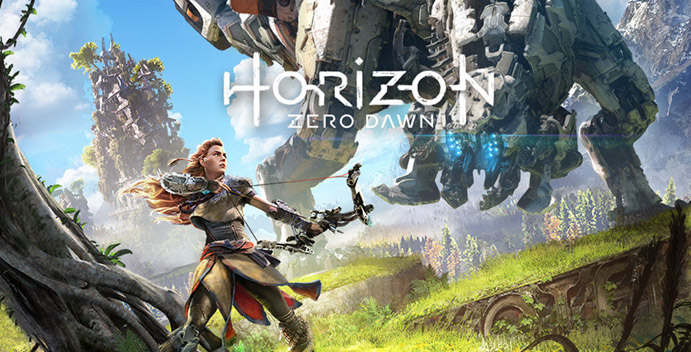
Horizon: Zero Dawn (2017)


In the age of franchises, remakes, reboots, sequels, and spin-offs, it can be hard for a new property or idea to find a foothold in the market. Studio Guerrilla Games, known for their Killzone series, decided to develop such a game. It drew attention at E3 where it's unique look stood out. A video game in which the world is a blend of hyper futuristic technological wildlife, but a tribal, caveman-like civilization of humans? An open world game wherein you fight robot dinosaurs? Seems legit!

Horizon: Zero Dawn surpasses most expectations established. It is fun, interesting, engaging, and gorgeous. It's got solid music and atmosphere, and a good amount of depth to the world worth investigating. The combat is diverse and exciting, while also providing a good enough challenge that even after all the upgrades, players still need to be on their toes. Any number of enemies could do some damage!

It is easy from ads to focus too much on the "robot dinosaurs" aspect of the game. There are some in there, such as watchers and thunderjaws (who look like raptors and t-rexes), but the bulk of the enemies are based on a variety of modern day animals as well. There are some that are horses, oxen, or rams, others that are ostriches or crabs. There are over two dozen creature types in the game, each with their own strengths and weaknesses. Each one can kill you if you're not careful, even the low-level ones.

Perhaps it isn't even quite right to describe these creatures as "enemies" either. Sure, they can be extremely deadly if you are not careful - many are outwardly aggressive and will attack you on sight. However, these creatures really do feel more like wildlife than "enemies." In the early stages, everything is new and threatening. They do a solid job working that into the game's narrative as well, so that players and main protagonist Aloy are essentially in the same boat. When you come across that first rockbreaker, for example, that is the first rockbreaker Aloy has seen as well. As you become more familiar with the world, the game, and the combat, you start to notice behavioral patterns of certain creatures. Grazers, for example, seem aggressive when they are introduced, but you soon realize that they only really become aggressive when desperate. Most of the time, however, they are skittish and will flee if they hear noise. Striders will charge and buck if backed into a corner, but they are also not particularly keen on fighting. Meanwhile, the larger sabretooth-like sawtoothes will pounce, charge, and attack almost instantly if they spot you. And then there are some like the broadheads that can be a bit unpredictable. They are more likely to charge you if they see you, but they will also try to flee at some point.

The different behaviors and attack patterns of these machine creatures really goes a long way to making them feel like actual organisms. Even late in the game, when you're pitted against thunderjaws and stormbirds, it becomes a bit difficult to see these as your "enemies." The AI of the machines is really solid and breathes life into the robots. At some point, I noticed I even avoided killing grazers, striders, or broadheads just because I felt bad for them. The experience received for killing one of them just didn't feel worth the guilt for killing something that was no longer a thing I found threatening.

The real "enemies" of the game are the Shadow Carja, a tribe of barbarian warriors hellbent on digging up old, violent machines and potentially destroying the world. These enemies you can chop down without remorse or any thought about whether they deserve it or not. Human enemies lack the same kind of variances as the synthetic wildlife, but they do present their own challenge. There are different weapons they are equipped with, as well as armor that can protect them from silent strikes. Plus, the game has a tendency to throw a lot of them at you at one time. And I mean a lot.

The strength of the game is probably the gameplay. Combat is tight and diverse, giving players a variety of ways to approach a given combat scenario. The melee attacks and dodge rolling is comfortable enough that, for skilled players, that is a good and challenging way to go. The bow sometimes has strange tracking habits, but is overall reliable - especially within a closer range. There are a few different bow types with different strengths, so odds are you will mix melee and close-range bow attacks with dodge rolling. Alternatively, you can stick to the high grass and take out enemies one at a time in secret. Stealth is my favorite way to play a game, when given the opportunity, so this was a much appreciated inclusion. Whistling or throwing rocks can draw enemies to a desired location, ripe for you to pounce and strike from the shadows and kill them in isolation. This is especially helpful when confronted with large groups of enemies, like the herds of lancehorns, chargers, or scrappers. Additionally, you can obtain or craft traps. This is helpful for stealth, of course, but once a trap is set off, it generally gets the attention of nearby enemies who go on high alert. Often, you will benefit from a combination. Stealth gives you the opportunity to take out a few enemies while setting up traps, and then you can spring a surprise attack and send them into those traps. Action, stealth, and strategizing makes for an incredibly fun and challenging game. One most always be cautious, too. A group of scrappers can kill you just as easily as a thunderjaw!

I never had much of a problem with melee myself, but I have read some criticism of it. I can see arguments that it is a bit on the clunkier side. It does seem like the game wants you to rely more on your bow than your spear. Probably the worst part of combat is when you have to deal with flying enemies, like glinthawks or stormbirds. The problem is with the camera. In order to aim up to hit them when they're airborne (which is pretty much the entire time they attack you), the camera will often clip nearby environmental objects, like rocks, bushes, or even tall grass. This can make it difficult to accurately aim, since you can't exactly see what you're shooting at. The trick is to try shooting at more of an angle; give some distance between you and the enemies. Easier said than done, of course, as flying enables them to cover ground much faster.

One other way to approach a situation is to try and isolate one machine, then override it. Getting overrides at secret lairs throughout the world allows you to hack a machine. Doing so can be quite beneficial. Some machines, like striders, become completely docile to you, allowing you to mount and ride them. Others, like ravagers, will become hostile towards any machine in the area. Hacking these machines is often an incredibly useful option when surrounded. It can also be used to provide distractions if you'd actually rather just get away than fight.


As an open world game, it does fall into many of the same shortcomings of the trend. It is overloaded with side quests, and many of them are not ultimately that different from previous ones. You will spend a fair amount of time "tracking" people and then fighting a group of machines. There are also the same tried-and-boring outpost liberation missions typical of open world games. Those are especially tedious given how many enemies they load each area with. There are plenty of collectibles - many of which don't actually do anything at all, although some do provide some story background. And, of course, there are "radio towers," but these are actually done in a fun and unique way. Rather than just climbing towers like in Far Cry or Assassin's Creed, you will likely need to clear out an area, then climb up a special type of machine creature called tallnecks. It's a small change of pace, but one that actually does make that otherwise menial task feel more engaging and interesting. It is a bit rewarding at the end when you can see all the allies you've made by doing a lot of the side quests show up at the end to help out. It's not as satisfying as, say, being able to call in the allies you made at the end of Dragon Age: Origins, but it's still neat.

The story has some great characters, and a lot of forgettable ones. The writing is also a bit all over the place. Sometimes dialogue is fine; sometimes it feels really forced. The story is fine (even if some of the "big reveals" are as predictable as can be), but the writing of it can be considered one of the weaker aspects of the game. It wasn't bad; just don't expect a Neil Druckmann-level of writing. At its core, it does build up Aloy properly. She's such a great character, even if traditional in a lot of ways, and easily could be a new character mascot to sit on the Sony mantel to push consoles. (A lot of this might also have to do with voice actor Ashly Burch, who continues to show her worth after having given life to Chloe in Life is Strange and Tiny Tina in Borderlands 2.)

Still, once you get to the last stretch, the game does become very dragged out. Probably about the last five or six hours of the game feels like you've just got one more hour left, yet it keeps going. It gets heavy on exposition dumps and information overload, while providing little diversity in play. You essentially just run through old research stations and find out what exactly has been going on. Even the finale - which gets pretty bonkers! - does that typical RPG thing of, "boss in stages." Except the order is kind of strange. First, you fight Helis, a human baddie from the beginning, who also kind of disappears for a long time. Then, you repeal wave after wave of invading machines. Finally, you go and fight HADES, the AI program that is the true villain. It probably should have gone "waves of machines," then Helis, then HADES, but it probably doesn't make that much of a difference. Regardless, it's just another way that they manage to stretch out the final chunk of the game.

It does end on a bit of a cliffhanger ending, which seems a little ambitious for a new property that had equal potential to fail as it did to succeed. The post-credits scene actually is a little unsatisfying, but then again, the game is definitely good enough to merit a sequel - perhaps with tightening up melee combat, adding new weapons and more human enemy types, environmental hazards, and some better writing. It's just a tad unfortunate given that the game is otherwise its own complete thing.

Though it does suffer many of the issues that all open world games seem to have, the game is just fun and visually interesting enough to make up for it. Horizon: Zero Dawn might very well be my favorite game of the current generation so far. It's probably not for everyone, but its definitely worth checking out. That it has done well, selling almost three million copies to date, is a pretty good thing for the industry. Hopefully, we get some more studios going off to try and make a new IP, rather than just doing sequels or new installments of an existent franchise.

And yes, the title will make sense at some point in the game.

REDUCTIVE RATING: It's great!

Available On: PS4


Guardians of the Galaxy Vol. 2 (2017)


It maybe took a little while to get there, but Marvel Studios has really started to run more with the fact that they are adapting superhero comics - the kind in which dudes in brightly colored spandex outfits punch and kick other dudes in brightly colored spandex outfits. There's an inherent strangeness and goofiness to the genre that makes it so lovable. For a while, they seemed a bit slow to fully embrace the superhero genre on the big screen. Everything was hunkered down in these "real world" rule sets, trying to ensure that everything were more "realistic." It had to all be explainable for a fictional universe that - in the comics - features a giant purple guy that literally eats planets and a literally eternal Hercules who is frequently drunk. Point being, it's about time they abandon the more boring versions of Phase I and start running with the oddness of the comics.

Nowhere is the weird side embraced as much as James Gunn's Guardians of the Galaxy. While it suffers many of the same problems as all Marvel movies do, it still stands out given its unique make-up and set designs. For crying out loud, it's most lovable characters are a talking raccoon and a walking tree! Just to backtrack for a second as well: one of the reasons why Guardians of the Galaxy might resonate so much to fans, many of whom had no idea who any of these characters were going into it, is that it is one of just a very small number of Marvel movies in which the director is given the freedom to write the script. Out of fifteen Marvel movies, only three have a writer/director at the helm of the projects - Gunn with both Guardians of the Galaxy films and Shane Black with Iron Man 3. It's hard to imagine the studio giving such control over any of their earth properties - indeed, they missed a golden opportunity for an amazing Ant-Man film when they chased Edgar Wright out - largely because those films have to serve as build up for the next Avengers movie. Guardians plays a role as well, but they're removed enough that they can take more chances.

Indeed, Marvel even had to work out a deal with Fox to get the film rights to Ego the Living Planet - a character that Gunn specifically wrote into his script from the beginning before knowing whether or not Marvel Studios had the rights. As easy as it is to criticize Marvel Studios for being a bit too formulaic and sanitized overall, they do get some credit for working to give Gunn the characters he wanted to use rather than tell him to simply replace him with another character they already own the rights for.

All that said, Guardians of the Galaxy Vol. 2 isn't ultimately terribly different than the normal crop of Marvel films. It's very good at what it wants to be, which is a fun, safe piece of entertainment reaching as wide an audience as it can. It tells a comparatively interesting story and has some of the best character beats in all of the Marvel franchise. That isn't so surprising given that was also true of its predecessor. It might suffer a bit from having too many characters in the film, each of whom has their own part to play and their own little arcs. Not all of them hit, like Mantis or Drax, but they also get some great moments.

There is a bit of a tendency to give Marvel movies more credit than they deserve. Captain America: The Winter Soldier, for example, was credited for being great because it tackled themes of government surveillance and pitted Cap against the government. Additionally, Iron Man 3 often got credit for being about a sort of self-discovery, that it was about learning strength was internal (and not reliant on the technological suits). Yet when you really watch those movies, those themes are barely tackled in any sort of meaningful way, or just completely fall apart by the end. (The government is not the bad guy, for example, because it was just that evil Hydra had hijacked it. Tony Stark is Iron Man without the suit, but he saves the day by using a literal army of suits.) The themes are there, to be sure, but in such a shallow capacity that it isn't really worth mentioning too much.

A similar thing happens with Guardians of the Galaxy Vol. 2. Many have praised it for the way that it embraces feelings of sadness or struggling to find one's place. Indeed, there might be more of an emotional gamut here than in most other superhero films, but it isn't entirely accurate that the film truly runs with those in a particularly deep or meaningful way. All of the characters feel sadness at some point, which makes it a more emotionally complex film than, say, all of the other Marvel movies. Still, for a film being credited for embracing sadness, it never seems to want that feeling to linger for more than a couple of minutes.

One of the biggest problems with Marvel movies is that, tonally, they have really fallen into a single category. Guardians of the Galaxy Vol. 2 suffers from the same problem that Vol. 1 had: too many jokes. To be clear, the issue isn't that jokes exist. It's just that they over-rely on them, especially here where sadness is such a prominent part. Can't have audiences feeling bummed too much! Have a heavy, great, emotional sequence? Immediately follow it up with a dumb gag! It's an ongoing struggle in the film that never gets sorted. One of the best scenes in the movie - when Mantis and Drax are alone talking - is a good example. It starts off with some stupid Drax-oriented jokes before he makes a comment that causes Mantis to touch him in order to absorb his emotions. When she does, she just starts balling. It's one of my favorite moments, as it's such a great way to visually show that for as stupid as Drax is, he is also dealing with an internal sadness that he suppresses rather than shows. And immediately when that scene starts to come to a head, Gamora pops in to interrupt, makes a comment designed to "lighten the mood," and then the plot moves on. We got a Serious Sandwich. They want to push a serious moment, but can't just give it to us straight up. Instead, they start with a joke, put in that emotional moment, and then follow it up with a joke, always careful to not have us sit too long in the serious sequence.

Drax, of course, has always been something of an odd character. He is very far removed from his comic counterpart that it's hard to like him if you are a fan of the comics. Even without that, his role in these films is a bit odd. He essentially is comic relief in a movie in which only Gamora is a straight-shooter. Did they really need to make Drax a comic relief character here when you've got Rocket Raccoon, Baby Groot, and Peter Quill? At the same time, there is a general, weird positive attitude that helps create a little bit of a balance to the more swashbuckling Star-Lord, more serious Gamora, the more sarcastic Rocket, and the more just goofy Baby Groot. All in all, Drax is a strange character, and it's hard to know if he is written well or poorly.

As much as they could have (and probably should have) laid off the jokes per minute thing, some of the gags are actually really good. These are entertaining movies, and the humor is more often effective than it is distracting. It's really just that they need to sometimes back off the jokes and let the film and characters breathe.

The story is solid compared to other Marvel movies, but drags a bit in the middle. There is a pretty long exposition dump that occurs that might as well have been an entire reel of film. (Not that any of these things are shot or shown on film, of course.) Even more, despite having one of the more interesting and better villains (not that that says too much, really), it still falls into that trap of requiring a giant space battle. An elitist group of aliens known as the Sovereign spend the bulk of the movie chasing the Guardians, culminating in a giant fight with thousands of space ships inside Ego the Living Planet. It is so heavy on CGI and moves so fast that it is difficult to keep up with the action. Even more, though, is that it ultimately is just a distraction. The central villain only really pertains to Peter Quill, so there isn't really much for the other Guardians to do. Thus, they need to bring in this totally separate, disconnected group of "bad guys" for the others to fight at the same time. It feels forced and distracting. All of the characters get their part to play and have their own little arcs, which are great! But come the time for the big action finale, it's very Star-Lord-centric, and they struggle to work everyone in.

With better character arcs and moments, a more interesting villain, and some cooler alien make-up and costumes, whatever Vol. 2 does worse than Vol. 1 is easily made up for. It's hard to say if it "better" than the previous film, but it's not worse, by any means. It has problems, but it's still a fun time. This, I think, is the benefit of having a writer/director who has the freedom to play with the toys more fully. Gunn clearly loves the characters - even if he did drastically change some of them. He's having a good time, and it shows. Still, it can be a bit frustrating that they never let the emotions sit for a moment. Nothing is more perfect exemplifying of that than the ending into the mid-credit scenes. The film ends almost perfectly, with a slow zoom and then hold on Rocket, looking at the Ravager funeral and looking super sad. When I saw it, I thought, "Oh man, this is the perfect shot to end on. Please don't continue the movie after this..." And then cut to credits! Perfect! They got it! For all the problems I had with too many jokes, they ended it at exactly the right...oh...oh wait. They give us all of about ten seconds and then the first of literally five mid-credits scenes - all of which are just jokes that should have been cut - plays. Even at the end, they can't just let the audience feel something for more than a few seconds before - surprise! - more jokes! Who wants to feel sadness when you can laugh instead?

None of that means the film isn't fun or entertaining. It is! It's just to say that when someone tries to convince you that the film is super great because of the way that it embraces emotions, they're maybe digging way, way too deep, and are maybe misrepresenting the film a little bit.

On a final note, I do have to say that it was nice to finally get a piece of original score that was actually memorable and stood out! I'm not sure why after fifteen films, we have a complete lack of recognizable character themes within the scores - and indeed, the scores themselves all sound pretty similar - but the credits of Vol. 2 provides a sort of 1980s pseudo-funk cover featuring David Hasselhoff that is surprisingly great. Guardians of the Galaxy has utilized a unique soundtrack full of licensed music that is hard to emulate (as Warner Brothers proved with Suicide Squad), but it's nice to get even just one track that legitimately sounds different than everything else.

Overall, if you liked the first one, there's no reason why you wouldn't like the second. It's probably a better sequel than The Winter Soldier, to be honest, but isn't without flaws. It's safe to say that one does not go into Marvel movies for much depth, but there might actually be a tad more here than usual. It's just not all that deep, is all.

REDUCTIVE RATING: It's fun.