Saturday, October 15, 2016

Shin Godzilla (Godzilla Resurgence) (2016)


Hitting a limited number of theaters for less than a week, Godzilla fans in America had only a small window to catch the latest Toho installment in the world-famous film franchise. The fact that it released theatrically in the US at all is, frankly, a miracle, probably owed to the internet. Trailers had released long before, causing many Stateside fans to campaign the Japanese movie studio to bring it here. Funimation managed to get the rights for limited screenings. After over a decade-long absence, the Japanese Godzilla was back, but was he better?

For the first time in Japanese Godzilla history (so don't think of Gareth Edwards and Legendary Pictures' 2014 Godzilla, and you should just forget Roland Emmerich and TriStar's 1998 Godzilla ever existed anyway), Toho put forth a new Godzilla film that is not in any way a sequel. Yes, virtually every Godzilla film since the original has been a sequel of sorts, even when they tried rebooting the series with The Return of Godzilla (1984) and then again with the Millennium series. Every Godzilla movie to this point told a story that followed the events of 1954. In Godzilla: Resurgence, however, the world has never seen Godzilla before. There was never a giant creature that rampaged through Tokyo not long after the atomic bombs. With that, the new film is the first complete Japanese remake of the Big G.

In many ways, the end result is a film similar in tone and themes to the original. In Gojira, much of the drama is centered around political and ethical reactions to the creature. The original film dealt with Japanese frustrations with their US occupiers, but also dealt with the moral dilemma of whether to kill or study the monster. In Shin Godzilla, the entire human story is a scathing criticism of an overly bureaucratic government more interested in formalities and protocol than actually getting things done. Mixed with visual cues clearly recalling the 2011 Tohoku earthquake, tsunami, and subsequent Fukushima nuclear plant incident, it is not hard to see that this film functions to address Japanese concerns with their modern government and its ability to handle disasters. Though often dragged out, eventually getting kind of boring, the use of a kaiju film to criticize those in charge is a big part of what makes Shin Godzilla feel very much in the same vein as the original.

Unfortunately, this also makes up the majority of the film, which runs just about two hours. Though the politics of the film are intriguing and compelling - making it perhaps one of the most interesting human plot lines in a Godzilla film in decades, especially when it gets into the global political stuff - the long running time and lack of real character arcs or development make it feel longer than it is. Character arcs are not a requirement for a good film, of course. However, in this case, the lack of them adds to a film that feels longer than it needs to be by easily a half an hour.

What makes Shin Godzilla feel the most like the original film is in the destructive capabilities of the titular villain. Godzilla is back as a lumbering force of devastation. At no point are we meant to root for the monster. We're not even meant to think of Godzilla as "cool" in this film. There is street level destruction that we see, highlighting the human cost (even if by the end, they have safely evacuated the city completely, giving them free rein for any and all destruction). It is also the result of a hideous and intimidating redesign of the King of Monsters. This will likely be the most talked about aspect of the film, and could wind up being one of the more polarizing debates in Godzilla circles! "How did you feel about the redesign?" is something many fans might still struggle to answer for years to come. (I am virtually no closer to an answer myself after almost a full week.)


I'M GOING TO TALK ABOUT SOME OF THE REDESIGN FEATURES NOT SHOWN IN THE TRAILERS AND CAME AS A HUGE SURPRISE TO ME. BE WARNED IF YOU WANT TO GO IN TOTALLY BLIND. 


See, the thing is that we all knew Godzilla was redesigned to be this ugly creature from the trailers, but those trailers don't really even show the half of it. First of all, Godzilla is constantly "evolving" throughout the film. The first form is this super top heavy thing that can't stand on its hind legs, flopping around as it ran instead. With giant eyes and mouth agape, it looked ridiculous and almost too silly for the serious tone the film was going for. He almost resembles a snake more than he does Godzilla. Eventually, he does evolve to walk on his hind legs, but still retains absurdly tiny forearms and an amusingly long tail. Distant shots depicting the profile make it look a bit goofy as a result. However, close ups (especially of the face) were often freaky. With smaller eyes, more prominent teeth, and a tougher, more cracked coat of scales, this Godzilla is the most terrifying look in the monster's history. It looks like it is going to kill everyone on the planet. (The red glow emitted from his body made for an especially frightening profile shot at night.)

There were a few things that didn't work so well for me, though. The atomic breath had randomly been changed from blue to purple. Plus, the way he used it required that his mouth slowly open very wide, with the lower jaw splitting almost like Predator. He looked like a drunk snake unsure if it were going to puke or not. Then, this strange black mist poured out, followed by an impressive fireball that lit nearly the entire city up in one of the biggest "holy crap!" moments in Japanese Godzilla history. But then that terrifying fire turned into a less intimidating purple beam that looked at home on an episode of Dragonball Z.   He doesn't wind up using it that often as a result, but that part isn't so problematic since he didn't really use it that often in the original film either. (I'm not opposed to changing the color, for the record. I just didn't think changing it to purple really made it better, and the texture of the beam was less impressive.)

Easily the aspect that will be most discussed is the tail. The tail, it turns out, offers a second exit point for the atomic beams, so at one point, he was shooting the purple radiation from his mouth and his tail at the same time. To me, this felt rather silly, something that had little substantive purpose and instead was done just to "look cool." It was the Godzilla equivalent of a double-bladed lightsaber in Star Wars Episode I: The Phantom Menace. Yet the most lasting image, and not just because it is the very last image, is of a close up on the tail. As the camera slowly zooms in, we can see what appears to be some sort of life forms on the tail. Actually, that is a bit misleading. It's not that they were on the tail. It's that they were the tail! We can't exactly see what those life forms are - they looked like human skeletons with dorsal spines - and others have pointed out that they thought they spotted whale bones throughout the tail as well. This prompts the question of, "what the hell am I looking at?"

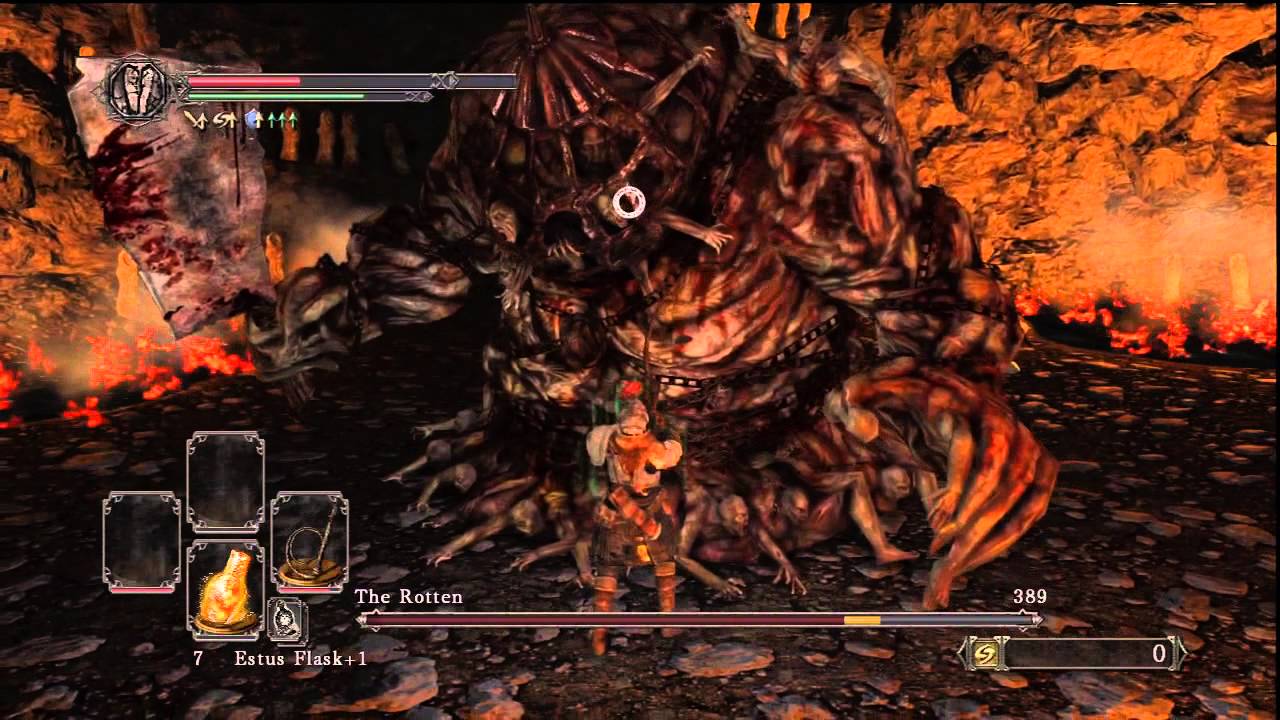
It's creepy as heck! The close up of the tail reminded me more of The Rotten from Dark Souls II more than anything from any other kaiju film I've ever seen. It was insane and disturbing, which is why I feel so conflicted. In context of the film, Godzilla shouldn't be a monster you actively like. Yet I can't help but feel like they were a little too harsh to the monster in its design! (It also makes me wonder what the future of the franchise is, since this design is not suited for fighting other monsters, so do they expect to continue with that as the model, or do they plan to just let creators re-imagine Godzilla however they want, or do the just have no plans for future Godzilla movies at this point?)

Either way, it does succeed in leaving an impression and generating talk.

OK! DONE WITH THOSE SPECIFICS! IF YOU WERE SKIPPING REDESIGN TALK AND SPOILERS, YOU CAN PICK UP FROM HERE!


The other thing about Godzilla Resurgence is that they try their hand at more creative shots. It is hard to really pinpoint the role of the camera in the film. It changes between the traditional overseeing steady-cam, giving the audience the sense that they are omniscient viewers of the events unfolding. At other times, it changes to a shaky cam to give the impression that you are there and the camera is another character present as these things occur. Then, it often resorts to found footage style shots to give a more ground-level view of Godzilla's rampage, with the camera actually functioning as another character. And then there are the strange variations of camera position. When the group of politicians and scientists stare at data on a computer screen, the camera appears to be within the screen, looking out at the people who are looking in. There are also some weird placements of the camera, like on the seat of a chair as one person slides it to another.

It doesn't always work, and creates a sort of incoherent visual look, but many elements were interesting and different enough to stand out among the history of generally boring shot composition from the franchise's history.

It's been a few days since I watched this, and I'm still no more certain as to how I feel about it. As an American fan who has seen two less-than-stellar American interpretations (though I did enjoy Gareth Edwards's take), I really wanted to see Godzilla get re-imagined by the people and society that created him in the first place. Godzilla is inherently interesting in that his popularity spans the globe, and yet he was a uniquely Japanese creation born out of uniquely Japanese experiences. Indeed, directors Hideaki Anno (of Evangelion fame) and Shinji Higuchi (who worked on another giant creepy thing in Attack on Titan) very much updated Godzilla for a new generation, whose concerns are a bit different than past eras.

Godzilla Resurgence is the first time Toho produced a traditional remake, one that does not follow the events of 1954's classic Gojira. Not everything works, and it isn't the classic that the original was. It isn't reinventing anything, but it changes quite a lot from the typical formula. One excellent part of the film sure to be criminally ignored when discussing it is the use of the score. There are two classic Akira Ifukube tracks featured in the film. Both work within the film and a nice nod to one of the men who helped fully realize the icon. At the same time, they often added tracks that sounded like a track from the original, but was different. It was as if they didn't have the rights, so came up with something that sounded similar. This was actually brilliant as it reinforced the eerie sense that this was like Godzilla - it felt familiar - but this wasn't the Godzilla you know.

As a die hard Godzilla fan, I wasn't necessarily into the look in a broader sense, but it worked within the context of the film. Additionally, I'm left wondering what the future holds. It is difficult to make more Godzilla movies without featuring him fighting other monsters, and this version of Godzilla doesn't lend itself to that aspect very well. I don't think Toho really wants to just have a new re-imagining every few years, since it tried that in a manner with the Millennium series to limited success.


Yet it's hard to imagine this latest installment not being among the most discussed of the franchise. There was a lot to process, and a number of elements sure to be divisive among fans. It might not be the single weirdest Godzilla film to date (for all the times people give that to Godzilla vs. Hedorah, I tend to lean All Monsters Attack), but it's definitely up there.

With Legendary Pictures set to eventually release an American sequel to their re-imagining, and supposed build up to an American King Kong vs. Godzilla, there is plenty of renewed interested. Toho has done well not over-managing their creators in Resurgence, allowing a complete re-envisioning that updates a lot and makes the King of Monsters relevant again. In the past, Toho has had a problem with rushing production on sequels and over-saturating their own market. As strange as it might sound in an age where Disney will release a Star Wars film every year, and all studios release multiple superhero flicks every year; Toho cannot simply expect to make a Godzilla flick once a year like before and expect the same results. Resurgence was vastly different than any Godzilla film to date, and it was coming off of the longest retirement of the franchise. While I don't want to see another five years before another Toho Godzilla film, I think patience is a wise virtue to adopt when working on the next one. We've been down this road a bunch, now.

So if you're a Godzilla fan, you kind of have to make sure you see this one. Everyone will certainly be talking about it.

RATING: Pretty Good


Monday, October 10, 2016

Dark Souls II (Scholar of the First Sin)


Having finally jumped on board the Dark Souls train earlier this year, it made sense to continue onto its somewhat inconsistent sequel. In this case, I picked up a copy of the Scholar of the First Sin edition for Playstation 4. Being Dark Souls, I heard mostly positive things going into it, but there was a sprinkling of complaints and criticisms.

Perhaps the most glaring difference between Dark Souls and Dark Souls II is the boss designs. Though there are a few good bosses with the right amount of challenge and intimidating design, the majority of them are forgettable. Many of them are even rather straight forward to defeat. Of course, a generally reliable tactic would always be to circle around and stab in the back, but that's almost all there is in Dark Souls II. Many bosses have an attack that damages in a close "area of effect," forcing players to have to step back from time to time, but that circle-stab tactic is efficient. The DLC provides some pretty challenging bosses, but with just a small handful of exceptions in the main game, they aren't really worth noting. Just for a comparison on the final bosses: it took me maybe five to six hours total of trial and error to beat Gwyn, Lord of Cinders at the end of Dark Souls. To defeat Nashandra at the end of Dark Souls II, it took all of ten, maybe fifteen minutes, tops.

(Probably my biggest complaint with bosses, though, is how frequently they resort to "two on one" set ups to provide the challenge. Almost always, the hardest bosses are the ones that tip the balance numerically.)

Of course, that is not to say the game is easy overall. For the first half of the game, I actually struggled a lot more with the basic levels than I did with the bosses. It seemed like there were a lot more areas of ambush, and there were more moments with an almost overwhelming number of enemies attacking at once. Some of the common enemies are noticeably tougher than the previous game. There appeared to be fewer traps laid about the pathways, but the environments did tend to create more opportunities for plummeting to death. Plus, there were some areas with status-inflicting stones that made traversing the corridors more difficult. In the Black Gulch, for example, you have to navigate a minefield of poison-spitting stones. In the Shaded Ruins, there are stones that inflict curse if you wander near. The use of environment seemed a bit better in terms of adding to the difficulty.

But that leads to one of the biggest annoyances within the game. In the first Dark Souls, you accumulate souls and then spend them to level up your attributes at bonfires. Any bonfire will do. In Dark Souls II, however, you level up by speaking to someone in the hub town of Majula. This means that wherever you are, you need to find a bonfire, warp back to Majula, talk to the Emerald Herald, speak with her, and then you level up. Functionally, it is ultimately the same. Since you can warp to and from any bonfire, it essentially is the same as being able to level up anywhere. It gets kind. It feels like a waste of time, and you can't help but wonder why exactly it is that you can't just level up at the bonfire you're at.


The ability to warp to and from all bonfires also kind of hurts the game in some respects. You wind up losing a bit of connection to the world. Instead of having to backtrack frequently and get a better lay of the land, you can wind up just going from bonfire to bonfire, and then just warping whenever you need to get anywhere. It essentially takes away from some immersion in the world. In the first game, warping came late as a reward. Until then, you had to wander. Not only did this give players a better understanding of the world's layout; it also gave players a stronger connection to it since we had to walk everywhere. The inconvenience of constantly retreating to Majula to level up is slightly off-set by the convenience of being able to warp anywhere else, but it kind of loses some of that original Dark Souls feeling of having to work your way back, especially to find your merchants.

One of the biggest changes to the gameplay is the way dying makes an impact. Souls still get dropped at the spot of your death, but when you return in Hollow form, there is an actual penalty. Every time you die, your max health drops a bit. Die again in Hollow form, it drops more. If you find yourself dying a lot (and being Dark Souls, there are sections where you likely might), then you constantly respawn with less and less health, which makes the game more difficult. You can revert back to Human form with a human effigy, but sometimes those come few and far between.

I think I understand the point of this design element. In terms of the game's lore, Hollow form is a cursed form of being. According to the mysterious narrative, being in Hollow form is not supposed to be great. In the first game, you die and respawn, but there is no discernible difference between Human and Hollow. The only real consequence of being in Hollow is that you can't summon allies should you need them. They clearly wanted to put more emphasis on the horrible side of being Hollow, so they created a much more pronounced punishment. However, I found this to be a little bit problematic in the early stages of the game. It's so easy to die in those early moments. When you get to a point of greater difficulty, this change actually makes the game harder. Eventually, I did break through and was able to push on, but there was a good stretch early on where losing health every time you died (and especially with the lack of human effigies in the beginning) just made the game feel frustrating and unfair. I'm not so sure making a game harder when players are starting to struggle more really is great design, myself.

That said, I can see some positive aspects to it. For starters, if you don't keep getting frustrated to the point of quitting altogether, the increasing difficulty early on forces players to experiment more to figure out how to beat enemies that are giving them trouble. So much of the Dark Souls experience is built around learning the environment and the enemies and the game itself. While I maybe found the health cost to be a bit too steep, it did force me to try new approaches to certain areas. By the end of the game, my overall impression was that it was actually a bit too easy. Additionally, one of the ways to obtain human effigies is to help other players beat bosses in jolly cooperation, or to invade and win PVP battles. So, the shortage of human effigies early could potentially push some players into doing more online stuff (which is not my thing at all, but it might be for others). While I was not a fan of the less health the more you die mechanic, I do recognize potential benefits to it.


Leveling up has never really been as important as upgrading equipment, but it seems to matter even less in the sequel. In fact, leveling comes pretty easily. For comparison, I beat Dark Souls at around level 85. I beat Dark Souls II at around level 215. (Granted, I also spent twice as long playing the latter, but that's still a substantial difference.) The thing that's funny about that, too, is that the game has these sort of preventative measures to deal with the possibility of grinding and over-leveling. Another break from the original game is that in II, enemies only respawn a certain number of times. If you kill the same enemy X number of times, they disappear from the game entirely. This means that it is possible to clear the entire game so that you could wander around without encountering anyone.

I think the idea is that this prevents players from simply grinding to the point that they become too powerful with their stats. It means that there is a finite number of enemies, and a finite number of souls you can possibly collect in a given playthrough. The one downside to this is that if you do find yourself repeating a section for a while, eventually you find yourself walking about with no concerns. It can make areas rather boring. Of course, they clearly don't mean for you to do much backtracking with the warp system in place from the beginning, but it can still render some parts safe and tedious to trek through. At times, it even seems strategic to clear the area before a boss so that you can level up and provide a safe path straight to a big fight from the bonfire, limiting the consequences of a potential loss.

For my money, I still prefer the first game. I found the sequel to be very frustrating early on in a way that the original game wasn't, and it took a much longer time before I actually felt comfortable in II. (As an aside, I also found the lock-on function dreadfully inadequate and far less reliable than in the first game.) That said, Dark Souls II isn't exactly disappointing, even if many bosses actually were. It is still a satisfying challenge, and the experience is still unreasonably rewarding. It just felt a little more disjointed in all its design elements as a whole. Still, there's something to be said about the fact that I spent over twice as many hours on Dark Souls II. It does retain almost all of the elements that made the original game so great.

REDUCTIVE RATING: Pretty Good


Saturday, October 1, 2016

The Magnificent Seven (2016)


SPOILER WARNING: Please note that this will have a bunch of major spoilers. One of the aspects to the film I wanted to discuss most requires diving into the outcome. 


Once a major genre in Hollywood history, the Western had appeared to go the way of the panda. Not quite extinct, but not voluminous in numbers. We got some good ones here and there, sure. 3:10 To Yuma got an entertaining remake. Jee-woon Kim made one of the most fun Westerns and action movies with The Good, The Bad, The Weird in South Korea. There have been a smattering of interesting additions to the genre scattered throughout the years. Yet the genre has long been replaced in pop culture. In many ways, the modern superhero comic book movie is the new Western.

The Magnificent Seven does a good job injecting what makes a good Western fun, while also updating it to fit modern cinematic sensibilities. In some senses, it pretty much is a Marvel movie - with an underdeveloped, simplified villain, plus making sure each member of the team had a specific strength. Still, the original Magnificent Seven, while a good, fun Western, wasn't exactly the high point of the genre. Few seem to really take ownership of Westerns as well, so a remake of it didn't cause much of a commotion the way that a more beloved film where fans have taken ownership like, say, Ghostbusters did. 

The classic formula is in tact. Denzel Washington stars as Chisolm, a warrant officer hunting down fugitives in the wild west in post-Civil War America. He has a run in with Emma Cullen (Haley Bennett) who offers to pay him everything her town has in order to protect it from a greedy capitalist (Peter Sarsgaard) hellbent on taking their land to exploit a gold mine. Despite the odds of surviving such a job, Chisolm takes it and begins building a team that includes the classic gunslinger archetype Faraday (Chris Pratt), the former Confederate sniper Goodnight Robicheaux (Ethan Hawke), his faithful Asian companion Billy Rocks (Byung-hun Lee), the Mexican outlaw Vasquez (Manual Garcia-Rulfo), the frontiersman Jack Horne (Vincent D'Onofrio), and the lone Native American known as Red Harvest (Martin Sensmier). Together, for reasons often left unknown, the ragtag group of societal misfits ride off to defend the town of hard-workin' average folk from the oppressive greed and power of a heartless corporate shill.  (It is here where I'll plug that if you haven't seen Seven Samurai, the source of The Magnificent Seven, you should. Themes that should have been more explored in the American versions actually get some time of day in Akira Kurosawa original.)

Though undoubtedly, some people on the internet who don't know what they're talking about probably complained about the diversity of characters as meaning the film exists to "further SJW propaganda," or that the "SJWs ruined The Magnificent Seven!" Ignoring that that the racial stereotypes in the film hardly fit that narrative (the diversity is a welcome sight in a Hollywood film, but it retains some of those Western stereotypes), this diversity is actually really smart for narrative and structural purposes for the film.


Coming in at just under two hours and fifteen minutes means that there isn't ultimately a ton of time to devote to each character. It focuses on primarily three characters - Chisolm, Faraday, and Emma - with some side development for Goodnight. Everyone else is pretty limited in how much time and attention they get. We get little nods to what Jack Horne's backstory might be, but they never get into detail and leave you guessing. Similarly, Red Harvest doesn't say much. We know he's essentially an outcast from his tribe, but we have no idea why. We don't actually know why Vasquez ended up on a wanted poster. And we don't even know where Billy Rocks is actually from, really. Structurally, there just isn't time to give everyone backstory, or even have the characters themselves develop. Instead, it focuses on a small number, then allows the others to shine through character interactions.

In order to quickly establish that the audience should not think this group of misfits should be able to work, they opt to go with those surface level reasons. Jack Horne once made a living collecting the scalps of Native Americans, and then enters a Native American. Chisolm is a black man wandering the wild west free, and then enters a former Confederate soldier. Faraday makes racist comments about Mexicans, so then enters a Mexican. The film doesn't delve into these conflicts much beyond that; there isn't time. Yet it functions to create an immediate and obvious division among the team, which makes it more impressive when we finally see them all working together and focusing on the job.

Additionally, some might cry about how "all the white guys die!" In regards to the team itself, sure. Faraday, Goodnight, Jack Horne, and Billy Rocks are the members who don't survive the final assault. Before crying foul, there are two things to consider. First, all the white men from the "seven" might die, but there are other white characters that do make it. Teddy (Luke Grims) gets injured, but he makes it. Plus, the entire town was white, and many survive their last stand. Second, and more importantly, it makes for more effective emotion-driving. Given the nature of Hollywood, where white actors are given many more opportunities for leading roles, they recognize that the audience might take more to the actors they recognize. Outside Denzel, that means Chris Pratt, that means Ethan Hawke, that means Vincent D'Onofrio. Pratt plays his typically charming character, so they know people will likely take a liking to him. Similarly, D'Onofrio has emerged lately as a powerhouse actor many have been sleeping on. With the minimal screen time, he makes his character surprisingly endearing. And Ethan Hawke's character is the only one on the team with real conflict. Killing off characters that neither get much screen time, nor are portrayed by recognizable, fan-favorite actors would not have had the same kind of immediate emotional resonance as killing off the often-beloved actors who get more attention.

It makes for a better film than the original, frankly. (Granted, the original wasn't exactly "amazing" itself.)

Note: Chris Pratt might be too sexy for his own good at this point. His Marvel contract has him way too ripped for everything now. I miss Fat Pratt...

In terms of its Western roots, it does a great job doing the slow build up to one crazy, prolonged action sequence. Most of the film comprises of the team's assembly, but concludes with one long, awesome action scene filled with plenty of drama. For anyone who prefers their characters being vulnerable, plenty of them get injured and killed here. There are some cinematic missteps, of course. Sometimes, it is interrupted by an unfortunate, corny looking slow motion shot, for example. But it's largely an edge-of-your-seat type scenario. (The experience reminded me a bit of how I felt watching all of Mad Max: Fury Road.)

One perhaps cheesy aspect that I admittedly can't tell if it works or not is how each character gets a specialty. Goodnight Robicheaux, for example, is especially gifted with a rifle. Billy Rocks (being Asian, no doubt) is good with knives. Jack Horne, being the biggest brute of the bunch, is great with an ax and performs more melee type attacks. Faraday, as the quick handed card playing gambler, is a quick draw and great with pistols. Red Harvest, on account of being Native American, primarily uses a bow and arrow. It's ultimately kind of silly, but it gives it that more modern Hollywood feel. After all, if the Western essentially were the precursor to the modern superhero genre, then it's only fair for this Western to take some elements from the new king of the summer.

The slow build, adrenaline-pumping conclusion is executed really well, doing exactly what you want a good Western to do. It's fun action with some really enjoyable performances and characters. Not everything works, of course. The final bit with a weird shot of CGI headstones feels a bit tacked on, and the last line is corny as heck, but then, it is a big budget Hollywood film. After a summer of nothing but tedious, mind-numbing slogs, it was nice to get something that has a solid structure, doesn't want you to completely tune out but doesn't make you think too much, that's just entertaining.

This might also be a case where the lack of entries in the genre works to its advantage. Superhero films, for example, are a dime a dozen at this point. When every other film seems to be bad, and you get maybe seven or eight of them in the year, you just don't feel like seeing them. What really is different about any of them, at this point? The Magnificent Seven, despite taking some cues from that genre, actually does feel relatively fresh as a result of not having many Westerns coming out in the years prior.

REDUCTIVE RATING: Pretty Good!
(Scale - Terrible..., Pretty Bad, It's Fine, Pretty Good, Amazing!)


Wednesday, September 14, 2016

Retrospective: Harry Potter and the Re-Defining Hollywood Blockbuster Franchise (2001 - 2011)


Though the fantastical world and griping story of Harry Potter came to an end five years ago, one does not need a Time Turner to re-live the magic. Marvel Studios has created such an intriguing, game changing Hollywood product in their "cinematic universe," but it could be argued that that might not have come to fruition without the Potter franchise preceding it. Indeed, thinking back on it now, the very idea of a single franchise telling largely one overarching story throughout the course of a decade and eight films, with largely the same cast throughout the entire process, was hugely ambitious. It is something that truly had never been done before.

Despite several director changes, we somehow obtained a rather cohesive vision of the world, mixed with some interesting and visually stunning work from others (namely Alfonso Cuaron, but Yates contributed to this as well in his second film Half-Blood Prince). We could have wound up with wildly differing versions of Hogwarts, or even the characters, with altering tones and visual queues. Instead, we saw a franchise with some flexibility, yet remain consistent. Like the source material as well, we saw the darkness brought to life, with maturing themes and story elements to match the aging cast and characters.

So much of the franchise's success is intrinsically dependent on author JK Rowling, who penned an incredibly well structured book series. While some of the films perhaps lacked interesting filmmaking or felt cinematically bland, they still work largely because the structure is solid. Rowling did a great job establishing key plot elements that would return. Things rarely vanished, and the conclusion of each installment was well set up. Examples of this would be the introduction of Professor Pomona Sprout and her mandrakes, which served as the typical first act classroom scene to establish the schooling element of Hogwarts, but later provided the cure for the petrified students at the conclusion. Another simple example would be the game of Wizard's Chess that Ron and Harry play in Philosopher's Stone, which quietly establishes Ron as being good at the game, and comes back as one of the big tests the trio must overcome at the end.

Of course, sometimes there are some contrived plot points, like the whole bit about Dobby telling Harry that he can only be freed if his master presents him with clothes at the beginning of Chamber of Secrets. It isn't exactly the smoothest, since that plot element is so strange and he brings it up rather clumsily, but that does come back at the end. So even with some forced points, they still make it a point to set things up. Nothing should ultimately come as a surprise, even if it sometimes takes a while to develop. The perfect example of this would be the use of polyjuice. This is a rather minor plot element in Chamber of Secrets, establishing this potion's power and popularity within the world. It doesn't ultimately pay off in terms of plot, though, until Goblet of Fire, when attentive and knowledgeable film goers (who haven't read the books) might guess at the fact that Mad-Eye Moody was actually David Tennant's Barty Crouch Jr in disguise. It's a brilliant pay-off that rewards viewers should they be paying attention and retaining information they've witnessed already.


If you go back and re-watch all eight films in the franchise, you can't help but notice how much they do things like this. This, again, is because of Rowling's writing. Setting Dobby free at the end of Chamber of Secrets is explicitly setting up his inevitable return in Deathly Hallows. Similarly, Ron mentions his brother being a dragon trainer a couple of times in the first few films, which is setting up his aiding Harry (sort of) in Goblet of Fire. The Room of Requirement in Order of the Phoenix ultimately holds little significance to the greater plot of that individual installment, but serves to set up its return of much greater value in Deathly Hallows. Quidditch itself is primarily there to establish Harry's abilities on a broom, which sets up key moments in Goblet of Fire as well as Deathly Hallows. Even thematically, they establish reasons for Ron to feel insecure when comparing himself to Harry in Goblet of Fire, which comes back later in Deathly Hallows as he wears the horcrux. Basically, they develop a natural feeling in Ron that the horcrux then exploits later. There are so many examples of this kind of groundwork being laid early that it would take too long to list them all. (And if you have read any of my reviews of Edgar Wright films, you probably know that this is the kind of thing I absolutely adore.)

What makes Harry Potter stand apart from any other Hollywood franchise is how it merges the worlds of basic entertainment with a story filled with themes, that requires some thinking, and often includes visual styles that challenge viewers to pay attention. It is not asking viewers to simply enjoy the ride the way that, say, Transformers does, nor does it simply scratch the surface of thematic points the way that Marvel movies do.

All things considered, there is really one film in particular that stands out: The Prisoner of Azkaban. This piece could easily turn into gushing praise of the film, and the incredible job that director Alfonso Cuaron brought to the franchise (yes, Children of Men, Gravity, Y Tu Mama Tambien Alfonso Cuaron). Following the capable, but rather stale filmmaking style of Chris Columbus, Cuaron introduced young Potter fans to interesting filmmaking, well executed shot composition, more individualistic characters, and put emphasis on viewers obtaining visual literacy. Gone are the stiff, by the books transition of time, replaced here through images depicting it. The whomping willow outside the school, once the source of a brief action sequence, now serves to depict the passage of time in a unique way. Cuaron also breathed real life into Hogwarts, allowing the young actors to have input on what they wore. Taking them out of their robes gave greater personality to each character, and provided a more naturalistic feeling to the school.

He also allowed the actors to do more. Consider the times where he has a long take featuring Daniel Radcliffe discussing things with Remus Lupin. The fact that some of those scenes lasts over 90 seconds without a cut, complete with camera movements and character actions, shows a clear trust in the actors. Perhaps best of all is the sequence with the boggart. Watch that scene and try to fully follow it. Here, let me post it below so you can:


The content of the scene features the students confronting what they fear most - thematically about self-reflection. The camera begins "in" the mirror itself, coming out through it into the "real world." After several minutes of wandering around the room, Remus is forced to step in and throws the boggart back into the cabinet. The camera follows it, going once again back "through" the mirror, ending the scene "in" the reflection. All the while, quietly foreshadowing Remus's secret that he's a werewolf (when he steps in, the dementor changes into a full moon - his greatest fear). Plus, it again hints at the Time Turner of Hermione (as the camera starts in the reflection and makes its way out, Hermione is nowhere to be seen, only to show up standing right next to Ron a moment later, just off camera so as to not see her simply pop in).

Prisoner of Azkaban also marked the beginning of the darker story threads, with each subsequent film getting progressively darker. As the tone of the plot became more intense and distressing, the visual look matched. Taking over the final four films, David Yates wound up with several films filled with scenes at night, or without light. Both parts of Deathly Hallows are so visibly darkened that you can't watch them with any sort of light on in the room, otherwise you can't see what's going on! (This functions as a bit of a double edged sword. On one hand, it creates a stylistic appearance syncing up with the tone of the story. On another, it is maybe not great to make a cinematic film that is so poorly lit that you sometimes can't even see anything.)

By the end of Goblet of Fire, the plot has gotten fully underway. The more enchanted nature of the first two Columbus films fall to the wayside. Yet for all the grittier story elements and the bleaker prospect for the characters, they are careful to never totally remove the magic of this fantasy world. Up until Deathly Hallows Part 2, there is always at least one sequence featuring Harry smirking as he discovers some new aspect to this realm. Though smaller moments and less frequent than the first few films, they are cautious to retain the awe-striking nature of magic. Cuaron is the first to really establish it as equally dangerous as it is magnificent, but Yates and Mike Newell (Goblet of Fire) make sure to keep some aspect of the wonderful side. This creates an important tonal balance. Magic is scary, but it is also incredible.


The format of each film is also kind of interesting when watching in a marathon. Philosopher's Stone establishes the foundation of the three best friends. Ron and Hermione both contribute greatly to aiding Harry get to the stone and temporarily stop the Dark Lord. In Chamber of Secrets, they remove one of those pieces: Hermione gets petrified, forcing Ron and Harry to make due. Prisoner of Azkaban flips it, taking Ron out of commission when Sirius accidentally bites him while trying to help him. This forces Harry and Hermione to team up sans Ron, who is left recovering in the infirmary. Goblet of Fire then breaks it up more, essentially putting Harry on his own. He does get some assistance from his friends, but it is comparatively minimal (consider that Neville Longbottom does more to help him than Ron does). By the time of Order of the Phoenix, Harry has been empowered to act on his own, but his friends are still there to help him anyway. Additionally, he has the support of many other adults and students.

All in all, for a franchise that spanned eight films over ten years and saw four different directors to tell one story, they are surprisingly consistent in quality. They're not all equal, of course. Chamber of Secrets is a bit of a slog given how much it repeats the beats of the first film. Goblet of Fire, by nature of its plot, suffers a bit from the team of Harry, Hermione, and Ron being a bit disjointed. Deathly Hallows Part 1 also falls victim to studios trying to maximize the profitability of the franchise, splitting one book into two films, with the first part being little other than set up for the second.

Additionally, it's amazing how lucky they got with their casting. Yes, it helps that they cast the majority of the British actors you know, but they cast young child actors at an early age, before anyone would know whether they'd be good or not. They wound up with Daniel Radcliffe, who has become one of the best actors working today (seriously, his super strange acting choices make him supremely fascinating to watch). They also got Emma Watson, who has proven a solid actor in her own right, in addition to being a general powerhouse of a human being offscreen. The weakest link is Rupert Grint, and he isn't even terrible. Consider how many child actors you know that went on to become actually legitimate grown up actors. That they had to gamble on these kids, and had to commit for a decade highlights just how fortunate they were, and how skilled at casting they are.

Given the number of professors and adult characters that would get limited screen time, and that they would provide the emotional stakes late in the story, they also did a great job casting likable actors in key roles. Consider Mad-Eye Moody. Here is a character that we are ultimately supposed to like in some capacity. When you watch Goblet of Fire, he's only in it a little bit. For the majority of his screen appearance, though, it isn't actually Mad-Eye. It's Barty Crouch Jr. under the influence of polyjuice. Yet by the time we reach Deathly Hallows Part 1, we are supposed to like him to some extent, setting up the emotional punch of his off-camera demise. But why is his death actually sad? Well, they cast Brendan Gleeson, of course! Similarly, Sirius Black gets limited screen time, but we are drawn to him immediately. In part it's because he's actually a good dude and the last bit of quasi-family Harry has left, but in another part, it's because it's Gary Oldman. They do this with lower stakes as well. When Sybill Trelawney gets canned by Dolores Umbridge in Order of the Phoenix, it is a surprisingly sad sequence. But why? Who really cares about Professor Trelawney? She had maybe three scenes total up this point, and not even in this same movie! But it's Emma Thompson!


The most perfect casting of all is the late, great Alan Rickman as the most interesting character of the whole series: Severus Snape. For the entire series, Snape is involved in this game of intrigue.  Is he loyal to Dumbledore? Is he actually a Death Eater looking to aid in the return of Voldemort? They constantly give us reasons for both possibilities. It isn't until the very end - after he has died - that we learn the truth. He was involved in a dangerous game as a double agent for Dumbledore, but he also wasn't so much loyal to the headmaster as much as he was operating out of a love for Lilly Potter. He participates for his own personal reasons, which are ultimately exploited by Dumbledore. Rickman was such a beloved actor that to cast him in such an ambiguous role was, as Ron would say, brilliant. Even when Snape was acting in a dubious fashion, many people may have still retained hope that he was actually a good guy, simply because it's Alan Rickman! He plays the duplicity of Snape perfectly, making him one of the most iconic and tragic characters of the franchise.


Sometimes, by nature of the medium, they have to rush things and we miss out on moments that should have been more powerful. At the end of Deathly Hallows Part 2, we see the aftermath of the night's battle. One of the sadder moments features the Weasley family sobbing over the body of one of their members. Which one was it, though? It gets sped by so quickly in the film that it's impossible to tell who it was if you hadn't read the book. It's so dark and the body is slightly blocked by his surrounding family. It looked like one of the twins, but the film makes no specific mention of which one. (Of course, readers of the book know it was Fred.) Though the point remains the same regardless of who it was - a sad scene where one of the Weasley kids has been killed - it is still a bit strange that they don't bother to actually tell us which one it was.

In the same vein was the display of Tonks and Remus's bodies. We learned several films earlier that they were a couple and that Tonks was pregnant. They bring it up very briefly when Harry has a conversation with his deceased parents, dead godfather, and Remus (for some reason - probably so that he can remind the audience that he and Tonks had a kid). But it's such a brief moment that you kind of do lose out on the full emotion of the shot when you see it. It has to hit you later, unless you have a super retentive mind.


Overall, the films are great adaptations. Yes, they skip over a number of big things from the books, but they do a good job figuring out what elements really need to stay, and which ones can be altered or cut altogether for the sake of a streamlined film. Adaptations should do this, rather than adhering strictly to the source material. The films do not serve as replacements for the books, and the Harry Potter films all do a solid job functioning as a representation of them. Die hard fans my harbor ill-will towards the films because of what they left out, but they stand out as among the most well executed and relatively faithful adaptations.

Hopefully, though, they leave it at that. There is The Cursed Child sort-of-sequel, and then this year sees the Fantastic Beasts and Where to Find Them spin-off, but the Harry Potter story is complete. As great as I think JK Rowling did with the books, and as well done as I think the movie adaptations are, I do really wish creators would stop with the "20 Years Later" epilogue. Whatever writers come up with for the long-term future will never be as interesting or exciting as what fans can and will conjure up in their minds. Harry Potter films especially would have benefitted from lingering a little longer on the immediate aftermath of the battle, and not time jumped to nearly twenty years later.

As an aside, it is worth noting that this is one of those stories that wouldn't have been such a big, elaborate thing if Dumbledore actually bothered to tell Harry anything, rather than leaving cryptic clues, putting him in grave peril, and hoping he, Hermione, and Ron (ok, let's be honest: mostly Harry and Hermione) figure it out. Dumbledore is kind of a jerk that way. It's also kind of painful to watch Philosopher's Stone when you get to the end and he meanly announces Slytherin as the winner with most points accumulated - only to then yank the rug from under their feet and award Harry, Hermione, Ron, and Neville just enough points to make Gryffindor the winner. Why couldn't he have added those points before announcing the point totals and the winners? He was just toying with those Slytherin students. They weren't all bullies like Draco Malfoy...

Rewatching the films made it painfully apparent of how badly Hollywood has been failing to imitate the franchise. You can usually tell the good franchises from the bad. The trouble with so many modern series is that it is blatantly evident when they are simply trying to be "the next Harry Potter." Nothing has captured an audience through intelligent writing, a story that grows with its audience, and with a unique concept and world. Not even the Marvel Cinematic Universe has quite managed to provide such an experience. Harry Potter is worthy of revisiting.

OVERALL REDUCTIVE RATING: Pretty Good
(Rating scale - Terrible..., Pretty Bad, It's Fine, Pretty Good, Incredible!)

Harry Potter Rankings:
8. Goblet of Fire
7. Chamber of Secrets
6. Deathly Hallows Part 1
5. Philosopher's Stone
4. Order of the Phoenix
3. Deathly Hallows Part 2
2. The Half-Blood Prince
1. Prisoner of Azkaban

Wednesday, September 7, 2016

Shaun of the Dead (2004)


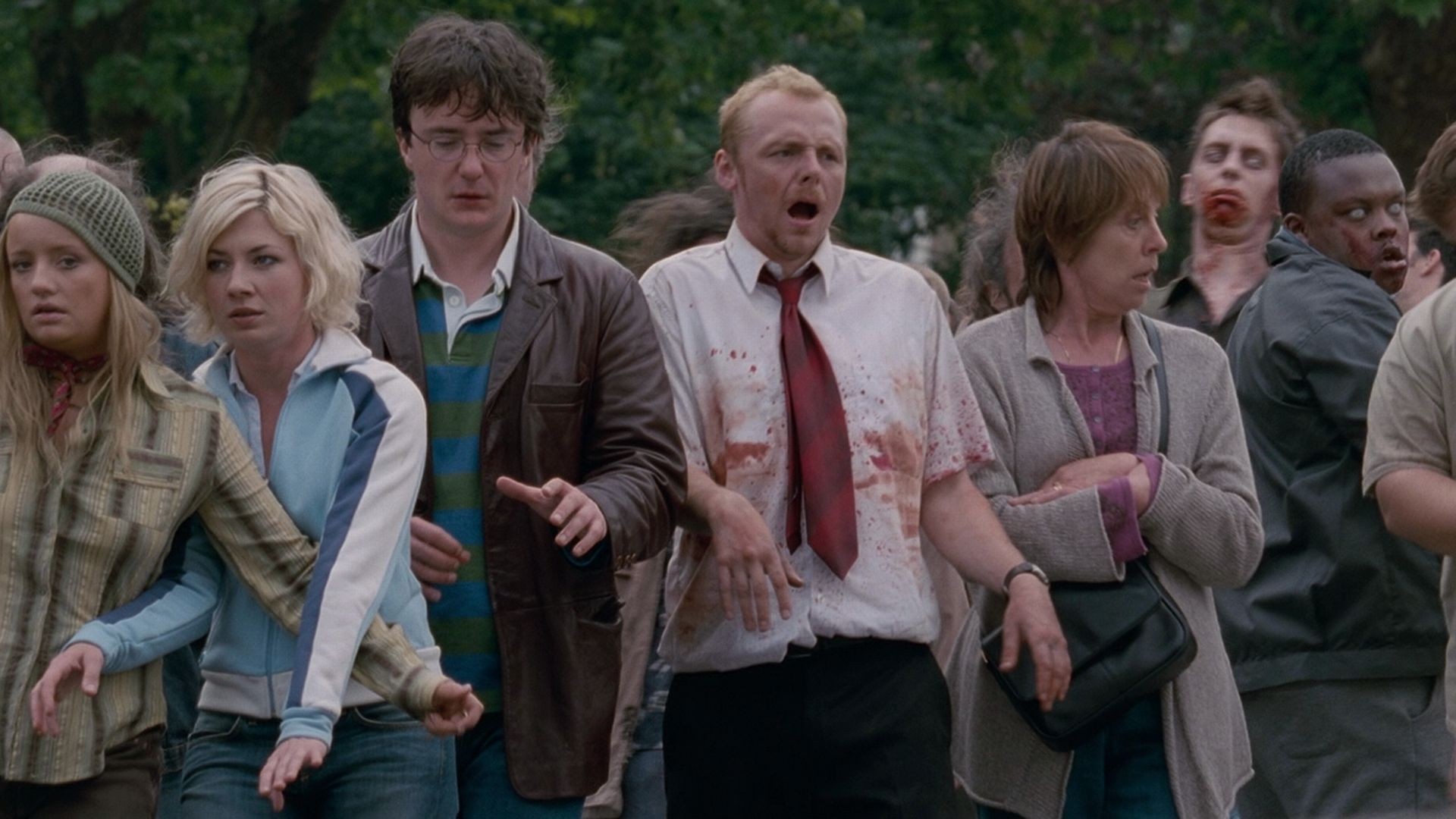
On the surface, Shaun of the Dead is simply a parody of zombie movies (which actually functions quite well as its own zombie movie). If you are a fan of the genre, you can tell that they've put a lot of time into it and that it comes from a great love of those classic George Romero zombie films. There are homages and references to other zombie flicks that aren't necessarily obvious unless you're familiar with those zombie movies and you're really paying attention!

All of the Edgar Wright movies are genre movies on the surface, but what sets his work apart is that they are so much more than just love letters or parodies or full of referential humor. They actually have legitimate substance: an actual, compelling story, realistic character relationships, development. Shaun of the Dead is no exception. The first of Wright's conceptual "Three Flavours Cornetto" trilogy, it tells the story of Shaun - a man going nowhere, stuck with his slacker best friend, ultimately avoiding "growing up." His unwillingness (or perhaps fear) of taking control of his life and "doing something" causes conflict with his flatmate Pete - a man who clearly has his life together. More importantly, it causes conflict with his girlfriend Liz, who does not want to feel stuck anymore, constantly spending nights drinking in the old pub with her boyfriend and his slacker best friend.

Shaun's life is nothing incredible. He appears to co-manage a small electronics store, working primarily with cocky teenagers who mock him constantly. He is at odds with his step father Phillip, who hounds him to remember his mother more. He is also something of a complete screw up, constantly making situations worse through his failure to follow through on promised actions.

This changes, of course, with the outbreak of a zombie plague. Suddenly, he and his best friend Ed find themselves as among the last remaining survivors in a world now overrun by zombies. Together, they come up with a plan to save Shaun's mom and Liz - his now ex-girlfriend - and hole up in the Winchester - the favorite bar of Ed and Shaun that had become a source of contention with Liz.

With this zombie apocalypse as the backdrop, Shaun attempts to take charge. He makes decisions with conviction and takes control of each situation that arises. Of course, his plan ultimately fails and everyone winds up getting killed except for Shaun and Liz. Just before they discover an escape route, Shaun breaks down and acknowledges what Liz and her friends, Phillip, and Pete all essentially told him before: he just can't get it together. Liz provides relief by saying that it's not that he came up with a plan and failed; it's that he tried something at all. Essentially, the difference between this screw up during the zombie apocalypse and all of those seemingly more minor screw ups during normal life is that here, he was trying 100%. He had no reservations; nothing holding him back.  Shaun's development has finally peaked and we see that he has grown up a bit and become a more responsible adult - ironically just in time to be eaten alive by the undead.


Like Hot Fuzz and The World's End, Shaun of the Dead is seemingly designed for re-watching. It exists on multiple levels. You can watch it a dozen times and peel back even more layers. Something Wright and Pegg love to do is play around with double meanings. Often, the first third of a movie is doing one thing. The final third is them doing the same thing again, but in a completely different way.

Take, for example, when Shaun leaves his apartment to run to the store. Immediately after passing the gate, a rogue soccer ball flies in and nearly hits him. Shaun looks at the kid and says, "Hey! You're dead!" It's a cliche threat, but if you've seen the movie before (or are just a really, really attentive movie watcher), you'll understand how accurate that line is. The next time we see the boy, he is a zombie. Or of course, during Pete's explosive speech toward Ed and Shaun. Referring to Ed, he says, "If he wants to live like a wild animal, he can go live in the shed!" And of course, that's exactly what happens. At the end of the movie, Shaun leaves to go to the shed where he keeps a shackled up, zombified Ed.

Then there's Ed's post breakup speech. "You know what we should do tomorrow," he says. "Keep drinkin'! We'll have a Bloody Mary in the morning, have a bite at the King's Head, a couple at the Little Princess, and stagger here to the Winchester for shots." This single line alone lays out the entire development of the movie. It's so obvious now that I can't believe it took me as many views as it did to notice it. Perhaps I was distracted by the relatively cheesy gag of Ed saying, "It's not the end of the world," just before a zombie knocks on the window of the bar.

The very next morning - completely oblivious of the zombie apocalypse - Ed is looking outside and notices a girl in the back yard. They go outside to investigate. Just before she attacks them, Shaun tries to ask her to leave. He notices her name tag says Mary (who you might recognize from the checkout woman in the opening titles). Of course, after she attacks them, they knock her over and she is impaled upon a piece of pipe. Another zombie shows up and the two pull out a shovel and cricket bat in order to bash their brains in - blood squirting everywhere. ("We'll have a Bloody Mary in the morning...")

On the phone with his mom right after, Shaun learns that Phillip has been bitten. They plan to go rescue her from him, but he hasn't quite turned when they get their. Phillip, of course, is Shaun's step dad with whom he has a rocky relationship with. Phillip has always been stern and strict with Shaun: always hounding him to do things, never giving him rewards or trust. In essence, Phillip is sort of like a tyrannical king in the eyes of Shaun. Although he was already bitten off camera, we do see him get bitten again as they try to leave. ("...have a bite at the King's Head.")

And of course, Shaun has to stop by Liz's flat to make sure that she's alright. After a close call, he climbs up the wall (something he tried and failed to do earlier), he finally gets in to rescue her. She is, essentially, his princess. He's come to rescue her (she even has a flat at the top of the apartment building - kind of like a damsel in distress sits in her tower). Her friends David and Dianne are there as well and ultimately decide to tag along. ("...a couple at the Little Princess...")


The final part took me forever to finally pick up as well (I actually didn't notice it initially until I started to talk about the Bloody Mary connection, then it all just clicked). When they finally get to the block the Winchester is on, the street is full of zombies (including an awesome, zombie Tyres from Spaced!). Their plan to get into the Winchester? Act like zombies! They quite literally stagger to the Winchester, only instead of being drunk, they are acting like zombies. Additionally, this is where they hold up. A regular joke throughout was the argument about whether or not the Winchester rifle hanging above the bar were real or not. Turns out that it is and they use it to take out a few zombies. (..."then we'll stagger to the Winchester for some shots.")

Just to touch upon something else: though Liz is essentially Shaun's princess, she is by no means a damsel in distress character throughout the movie. (Wright and Pegg write female characters better than perhaps anyone in Hollywood.) She ultimately makes the decision for her and her friends to go with Shaun. She is engaged in helping them succeed. She is supportive and constructive. And she is often more helpful in dealing with zombies than the other male characters! When Shaun pushed through a fence and attacked by a zombie, it's Liz and Dianne who rush in to help him. They don't even miss a beat. Meanwhile, David stands around watching while Ed just stands there texting. So even though in terms of the story, Liz functions a bit like a cliche "princess" character, she is by no means a damsel in distress nor a half character that only exists as a reward for Shaun. In fact, they only really get back together after working together. Shaun doesn't exactly do anything for Liz to function as a "reward" for his heroic behavior. Yet because the two of them work together, each pulling their individual weight, they both earn the return to relationship status.

Wright and Pegg are very meticulous, organized writers, rarely leaving anything as random. Upon review, I couldn't help but imagine that Shaun and the zombies essentially switch roles. At the beginning, Shaun appears to just be going through the motions of daily life. Even going to the pub with Ed - something they do for fun - seems like just the regular routine. The lack of ambition and enthusiasm for anything he is doing makes him seem like a metaphorical zombie. He only turns his life around after being attacked by literal zombies.

The references to other zombie classics will keep many viewers searching. There are many! They refuse to call them zombies in a reference to Danny Boyle's refusal to do so in 28 Days Later. (They also reference 28 Days Later with a news report at the end that has the anchor saying, "New reports of the virus originating in raged monkeys has been dismissed as bull..." before getting cut off.) There are references to Night of the Living Dead with the radio early in the film referring to a space probe returning to Earth prematurely. The anchorman who says to "remove the head or destroy the brain" is also a reference to the genre-sparking film.  Shaun's place of employ is even a reference to Evil Dead (Bruce Campbell's character works in a similar establishment). He even references that he is in charge today because, "Ash is out." (Ash of course is the name of Campbell's character.) There are a few others as well - in addition to some Star Wars references, a Clockwork Orange reference, and even some inside jokes for "Spaced" fans! ("Fried gold.")

The movie functions very well as a sort of "coming of age" story for mid to late 20 somethings who increasingly seem to be avoiding "growing up" these days. At the same time, it functions pretty well as a zombie movie. And at the same time as that, it functions very well as a comedy!

One of my favorite movies, this is just always going to be my Halloween tradition. This movie has honestly gotten better with every viewing I've ever had of it. I love films that are built on structure and exist on multiple levels. Few do a better job than Edgar Wright.

Reductive Rating: Amazing!
(Scale - Terrible..., Pretty Bad, It's Fine, Pretty Good, Amazing!)


Friday, September 2, 2016

The Host (2006)


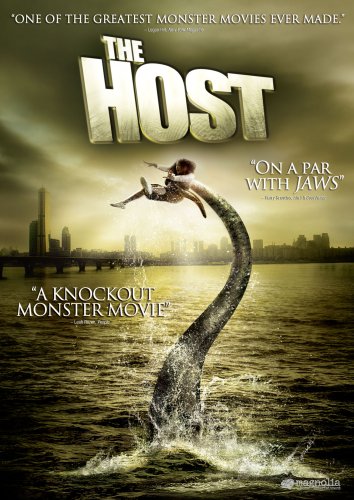
The Host is a South Korean monster movie centered around a dysfunctional family slowly, painfully coming together in trying to find their child, who was nabbed by the monster in its initial appearance in Korea. Kang-ho Song plays the slacker dad Park Gang-doo. With his bleach blonde hair and his saggy sweat pants, we get an immediate visual cue that this guy is not a very detail-oriented guy.

Breaking away from typical monster movie norms, director Joon-ho Bong (Mother, Memoirs of Murder - both of which are definitely worth checking out) quickly shows us exactly what we are dealing with. It takes all of 15 minutes before we get our first look at the monster as it attacks onlookers by the Han River. It looks something of a tadpole with giant forelegs, making it a fast and agile creature, often moving almost like an acrobat. At the end of its rampage, it grabs Hyun-seo and takes her with it as it returns to its den.

In the aftermath, people who were there are gathered in a gymnasium for a memorial service. The Park family is reunited in the tragedy of loss. Gang-doo's sister, the bronze medal archer Nam-joo, ignores her family as she walks straight up to the picture of Hyun-seo and breaks down into tears. His brother Nam-il, a former protester and hacker, shows up drunk, immediately blaming his idiot brother. As everyone around them sits in mourning, this family starts fighting, then trying to stop the fight, all while crying. It devolves from a sad, serious scene into an over-the-top comedic one. This perfectly exhibits the general tone of the film. It isn't light hearted, but it is funny. Conversely, it is poignant, but it's not too serious.

Gang-doo eventually gets a phone call from Hyun-seo. She is trapped in a sewer, but she's still alive. The Park family unites and escapes the hospital in order to search the sewers for Hyun-seo. All the while, the South Korean government is being regularly chastised by the Americans for failing to contain the virus and the creature and subsequently intervenes. They take over the hunt by authorizing the release of a chemical called Agent Yellow by the Han River to kill the monster. This sparks protest by angry Koreans who don't want any more chemicals dropped in their river. All plot points - from Nam-joo's archery to Nam-ils past as a rebellious college kid to Gang-doo's desperate rescue attempt for his daughter to the Korean/American stand off - converges at the end. The monster stuffs its mouth with Hyun-seo and another young child captured and heads off to the shore where protesters are butting heads with police as they move a device that will release the Agent Yellow.

The film is not anti-American, but it does have rather strong criticisms of the United States. It's easy to spot the sentiment here, where they make it seem as though the US is lying to get hands-on with a South Korean problem, but the movie isn't entirely anti-American. Indeed, during the first attack, they show a young American soldier on leave risking his life to help people being chased by the monster. It's almost to say that Americans are good people, but the government is shady and manipulative (something probably not that hard to argue, actually). In this way, it felt totally fair.

If you're not familiar with Kang-ho Song, you should check out his work. One of the most entertaining actors on Earth.

Though it breaks away from a lot of typical monster movie tropes and cliches (which is refreshing), it does hold on to one: the introduction scene being based on a real event. As unbelievable as that opening scene is (which features Scott Wilson as the crazy American scientist - Wilson probably best known at this point for his role as Hershel on The Walking Dead), it actually happened. There really was an American scientist who got annoyed that his chemical bottles had dust on them and thus dumped them in the Han River!  With an intro scene based on a real, controversial event and with its criticisms of American policy, it shares a bed with other classic monster movies like Ishiro Honda's masterpiece Gojira. But it does change up the formula in a lot of ways.

It has a unique charm to it, being both incredibly suspenseful and very funny. Most of the story involves this dysfunctional family coming together for a singular purpose. The Host is pretty much Little Miss Sunshine meets Jaws. It depicts a smaller scale version of the monster attack, certainly done better than the way they tried to do the "small scale view" with Cloverfield. This monster movie mixes the personal feel with the wider scope.

The movie is incredibly well acted, with each character making instantly likable characters who you root for the entire film. The character development flows perfectly as we watch Gang-doo slowly evolve into responsible adult and parent, but it took time. He was still screwing things up a long way - in one instance, his screw up costs a life. But he eventually does get his act together. Meanwhile, his brother Nam-il who constantly insults his brother for screwing up nearly blows everything by making a huge mistake himself. By the end, everyone is on equal footing.

In what is a rather surprising twist, they ultimately fail. They cannot save Hyun-seo in time. But Hyun-seo had been able to take care of and save another kid, Se-joo. In this sense, Hyun-seo was the only one who didn't screw things up. This was the final thing pushing Gang-doo into "growing up." Though he couldn't save his own daughter, he saw that she saved this other young boy. Gang-doo winds up adopting the boy and caring for him as his daughter did, and as he knows he should have always done for his daughter.

The final scene shows how far we've come as it we see Gang-doo looking out of the food shack, only this time, he is not the slacker screw-up he was during the opening shots. Instead of lazily watching out, looking bored, he has his rifle by his side and he is staring down at the river, ever vigilante should something else rise up to the shore. Gone is his bleach blonde hair and baggy sweat pants. For the first time, he is dressed like a real adult, and when we see him feed Se-joo, we know that now he finally is.

REDUCTIVE RATING: Amazing!
(Rating Scale - Terrible..., Pretty Bad, It's Fine, Pretty Good, Amazing!)


Thursday, August 25, 2016

Stranger Things (2016)


Netflix has a funny way of handling content sometimes. They'll make a hard push to promote things like Orange is the New Black, Daredevil, or House of Cards. Then they sneak in something like Lady Dynamite or, in this particular case, Stranger Things. For a show that got next to no real hype prior to dropping, the '80s nostalgia trip and Stephen King's Greatest Hits compilation almost immediately struck a chord with audiences, becoming one of the most talked about shows of the year.

In many respects, it's easy to compare Stranger Things to something like the original Star Wars. The creators were clearly influenced and inspired by many things that came before. Using that, they've essentially remixed many of those elements into something fresh. Though it maybe doesn't add too much new stuff to the table, Stranger Things largely succeeds by adequately bringing old things back. So many elements are either lifted from other works or are amalgamations of them, but they feel very fresh in modern times. It doesn't hurt that the Duffer brothers happen to have excellent tastes, subsequently taking from a wide array of films, television, and video games.

There's a lot one can talk about when breaking it down. Following a group of young, nerdy boys as they search for their missing friend, they stumble upon something incredible and terrifying. What makes Stranger Things feel even more refreshing is that they have practically abandoned the "mystery box" formula popularized by J.J. Abrams. There is a mystery in Hawkins, Indiana, and while not everything is spelled out for the viewers, we are not wholly ignorant to the goings-on. We watch D&D group Mike, Dustin, and Lucas search for Will. They don't know what happened to him. We the viewers, however, saw him get attacked by a monster, and get clues from another plot thread that tell us he is alive. Similarly, police chief Jim Hopper investigates unusual circumstances that we know the government is involved in.

It strikes a happy medium between unknown mystery and allowing us to watch how the characters deal with it. The trouble with shows like Lost is that the "what comes next?" and "what's going on?" questions often supersede the characters. It would have been easy for the show runners to hook people by revealing very little, ending each episode with enigmatic cliffhangers. Instead, they make sure to give viewers just enough that the driving factor for coming back to the show is concern or love for the characters.

(As an aside, a friend of mine pointed out that keeping the viewers more informed than the characters actually functions to relate those watching to the character of Will. Trapped in the parallel dimension known as the Upside Down, Will knows what is going on with this horrifying creature, but he is almost powerless to do anything about it. Occasionally, he can flick some lights, but other than that, he can't do much. It's an interesting take, and one that I find worth bringing up.)


Though references and influences of The Goonies and E.T. are pretty obvious (Episode 1 starts and finishes with nearly identical shots from E.T., for example), the show isn't just one of those kids-on-their-own adventure films. You've also got Chief Hopper trying to solve this unique mystery. It's sort of an X-Files, Twin Peaks, Jaws type of story. Plus, you've got Will's mother Joyce (the very enjoyable Winona Ryder) in this "Is she right or insane?" type of tale, fulfilling a Richard Dreyfus/Close Encounters of the Third Kind role. Then there's Nancy, Jonathan, and Steve who are essentially in an '80s rom-com at the start.

So much of the show excels when all these differing stories and genres start to converge onto a single point. At just eight episodes, it moves quickly. There isn't much time to dillydally, and these plots all begin to meet at almost exactly the middle. Being well paced dramatically impacts the effectiveness of the mystery, rewarding viewers in such a timely fashion so as to never feel like we're being reeled in by creators who would reveal that they used a lure instead of real bait.

Not everything is perfect, of course. While the internet appears to have a love affair with Barb, she's ultimately not much of a character worth noting in terms of the narrative. Her brief arc is tiny, slightly disappointing, and even highlights that sometimes the writing is a tad distracted - occasionally unsure of how much time to dedicate to each area of the story. The conclusion also has some anti-climactic moments that felt like they could have either used more of a build up or more clarity. The series starts off with the boys playing a Dungeons & Dragons campaign that spells out what is going to happen in the series (a structural tactic I always enjoy - see every Edgar Wright movie). The finale sees them finishing the campaign, with each friend objecting to its end with a series of questions related to the show's plot. Their questions about the campaign, and its lack of satisfying answers, all connect to the viewer's questions about the conclusion of the season. This is one of my favorite techniques in media. However, I'm not quite sure the fantasy aspect of the Dungeons & Dragons game ultimately connects that well with the sci-fi/horror elements that dominated the show. It's a neat way to spell everything out, but it doesn't quite connect as well as other aspects of the show, and feels a tad bit like a way to build their "nerd cred" by showing that they know something about D&D.

The acting is top notch for a show reliant on young child actors. Each one really stood out, right at home with all of your favorite kid-centric movies. The teens are also surprisingly believable characters for an '80s era set. There's been some strange criticism of Ryder, but frankly, she nails the understandably distraught and disheveled mother with the Dreyfus-esque "might be losing her mind" trope. Even David Harbour excels at the nuance of Chief Hopper, a character who starts off seeming like he's going to be unlikable, but winds up the most interesting part of the show.

Of course, no discussion of Stranger Things can be considered complete without mentioning the original score as well.  Composers Kyle Dixon and Michael Stein nail the '80s nostalgia, John Carpenter-inspired soundtrack. It's arguably more perfectly recreated than Disasterpeace's amazing soundtrack for It Follows, itself a throwback to Carpenter films.

Even if you're not a big fan of the '80s, or don't care about all of the references, Easter eggs, and nods to all those things thirty-somethings cling to out of an often misguided sense of unwarranted nostalgia, Stranger Things is still great. It's incredibly well structured, intelligently written, excellently paced, and one of the more visually intriguing shows to grace the Netflix platform.

Although, can we please agree to stop talking about its title fonts? Really, it's not that interesting...

REDUCTIVE RATING:  Amazing!
(Rating Scale - Terrible..., Pretty Bad, It's Fine, Pretty Good, Amazing!)