Monday, February 15, 2016

Deadpool (2016)


It's hard to say what the expectations were going into Deadpool. As a comic book character, few have as passionate a cult following as the Merc with a Mouth. As long as they made him violent and wise-cracking, fans were probably going to love it. The issue, though, is how do you get this to appeal to a wider audience? Or, how do you get someone who is, frankly, kind of annoying to be enjoyed by people who aren't part of the Deadpool Corps?

The solution seems counter-intuitive: don't spend too much time lingering on Deadpool himself. Yes, obviously the film follows Wade Wilson. That's true. Before his cancer and the ensuing experiments to activate his mutant genes, he was still going at about forty jokes per second. However, in those moments, he does come off as surprisingly human. As a mercenary, he appears to have a soft spot for victims who hire him for revenge. He falls in love. He even becomes afraid and angry in a very naturalistic fashion near the end of the experimentation portion of the story. 

Director Tim Miller (in his feature film directorial debut) wisely recognized that as a character, Deadpool is not particularly strong enough to carry an entire story by himself. He is at his best, most interesting, and most entertaining when in context of other characters. Too much Deadpool at a time, and you risk the non-fanboys getting annoyed by his increased sixty jokes per second. Miller avoids this through two key techniques. 

First, he jumps around. The film opens up in the "present" as Deadpool is trying to track down Ajax (or, Francis rather), the man responsible for torturing him, activating his mutant gene (which is a super healing factor), but also causing his body to become covered in tumors and lesions. Basically, he's pissed that he went from the super attractive Ryan Reynolds to what appears to be "an avocado that had sex with an older, uglier avocado," as stated by Wade's bartender friend Weasel (TJ Miller). After a humorous and violent action sequence, Tim Miller then cuts back to fill in the blanks. 

It works in part because Wade Wilson is less annoying and more interesting than Deadpool, so it gives us a reprieve from the hugely immature nature of his superhero alter-ego. Generally, jumping around through time is not ideal. However, Deadpool also breaks the fourth wall. A lot, actually. Eventually it cuts to him in the present, addressing the audience in order to fill everyone in. Going back to the beginning also works because it helps fulfill that side of the character. It feels less like poor writing or directing and more like part of the joke that Deadpool knows he's in a movie and he's being watched.

The other thing that helps Deadpool become more easily digested by a mass audience is that they pair him up with two X-Men: Colossus and Negasonic Teenage Warhead. The former is pretty much a stand in for your traditional, goody-two-shoes superhero. He's the "ideal" hero trying to recruit Deadpool to that side of the super people spectrum. The latter is largely there for the sake of dated pop culture references and kind of sexist and/or ageist jokes. (I'll actually address that in a moment.) These characters actually have a fair amount of screen time, and are a sizeable part of the final action sequence. This allows for more of that typical widespread action we expect in these movies, but it also places Deadpool in the context of your pretty traditional superheroes. Pairing Deadpool with someone playing it straight is critical to the success of the character, as it allows him to bounce off someone. This is why the best Deadpool comics are ones where he's part of a team (like X-Force) or paired with a character almost completely void of humor (Cable & Deadpool). 

So just to touch a bit on the humor itself: you probably won't have to dig hard to see people criticize the film for its occasionally sexist humor, or its ageist jokes, or its weirdly outdated pop culture references. These things all exist within the film, absolutely. The thing about Deadpool though is not that he is always funny. It's that he thinks he is. As a character, he has always been about saying all the jokes and thoughts that come to his head. He'll spray them everywhere just to see what sticks. This is true in the comics, in the games, and definitely in the film. Almost every line he has is a joke, and they can't all land. Most don't, actually. But that's not the point. Deadpool is a crazy guy who has no filter. That's his characterization. That's why he's one of the more annoying characters, and why you need him to be paired with others for sustained success. You don't want him to annoy the audience; you want him to annoy the other characters while the audience watches with amusement. 

As for the outdated references? Well, yeah, that's also a pretty big part of your typical Deadpool comic. These factors don't make him an easily accessible character, really. But it is what makes him unique. The film does a pretty great job capturing those aspects of his character. The fourth wall breaking might actually be where the comedy succeeds most, which would also be fairly similar to your typical Deadpool comic.

Not everything works in the film, of course. The conclusion of the Wade/Vanessa storyline feels a little strange. Deadpool's history is rooted in negative stuff happening, so it's kind of strange seeing a happy ending. (They probably did this just to make a bad "happy ending" joke, now that I think about it.) It's a bit strange of a decision though because that's a character they'll now have to keep track of going into the sequel. They'll have to account for this person whose only role was to be the damsel in distress and/or love interest motivator for the hero. It's strange too because perhaps the one thing they didn't exactly get was just how literally insane Deadpool is. Throughout the film, he's regularly addressing the audience. In the comics, though, he almost always has conversations with himself and his inner monologue. That's quite a difference, really. Breaking the fourth wall like that doesn't make him seem crazy. Arguing with the voices in his head? Kinda does. So it seems strange that they would keep around the person that grounds Deadpool. She's an important character because she does that in this film. She gives the film a surprisingly solid emotional core that definitely helps make the film as good as it is. But practically speaking, she kind of has to go.

The other thing that didn't quite work for me was his team of sidekicks: Blind Al and Weasel. Neither character really gets to do much but crack a joke or be the source of one. It would have been cool to see a more capable Weasel - the weapons buyer from the comics - actually helping Deadpool in a meaningful capacity other than just "emotional support." The jokes makes sense - TJ Miller is a hilarious comedian. But neither he nor Blind Al are allowed to really do anything. I'm not sure if they kept them on the sidelines because they already had Deadpool teaming up with Colossus and Negasonic Teenage Warhead, or if they just sort of forgot about them. Those characters don't often help him in the field, but they do help him plan and prepare. 

Other than that, I thought the action was really good. It was violent but not gory and super graphic. And they used the violence as comedy in some really effective ways (that sounds weird, I know). Sometimes there's a little too much "bouncing Deadpool," and that CGI doesn't look all that great at moments, but most of the time it was fine. The suit looked good and Reynolds was pretty great in the titular role. The sequences between Colossus and Angel Dust were also pretty fun. It was cool seeing some actual heavy hitters duking it out. 

It's hard to keep track of all the fourth wall breaking and all the Easter eggs in the film, but that highlights how well they actually got the character down. So if you're a hardcore fan of Deadpool, I don't see why you wouldn't enjoy the movie. And if you're more of a casual fan (like me), it's irreverent humor actually feels surprisingly fresh in the world of far-too-serious-for-their-own-good superhero movies. (Seriously, the trailers go from Batman v. Superman to Captain America: Civil War to X-Men: Apocalypse and it's like, Christ, lighten up, guys! It's starting to feel a little like we've moved into the late '80s era of superhero comics, but in film form.) 


Monday, February 1, 2016

Mirror's Edge (2008)


It seems strange to think that a first person parkour game would be much fun. On the most part, Mirror's Edge manages to be exactly that. While still flawed, it's still a solid game with a lot of promise. A sequel/reboot is on the horizon after nearly a decade, and it's great to see since the original showed promise.

It's become a little more common to see first person games that don't exclusively deal with shooting enemies and engaging in war-driven combat. Sure, a quick search would yield things like Portal or some of those "walking simulators" like The Stanley Parable. Mirror's Edge was one of the first to really try and do an action first person game where combat and gun play was not the focal point.

That, of course, shows. It's a bit hard to fully explain, but the shooting mechanics feel rather clunky. Aiming is more difficult than it usually is in games, you don't take many hits before you die, and you can't pick up more ammo - instead you have to ditch the gun when empty and hope to find another one. All of these contribute to that. On the other hand, shooting isn't the primary mechanic of the game, and making it more awkward to control creates incentive to find alternative routes. Most of the time, you can discover better pathways to escaping a level, but there still are some occasions in which it certainly seems like you have little choice but to engage.

Hand-to-hand combat is also slightly off. While it can be more reliable than using firearms, precision seems just as important in that area as it is with your parkour. So if parkour were the primary mechanic, those controls should be pretty tight, right? Certainly, that element of the gameplay is a lot more established. It can be frustratingly unforgiving at times, requiring very precise movement and aim of your character. Once you get the hang of running, it's actually pretty easy to see where you mess up. There are only a few areas in which it doesn't take much of an error to send you flailing to your death.

Levels are pretty well designed, although there are a few that can be confusing. Those moments are extremely frustrating, however, given how well the game uses colors to direct the player's focus. Though objects take on realistic shapes, the designers play a lot with colors. See something red? That's where you want to go to. Often, blue objects indicate dead ends or dangerous areas. Obviously, this plays to the idea of fleeing police (regularly referred to as "blues" by the characters). On a more basic color theory level, blues are generally "cool" colors - not particularly inviting - while red is considered a "warm" color. Reds stand out in contrast to general whiteness that makes up most of the backdrops, but also against the colder blues around. This is a neat trick that you see great level designers utilize. (Think Naughty Dog and the way that they use yellow to indicate where to move in both Uncharted and The Last of Us.)


It is a bit strange that the cutscenes interspersed between the levels are done in a totally different art style than the gameplay. What makes this different than, say, Final Fantasy X, is that the reason cutscenes look better in that game is they didn't have strong enough hardware to make an entire 30+ hour game look that good. Here, it's an artistic decision to make the game look realistic while the cutscenes are altered to a more animated and very stylized look. While I liked it, personally, I can understand why these two distinctly different styles may be a bit jarring for some players to transition between.

While the gameplay focuses on running - complete with added camera blur that coincides with your increased speed and momentum - the story focuses on more Orwellian themes. The plot is ultimately rather small and personal: it's the story of Faith (the player) trying to rescue her sister from the clutches of a corrupt individual fulfilling the villain role. What's neat about the story though is how it builds the world around this tale that is more personal and smaller in scope. The game clearly touches on the themes of what we are willing to give up in the name of "security." (The only colors found in the levels are also the colors of threat warning levels, if you needed more connection.) It maybe doesn't delve too much into those themes on any particularly deep level, but it's still an interesting backdrop to pin the story against.

All in all, it's a pretty solid, fun game. It can be a bit challenging and frustrating with some of its clunky gun controls and unforgiving precision for some jumps, but it never feels impossible. It's also on the shorter side, which might disappoint some. (I clocked in around seven hours, but ya know, it's nice to have a game you can beat in a week! I don't personally feel shorter game length is inherently bad, although the story here could have maybe used one more chapter.) It's great to see a new Mirror's Edge around the corner, because this game did show a lot of promise. And I agree with Cheech in Ghostbsuters II, "Better late than never."


Sunday, January 31, 2016

Tom Brady and Peyton Manning Are More Even Than You Think

Tom Brady won't be the first quarterback to play in seven Super Bowls. Despite making it to five consecutive AFC Championship games, he's gone 2-3 in that span. Outside looking in. Can't win them all, of course. People shrug off Patriots losses in the post season with, "They'll be in contention next year." It's easy to take their success for granted. It's completely unfair to bash the organization for not making it to their seventh Super Bowl in fifteen years. They've still got a success rate better than any team in NFL history, especially during the salary cap era. These losses are a testament to how difficult it is to make it to the Super Bowl at all, never mind year after year.

In many ways, the game in Denver mirrored that vomit-inducing loss in the 2007 season to the New York Football Giants. If anyone remembers that game (and I know, I know, Pats fans have been trying so hard to forget), it wasn't really Eli Manning that won that game for the Giants. It wasn't that miracle helmet catch. It wasn't even that dropped Asante Samuel pick that would have put the NFC champs on ice. It wasn't New York's running game or receivers or special teams. It was barely even their coaching, really. It was their defensive front's execution.

In that Super Bowl, Brady was sacked five times and got pressured throughout the entire game. Though he completed 60.4% of his passes, he had to get rid of it quickly to avoid the rush. He averaged a paltry 5.5 yards per attempt, with 29 completions for 266 yards. Outside of the two Giants Super Bowls, Brady has typically excelled. Here, he looked mediocre, largely because of the pressure. Make no mistake about it, the true MVP of the game was the entire Giants defensive line. 

The same was especially true in 2011 as well. The pressure doesn't exactly show up on the stat sheet - Brady was sacked twice - but the numbers are fairly similar. Brady completed 65.8% of his passes, but still averaged just 6.7 per attempt (although at this point, that was more normal as they had restructured their offense around the short game). Yet the game was impacted greatly by the consistent pressure. Recall that the game started with an intentional grounding safety on the Patriots' opening possession. (Since a lot of people have been playing the "blame Gostkowski game" for the most recent loss in Denver, let's keep in mind that if in that Super Bowl Brady makes a smarter play or a better throw, the Patriots are down by two points going into that final drive, instead of the four. Imagine Brady only needing to get into field goal range to win the game, instead of needing to drive eighty yards, most of which on a last second Hail Mary. Point being, no one play decides the outcome of a game, even late.)

Since those Super Bowls, teams have been trying desperately to copy that. The success for the Giants was not so much in the game plan itself; it was in the execution. It's no secret that every quarterback will struggle if you can get consistent pressure. This always seems to be the big knock on Brady. "He's great! But if you can get pressure on him, he's not that good, really." 

Well, no duh. Virtually every quarterback sees their performance drop significantly under pressure. It's always been strange that this is something people use to diminish Brady's talent, but that never gets applied to anyone else (and certainly, that argument always held true of Peyton Manning too). At the same time, Brady is slightly worse than most others when pressured. Only two other quarterbacks see a bigger drop in QBR with pressure than Brady (Philip Rivers and Drew Brees - two guys well respected, especially Brees, who nobody knocks for being bad under pressure). Even more, you don't have to look that hard to find video evidence of it. Brady doesn't lose a lot in the post season, but when he does, it's almost always against the Giants, Broncos, or Ravens. 

Speaking of, remember that two year stretch when Rex Ryan was a somewhat decent coach and had a pretty great defense? The Jets succeeded against New England in their divisional game - an MVP season for Brady - largely due to their pass rush. Brady completed 64.4% of his passes, and he threw one of the only picks he had all year. Though he completed 29 passes, he averaged 6.6 yards per attempt and threw under 300 yards. More importantly, he was sacked five times.

When you go back and watch the 2016 AFC Championship, Manning had almost nothing to do with it. He'll get the credit, and Brady-bashers are quick to point out that Manning has a winning record against Brady in AFC title games. But the only way this game could have been less about Manning is if Brock Osweiler had started. The Patriots offensive line had been a problem all season. They couldn't block someone on Twitter. And it culminated in one of the most dominant performances by a defensive line since the 2011 Super Bowl. 

What's ultimately interesting about Brady's post season statistics is that he's played in so many damn games. Consider the fact that he's played in ten AFC championship games. That's almost three quarters of an additional season, just in AFCCGs alone! Never mind all the divisional games, and the few wild card games, or the almost half a season in Super Bowls too. No quarterback has played in more post season games. It's actually kind of ridiculous. He's probably played in more post season games than most NFL quarterbacks play regular season games in their careers! The post season is different than the regular season too. It's against superior competition, and it's so much harder to win in the playoffs. It's funny that people mock Brady for losing those two Super Bowls, and yet, Peyton Manning has also lost two Super Bowls. There's a good chance he's about to lose his third too! What will the talking point be if Manning loses almost as many Super Bowls as Tom Brady has won? (I imagine that it will default to "team if Brady succeeds / team if Manning loses" and "Brady if Brady loses / Manning if Manning wins.") 

Inevitably, Manning v. Brady arguments will, at some point, devolve into who had better weapons. In recent years, Brady has had the greatest tight end to ever play the game (and who can barely last a whole season because of the way he plays mixed with the way the NFL doesn't actually give a crap about player safety.) For one year, he even perhaps the greatest receiver in history in terms of pure talent. But then what else? People drop Wes Welker in there, or Julian Edelman. To be clear, those are great players. The importance of Edelman was excruciatingly obvious in the month of December when he was out. But let's not forget what we're saying here: Tom Brady has had better weapons because he had...slot receivers?  Again, they are absolutely all-time great slot receivers, but how strange is it that we're looking at that position as the key to offensive success? (Also, let's not forget that Manning had a few great slot receivers, in addition to his great wide outs.) 

When all is said and done, however, the talent is pretty even, but I'd argue it's skewed more in Manning's favor. Even now, Manning has some of the best receivers in the league, which he can barely do anything with due to his noodle arm. Either way, it's not a large enough gap overall to definitively grant one player the GOAT on surrounding offensive talent alone. However, it is worth reminding people that so much of Brady's career has been about him "making due." He gets weapons and talent, but it's usually not much. (And if we want to go back to playing the "what if" game, Peyton Manning doesn't win his only Super Bowl if Brady has actual receivers in 2006. I'm not sure how many non-Pats fans remember the likes of Reche Caldwell and Jabar Gaffney...)

Reflecting on it highlights something about this Patriots organization. Stripped of all hatred of the team and its success, from a purely football and institutional standpoint, the Patriots with Brady at the helm have been one of the most fascinating organizations. They've fundamentally revamped their offense every three to four years, often setting the trends. Consider that Brady's most traditional years were early in his career. Where the Indianapolis Colts always built their team specifically around Peyton Manning, overloading with offensive talent often at the cost of defense, the Patriots never seemed to care that much. When they started losing that traditional structure - losing guys like Troy Brown to retirement and David Givens and David Patten to free agency - they attempted to plug those holes with whoever (namely, the aforementioned Gaffney and Caldwell).

Things changed in 2007, when they signed Randy Moss and Wes Welker. Though more traditional in its structure, and one of the only years Brady had a typical wideout, the offense was actually built on more of a high/low game. Slot receivers had been used before (especially in Manning's offense with the Colts); the Patriots revolutionized the position. After that stint, they revamped again to heavy use of tight ends. When Aaron Hernandez wasn't shooting people, he was carving up NFL defenses. Rob Gronkowski emerged as an almost literal monster that defenses are still struggling to figure out.

So none of this is to suggest that Brady hasn't had real talent around him. Gronkowski has redefined the tight end position while Julian Edelman has somehow emerged as an even more prolific and significant slot receiver than his predecessor (Welker). But let's just be clear about this: for the last five or six years, the Patriots offense has been consistently impressive while being built around tight ends and slot receivers! Stop me if this sounds like talent your team will win with: Edelman and Gronkowski (the exceptions), Danny Amendola, Brandon LaFell, Keshawn Martin, Kenbrell Thompkins, Aaron Dobson, Brian Tyms, DeAndre Carter, Scott Chandler, and Michael Hommanawanui. Let's factor in end-of-their-careers Chad Ochocinco and Brandon Lloyd (who, to be fair, was actually a much better target for Brady than most Pats fans seem willing to recognize).

Point being, unlike Manning-led offenses, Tom Brady has never had the benefit of an offense specifically built around him. Quite literally, he has always had to adapt his game to his constantly changing offense. Of course, we can't knock Manning on this: we've never really seen him have to have to do that. This year might very well be the first in which Manning is on a team that specifically focused on building outside the offense, recognizing that the quarterback is hardly the player he once was. His game has changed dramatically due to injuries and age, not because his team has changed. Even still, this highlights that Manning has always had teams catered to him, whereas Brady has had to maintain relevance by fitting into the new offense. It's easily one of the most overlooked and underappreciated elements of Brady's game, and something few Brady-bashers or Manning-maniacs will acknowledge.


That out of the way, Brady is hardly the infallible quarterback he's sometimes made out to be. His postseason numbers are impressive as a whole - although some of it is due to the sheer number of games played. For example, setting the record for most passing yards in the playoffs makes sense given no quarterback has played in more games.

One way that Brady and Manning are similar though is that Brady can be a bit erratic in the post season. His best and most consistent statistical years were actually earlier in his career, when he was part of a more traditional offensive structure (and the kind that Manning enjoyed for most of his career).  Some might make note that his most impressive post season performances have come against somewhat lackluster teams. For example, his six touchdown game came against the Denver Broncos led by Tim Tebow. He's also had a bunch of success against the hapless (and defenseless) Indianapolis Colts as led by Andrew Luck.

Over the course of his thirty-one post season games (nearly the equivalent of two full additional seasons, mind you), Brady has completed 741 out of 1183 passes (62.6%) for 7,957 yards (265 yards per game) and thrown for 56 touchdowns to 28 interceptions (a 2:1 ratio). He's also got a 22-9 record overall (.709 winning percentage). While he's had his struggles too (especially, strangely, in AFC championship games), it's also worth noting that the playoffs are always harder on any team and quarterback. After all, Brady has faced a top ten defense in two-thirds of his post season games.

I've written before about something of a pattern that emerges when examining his yearly playoff performances. Most often, he starts off looking great, follows it up with a bad performance, and then follows that up with an average game (if they make it to a third game.) Seriously. It's super weird, but also totally true.

In all of his thirty-one post season games, he's only played in the wildcard round three times. He's 2-1, completing 58.2% of his passes, 189 yards per game, and throwing a total of 7 touchdowns to 3 interceptions. All three games were against top ten defenses.

He's played twelve divisional round games, and this is typically excels. He's 10-2 there, completing 63.3% of his passes, averaging 284 yards per game, and logging 24 touchdowns against 9 interceptions (so almost a 3:1 ratio). 8 of those 10 games were against top ten defenses.

Of course, he's also played in six Super Bowls. Those two Giants games were a bit of an outlier in terms of his typical play in the big game, but it's worth remembering that those Giants teams had a killer pass rush, which dramatically impacted the game. Overall though, he's completed 67.6% of his passes, averaging 267 yards per game, and he's tossed 13 touchdowns to 4 interceptions (so he's thrown a bit over a 3:1 touchdown to interception ratio). And, obviously, he's 4-2. What's strange is that his best performances were against all the teams except New York, which was the only team without a top ten defense he's faced in the Super Bowl.

So he's pretty great in Super Bowls, and he's almost automatic in the divisional round. And while not super impressive, he's pretty reliable in wild card games - if he ever plays them. And yet, in AFC championship games, he's completed 59.6% of his passes, averaged 237 yards per game, and has thrown 12 touchdowns to 12 interceptions. What's strange is that only half of these matchups were against top ten defenses. Disregarding his wild card games due to the severally limited number, Brady's completion percentage drops about four points from divisional rounds and eight points from Super Bowls. His yards drop by thirty to fifty yards per game. And his pretty usual 3:1 touchdown to interception ratio is altered to a mediocre 1:1.

It's super weird. What is it, exactly, that makes the AFC championship game so much tougher for Brady and company? Part of it, of course, is the inherent nature of the playoffs. People tend to take the Patriots continued success for granted. They're the only team I've ever seen become favorites just by simply being there (looking specifically at the 2011 Super Bowl when there was no reason for them to be favored against a clearly superior and more complete Giants team). Yet winning in the NFL is pretty hard; winning in the post season even more so. The competition gets better, defenses get stiffer, and when you've played in 30+ post season games, it's just literally impossible to win them all. People knock the Patriots whenever they fail, but even the most ardent haters are holding them up to an insane standard, because they're the most successful dynasty in NFL history. (Seriously, for the Patriots to have proved the haters wrong, they'd have had to win 13 Super Bowls in the last 15 years...That's barely even possible in Madden games!)

Part of it too is, of course, while the Patriots regularly get the bye week, they're not always the number one seed. This means that most of their divisional games are played at home, while a fair amount of the AFC title games are on the road, and Super Bowls are on "neutral" territory. Brady hasn't exactly been at his best on the road in playoff matches. While he's 15-3 at home, he's also 3-4 on the road. (Worth noting, three of those losses were in Denver.)

Keeping everything in perspective of the increased difficulty of the post season, and with how the NFL is set up to prevent teams from having this kind of sustained success, Brady's numbers are still very impressive. Still, he's not perfect. He'll struggle if you get a great pass rush, and if it's on the road, but he's still reliable and great much more often than he's not.


Really the only thing that stands out, when all is said and done, he's at his weakest in AFC title games. He's managed to get his teams to overachieve on numerous occasions, most notably 2006, 2011, and 2015. (Seriously, it's hard to win on the road in the playoffs when you've got a weak o-line and virtually no running game due to injuries. And yet, the Patriots were a two-point conversion away from bringing that game to overtime.)

Manning supporters will regularly discredit Brady's post season numbers for being team achievements, yet will give Manning credit for his. At the same time, Brady fans do tend to sell Manning a bit short. It's true, Manning took a while to eventually get good in the post season. He actually had largely turned it around. 2006 was definitely a turning point for him. (Of course, that AFC title game pretty much was the Super Bowl given the winner went onto face the Chicago Bears...led by Rex flippin' Grossman.)

While Manning has played in five fewer post season games, it's still enough to compare. Here are some comparisons.


RECORDS:

Playoffs/Total:

Tom Brady: 22-9  (.709)
Peyton Manning: 13-13  (.500)


Home Playoff Record:

Brady: 15-3  (.833)
Manning: 10-6  (.625)


Road Playoff Record:

Brady: 3-4  (.428)
Manning: 2-5  (.285)


Wildcard Games:

Brady: 2-1
Manning: 3-4


Divisional Games:

Brady: 10-2
Manning: 5-6


AFC Championship Games:

Brady: 6-4
Manning: 4-1


Super Bowls:

Brady: 4-2
Manning: 1-3


Playoff Games Versus Top Ten Defenses:

Brady: 20
Manning: 15


Record Versus Top Ten Defenses:

Brady: 16-4  (.800)
Manning: 8-7  (.533)


INDIVIDUAL STATS:

Totals:

Brady: 741/1183 - 62.6%       7957 yds - 265 ypg     56 TDs  28 INTs  (2:1)   67.7% against top 10 defenses
Manning: 636/1004 - 62.3%   7198 yds - 276 ypg     40 TDs  24 INTs   (1.7:1)    57.7% against top 10 defenses


In Wild Card Games:

Brady: 60/103 - 58.2%    567 yds - 189 ypg       7 TDs  3 INTs  (2.3:1)     100% against top 10 defenses
Manning: 153/228 - 61.7%   1969 yds - 281 ypg   13 TDs  6 INTs  (2.1:1)   42.8% against top 10 defenses


In Divisional Games:

Brady: 298/471 - 63.3%    3413 yds - 284 ypg       24 TDs   9 INTs  (2.7:1)    80% against top 10 defenses
Manning: 268/436 - 61.4%   2830 yds - 257 ypg    15 TDs  9 INTs   (1.7:1)    45.5% against top 10 defenses


In AFC Championship Games:

Brady: 216/362  -  59.6%      2372 yds - 237 ypg       12 TDs   12 INTs  (1:1)   50% against top 10 defenses
Manning: 125/208 - 60%      1539 yds - 307 ypg        9 TDs     5 INTs   (1.8:1)   100% against top 10 defenses


In Super Bowls:

Brady: 167/247 -  67.6%      1605 yds - 267 ypg         13 TDs   4 INTs  (3.25:1)    67% against top 10 defenses
Manning: 90/132 - 68.1%     860 yds - 286 ypg           3 TDs     4 INTs   (1:1.3)     67% against top 10 defenses


Versus Top 10 Defenses:

Brady:  466/742  -  62.8%     5103 yds - 255 ypg     38 TDs    20 INTs   (1.9:1 ratio)
Manning: 368/581 - 63.3%   4208 yds - 280 ypg     23 TDs     13 INTs  (1.7:1 ratio)


Basic point here is that Manning and Brady have been a lot more even than backers of both seem to realize. On the surface, of course, Manning fans (Fannings?) will suggest that the even play, yet heavily skewed record indicates that Brady has simply been part of a better team, hence more success. Stats don't exactly tell the whole story, of course. It would be a little hard to argue that Brady hasn't benefited from a more well run organization that actually knows how to build a team. People mention that Manning was drafted by a dismal Colts franchise, which is true, but ignores that the Patriots weren't exactly top notch when Belichick took over in 2000 either.

But here's the thing: remember Peyton Manning's one Super Bowl success? If the argument is that Brady won due to team effort, that argument goes double for Manning's ring. In his 2006 campaign, Manning threw six interceptions to just three touchdowns. He threw more interceptions than touchdowns in two consecutive games. On the one hand, he did face the top three ranked teams in total defense. On the other, he faced only one of them during his horrible stretch. I've noted before that the Patriots sometimes win in spite of Brady (see 2006 and 2007, when Brady combined for four touchdowns and six interceptions against the Chargers), but Brady has never had a bad stretch in the post season like that. At least, none that the Patriots survived. Brady has only ever accounted for more turnovers than scores in a post season run once - in 2009 when they went one-and done.

Speaking of, Manning has also gone one-and-done eight separate times, compared to Brady's two. Again, natural inclination is to say, "team effort!" Indeed, Manning's success has evened out since joining the Broncos, a team wherein John Elway has wisely built arguably the strongest overall team Manning has ever played for. (Is it wrong that I think of Elway as a better GM than he was a quarterback?) But the stats tell a story of a mediocre Manning in most of those games. They also tell of a poor Brady in the one-and-done campaigns he's been a part of. Point being, to simply shrug everything off as "team effort" ignores the role a quarterback has on a game. For example, you can't ignore Manning's role in a loss wherein he completed 45% of his passes for 137 yards, 2 interceptions, and 0 touchdowns (as he did in his third post season, facing the New York Jets). Nor can you ignore his inefficiency in the red zone in 2005 against the Steelers.

Plus, if the argument is always "Brady succeeds with team effort," then we can't turn around and pin Manning's success in AFC championship games on primarily him. You don't really get to pick and choose when to apply that argument. Either it applies to both or it applies to neither.


At the end of the day, these guys are two of the greatest quarterbacks of all time. The fundamental difference though is that when push comes to shove, in the biggest game of the year, Brady's just better at scoring.


Thursday, January 28, 2016

Guacamelee (2013)


Interested in funny little platformers that you can play with a friend and still get a good challenge? There's a good chance that you'll enjoy Guacamelee. Drawing influence from traditional Mexican lore and culture, the game provides a fair amount of cultural insight as well as entertainment.

Right off the bat, you can't help but notice how bright and colorful it is. Animation looks cartoonish, and everything is in bright, warm colors. This world pops and stands out. It's score perfectly matches as well, with the sounds of traditional Mariachi music and instrumentation mixing with modern electronica sounds. The themes throughout the game stand out as much as the backgrounds, character designs, and animations.

The game follows Juan, an agave farmer who is in love with El Presidente's Daughter. One day, an evil charro skeleton arrives, kidnaps her, and kills Juan in the process. Ending up in the land of the dead, Juan is reinvigorated with the power of a sacred mask given to him by a luchador. He is transformed into a powerful hero in order to fight an army of skeletons and magical henchmen, all to save El Presidente's Daughter.

You can already see a bit of the Mexican folklore that is used as the ground for the story. Along the way, Juan must learn new skills from the strange and humorous Uay Chivo, an old man who is always in the form of a goat when you run into him. He shows up after you destroy one of his statues, annoyed, but giving you new powers that aid you through the levels.

At it's core, the game plays a bit like a Mexican Mario. It's story is just a "save the princess" one, where you come so close several times, only to have the villain pull her away at the last moment to a new location. Combat is much more a role in this game, of course. After all, it's called Guacamelee for a reason! To be sure, many of the trials in the game come from navigating a hazardous environment. While it's not quite like Mario's traps and hazards in specifics, the idea of traversing areas where you can fail to cross and die is prevalent. However, you'll be doing a lot more than just jumping on enemies. Instead, you will be engaged in melee combat - sometimes with loads of enemies! As you advance, both enemies and environmental hazards get more difficult.


By the end, you really need to have gotten a good grasp on all the powers and abilities to stand a chance. This is one of those games where you need to be rather familiar with it to win. The learning curve is pretty well designed, as it rarely introduces new things that are overwhelmingly difficult compared to everything else it introduced earlier.

Part of the beauty is that - again, like a Mario game - the levels may be straight forward and linear; the overall world is not. Though some levels are only accessible after you gain certain abilities, the player is largely free to roam. Other than a few set moments, especially early in the introduction and tutorial, there isn't really a set order to do things. The maps give you markers for where to go to advance the story, but you don't have to rush to do that. This goes a long way to letting players feel like they have control and choice in a game that might otherwise feel pretty linear. As a result, it rarely does feel that way.

Of course, some of the challenges are really difficult. I had a few moments where I had to stop playing and return the next day because I was getting too frustrated. If you're going to pick it up, be prepared to die. A lot. On the other hand, though, I always got through those tough parts the next day. when I reviewed Journey, I mentioned how nice it is to get some of those "lean back" games that are relaxing and calming. Guacamelee highlights how satisfying it can be to get the opposite: a "lean forward" game that's challenging and frustrating. Seriously, few things are more satisfying than overcoming a difficult section in a game.

You also have to just love a game where one of the mechanics is you turn into a chicken to access narrow pathways. The game is as funny as it is fun. Though I didn't get to try co-op at all, it does seem like a good game to play with a friend.


Tuesday, January 26, 2016

Journey (2012)


Every once in a while, it's nice to take a break from all those action games. Sometimes, the beauty of a game is in the simple exploration of a new world. Thatgamecompany has made a few really great, relaxing, laid back games with Flower and Fl0w. Their crowning achievement to date, however, was 2012's beautiful Journey.

The joy of Journey is that they don't really tell you anything. Instead, you just go. Dropped in this expansive desert, you're given no explanation, no real tutorial period, no hand-holding. All they do is give you a destination (the large mountain off in the distance) and the player just goes. There are a few moments where the game provides a brief text tutorial bit, but there is little in the ways of control. One button actives magical carpets that restore your power. Another button jumps. And another button plays a musical chime. Movement of the character is controlled by the left stick, with camera control on the right. That's it!

Thatgamecompany makes incredible games that defy description sometimes. It's hard to describe Journey as a platformer - you will jump around platforms, but that's only a tiny part, and there's no fail state. Yet it's also not quite right to call it a puzzle game either - you will need to figure out how to get through certain sections, but it's mostly about finding the right place to go, not the correct actions to take.

The title of the game perfectly describes it, though. It's just a literal journey. What's perfect is the way they direct your attention to a particular path or destination, but rarely force you to go straight through. Some of the areas, especially in the deserts, are huge. Though you're really only motivated to move linearly through these sections, going from object in the distance to object in the distance, the game never feels like you can only go that route. It feels wide open, as if you could go in any direction you want and wander for however long you wish.


Environments are gorgeous and well realized. Making it better are the distribution of magical carpets, the source of the player's powers. Encountering them restores your energy, allowing you to jump and chime and transform objects. These magic carpets move and feel like individual creatures. There are even occasions featuring a giant hammerhead shark, except made out of carpets. The aesthetic of the game is consistent through and through, and it's interesting and gorgeous.

At times, you will encounter other players online. There isn't really much to do overall. Players cannot communicate via voice or messaging. The only way to get the attention of the other player is to hit your musical chime. Mostly, players will help each other out by showing them the way. For instance, I was having a moment at what seemed to be a dead end. Another player had been around, found a magic rug, and followed it upward to the next area. That player chimes, got my attention, and led me to the next area too.

It's kind of brilliant. Low-key interactivity online in a game means that it's almost impossible to have a negative experience. It also adds to the sense that you are simply on a journey, start to finish. Scattered about, you'll run into other players who are also on their own journey.

Oh yeah: we can't forget about the score! Since there's no dialogue, and sound effects are minimal, most of the audio is the simply wonderful score conducted by Austin Wintory. Wintory's epic and perfectly matched soundtrack was the first, and remains the only video game score to have been nominated for a Grammy.

Overall, it's such a unique experience. Die hard gamers may be reluctant to call anything Thatgamecompany does a "real game." After all, there is virtually no challenge, nor is their a fail state. You cannot lose Journey.  But sometimes, the best part of a game is not the challenge, or feeling empowered to succeed. Sometimes, it's just about getting to the end. Journey is a magical adventure that really makes you lean back and enjoy the view. While this kind of relaxing, yet touching game isn't for everyone, it's definitely for anyone just looking for an experience without any of the frustration that can sometimes accompany more traditional games.


Sunday, January 24, 2016

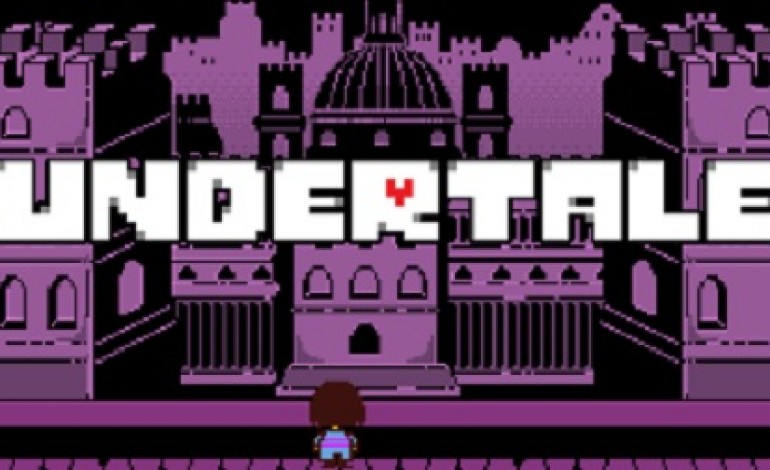
Undertale (2015)


Sometimes it's easy to roll one's eyes at this growing trend of retro-graphic indie games. Of course, it makes sense given that smaller developers have less money to spend on graphics, and the old Super Nintendo graphics were hyper stylized. And, of course, one look at the Hollywood box office hints at how powerful nostalgia is as a marketing tool. It all makes sense.

Yet Undertale is something wholly unique and modern while feeling retro and nostalgic. Yes, the observant gamer can see homages to older RPGs. However, there's almost nothing else like it out there, and more importantly, few games are as well written, with memorable characters and an intriguing premise.

See, most RPGs are built on the basic conceit that you are just going to mindlessly kill enemies as they appear. We're never meant to wonder about whether it's fair we just took out that Rolypoly in Chrono Trigger, nor are we meant to dwell on the fact we've slaughtered god knows how many Adamantoise throughout the Final Fantasy franchise. It's all pretty clear cut in black and white. These enemies are monsters. Don't think about it; just kill them. Even most boss fights can be reduced to that.

Of course, it makes sense and there's nothing wrong with that! It clearly works for those games. What Undertale does, though, is add a little more to those random encounters. These are sentient beings with feelings and insecurities. Most of them don't even really want to fight. As the player, you get to decide how to approach each battle. Will you simply fight them and kill them, like you're accustomed to in those other games? Or are you willing to put yourself at slightly greater risk to figure out how to spare them?


To fight enemies, it's a pretty straight forward mechanic, but it's not your traditional style. Instead of simply selecting "fight" and having your character attack with random damage dealt, you get a bar with sliding markers. Timing is the key, as you hit enter to stop them. The closer they are to the center, the more powerful your attack will be. It's actually a really solid compromise between the more laid back and passive style of older RPGs with the more modern desire for faster and more interactive systems.

If you try to play through without killing things, then you need to figure out the proper string of Actions to put the enemy in a mental place to stop fighting. Each enemy has their own unique action options. The key here is to pay attention to what the enemies say in response to a particular action. It pays to start of by "Checking" them, then adjusting your actions accordingly. Sometimes, it's pretty quick and straightforward. Other times - especially with boss fights - it can take a long, long time to wear them down mentally.

When the enemy attacks, a bullet hell type mini-game opens up, forcing you to dodge a serious of incoming attacks in a limited space. Admittedly, I was not so crazy about that aspect of the gameplay. Kind of found it tedious and not particularly fun. Sometimes the attacks would also speed up and get to the point where I just honestly couldn't keep up. So much of dodging is simply about identifying the attack pattern, but that can be hard to do if you can't even see what the attacks are. This can make the game extremely frustrating at times, but it never really feels impossible.

When you die, you get these messages about how you should not give up. Stay determined! Stay strong! This is sometimes easier said than done, especially with boss fights that seem never-ending. And yet, if you can stay with it, the story never disappoints. For a short game that takes less than ten hours to complete, the lore is surprisingly well established.


You'll wind up meeting a memorable and unusual array of characters, from the skeleton brothers of Sans and Papyrus (and yes, they do speak in their respective fonts - yes, this game makes font jokes) to the absurd game show hosting computer Mettaton, everyone you meet leaves an impression. If you play your cards right, you can even use them to help you defeat the menacing Flowey at the end (the true, evil, final boss).

Odds are, you'll want to replay the game, even if you're like me and were maybe not so crazy about the dodging attacks mechanic. As mentioned, there are a few different ways to play. You can avoid killing things (Pacifist), or you can just go through and slaughter everyone (Genocide). They result in different endings, but also in different experiences. Characters respond differently according to your actions. And oh yeah, accidentally kill that boss while trying to play Pacifist? You can't just reload your game. You'd have to completely reset the game in the opening menu. The game recognizes when you've reloaded your game after performing an action you didn't want to do, so unless you reset the game (restarting the entire game), your mistakes and second guessing actions stay with you the whole time.

The key element of this game that makes it so interesting and compelling is the choice. Rather than creating binary moral decisions - like Mass Effect or BioShock or any and all Telltale games - the decisions you make play out in real time. They don't pause the game and make clear that you are making a choice. Yet every time you encounter an enemy, you have to do so. Do you kill them? Do you risk your own life trying to figure out the proper order of actions to spare them? Do you try to flee? It might seem like it's pretty easy to just go through and kill everything, or just go through and spare everyone, but there will almost always be occasions that make you reconsider your overall strategy.


And that's exactly the thing: whenever you do struggle to show mercy, and killing the enemy seems like it will give you the best chance of winning and advancing, you know that it's your call. It's your choice. The game makes it clear at the getgo that you will always have the ability to spare enemies - including all of the bosses. Sometimes it doesn't feel like it, but you do. In some ways, it makes it more difficult than your typical RPG. What I mean is, when you play Final Fantasy VII, you're only confronted with two options: kill the enemies or flee. When you run into a boss, you are presented only one option: destroy. Here, we are constantly presented with the option to try and spare them.

Undertale is, quite frankly, one of the most interesting and well-written games I've played in years. It's a nice throw back to late NES/early SNES RPGs, with some nice homages (like the opera scene from FFVI). All the while, it reinvents the genre with unique mechanics. Not everything is perfect, of course, but it's still one of the best games of the year. The characters are weirdly relatable and clearly defined. The writing is consistent and great. And most importantly, despite some of the heavy themes, it always maintains a sense of humor, similar to those older Nintendo RPGs.

Plus, it has one of the best soundtracks of the year too.

Seriously, do yourself a favor and check it out. It's not a long game, and it can get pretty challenging, but it's worth it to stay determined!


Friday, January 22, 2016

Fair Is Just A Feeling: Part 2 of the Critical Look of the NFL's Overtime Rules

I'm not quite sure how or why it happened, but last week's examination of the NFL's overtime rules became one of the most viewed entries. Since then, I've been involved in a strangely high number of conversations - online and off - about the perceived "unfairness" of the current rules. After hearing a lot of arguments, I figured I would do some more digging and update my argument with a few thoughts that came to me later.

In the previous article, I mentioned that in 2010 and 2011 combined, teams that got the ball first in overtime had a game winning score on their opening possession just about 16% of the time. Some have accused me of being deceptive with my limited selection of years. I don't think I was being deceptive about it (in the original article, I did specifically state outright that I was citing a very limited sample size, so it's not like I made it a secret). So, naturally, the first thing I went and did was found data in more years.

For the sake of transparency: this information is not readily available. Turns out, no one else has really been collecting this data in one easily accessible spot. Googling, "how many OT games were won opening possession scores" doesn't yield anything particularly helpful.  However, the information itself is out there. What I've had to do is painstakingly find all the games in a season that went to overtime (by looking at the scores week by week), then read the play-by-play logs to find out which OT games were won on an opening possession. If you've never tried collecting data like that, let me assure you it's extraordinarily tedious and time consuming. I'm even going to mention that you have to take these stats with an error margin of maybe +/- 2 games total. (I think, for example, I originally claimed that teams that got the ball first in 2014 and 2015 went 15-23. They didn't. They went 15-22. I apparently re-counted a game. Staring at a computer screen and reading tons of tiny text can make it kind of easy to mess up here and there.)

Point being, there's a reason my sampling sizes are not that large. First step, then, was double checking the four years I had already tracked, and then counting more. I've gathered the stats for all four years of the new OT era, and I went back seven years - to 2005 - with the old rules. Not because I'm trying to cherry-pick. Indeed, I fully plan to keep digging at another time. It's just that this has been such a time consuming process that I need a break. Still, seven years of data is enough to give us a bit of a clearer picture.

Here is what I've found:

Teams that got the ball first in overtime from 2005 to 2011 had a combined record of 49-52-1. However, out of those 102 overtime games, only 31 were won on an opening possession. That means that in the span of seven years, the game was over after a single possession 29.5% of the time.

Comparatively, from 2012 to 2015, teams that got the ball first in overtime had a combined record of 37-32-3. Out of 72 overtime games during that span, the game was won on the first possession score, or the team that got the ball first scored and the other team failed (functionally the same as sudden death) 23 times. That's about 31.9% of the time.

Basically, a team that gets the ball first and scores on their opening drive is functionally the same. In four years, there has only been one occasion in which a team scored on their opening drive, then wound up losing the game (the Colts lost to the Panthers in 2015 after getting the ball first and scoring a field goal). 21 out of 23 teams that scored on their opening possession in overtime win the game. (One time resulted in a tie - more on that in a moment.)

Well, ok, what about games that were won on an opening possession touchdown? From 2012 to 2015, that's happened 20 times, out of 72 overtime games. that's about 28% of the time. It makes sense that we'd see a jump in this stat given that the new rules fundamentally shift the strategy of coaches, offenses, and special teams now that a field goal doesn't guarantee anything (even though it kind of effectively does). One might expect to see a rather substantial dip when looking back at this stat when looking at the original rules. Yet from 2005 to 2011, overtime games were won an an opening possession touchdown 24 out of 102 times - or 23.5% of the time.

Yes, yes, I understand that results don't equate to fairness. But this further backs my argument that this idea that all you have to do, really, was win the coin toss was complete nonsense. Football is a little more complex than that. Games won on opening possessions has been almost identical in the first four years of new OT rules as they were in the last seven years of old ones. The frequency a game is won on an opening touchdown isn't particularly different either.

So what was the point of these overtime rules?

I suppose in defense of the anti-old rules and "win the coin toss, win the game" fighters, it's worthwhile to examine years independent of each other too. Certainly when you look at the years individually, you find that there is no real pattern. Below is the breakdown of percentage that games with the old rules were won an the opening possession, without the other team's offense seeing the ball:

2005 - (31%)
2006 - (41.6%)
2007 - (40%)
2008 - (50%)
2009 - (40%)
2010 - (11%)
2011 - (27%)

At first glance, one might say that there is something of a commonality in that three of the four years saw it occur 40% of the time. One year even saw half of all overtime games end on the first possession! And yet, there's also 2010 and 2011, and 2005 only saw this happen less than a third of the time. I'd guess that if we went back further, we'd see something similar in that the success rate fluctuates pretty wildly at times.

Regardless, none of those statistics indicates that this was something happening all the time, like everyone suggests. Even 2008, the year most favorable to the team that gets first possession, it only happened half of the time. Hardly enough to indict the rules. And oh yeah, the overwhelming majority of overtime games today are still won on field goals.


However, there's one other stat I'd like to call attention to. Did you notice that in the last seven years of the old rules, there was just one tie? Did you happen to catch that in the first four years of the new overtime rules, there have been three? 2015 is the first year of the new rules that didn't have a game end in a tie, but there were a few close calls. This leads me to a few additional thoughts about overtime rules from a design perspective.

Take a moment to consider what the function of overtime is. The entire point of overtime is to determine a winner. The whole "fair" argument is really strange to me since it throws out the fact that there was an entire sixty minutes of regulation in which both teams had plenty of opportunities and chances to legitimately win the game. When it's still tied, the game slightly alters one rule to help determine a winner when a full game wasn't enough. All it changes is that the first team to score wins. That's it! The game plays out almost exactly the way it would in regulation. The only strategical difference is that coaches will call super conservative plays deep in the opponent's territory, knowing they don't need to try for the touchdown.

Can you recognize what that rule change does, from a game perspective? It practically guarantees a winner. Sure, there have been those few games that still end in a tie, even with sudden death rules, but the rest of the time, there is always a winner as long as someone scores. The sudden death rules decrease the chances of a tie.

Here's what the new rules functionally do: by allowing the other team to have an offensive possession if the first team scores a field goal, the rules actually increase the chances of a tie. Here's the perfect example: a couple of years ago, the Vikings and Packers went to overtime. The Packers got it first and scored a field goal. The Vikings got a possession, by rule, and proceeded to score a field goal of their own. With a normal fifteen minute period, that doesn't leave a lot of room for additional possessions. There was about six minutes left in the period when the Packers got the ball back for their second possession. Plenty of time to kick a game winning field goal, but when teams have to drive 60 to 70 yards down field for a high percentage chance, it might take a little more.

In this case, the new overtime rules directly led to a game ending in a tie, whereas with the old rules, there would have been a winner (and it would have been the Packers, who conveniently are always complaining about OT rules since they keep losing in the post season - seriously, the Packers have lost their last four playoff games that went to overtime).  What's more is this same situation happened with the Bengals and Panthers! That game would have had a winner if not for the new overtime rules. These situations highlight how the new rules can sometimes defy their purpose.

From a game design perspective, you generally don't want a set of rules that can off-set the function of them. If the overtime rules are meant to determine a winner, a system of rules that increases the chances of ties defeats the purpose. (We almost had this same situation happen again this year, by the way, when the Colts scored on their opening possession, and the Panthers scored a tying field goal too. Fortunately, with about five minutes left, the Panthers defense got a takeaway to set up excellent field position for the game winning field goal.)


So ok, the stats don't really back the idea that the old rules really were so terrible, but they just felt wrong. The results don't mean anything about "fairness," it's argued. The whole premise that it's not fair is built on the conceit that the primary element of football is the offense. Even after the rule change in 2012, we still hear people argue that it isn't fair that the other team "didn't get the ball."

Fun fact about football: it's not a turn-based game. Sure, it's not a free-flowing game like soccer or basketball or hockey. And yes, we do like to make analogies to chess. Thing about chess though? It is turn-based. For a while, it was considered an unfair advantage for players who get the first move. After some time, players got really good at developing strategies that there are many who think going second is advantageous. Either way, the point is that chess, like checkers or othello, are purely turn-based games. When one player goes, the other player cannot do anything but watch.

Football does not actually work like that. It's maybe easy to think of offense as "getting a turn" with the ball, but it's not purely turn-based. When the other team has the ball - or has their "turn" - you have your defense on the field. You don't sit idly by while the other team moves the ball into field goal range. When it's not "your turn," you still have the opportunity to act in a way that can earn the win.  Because both teams field players at the same time, there is nothing inherently "unfair" about it. If the concern were that both teams get a possession in overtime, then there should be equal focus given to ensuring both teams have an equal number of possessions during regulation too. How many times does a team win after getting the ball first in the game, then getting the ball and trying to kill the clock? This entire strategy is built around ensuring your team has one more possession than the other team. Is that any more "fair"?


The main reason why I don't like all of these rule changes is sort of a fundamental design thing for me. Given that some teams build around offense - like all of those Colts teams with Peyton Manning - and others build primarily around defense - like the Seahawks - it seems weird that the argument is that we need to ensure offenses get a chance. At the end of the day, we're trying to mold the rules around the teams, rather than having the teams build around the rules.

It's a highly questionable approach to design, and one that I don't think the league should get into. Even the idea of college rules - which I think is very entertaining - takes away special teams and some key coaching aspects. Field position is removed from the equation entirely, as are all of those decisions that make or break teams and coaches.

So yeah, I still don't think the rules ever had to change in the first place. The new rules are worse, even if slightly more entertaining. And I do worry a bit about what any more knee-jerk rule changes will do.