Thursday, November 2, 2017

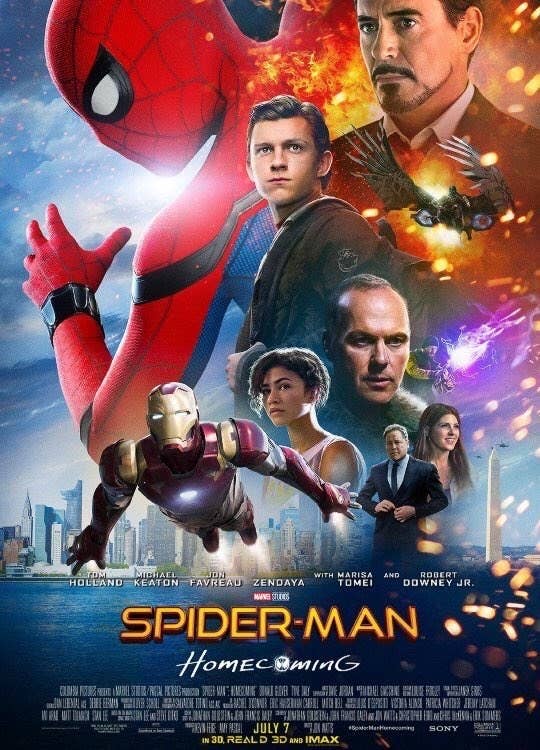
Spider-Man: Homecoming (2017)


When news broke that Marvel Studios would get access to its most beloved comic book hero, it felt like the sensational Spider-man would finally get a truly great rendition of the character on the big screen. Many fans were eager for something fun and exciting to wash the bad taste of The Amazing Spider-man 2 out of their mouths. For some, the stink of Spider-man 3 never really went away, even with the totally adequate Amazing Spider-man reboot. With Marvel Studios at the helm and no Sony to screw it up, surely, this would be at long last the Spider-man film everyone was awaiting!

It's easy to see why so many people enjoyed the film. By all means, it was a fun romp through the general sticking points of Spider-man action. It even utilizes some of the same cheesy cliches that are staples of the character. Tom Holland is arguably the most complete version of the Peter Parker/Spider-man symbiosis, which stands out given that Tobey Maguire and Andrew Garfield both did solid jobs as either Peter or Spider-man. Neither brought the two together quite like Holland. Of course, it helps that the actor is just 21 years old. Compared to Maguire (who was 26) and Garfield (who was 29), we finally have a high school Peter Parker that actually looks like he could, ya know, be in high school. (Byline on that thought: how strange is it that Garfield was actually older than Maguire when they took their roles?)

Yet this is also one of the problems with the film. High school Peter Parker is sort of old hat by now, as far as cinematic renditions go. It's a bit odd that they keep insisting that Peter start in high school every franchise when, in the comics, he hasn't been a teenager in decades! Being a high school kid certainly helped grow the popularity of Spider-man when he was first introduced into the world of comics. The medium was (and continues, really) to try to be appealing to all ages, especially young folks. Placing him in his teen years would resonate more genuinely for teenage fans buying comics. At the same time, teenage Peter Parker hasn't really been interesting in the comics for ages. On film, navigating high school has been so repetitive that it highlights how limiting that environment ultimately is. 

Certainly, it is appreciated that they recognized Spider-man is one of the characters in which no one one in the theater needs the origin story explained, picking up in the middle of his every day life is sort of problematic as far as film structure goes. The first ten minutes are almost unbearable. We get the hyper-simplified introduction of the villain, followed by a nauseating series of smartphone shot footage of Captain America: Civil War - because maybe there's a chance people didn't see that movie. It all just serves to recap the last big Marvel movie, which begs the question: is this just what we're going to do now? Are we going to need to start each film on Earth with a "previously on" sequence? It's strange that they trust the audience enough to already know that Peter Parker was bit by a radioactive spider, and that Uncle Ben was killed, but they can't trust us to have some idea that Captain America: Civil War happened just a year ago? 

The primary issue here is that so much attention is spent on Spider-man, his ancillary characters are effectively pointless. Sure, we can easily tell that Ned is his best friend, but since we get so little time with them or seeing them be buds, it feels entirely rushed when he catches Peter in the act of being Spider-man within the first twenty minutes of the film. We obviously tell that Liz is Peter's love interest, but other than some awkward (and kind of uncomfortable) moments of him pining for her, they don't really have much screen time together prior to him confessing his feelings. It's true that in Spider-man and The Amazing Spider-man, we already can tell that Mary-Jane and Gwen are his love interests. The biggest difference is that those relationships are actually pretty big components to the overall plot. Liz is indicative of a film that feels very "paint-by-numbers." 

Aunt May fares even worse, given she has almost no role whatsoever in the film. She gets maybe a scene or two to worry over her nephew, and she gets a brief moment to highlight how in the dark she is about his big secret. On the whole, she is absent from any meaningful aspect of the story. This problem is by no means exclusive to Spider-man: Homecoming. Few writers and directors have quite understood how to utilize the main cast. For example, Zack Snyder clearly has disdain for Superman's world of Lois Lane, Jimmy Olsen, and Perry White. 

We don't ever really get moments to see these relationships in action, in part because they choose to bring us into the action already in progress. It's also in part because the Peter Parker world takes a back seat to the Spider-man world. This is a key difference between other "first films" of the character, and a big reason why Spider-man and The Amazing Spider-man are better. Those are films about Peter Parker, and Spider-man gets in the way. Spider-man: Homecoming is about Spider-man, with Peter Parker getting in the way. That might make for a more entertaining action flick, but it makes for less compelling drama or character arcs. It is a bit of a miss to have his arc end with "digging deep" to prove he's worthy of the suit when we are also already meant to assume he has already learned the lesson of great responsibility accompanying great power. Granted, they never explicit reference Uncle Ben at all, but because his origin story is implied, we should be safe in assuming that is the case in this universe as well. 

Spider-man has lacked intriguing or substantial villains ever since Sam Raimi stopped directing the films, and as great as Michael Keaton is, Adrian Toomes is as much a boring villain as anyone in The Amazing Spider-man. He goes from what appears to be an honest working man to an illegal arms dealer, performing high tech, elaborate heists, in literally the blink of an eye. It's impossible to get a bead on him. In the prologue, he's just a working man trying to earn a living for his family, as are all of his employees. When he loses the gig cleaning up after the alien invasion from The Avengers, he goes full-blown terrorist: stealing illegal weapons and selling them to dangerous people on the streets. He supposedly cares about his family - he states a couple times that's who he's doing this for - but he never seems like a half-way decent person at all. And then at the end, he has a little moment randomly protecting Peter Parker's identity from another criminal. Why is that? Are we supposed to think it's because he wants revenge himself? Or is it because, after Spidey saved him, he's maybe showing that he isn't just another generic bad guy? Either way, he doesn't get enough development or attention throughout the film for it to really make sense. 

It is worth noting that there are interesting elements in there. One conversation sees his crew point out the insanity that Stark gets to take control of the clean up when he was part of why the city wound up in ruins in the first place. Toomes's rant at the end about how someone like Stark gets to just do whatever he wants is completely legitimate. It's just not presented adequately enough in Homecoming. It makes sense if you are a fan who has been watching from the start. Tony Stark has indeed been behind some crazy stuff and gotten off without any real consequences. Then again, we just watched an entire movie where Spider-man keeps screwing stuff up and he, too, doesn't suffer any consequences. By the end, his principle dismisses his detention stating that he's a good, smart kid while Stark offers him a brand new suit and a spot on the Avengers squad. He faces no legal repercussions for his assault on a person trying to get into their own car. Also, there's no blow back from the fact that he disrupted an FBI sting operation on the ferry. Watching Homecoming is, in a sense, a great way to understand why J. Jonah Jameson feels the way he does about good ol' webhead. 

The action is good, of course. Most Spider-man flicks do that side of things really well. The lack of any weight to it here, though, causes it to suffer. There aren't really any stakes, even personal ones. Sure, it's not totally stale to see a story about this kid trying to live up to the standards that idols like the Avengers set, but since that's all he's trying to do for so long, it just feels like insignificant, mindless fighting. Who cares, really? 

They try to put some sort of personal spin on the final battle. They basically spin off from the Harry Osborn thing. The Green Goblin is the villain of the first ever Spider-man film, and his son happens to be Peter's best friend. It's a great way to create drama in the action. Even if Spider-man wins, Peter loses because he's inadvertently destroyed his best friend's father. They sort of attempt this in The Amazing Spider-man by having Gwen Stacey's policeman papa involved in the action. Again, Spider-man wins, but Peter suffers. Here, they randomly force the connection that love interest Liz's dad happens to be Adrian Toomes. Voila! A classic Spider-man trope, present and accounted for! Only, it is revealed so abruptly and with virtually no set up - and just before the final action. It's one of the most contrived things in a super hero film to date. In The Amazing Spider-man, it kind of just makes sense why Captain Stacey would be involved in trying to bring down the villain. Additionally, he and Spidey have a few run-ins prior. The same thing is true of Spider-man. Norman Osborn has a relationship with Peter from the beginning by virtue of being his son's friend. 

Again, it falls flat because who really cares about Liz, her family, or even Peter's potential relationship with her? They are such a non-item throughout the film that it's almost easy to forget the stakes there during the fight. Worse, the consequences are completely short-lived. Whereas Peter has to continue to live in a world where he feels responsible for the death of Harry's and Gwen's fathers while maintaining a relationship with Harry and Gwen, Homecoming has Liz simply move away to Oregon. She's out of the picture completely now. That still stinks for Peter, I guess, but it is so much cleaner. At least he doesn't have to worry about sustained feelings of guilt! Phew!

At the end of the day, when you ask the quintessential question, "what is this movie about?" there isn't really a good answer. Both Spider-man and The Amazing Spider-man are about this kid grappling with these new powers and the responsibilities that come with them. They're about learning balance between the maturity these responsibilities require with the ability to lay back and take care of oneself. They're about navigating relationships while life throws crazy curve balls at you. There's a tiny bit of that maturity theme in Homecoming, but it's actually just about Spider-man becoming part of the MCU. Through stretches, it feels almost exclusively to exist to show how he is part of it (while also somehow keeping him out of New York City proper, so, I hope you don't think swinging through skyscrapers is a key ingredient to good wall crawler action). It's so full of references to the MCU that you can almost feel a footnote on the script. 

To be sure, it beats the previous film. The Amazing Spider-man 2 did some things well enough, but got bogged down too much with world building for its own good. Here, the world has already been built, so it was more world referencing. While it could also be argued that the infamous Spider-man 3 suffered the same thing as Amazing Spider-man 2, there could be a legitimate case that it is a better film than Homecoming as well. (That might be one of the most controversial things I've written on this site. Perhaps I'll elaborate on that later in greater detail.) It's not hard to understand why modern movie goers might love Homecoming, but it is - as a film - perhaps the weakest thing Marvel has put on screen so far. And yes, I'm including Thor: The Dark World. (Man, I really want nerds to hate me, huh?) 

REDUCTIVE RATING: It's...actually kinda...meeeeeeh.


Friday, October 27, 2017

Stranger Things: Season 2 (2017)


WARNING: SPOILERS!  (There are definitely some specifics spoiled here, so come back to this when you finish watching it, or if you just don't care about spoilers.)

Admittedly, a follow up to last year's break-out Netflix show Stranger Things was always going to be in a tough spot. So much of the fun was how little anyone knew of it. The discovery and subsequent ability to pass it onto the next unsuspecting victim helped build an organic hype machine. That is inherently lost here, particularly since they chose to stick with the same cast of characters in the same town. Of course, that social aspect has no real bearing on the overall quality of a show.

It's probable fans will love this as well. Yet the second season follows a lot of trappings that most sequels fall into - too much rehashing of the first, unsatisfying explanations of past events, a little too much attention spent on comic relief, a problem with scaling, and some ambitious writing leading to inconsistent pacing. At the same time, it's the same trip down Nostalgia Lane (complete with some brilliant and subtle homages), with the same great characters, and surprisingly dark sci-fi elements mixed with in for good measure. Bears noting that the score might even be better than the first season's (which says a lot about S U R V I V E's capabilities).

The aforementioned sequel trappings are very much present, and it could be considered a problem depending on your stance. If you're inclined to believe that the Duffer Brothers trying to mimic their favorite sequels means something positive, then this won't be a problem. Conversely, if you think copying the worst aspects of Hollywood isn't exactly...great, these issues might stand out.

The ultimate weakness with the second season is in the structure and writing. It isn't that the dialogue is worse, although there is a bit too much comic relief at times and it is occasionally ham-fisted and corny beyond what it should be. It's just the amount of disconnected filler. Season 2 suffers from the the "More Problem."

Almost always, sequels try to improve upon the popular original material by going bigger and doing more. For example, how do you top the terror of a single xenomorph in Alien? Well, obviously, just throw in an entire swarm of them in Aliens! Just add more aliens! That is certainly the case here (instead of one humanoid creature to terrorize the town, they go with a hoard of canine-like versions). Additionally, there is just more stuff in general. Where season one was eight episodes at forty-five minutes a pop, season two is nine episodes that are all nearly an hour long. More space to fill, especially in Netflix shows, has generally meant a fair amount of dead air.

It isn't necessarily fair to compare the two seasons, but it is worth taking a moment to note the structural changes that weaken it. There are several different branches of story in the inaugural series. You've got Hopper doing his thing. Joyce does hers. The boys do their thing with Eleven. Nancy and Jonathan have their story. It's a splintered narrative, as most shows are. What makes it work so well is how connected they inherently are. All of the separated plot threads revolve around finding Will. So, when it comes time to have all plot lines converge on a single point, it happens pretty organically. This is entirely because each story is separate, but related.

Season two, however, has a lot of fat. Some of the story lines are connected, to be sure, but they hardly line up as well. Everyone is going after a different objective. Dustin, Lucas, Steve, and Max are trying to contain their Dart problem. Hopper, Joyce, and Mike are trying to figure out what's going on with Will and his visions. Nancy and Jonathan are searching for a way to expose the secret government lab in town. Eleven eventually ends up on a journey of self-discovery. It's all disjointed plot threads. By itself, that is not so much of a problem. It becomes one when all plot points try to converge on the same moment in the larger narrative. The organic melding of threads from the first season is abandoned for some contrived reasons to put everyone together at the end.

Even more, there are secondary story lines that hardly get any attention beyond set-up. They are abandoned, ignored, or - in some instances - lack any actual conclusion. Take, for instance, the character story arc of Mike and his animosity towards Max. This gets set up pretty early. There isn't much explanation for it. And by the end, Mike never has a moment of recognizing Max's worth, or acknowledging that he has been a prick to her. Another great example is the Lucas/Dustin competition for Max's attention, which gets set up early, is almost never explored in any depth, and then has one of the strangest "conclusions" (in that it makes no sense why Dustin would even think of Max romantically by the end, but apparently he still does). Worse: the Max/Billy relationship has an air of mystery around it, gets almost no exploration, doesn't answer some of the questions they ask, and all builds to just a small character moment for Max, who doesn't really add that much to the overall story in her own right (which is a shame since she's a solid character). It winds up feeling like a distraction. The entire Jonathan/Nancy plot seems to exist exclusively to pacify fans dissatisfied with both the fact they didn't wind up together, and that Barb had seemingly been forgotten.

Eleven suffers the worst in the new season. She is literally forced to the sidelines for the first two-thirds of the season. Her story is not inherently uninteresting, but it also has nothing to do with the central plot. She serves the season primarily as the deus ex machina. With no bearing on the story, she is brought in literally at the end just to save the day because she's the one with the powers. Her detour in episode seven is completely unnecessary, disruptive to the pacing, and causes a strange tonal shift. An entire episode away from the intense action episode six ended on, it winds up feeling like something out of an '80s UK comic book. While the whole season is likely to be viewed fondly, it might not be so unexpected if that episode winds up being a bit polarizing.

None of this is to suggest there aren't interesting or well-executed elements. Easily the smartest thing they did was re-shape Steve into an actual person, with redeemable qualities. His relationship with Dustin comes out of nowhere, but works surprisingly well. On top of that, everything they did with Paul Reiser's character was clever and subversive. A doctor at the secret evil government facility, it is easy to keep expecting the moment revealing his true intentions. Turns out, he doesn't really have any. He has moments that lack awareness, but he does seem to genuinely want to help these people. It puts a spin on the "evil government agency" trope that is actually pretty refreshing. The dynamic between Hopper and Joyce also serves as a strength. (There should be no question that the Duffer Brothers clearly think of those two characters as their bread and butter for pushing the larger story.) Splitting the kids up even breeds interesting elements to the narrative.

On a technical level, it holds up to the first season - minus a few things. The obsession with psych-out "jump scares" is incredible! Few shows have so heavily relied on the fake out. In fact, one scene uses the fake out to build up to...another fake out scare. There is a lack of genuine terror in season two that season one managed to pull off with the single demogorgon. Loud, startling noises are the bane of modern horror. Stranger Things uses the fake out quite excessively.

[As an aside: can writers please retire the old schtick of a character saying something like, "This isn't (insert fiction)! This is real life!" Every time a character says that, at least have the decency to have them turn to the camera, nod, and wink at the audience. Seriously, it wasn't that clever the first time someone did that "meta" joke. They use that line and a variation of it twice in the same episode.]

All in all, it'd be hard to argue season two was anywhere near the level of season one, but that should not be mistaken to mean it wasn't enjoyable. At times, it almost seemed reminiscent of Attack the Block, with a pretty obvious The Exorcist vibe by the end. There's a lot of stuff that really works.

It is probably worth noting that I was born in '87, which means I grew up in the '90s. I don't have the same nostalgia for all things '80s like a lot of other people seem to. The showrunners handle it well (although at times, a little clunkier than in season one), but occurring in that time period doesn't fill me with any deeper emotions. I understand that this aesthetic will touch others in a more personal fashion than it can for me. It's easy to see why some would gravitate towards the show's aesthetic and allow that to do a little more lifting than the writing. For me, personally, the comfort of nostalgia doesn't quite cover for the structural issues.

It's one of those things that, for me, the more I think about it, the more mediocre I think the second season is. However, the worst of Stranger Things is still better than a lot of things - especially from Netflix. I suspect I'll be in the minority on this. I liked it, but I do think when I revisit the show, I'll probably just stick with season one. I liked the ideas put forth by fans as to what the end of that season meant a lot more than what the Duffer Brothers actually did with it.

REDUCTIVE RATING: It's...fine.  (But I presume everyone else will think better of it.)


Wednesday, October 25, 2017

Superhot (2016)


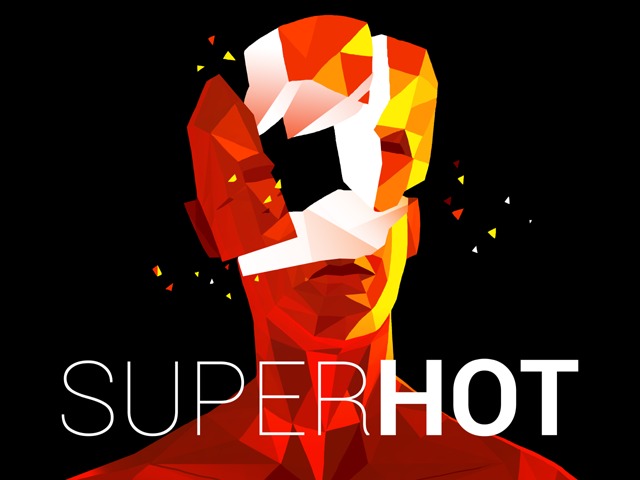
In an age where major studios are obsessed with cramming too much stuff into a game, there is still truth in the philosophy of do one thing really well instead. Superhot is a good example of a simple game with a unique mechanic, and focusing on that. A first person shooter/puzzle game, the "schtick" is that time only moves when you do. This single mechanic allows for an interesting array of level designs with various degrees of difficulties.

It's not entirely accurate to say that time only moves when you do. Standing still just slows it down a lot, but doesn't halt everything. The natural inclination when picking up a shooter is to run and gun, but that can be a death sentence here. Depending on where enemies spawn and what kind of weapons they have, you could be dead before you even know it. The more you go through a level, the more confident you might feel going quickly, but odds are that you'll want to take it slow. Learn the level while you stop to plan out your next move. It's an FPS with a meticulous, deliberate sensibility.

Everyone takes just one hit to be killed, which adds tension to movement. One hit and you're gone. On the flip side, a single well-placed shot will take out enemies as well, which can make a big difference while planning your next move. Of course, getting those shots just right is shockingly tricky. Most players experienced in the shooter genre are familiar with leading their targets. It takes a fair amount of getting used to when those targets are moving in a very stop and go fashion. You have time to take aim, but it can be difficult to judge how far you have to lead a moving enemy when they aren't moving a normal speed, or how you won't know if you hit them until you start moving again, which then often exposes you to enemy fire. 

Suffice it to say that Superhot can get challenging at times. Many levels feel substantially more like a puzzle game than a shooter. Frustration can mount as you struggle to dodge bullets, find enemy spawn points, and figure out the best routes to take to succeed. While bullets are easy to track, thanks to long, red tracer tails, how close they need to come to actually hit you is sometimes infuriating. Being in the first person perspective, it can be hard to tell when a bullet is going to hit the body you can't see. Rounds don't actually have to hit you head on to kill you, which sometimes feels a little unfair. Still, it doesn't take long to figure out proper adjustments to avoid enemy fire. Some enemies are more troublesome than others (like ones with shotguns that spray multiple rounds at once), but the difficulty is pretty solid to provide for a sense of great satisfaction upon solving the levels.

Perhaps the most surprising element of Superhot is it's narrative. People will be drawn to the time altering mechanic, and they might be grabbed by its art style. However, the story is worthy of attention, too. Fans of meta-commentary about a medium - like how Undertale makes comments about games or Community makes comments about television - will likely be interested in Superhot, itself a game about playing a game. Every few levels, you are kicked out of "the game" to have a text chat with a friend about it. As you get deeper into it, mysterious things start happening outside your control. Someone or something is watching you, both in the game and out of it. A series of chanting "The mind is software," and "Bodies are disposable," culminates in the "in-game" you killing the "out of game" you. At this time, they introduce a new body-switching mechanic that is shades The Swapper. It doesn't get enough time in the game for players to use, really, but it still adds to the gameplay.

There is a VR version out there that actually is pretty awesome. Superhot lends itself to the VR experience pretty well. They continue with the meta in game/out of game story element (you have to pop a disk into the computer and then put on a VR head set in game to start the game), and its stylized white environments with red enemies makes for a less disorienting VR experience than a game like, say, Resident Evil VII which goes for realistic graphics. Virtual reality isn't quite graphically there yet, so the more realistic the look, the more off it feels. While the first few levels of Superhot VR are surprisingly fun, there is definitely a wall you slam into. Since time slows down when you stand still, it's actually much harder to control that mechanic with your head than with a traditional controller with two analog sticks. Even more, the game requires the use of Sony's motion controllers, which are frustratingly unreliable in their accuracy. When it only takes one hit to get game over, and when they set it up so that each level has multiple parts that you have to repeat when you start over, the lack of accuracy is devastating to the experience. It is worth checking out Superhot VR, and it does maybe highlight the potential of the technology, but it still has a long way to go before gaming because equally fun with it.

When you finally beat the game, the mysterious people behind it all in the story tell you that it is now your responsibility to spread the word and get more people to play Superhot, so their ranks can grow. I'd love to say I'm not part of their meta-advertising campaign, but the game is fun and interesting enough that it's hard not to recommend it. Perhaps the biggest problem with it is that it is so short, which just goes to show how good it is. "Innovative" gets thrown around a lot as a term to describe games, but it might not be so accurate to describe it as such. It is, however, quite unique and worth playing regardless.

REDUCTIVE RATING: Super hot! Play it!

Systems: PS4, XBox One, Windows, Linux


Thursday, October 19, 2017

Monsters (2010)


(Preface: This is a slightly edited repost from my old blog. It was written in either 2011 or 2012. I have added a few thoughts from here in 2017, indicated in italic parentheses.)

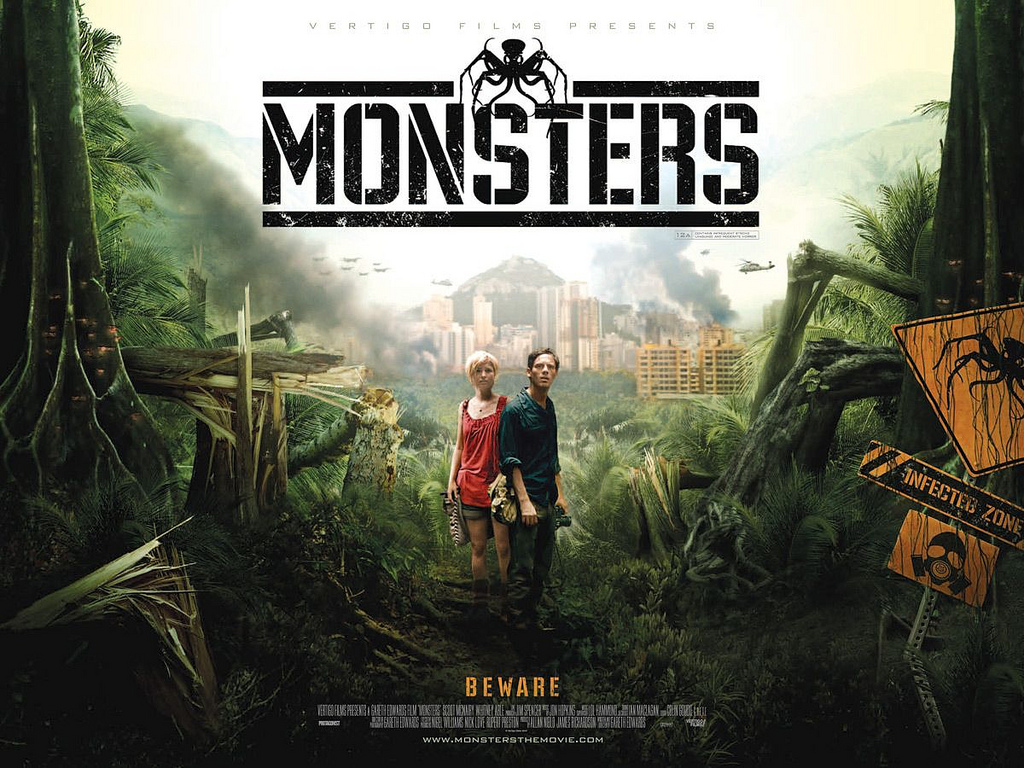
The first feature film from director Gareth Edwards, 2010's Monsters is something of a 28 Days Later movie for the monster genre. It's a pretty simple story, following photographer Andrew Kaulder as he is given the task of bringing his boss's daughter Sam home to the United States. It's basically a road trip movie with a love story at the core. And, of course, there are giant alien creatures that destroy cities and trucks.

Monsters is practically the definition of guerrilla film making. With a budget of $500,000, the film is shot entirely on location throughout five different central American countries. Often, they would have to move quickly to shoot scenes without disrupting the every day life of those places. They also would make up scenes on the spot if they found something that looked visually interesting. The best example of this was the scene with the candle light vigil. Edwards and crew just stumbled upon the Day of the Dead celebration in Mexico. Seeing this, Edwards gathered the actors and crew to come up with a scene that could utilize the event around them. They then found a place to put it into the film. The end result is a tonal shift that really enhances the sense of devastation from the creatures. This is generally how they shot most things.

Edwards does an excellent job keeping the focus on just these two characters while giving a sense of scale with images of destroyed buildings and boats in the background. With a lot of monster movies, you don't really get a sense of the ground level. We tend to see the larger impact of the beast. It's threat is global. Here, we just get a taste of the larger scale, but we ultimately connect to the human cost of giant monster attacks. And when we finally see the beasts in action, the graphics are solid with a good sense of fear from the characters. Instead of pulling back to show us the entire attack, we get shots of the attack from Sam and Kaulder's perspective, making it feel more personal.

The chemistry between Kaulder and Sam is a little rough at first, but builds over time. Some dialogue seems forced or poorly prepared (as they probably made it up just before the shoot), but overall, they do seem to genuinely connect. This is probably in large part due to the fact that actors Scoot McNairy and Whitney Able are actually married in real life. Able plays Sam, a young woman adrift in the midst of an unsure engagement. McNairy plays Kaulder as the annoyed babysitter who wants nothing more than to stay in Central America to take an award winning photograph of a real live monster. Kaulder is impatient, often bordering on outright mean. It's a little unclear why Sam can't just take herself home when she seems to have more money and has an actual grasp on the language (she speaks it fluently while Kaulder can only give an awkward "hasta luego" at times). In this way, the basic premise of the plot is a bit contrive, with the owner of the publishing company Kaulder works for issuing an ultimatum to bring his daughter home in the aftermath of a creature attack.

What makes the beasts seem even more frightening is the real footage put in. Often, we see CGI boats or buildings destroyed in the background of shots, but Edwards also makes it a point to shoot scenes anywhere there was real rubble. In the first scene after the opening credits, we see Kaulder walking up a hill of rubble and broken buildings as he searches for Sam. All of it is real. Similarly, when they get to the destroyed town in America, a storm had just hit and the town really was devastated. There's also a cool shot of a road that just seems to end. The road had been wiped out by a flood prior.

The CGI looks pretty good too. Granted, there ultimately isn't much of it which winds up being the best thing for the film. It's reliant on post production CGI to show the power of the creatures, but it's still used sparingly. This is ultimately a movie about the people, not the monsters. Most of the CGI used winds up being used to put signs into the backgrounds! Tension is created through implications - kind of like how Steven Spielberg had to get creative due to the technical difficulties of the mechanical shark in Jaws.

A lot of people have complained that it's kind of a boring movie and nothing really happens. It's more personal in scale and a bit more somber in tone than typical monster movies, to be sure. And for a movie called Monsters, you only really see them a handful of times. You don't really see them attack anything except a couple of trucks. Still, once they get to America, things get particularly interesting. As a lifelong fan of the genre, it is among my favorite sequences ever in the category of "monster flick."

The final sequence makes the whole movie, really. In an abandoned part of America, Sam and Kaulder find a gas station which they use to call for help. The military is dispatched to rescue them and they're left to simply wait. While they wait, Sam calls her annoyed and overly concerned fiance while Kaulder calls his child. All of the things they've discussed on their travels come to a head here that culminates in a monster investigating the gas station.

The scene starts off as something of a nod to The War of the Worlds. Sam is alone inside the building when she hears the door open. Thinking it's Kaulder returning from the payphone outside, she looks happy for a moment before realizing that instead, it's the long, creepy tentacles of an alien creature. The tentacles investigate the store for a few minutes while Sam struggles to keep it together. Meanwhile, Kaulder is powerless to do anything but watch from outside. It's a pretty tense moment!

A second monster shows up and the two creatures proceed to connect via several tentacles and - presumably - mate. While this happens, Kaulder is still motionless outside watching. Slowly, Sam comes outside to watch what is transpiring as well. As the two creatures intertwine with each other more and more, Sam moves closer and closer to Kaulder.  By the time the creatures are done and move on, Sam and Kaulder are finally in the same shot together. In the background, we hear the incoming humvees and helicopters of the rescuing military party. Finally, Sam admits that she doesn't want to go home. She essentially admits that whatever is waiting for her back in the safety of her normal life is scarier to her than these creatures. The two finally kiss before the military shows up and pushes them into separate humvees.

It's a sequence that goes all over the spectrum. It starts off tense and frightening and ends up with a display of honesty and beauty. These monsters aren't really monsters. They're just creatures, doing what they do. The way that Sam and Kaulder kind of parallel the movements of the monsters is perfect, and suddenly everything makes sense.

The film is essentially just the story of these two characters set in this environment (and there are a number of plotholes, but they're not huge or distracting). It's possible to read into the film a number of different ways. From the outset, you get a sense that it's trying to say something about immigration. The "Infected Zone" is from the middle of Mexico to the border of the United States. The US's response is to build a giant wall at the border to keep the aliens out (this aspect takes a whole new focus given the political climate of 2017). Meanwhile, good, hardworking, family oriented people are being kept out of safety as a result. It could also be argued that the film is a way to show how perilous the actual passage to the United States can be. The messages here seems clear.

Still, the wall ultimately fails and when Kaulder and Sam get into the United States, they see good ol' American towns destroyed by the aliens. If we were to continue the immigration metaphor, it would then suggest that the aliens will get in anyway. And not just that, but destroy America as well! These are both easy messages to take away if reading too much into it. At the end of the day though, it seems pretty unclear if Edwards was trying to say anything at all on the topic.

Monsters isn't for everyone. It isn't action packed and can feel a bit slow-paced at times. Its guerrilla style film making makes it seem ultra-realistic at times while seeming forced at others. It abandons a lot of typical monster movie tropes. Similar to how Danny Boyle wanted to explore life after the breakout in 28 Days Later, Edwards wanted to explore life after the initial monster attacks. It's a place where everyone carries a gas mask and destruction is just part of life. Seeing destroyed tanks or dead creatures is completely normal. This change of pace makes it one of my favorite movies of the past few years.

As a side note: this film ultimately got Gareth Edwards the job for the Legendary reboot of Godzilla. Though I happen to still have some doubts, the way that Edwards showed the dark, human costs of monster attacks in Monsters gives me a lot of hope for his take on Godzilla. When he started work on Monsters, he said he just wanted to make a monster movie. And now he gets to make the mother of all monster movies. (Follow up a few years later: it seems like the concerns were merited, but that the strengths Edwards showed on Monsters proved beneficial to Godzilla as well. He definitely did more than most Godzilla films to show the dark, human cost, and his eye for scale stood out as well.)


Thursday, October 5, 2017

Oxenfree (2016)


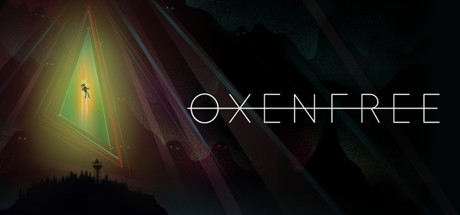
The idea of a suspenseful horror mystery game in a two-dimensional, cartoon-ish animation style doesn't sound like it would work out too well, but Oxenfree manages to pull off an eerie atmosphere with great effect. An indie game from 2016, it has generally fostered positive reviews for accomplishing so much with so little. Some might find it a tad slow and boring, but it executes a number of things really well.

Playing a bit like a teenage coming-of-age movie, the primary focus is the narrative. Five young adults go onto this abandoned island for a night of celebratory drinking and rabble rousing. Along the way, they discover strange radio signals that, when picked up using a radio, distorts reality. For a while, it is unclear what exactly is happening. Is it ghosts? A tear that connects to a parallel universe? A time loop? Friends get possessed, situations and conversations repeat, and new mysteries and backstory about the island are uncovered.

Oxenfree is a game easy to recommend to fans of Telltale games like The Walking Dead or Game of Thrones. In fact, one of the co-founders of this game's studio specifically worked on The Wolf Among Us. The influence is obvious from the core mechanic of the game: making choices through dialogue options. What's nice about Oxenfree compared to other decision-driven games is that conversations occur without interrupting. Players can walk and talk at the same time, no longer beholden to cutscenes or restricting conversation sequences that trap players in that moment until the talk is over. Speech bubbles appear above the protagonist's head, adding to a cohesive art style as well. It looks a bit comic book-like, so the speech bubbles enhance that.

The downside, however, is the same as it always is for these types of games. As intriguing as the story might get, there still isn't ultimately that much for the player to do. There is even less to interact with in the world of Oxenfree than that of a Telltale game, or Dontnod's fan-favorite Life is Strange. While Telltale has made efforts to expand a bit beyond the basic mechanic of choosing and Dontnod introduced time rewind powers to the formula, Oxenfree offers little else beyond walking and, well, talking.

The flip side: it handles decisions more organically. One of the problems with something like The Walking Dead is how unnatural some of the dialogue is, and how "gamey" it feels once you go from walking around, pointing and clicking, to engaged in conversation with a character. They also get pretty obvious when you are making a choice clearly meant to impact the story. In many cases, decisions are pretty binary as well. Save Doug, or save Carli? While some of the writing and voice acting in Oxenfree is less than stellar (undoubtedly connected to the fact that it is a small studio indie game), dialogue and choices are presented in a more realistic fashion, with a more natural flow. The best choice-driven games don't make it so obvious when you're making key decisions. Oxenfree doesn't completely avoid this trap, but it manages to create a more honest mechanic.

Perhaps the most impressive aspect of the game is how unsettling it is. One would not expect a side-scrolling, 2D walk-and-talk game to create a disquieting atmosphere, but Oxenfree manages to do so through audio design and some image distortions to great effect. The use of radio and television static is surprisingly efficient at crafting an eerie environment. It can be startling to be playing a game that suddenly cuts out and starts looking warped, as if something has possessed your television and the game, just as the other beings possess the friends. "Terrifying" isn't an accurate way to describe it, but it is shockingly off-putting.

It is a little tricky determining who to recommend Oxenfree to. It isn't so amazing that I would recommend it to anyone and everyone, the way I would, say, Little Nightmares or Horizon: Zero Dawn. At the same time, it does things a little more subtly than something like The Walking Dead and has fewer mechanics than Life is Strange, so there might not ultimately be a ton of crossover there (although, certainly, if you are into Telltale games, you will likely be more receptive to Oxenfree). The pacing is a little inconsistent, and it takes a little while before the good, weird stuff breaks out in earnest. Even then, many might still find it a bit boring. If you're into narrative-driven games with choice-based mechanics, however, and a single, cohesive style and spooky atmosphere, then this is a game you might want to check out.

REDUCTIVE RATING:  Pretty Interesting / Worth Checking Out

Available On: PS4, XBoxOne, Nintendo Switch, Steam, iOS, Android


Thursday, August 31, 2017

Little Nightmares (2017)


Every once in a while, a game comes out of nowhere and completely blows you away. I can't even remember how I heard about Little Nightmares, but it very quickly shot up the ranks of favorite games of 2017. It has all of the ingredients necessary for being an indie darling, and it lives up to the standards established by other, similar horror/platformers like Limbo or Inside.

In fact, it is almost impossible to discuss Little Nightmares without comparing it to Inside. There are many noticeable similarities between the two. Both are ultimately side-scrolling, horror, puzzle platforms that are mechanically simple, yet shockingly challenging. You will fail a fair amount. Both also rely heavily on background and world design to convey a dark, discomforting environment. What either game is actually about is open to interpretation, but there is no shortage of environmental design elements that push a disquieting atmosphere. If the world in Inside is mysterious and subtle, however, the world of Little Nightmares is a bit more upfront. Creepy humanoids giving chase are replaced by disfigured and disgusting beings that are only slightly human.

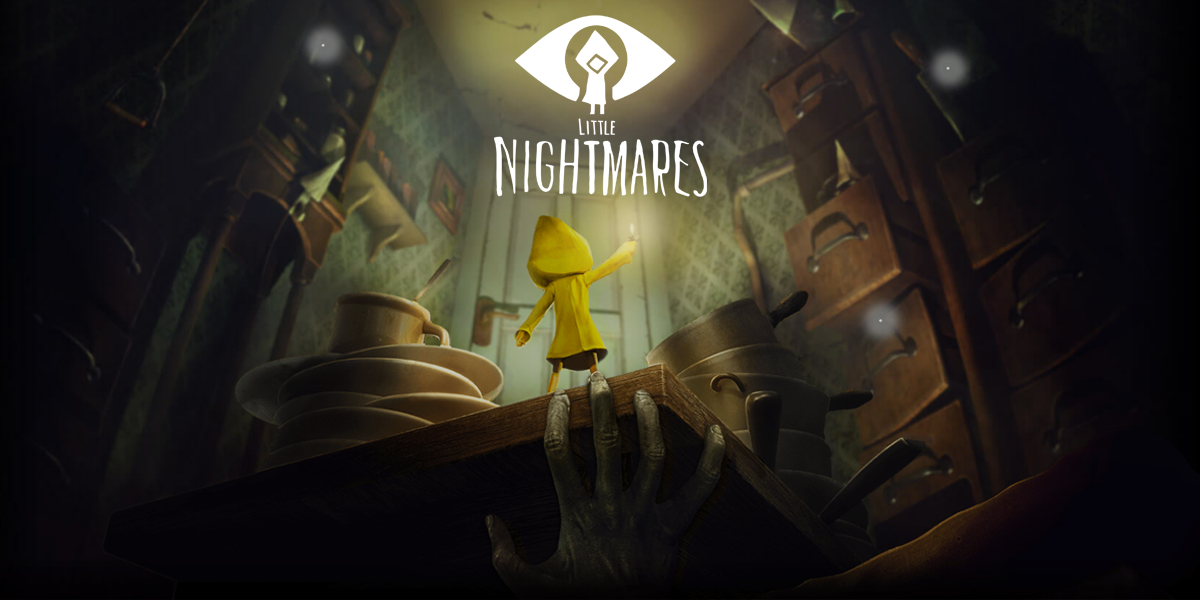
What Little Nightmares has going for it is a bit more cohesion in its art style and tone of adventure. Most impressive is the effectiveness of an almost claymation-like look to both the characters and their movement. It almost feels as if you are playing in a darker, somehow stranger Tim Burton movie. It's astounding how such a style can create so many terrifying and discomforting creatures and moments. Not only does it give the game a unique visual element that separates it from so many other games; it goes a long way to making players feel anxious.

A key difference from comparable games (like the aforementioned Limbo or Inside) is that it uses the foreground and background, whereas those other games have you move only left and right. The end result of allowing front and back movement is a depth that makes platforming moments more challenging. That, in turn, also adds to the tension since screwing up an angle can result in being caught by one of the pursuing monsters.


As the game progresses, things get even more twisted and frightening. The penultimate "level" involves sprinting by a group of fat, gigantic, disturbing people hellbent on eating you. They spill down the stairs and crash into the hallways in pursuit, almost as if they were in a Dark Miyazaki universe. I found myself gripping the controller so tightly that my fingers were sore, all because I had turned into a ball of stress! And, somehow, the final section gets legitimately scary! (I had yelped out lout a few times trying to beat the last monster/boss.)

Like Inside, one of the best aspects of the game is how little information it actually feeds you. Upon completion of the game, I immediately dove down the internet rabbit holes for theories of what it all meant. The game is filled with messed up concepts - like the consumption of children - and even a fair amount of Holocaust imagery. The little kid that is controlled by the player even has moments that are startling! Additionally, the complete lack of clues or pesky control reminders makes advancing feel even more satisfying. Many major games tend to hold your hand, making sure you never get stuck. This - like Inside - never gives clues. It never explains anything outside the basic controls at the very beginning of the game. Getting through the next section is incredibly satisfying because you can feel your brain putting it all together.

Perhaps the hardest thing to talk about is just how surprising it was. While a comparatively short game, it is also one of those things where the less you know, the better it is. For me, it started strong and finished stronger. I had no idea what the game was or what was in store; I loved every second of it. It's a small game that came out of nowhere to become one of my favorites in years. In fact, I'd argue it's better than Inside (even if just slightly). I want to rave about it more, but I also don't want to ruin any part of it. Suffice it to say, this is one that I will regularly recommend to people.

As an aside, I would also recommend checking out the DLC. "The Depths" was one of the most tense levels of any game I've played. Essentially, recall how horrifying and stressful the "mermaids" were from Inside, then stretch that out for an entire DLC package. (It's also cool in the way that it sort of recycles levels from the main game, but in different ways.)  I'm not a big fan of DLC overall, but it's definitely worth it.

REDUCTIVE RATING: Amazing! Definitely play it!

Systems: XBox One, PS4, Steam


Tuesday, August 15, 2017

The Last of Us (2013)


Naughty Dog had already wiggled their way into the top spot of cinematic gaming experiences through the Uncharted series, but they cemented it with 2013's The Last of Us. Building off of the adventures of Nathan Drake, they provided a surprisingly refreshing take on the action adventure genre by mixing it with survival horror. To top it all off, they provided some of the best writing and acting seen in video games to date.

It is ultimately difficult to discuss The Last of Us without bringing up spoilers, so be warned that there will be pretty big ones present throughout the piece. Additionally, it is a game in which two aspects are both intrinsically connected and divorced from each other: the gameplay and the narrative.

On the game side, it does a number of things incredibly well. Taking from the survival horror genre, it does a nice job creating tension through tough enemies. Effectively a "zombie" game, it takes its cues from the likes of Resident Evil in that you don't exactly want to run into them. The satisfaction does not come from mowing down endless rows of mindless bodies rushing as a hoard. Rather, getting through the section in relatively good health is ideal. To do so often requires a mixture of stealth and action. Some enemies are nearly impossible to avoid, and thus, you must be ready for a fight. Others give you every opportunity to either sneak by or quietly take them out. Players have to get comfortable doing both to succeed.

Resource management plays a role in the atmosphere as well. Looking around the maps, items can be collected to use for things like molotov cocktails or pipe bombs. Melee weapons can be reinforced, and med-kits can be crafted. To build them, though, requires a safe space out of trouble. The game does not pause while in the crafting menu, so players must be aware of their surroundings, lest they be attacked unprepared. Plus, all items have dual purposes. The ingredients required for a molotov are also required for med-kits. The necessary goods for nail bombs are also required for shivs. It effectively forces one to make key decisions about how to allocate those sources. Shivs are important for opening locked doors filled with items, as well as to escape the clutches of Clickers (which insta-kill you). Yet nail bombs are extremely effective for dealing with large numbers of enemies.

Ammo supplies are also limited. While there are various types of firearms to be found and used, there isn't a ton of ammunition to be found. This, mixed with limited resources, encourages players to act more deliberately or use stealth as much as possible. Confronting enemies - both human or infected - can go very poorly, very quickly.

While these are fun components that maximize the tension and dread, they are also limited. It would not be unfair to argue that there aren't enough ways to utilize the resources collected, or that the AI of enemies isn't exactly smart enough to feel all that exposed when crafting. On "Normal" difficulty, the game also provides more than adequate amounts of resources and ammo to make it through. Then, there's also the "listening" ability that allows players to see where enemies are, if moving.

The game works completely fine as a stealth adventure horror one, and it does these things really well, but it is not off-base to argue it is also pretty limited in scope. This doesn't mean it's bad; just that it isn't quite as revolutionary as many critics make it seem.

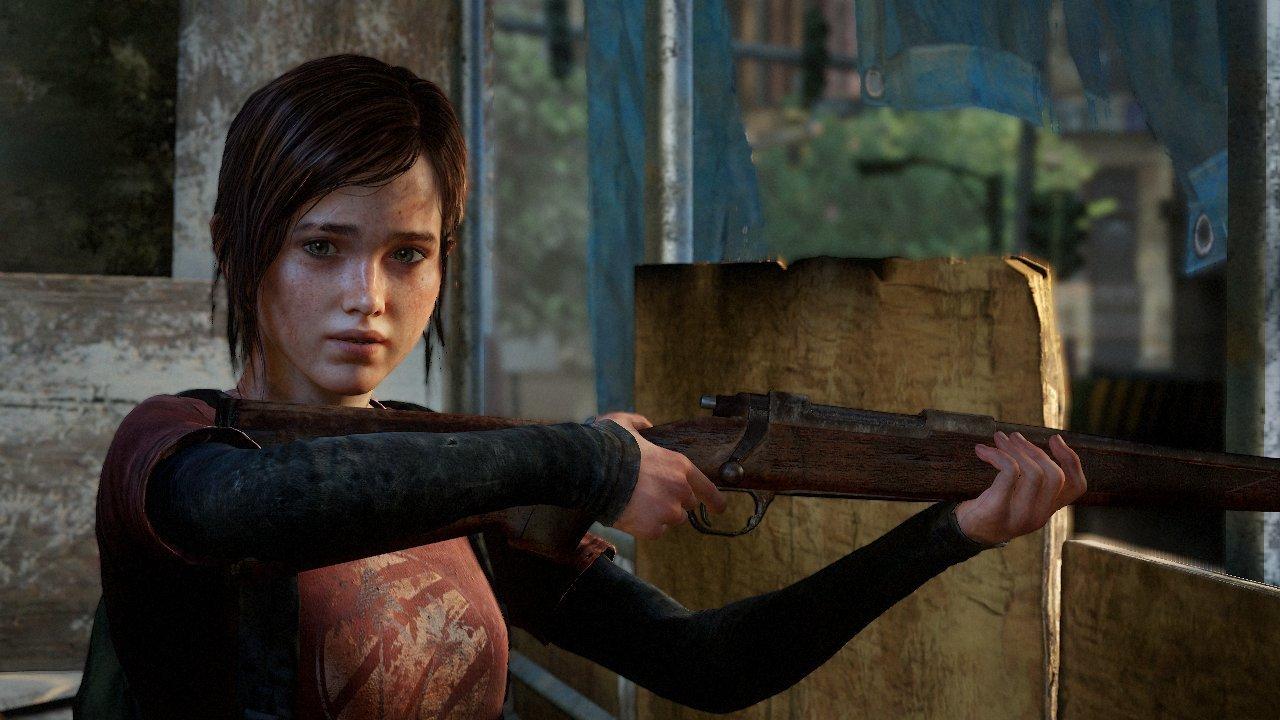
Gameplay itself is pretty tight, especially for a game reliant on an AI companion. Ellie, the young girl Joel (the player) is charged with escorting to Salt Lake City, becomes increasingly empowered throughout the game. At first, she mostly just runs around shouting profanities at enemies. Eventually, she is a full-fledged partner, throwing bricks and stabbing/shooting them as well. This, interestingly, does not make the game ever feel easier. Sometimes, there are some awkward moments of trying to get around each other, but it's overall really smooth.

Perhaps the most well-done aspect is in the level design. Where Uncharted games often feel exactly like the hyper-linear corridor it is, The Last of Us feels a lot wider. It is true that there is only ever one direction to end up in. There is no backtracking, nor are there multiple exit points from a level. It is, by every measure, a linear, narrative-driven game. That said, maps are often large and detailed enough that there is plenty to explore. The world within the game provides many narrative context clues, as well as exposes players to optional conversations and notes left behind, which also provide a shocking amount of emotional impact and insight into the history of this place. In combat scenarios, the open spaces go a long way to the feeling of insecurity. There are very few places to hide in which there isn't a "behind you" to watch out for. It feels both realistic and dangerous, getting players to really observe their environment.


The worst aspect of the game, as is a bit typical of Naughty Dog, is how often it forces players to play a particular way. For most of the game, the agency is in how to approach an area. Just sneak by? Try to go all Predator on them and take them out one by one? Set some traps and then go all Rambo on them? The choice is yours! Except when it isn't. For "cinematic" purposes, the game will often throw you into a scenario that allows for only one style of play. These aren't necessarily "bad moments," but they do sort of run counter to the design of the rest of the game, with its combat and maps that are very in-tune with one another and satisfying.

Of course, The Last of Us would not likely be considered an all-time great if not for its story and characters. Without question, it provides one of the most well-written narratives, filled with parallels and subtleties. Characters are surprisingly well-defined, given most of them are only in it for a stretch. And, of course, the relationship between Ellie and Joel develops in a truly organic, believable, and compelling fashion. It's easy to look at it from just Joel's perspective, being that of a father who's lost everything finding something to care for in a surrogate daughter (Ellie). It is not just his story though. Ellie doesn't exactly fit that perspective, as Joel never quite feels like her surrogate father. Instead, he is just someone who has been able to stick around in her life. Given her rather quick bonding to Tess and Sam, she's substantially more balanced as a person. More welcoming and empathetic than Joel, it isn't even ultimately a story in which both must learn from each other: Joel to be more empathetic and caring from Ellie, and Ellie to be tougher and colder for the sake of survival.

It seems that, too often, more is made of these dynamics than are truly there; at the end of the day, it is about two people making an unlikely connection. The characters are written and performed incredibly well, which breathes further relatability into everything. Under it all is a dark sense of humor, too. Overall, the story is structured intelligently. Broken into seasons to function as "acts," it gets progressively darker before finally having it all fall under them. The opening and ending sequences serve as nice, opposing book-ends. And every character introduced along the way has some thematic relevance to the two central characters.

The Last of Us is aided by having one of the best endings, leaving a ton of room for interpretation and discussion. Does Ellie know? She's had such good bullshit detection the entire game, surely she has to know Joel is lying? Is Joel the bad guy? Did he just screw over humanity for selfish purposes? What about the Fireflies? Up until the end, they were presented as humanity's last true hope. Were they in the wrong? Did they have a point? Was Marlene a sympathetic figure? There is so much to go over. The abrupt, unsatisfying ending is perfect in the way it generates player interpretation. A nice, succinct, simple ending is nice once in a while, but give me the dark, deep well, the juicy, meaty ending I can sink my teeth into any day.

As a whole cohesive unit, the narrative and design often work well together. The epic adventure aspect of the story fits perfectly with the linear design of the game. The story creates an urgency to get through it, which perfectly distracts from any desire to really do greater exploring. Everything about the game keeps pushing you forward. The way Ellie grows as an AI companion in conjunction with her growth as a character is great, and further provides context for her and Joel's bond. The limited resources and tough enemies match the dark, intense, and disturbing world.

There are some missteps, to be sure. The inclusion of "puzzles" to do with Ellie or another AI partner are never difficult and feel very "gamey." A misguided "boss fight" near the end is a bit disruptive. There are even some cutscenes that run contradictory to the rules of the world, such as that Clickers can't see you - they follow you through sound - but you are encouraged to hide when they show up. There are other elements that remind you you're playing a video game, but it isn't inherently bad. It just creates a little bit of dissonance between the narrative and gameplay.

Most of the problems are incredibly minor and don't distract from the game. Everything is made substantially better with an original score from Academy Award-winning composer Gustavo Santaolalla. The game is aided even more with a great piece of DLC in Left Behind, which actually improves the basic gameplay in a few ways. The game might not be for everyone, with its horror roots making it both a bit harder than an adventure game and a lot more violent (in fact, it features one of the few video game moments in which I actually cringed from it), but for those with an appreciation of what the medium holds for the potential of writing, director/writer Neil Druckmann has offered up a master class.

REDUCTIVE RATING:  Incredible!

Available On: PS3, PS4