Thursday, May 18, 2017

Xenosaga Episode II: Jenseits von Gut und Bose (2004)


If the narrative of Xenosaga Episode I were a bit chaotic, convoluted, and mysteriously confusing, Xenosaga Episode II doesn't exactly make things much clearer. There's a large story going on, continuing the events of the previous game (whatever they were), but the focus is primarily on the backstory of Junior, Sakura (the child MOMO was modeled after), and Rubedo. Gnosis aren't a super big part of the world anymore, although they're still there on occasion as the enemies. It all provides a surprisingly compelling character story, even if it's still filled with confounding elements at times. Rubedo is actually a pretty entertaining villain, so to have some light shed on him, even providing a reason to empathize with him, is a pretty good direction to take the story.

One of the biggest issues people may have with Xenosaga as a whole is how much of the game is comprised of cutscenes, most of which make no sense. Even fans of this style of JRPG - the kind where you line up a party of three or four characters and select actions through menus - might wind up having a hard time staying focused. Cutscenes are often so long and cryptic that it can actually get a bit boring. It doesn't help that a number of characters use a completely emotionless, monotone voice. From the newly introduced Canaan and Jin to the replaced voice actor for chaos, it almost seems like they're trying to lull you to sleep sometimes.

On the flip side to the dragged out, kind of boring story is the combat system, which takes the core experience of the first game and makes it a bit more fun. The basic idea is the same: in a turn-based order, each character has different attack options. Stocking allows you to build up a series of attacks to unleash at an onslaught of combo attacks. Doing the right combination of strikes can send opponents airborne or knock them to the ground, exposing them to greater damage. It adds a fun element to battles in a similar way that dual and triple tech attacks did in Chrono Trigger. It's hard to say if, in the end, the combat here is more fun than in the first game, but either way it is still fun.

However, some of the problems plaguing the first game return in full for the sequel. Probably the most egregious aspect of the gameplay is that the rules that apply to the player do not apply to the computer-controlled enemies. Bosses are often difficult - and large groups of enemies as well - because they get to function outside the established rules. They can boost on top of boosts, opening the way for a wave of uninterrupted attacks that never feels fair. Indeed, sometimes, they boost without losing one of their stored up boosts, which also opens the door for such non-stop attacks. Their boost also will override yours if you select one, making it difficult to properly plan and execute a strategy to inflict a break. It gets extraordinarily frustrating to be fighting a normally difficult enemy or boss, one capable of inflicting plenty of damage in its own right, only to get destroyed because it managed to pull off a series of three boosts in a row, even though they appear on the move list (which your characters can't boost when they are on there). It feels cheap, and if you die, feels like the game just beat you by cheating.

Becoming more like Xenogears, Xenosaga Episode II works in segments of the game that require battling in the mechs. These can sometimes be the toughest battles in the game given that it can be difficult to heal substantially in battle. They're better and more fun than in Xenogears, thanks in part to being able to use ether abilities of their pilots, but it can still be a challenge. Fighting in gears requires a bit of a shift in planning. Each gear is open to certain potential pilots, and since they require two of them, this gives some more room for party experimenting, even if still ultimately limited. Different duos provide different special abilities. Requiring the use of gears at times is a good idea if they're going to bother putting them in the game. Gears were never really a major part of the first game, and you were never really required to use them. If you're going to include them, it's good to design certain sections around them.

There are, however, some strange design choices as well, such as having you momentarily run around even though you're just literally moving from one area for a cutscene to the next area for a cutscene. One supposes they realized it might be worthwhile to have the player do something in that half an hour exposition dump, but just moving the character around the map doesn't exactly entail too much action or make the player feel any more involved. It often just feels like a waste of time. Then, there are smaller decisions, like the classic JRPG trope of the final Final Boss being more of a narrative-driven fight: one you can't lose. It's fine to do this, of course, but it feels strange that - if they're going to - they would give Albedo 5,000 HP, meaning it can take ten minutes to kill him. Even more, they make sure that Albedo gets a turn after every one of Junior's, and it's literally nothing but a taunt. Since it is impossible to lose the fight, why not let the player get a few turns in a row before interrupting with a taunt? Or at least making the boss have less HP, so it only takes three or four rounds to finish? It goes on unnecessarily long, and feels absurdly tedious and boring.

Plus, to unlock many abilities, players are expected to do an obnoxious number of literal chores in its strange "Good Samaritan" campaign. These "side missions," (and calling them that is quite generous), require players to seek out random NPCs who will provide them with some ridiculous chore to do - from destroying a certain number of boxes to hanging up fliers to finding dates for people. These are especially tedious and mind-numbingly boring. It's the worst kind of padding developers can do.

The game came out before the importance of a consistent voice cast was firmly established in the gaming industry. As a result, a number of characters have a change in actors. It's a little unfortunate that chaos, MOMO, KOS-MOS and Shion (the central protagonist of the previous game) have all been replaced. If you're keeping track, that's literally more than half of the original cast being replaced. Only Junior and Ziggy retained their voice actors, and that actually does make a difference. It gives them more consistency and makes them more recognizable. Everyone else takes a little bit to adjust to.

It might not be entirely accurate to call Xenosaga Episode II the better game when compared to its predecessor. There isn't much of a drop-off in overall quality, though. It still requires a fair amount of patience, from the extremely long cutscenes to the cheap boss battles, but it's never insurmountable. If the first game was something you enjoyed just fine, the second will likely do that too. The advantage it truly has is a more compelling character-driven central story, which can help ease the apprehension of going into another cutscene.

REDUCTIVE RATING: It's fine.

Available On: PS2


Wednesday, May 17, 2017

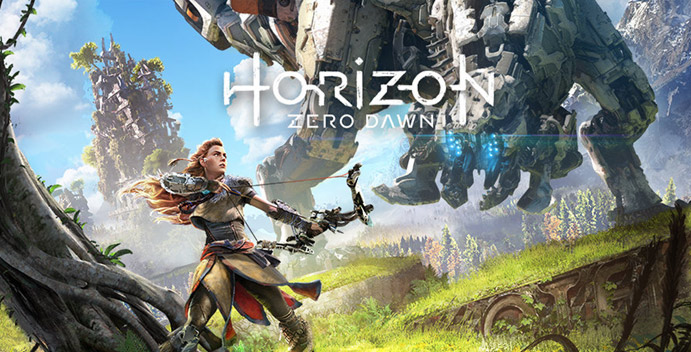
Horizon: Zero Dawn (2017)


In the age of franchises, remakes, reboots, sequels, and spin-offs, it can be hard for a new property or idea to find a foothold in the market. Studio Guerrilla Games, known for their Killzone series, decided to develop such a game. It drew attention at E3 where it's unique look stood out. A video game in which the world is a blend of hyper futuristic technological wildlife, but a tribal, caveman-like civilization of humans? An open world game wherein you fight robot dinosaurs? Seems legit!

Horizon: Zero Dawn surpasses most expectations established. It is fun, interesting, engaging, and gorgeous. It's got solid music and atmosphere, and a good amount of depth to the world worth investigating. The combat is diverse and exciting, while also providing a good enough challenge that even after all the upgrades, players still need to be on their toes. Any number of enemies could do some damage!

It is easy from ads to focus too much on the "robot dinosaurs" aspect of the game. There are some in there, such as watchers and thunderjaws (who look like raptors and t-rexes), but the bulk of the enemies are based on a variety of modern day animals as well. There are some that are horses, oxen, or rams, others that are ostriches or crabs. There are over two dozen creature types in the game, each with their own strengths and weaknesses. Each one can kill you if you're not careful, even the low-level ones.

Perhaps it isn't even quite right to describe these creatures as "enemies" either. Sure, they can be extremely deadly if you are not careful - many are outwardly aggressive and will attack you on sight. However, these creatures really do feel more like wildlife than "enemies." In the early stages, everything is new and threatening. They do a solid job working that into the game's narrative as well, so that players and main protagonist Aloy are essentially in the same boat. When you come across that first rockbreaker, for example, that is the first rockbreaker Aloy has seen as well. As you become more familiar with the world, the game, and the combat, you start to notice behavioral patterns of certain creatures. Grazers, for example, seem aggressive when they are introduced, but you soon realize that they only really become aggressive when desperate. Most of the time, however, they are skittish and will flee if they hear noise. Striders will charge and buck if backed into a corner, but they are also not particularly keen on fighting. Meanwhile, the larger sabretooth-like sawtoothes will pounce, charge, and attack almost instantly if they spot you. And then there are some like the broadheads that can be a bit unpredictable. They are more likely to charge you if they see you, but they will also try to flee at some point.

The different behaviors and attack patterns of these machine creatures really goes a long way to making them feel like actual organisms. Even late in the game, when you're pitted against thunderjaws and stormbirds, it becomes a bit difficult to see these as your "enemies." The AI of the machines is really solid and breathes life into the robots. At some point, I noticed I even avoided killing grazers, striders, or broadheads just because I felt bad for them. The experience received for killing one of them just didn't feel worth the guilt for killing something that was no longer a thing I found threatening.

The real "enemies" of the game are the Shadow Carja, a tribe of barbarian warriors hellbent on digging up old, violent machines and potentially destroying the world. These enemies you can chop down without remorse or any thought about whether they deserve it or not. Human enemies lack the same kind of variances as the synthetic wildlife, but they do present their own challenge. There are different weapons they are equipped with, as well as armor that can protect them from silent strikes. Plus, the game has a tendency to throw a lot of them at you at one time. And I mean a lot.

The strength of the game is probably the gameplay. Combat is tight and diverse, giving players a variety of ways to approach a given combat scenario. The melee attacks and dodge rolling is comfortable enough that, for skilled players, that is a good and challenging way to go. The bow sometimes has strange tracking habits, but is overall reliable - especially within a closer range. There are a few different bow types with different strengths, so odds are you will mix melee and close-range bow attacks with dodge rolling. Alternatively, you can stick to the high grass and take out enemies one at a time in secret. Stealth is my favorite way to play a game, when given the opportunity, so this was a much appreciated inclusion. Whistling or throwing rocks can draw enemies to a desired location, ripe for you to pounce and strike from the shadows and kill them in isolation. This is especially helpful when confronted with large groups of enemies, like the herds of lancehorns, chargers, or scrappers. Additionally, you can obtain or craft traps. This is helpful for stealth, of course, but once a trap is set off, it generally gets the attention of nearby enemies who go on high alert. Often, you will benefit from a combination. Stealth gives you the opportunity to take out a few enemies while setting up traps, and then you can spring a surprise attack and send them into those traps. Action, stealth, and strategizing makes for an incredibly fun and challenging game. One most always be cautious, too. A group of scrappers can kill you just as easily as a thunderjaw!

I never had much of a problem with melee myself, but I have read some criticism of it. I can see arguments that it is a bit on the clunkier side. It does seem like the game wants you to rely more on your bow than your spear. Probably the worst part of combat is when you have to deal with flying enemies, like glinthawks or stormbirds. The problem is with the camera. In order to aim up to hit them when they're airborne (which is pretty much the entire time they attack you), the camera will often clip nearby environmental objects, like rocks, bushes, or even tall grass. This can make it difficult to accurately aim, since you can't exactly see what you're shooting at. The trick is to try shooting at more of an angle; give some distance between you and the enemies. Easier said than done, of course, as flying enables them to cover ground much faster.

One other way to approach a situation is to try and isolate one machine, then override it. Getting overrides at secret lairs throughout the world allows you to hack a machine. Doing so can be quite beneficial. Some machines, like striders, become completely docile to you, allowing you to mount and ride them. Others, like ravagers, will become hostile towards any machine in the area. Hacking these machines is often an incredibly useful option when surrounded. It can also be used to provide distractions if you'd actually rather just get away than fight.


As an open world game, it does fall into many of the same shortcomings of the trend. It is overloaded with side quests, and many of them are not ultimately that different from previous ones. You will spend a fair amount of time "tracking" people and then fighting a group of machines. There are also the same tried-and-boring outpost liberation missions typical of open world games. Those are especially tedious given how many enemies they load each area with. There are plenty of collectibles - many of which don't actually do anything at all, although some do provide some story background. And, of course, there are "radio towers," but these are actually done in a fun and unique way. Rather than just climbing towers like in Far Cry or Assassin's Creed, you will likely need to clear out an area, then climb up a special type of machine creature called tallnecks. It's a small change of pace, but one that actually does make that otherwise menial task feel more engaging and interesting. It is a bit rewarding at the end when you can see all the allies you've made by doing a lot of the side quests show up at the end to help out. It's not as satisfying as, say, being able to call in the allies you made at the end of Dragon Age: Origins, but it's still neat.

The story has some great characters, and a lot of forgettable ones. The writing is also a bit all over the place. Sometimes dialogue is fine; sometimes it feels really forced. The story is fine (even if some of the "big reveals" are as predictable as can be), but the writing of it can be considered one of the weaker aspects of the game. It wasn't bad; just don't expect a Neil Druckmann-level of writing. At its core, it does build up Aloy properly. She's such a great character, even if traditional in a lot of ways, and easily could be a new character mascot to sit on the Sony mantel to push consoles. (A lot of this might also have to do with voice actor Ashly Burch, who continues to show her worth after having given life to Chloe in Life is Strange and Tiny Tina in Borderlands 2.)

Still, once you get to the last stretch, the game does become very dragged out. Probably about the last five or six hours of the game feels like you've just got one more hour left, yet it keeps going. It gets heavy on exposition dumps and information overload, while providing little diversity in play. You essentially just run through old research stations and find out what exactly has been going on. Even the finale - which gets pretty bonkers! - does that typical RPG thing of, "boss in stages." Except the order is kind of strange. First, you fight Helis, a human baddie from the beginning, who also kind of disappears for a long time. Then, you repeal wave after wave of invading machines. Finally, you go and fight HADES, the AI program that is the true villain. It probably should have gone "waves of machines," then Helis, then HADES, but it probably doesn't make that much of a difference. Regardless, it's just another way that they manage to stretch out the final chunk of the game.

It does end on a bit of a cliffhanger ending, which seems a little ambitious for a new property that had equal potential to fail as it did to succeed. The post-credits scene actually is a little unsatisfying, but then again, the game is definitely good enough to merit a sequel - perhaps with tightening up melee combat, adding new weapons and more human enemy types, environmental hazards, and some better writing. It's just a tad unfortunate given that the game is otherwise its own complete thing.

Though it does suffer many of the issues that all open world games seem to have, the game is just fun and visually interesting enough to make up for it. Horizon: Zero Dawn might very well be my favorite game of the current generation so far. It's probably not for everyone, but its definitely worth checking out. That it has done well, selling almost three million copies to date, is a pretty good thing for the industry. Hopefully, we get some more studios going off to try and make a new IP, rather than just doing sequels or new installments of an existent franchise.

And yes, the title will make sense at some point in the game.

REDUCTIVE RATING: It's great!

Available On: PS4


Guardians of the Galaxy Vol. 2 (2017)


It maybe took a little while to get there, but Marvel Studios has really started to run more with the fact that they are adapting superhero comics - the kind in which dudes in brightly colored spandex outfits punch and kick other dudes in brightly colored spandex outfits. There's an inherent strangeness and goofiness to the genre that makes it so lovable. For a while, they seemed a bit slow to fully embrace the superhero genre on the big screen. Everything was hunkered down in these "real world" rule sets, trying to ensure that everything were more "realistic." It had to all be explainable for a fictional universe that - in the comics - features a giant purple guy that literally eats planets and a literally eternal Hercules who is frequently drunk. Point being, it's about time they abandon the more boring versions of Phase I and start running with the oddness of the comics.

Nowhere is the weird side embraced as much as James Gunn's Guardians of the Galaxy. While it suffers many of the same problems as all Marvel movies do, it still stands out given its unique make-up and set designs. For crying out loud, it's most lovable characters are a talking raccoon and a walking tree! Just to backtrack for a second as well: one of the reasons why Guardians of the Galaxy might resonate so much to fans, many of whom had no idea who any of these characters were going into it, is that it is one of just a very small number of Marvel movies in which the director is given the freedom to write the script. Out of fifteen Marvel movies, only three have a writer/director at the helm of the projects - Gunn with both Guardians of the Galaxy films and Shane Black with Iron Man 3. It's hard to imagine the studio giving such control over any of their earth properties - indeed, they missed a golden opportunity for an amazing Ant-Man film when they chased Edgar Wright out - largely because those films have to serve as build up for the next Avengers movie. Guardians plays a role as well, but they're removed enough that they can take more chances.

Indeed, Marvel even had to work out a deal with Fox to get the film rights to Ego the Living Planet - a character that Gunn specifically wrote into his script from the beginning before knowing whether or not Marvel Studios had the rights. As easy as it is to criticize Marvel Studios for being a bit too formulaic and sanitized overall, they do get some credit for working to give Gunn the characters he wanted to use rather than tell him to simply replace him with another character they already own the rights for.

All that said, Guardians of the Galaxy Vol. 2 isn't ultimately terribly different than the normal crop of Marvel films. It's very good at what it wants to be, which is a fun, safe piece of entertainment reaching as wide an audience as it can. It tells a comparatively interesting story and has some of the best character beats in all of the Marvel franchise. That isn't so surprising given that was also true of its predecessor. It might suffer a bit from having too many characters in the film, each of whom has their own part to play and their own little arcs. Not all of them hit, like Mantis or Drax, but they also get some great moments.

There is a bit of a tendency to give Marvel movies more credit than they deserve. Captain America: The Winter Soldier, for example, was credited for being great because it tackled themes of government surveillance and pitted Cap against the government. Additionally, Iron Man 3 often got credit for being about a sort of self-discovery, that it was about learning strength was internal (and not reliant on the technological suits). Yet when you really watch those movies, those themes are barely tackled in any sort of meaningful way, or just completely fall apart by the end. (The government is not the bad guy, for example, because it was just that evil Hydra had hijacked it. Tony Stark is Iron Man without the suit, but he saves the day by using a literal army of suits.) The themes are there, to be sure, but in such a shallow capacity that it isn't really worth mentioning too much.

A similar thing happens with Guardians of the Galaxy Vol. 2. Many have praised it for the way that it embraces feelings of sadness or struggling to find one's place. Indeed, there might be more of an emotional gamut here than in most other superhero films, but it isn't entirely accurate that the film truly runs with those in a particularly deep or meaningful way. All of the characters feel sadness at some point, which makes it a more emotionally complex film than, say, all of the other Marvel movies. Still, for a film being credited for embracing sadness, it never seems to want that feeling to linger for more than a couple of minutes.

One of the biggest problems with Marvel movies is that, tonally, they have really fallen into a single category. Guardians of the Galaxy Vol. 2 suffers from the same problem that Vol. 1 had: too many jokes. To be clear, the issue isn't that jokes exist. It's just that they over-rely on them, especially here where sadness is such a prominent part. Can't have audiences feeling bummed too much! Have a heavy, great, emotional sequence? Immediately follow it up with a dumb gag! It's an ongoing struggle in the film that never gets sorted. One of the best scenes in the movie - when Mantis and Drax are alone talking - is a good example. It starts off with some stupid Drax-oriented jokes before he makes a comment that causes Mantis to touch him in order to absorb his emotions. When she does, she just starts balling. It's one of my favorite moments, as it's such a great way to visually show that for as stupid as Drax is, he is also dealing with an internal sadness that he suppresses rather than shows. And immediately when that scene starts to come to a head, Gamora pops in to interrupt, makes a comment designed to "lighten the mood," and then the plot moves on. We got a Serious Sandwich. They want to push a serious moment, but can't just give it to us straight up. Instead, they start with a joke, put in that emotional moment, and then follow it up with a joke, always careful to not have us sit too long in the serious sequence.

Drax, of course, has always been something of an odd character. He is very far removed from his comic counterpart that it's hard to like him if you are a fan of the comics. Even without that, his role in these films is a bit odd. He essentially is comic relief in a movie in which only Gamora is a straight-shooter. Did they really need to make Drax a comic relief character here when you've got Rocket Raccoon, Baby Groot, and Peter Quill? At the same time, there is a general, weird positive attitude that helps create a little bit of a balance to the more swashbuckling Star-Lord, more serious Gamora, the more sarcastic Rocket, and the more just goofy Baby Groot. All in all, Drax is a strange character, and it's hard to know if he is written well or poorly.

As much as they could have (and probably should have) laid off the jokes per minute thing, some of the gags are actually really good. These are entertaining movies, and the humor is more often effective than it is distracting. It's really just that they need to sometimes back off the jokes and let the film and characters breathe.

The story is solid compared to other Marvel movies, but drags a bit in the middle. There is a pretty long exposition dump that occurs that might as well have been an entire reel of film. (Not that any of these things are shot or shown on film, of course.) Even more, despite having one of the more interesting and better villains (not that that says too much, really), it still falls into that trap of requiring a giant space battle. An elitist group of aliens known as the Sovereign spend the bulk of the movie chasing the Guardians, culminating in a giant fight with thousands of space ships inside Ego the Living Planet. It is so heavy on CGI and moves so fast that it is difficult to keep up with the action. Even more, though, is that it ultimately is just a distraction. The central villain only really pertains to Peter Quill, so there isn't really much for the other Guardians to do. Thus, they need to bring in this totally separate, disconnected group of "bad guys" for the others to fight at the same time. It feels forced and distracting. All of the characters get their part to play and have their own little arcs, which are great! But come the time for the big action finale, it's very Star-Lord-centric, and they struggle to work everyone in.

With better character arcs and moments, a more interesting villain, and some cooler alien make-up and costumes, whatever Vol. 2 does worse than Vol. 1 is easily made up for. It's hard to say if it "better" than the previous film, but it's not worse, by any means. It has problems, but it's still a fun time. This, I think, is the benefit of having a writer/director who has the freedom to play with the toys more fully. Gunn clearly loves the characters - even if he did drastically change some of them. He's having a good time, and it shows. Still, it can be a bit frustrating that they never let the emotions sit for a moment. Nothing is more perfect exemplifying of that than the ending into the mid-credit scenes. The film ends almost perfectly, with a slow zoom and then hold on Rocket, looking at the Ravager funeral and looking super sad. When I saw it, I thought, "Oh man, this is the perfect shot to end on. Please don't continue the movie after this..." And then cut to credits! Perfect! They got it! For all the problems I had with too many jokes, they ended it at exactly the right...oh...oh wait. They give us all of about ten seconds and then the first of literally five mid-credits scenes - all of which are just jokes that should have been cut - plays. Even at the end, they can't just let the audience feel something for more than a few seconds before - surprise! - more jokes! Who wants to feel sadness when you can laugh instead?

None of that means the film isn't fun or entertaining. It is! It's just to say that when someone tries to convince you that the film is super great because of the way that it embraces emotions, they're maybe digging way, way too deep, and are maybe misrepresenting the film a little bit.

On a final note, I do have to say that it was nice to finally get a piece of original score that was actually memorable and stood out! I'm not sure why after fifteen films, we have a complete lack of recognizable character themes within the scores - and indeed, the scores themselves all sound pretty similar - but the credits of Vol. 2 provides a sort of 1980s pseudo-funk cover featuring David Hasselhoff that is surprisingly great. Guardians of the Galaxy has utilized a unique soundtrack full of licensed music that is hard to emulate (as Warner Brothers proved with Suicide Squad), but it's nice to get even just one track that legitimately sounds different than everything else.

Overall, if you liked the first one, there's no reason why you wouldn't like the second. It's probably a better sequel than The Winter Soldier, to be honest, but isn't without flaws. It's safe to say that one does not go into Marvel movies for much depth, but there might actually be a tad more here than usual. It's just not all that deep, is all.

REDUCTIVE RATING: It's fun.


Tuesday, May 16, 2017

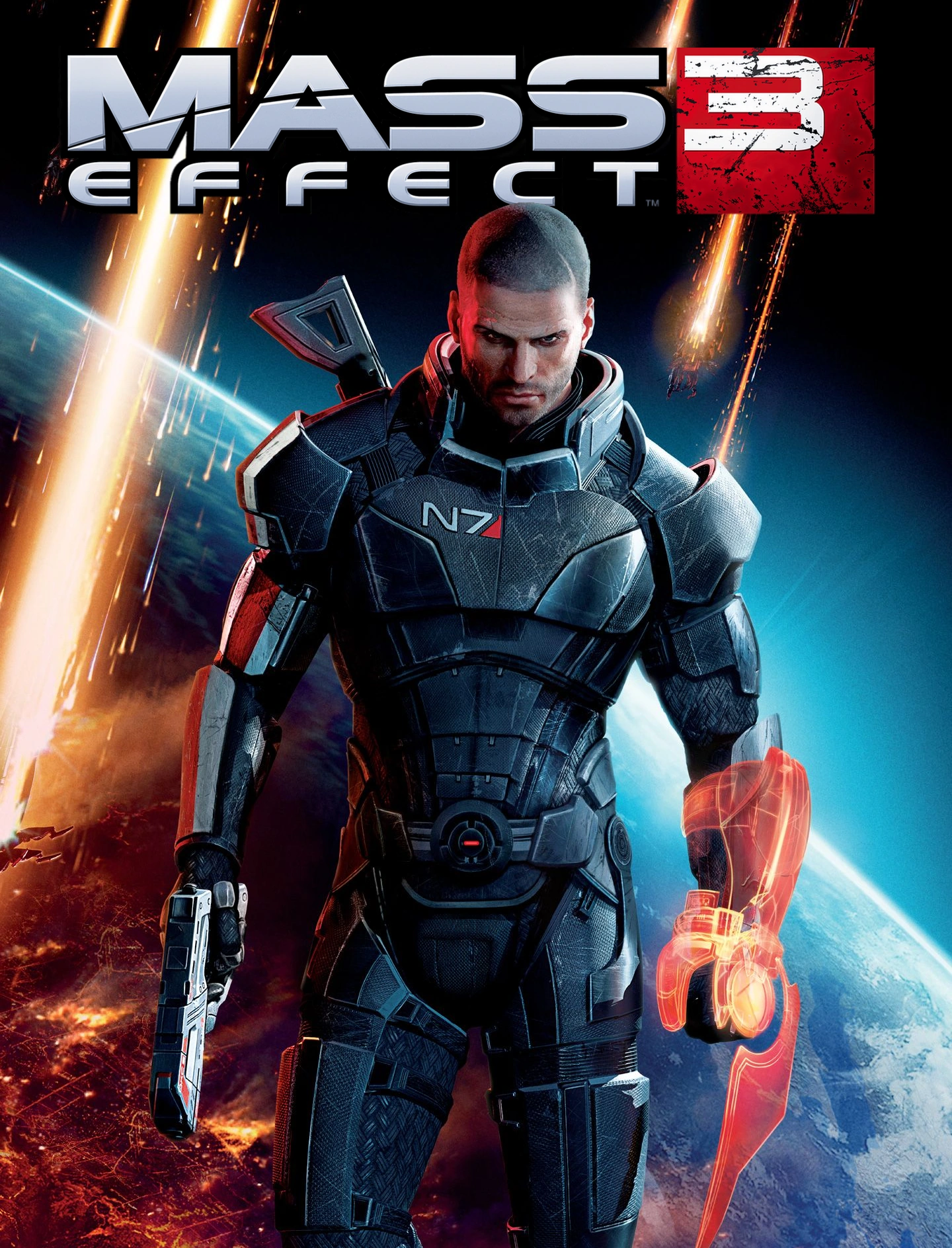
Mass Effect 3 (2012)


It's gotten easier to examine the final installment of the Mass Effect trilogy as the years have gone by. The outrage over its extraordinarily unsatisfying ending has subsided over the years, and the emotional impact of such a gut-punch has quieted. By no means is the ending "good" or "well written," which is a shame for a series that actually had some pretty great writing, but five years later, it's much easier to look at the game as a whole, without that vested interest in "what comes next." Of course, for many fans, even the reactionary "extended cut" or the fan-service "Citadel" DLC couldn't make up for the hurt. Still, it's less raw at this point.

Taken as a whole, Mass Effect 3 might be the most complete package as an individual game. It's emotionally-driven, with the central protagonist actually appearing human for a change. The campaign is slathered in the fictional politics of this fantasy/sci-fi world. Alliance building makes for a surprisingly strong campaign. Some would argue that it all feels silly given the scale of the Reaper War, but without the diplomacy, you'd be left with something that basically functions as just Gears of War in space. It would not be unreasonable to argue that overall, it has the most interesting single-player campaign in the trilogy.

Granted, one cannot simply list the story of the individual game out of its context in the series. Being the final act, it does not stand on its own. The bulk of it relies on what came before, as it should. This makes some of those narrative missteps feel even bigger as a result. Within the context of Mass Effect 3 alone, you get situations like on Utukku. The mission in which you stumble upon a giant rachni queen is actually a pretty solid one. By no means is it a bad mission. The basic plot itself isn't inherently bad. A rachni queen has been captured by Reaper forces and is being forced to pump out an army of offspring that they will use as shock troopers. Great! Good story! One problem, though: it kind of betrays what happened in the first Mass Effect. More subtly, if you chose to save the rachni queen in the first game, it is unsatisfying to see that she is, once again, being used as a tool to breed an army of enemies you must mow down. More overtly, if you killed the rachni queen back on Noveria, the developers just plop a new rachni queen in her place. So what does it matter if you saved or killed her?

Even elements like Udina being made Councilor because Anderson was needed in the military as an admiral with the Reaper invasion betray that. Not every choice has to matter in a video game - indeed most choices in most games don't ultimately matter - but why give us such a meaningless one to make if you are just going to reset it two games later anyway?

That is the primary problem with Mass Effect 3. Because the missions have to be the same, regardless of what decisions you've made or whether you've played as a renegade or paragon, the game has to do a number of resets. These are the big narrative missteps within the final game. What's worse is that they even undermine decisions you make explicitly within this one game alone at the end. You can spend so much of your playthrough opening the door for a geth/quarian union, but then if you destroy the Reapers, you kill all the geth, so who cares? Mass Effect isn't one of those games that presents choice in the game as a means to speak toward the general idea of choice as illusions in life. Rather, it just feels like BioWare maybe didn't know exactly how to handle all of the branches they left open through these decisions, and opted to close it up in the easiest, but least rewarding ways for the players.

The ending is, without question, pretty terrible. That itself could be a separate essay, but suffice it to say that it actually makes little sense. It undermines everything the trilogy had been going for up to that point. It presents you with a few terrible choices, in which none are actually satisfactory. It feels like a lose-lose scenario. Even the extended cut doesn't actually fix the root of these problems. Not that artists should necessarily ever be obligated to explain their work, but I would be genuinely interested to hear lead writer Casey Hudson explain what he was thinking with his ending. It's such a hot mess that it's hard to know what he was actually even going for.

The narrative problems are some of the biggest problems with the game, but the rest of it is actually pretty great. The leveling system is still inferior to Mass Effect, but they found a happy medium between that and the overly simple Mass Effect 2 system. The cast is pretty great, even if it might take a little time to warm up to James Vega. The time for learning of new characters is over, so the fact that there's ultimately only one potential new character (and unfortunately, a DLC character that adds quite a bit to the game - another creative decision that was pretty awful). The soundtrack is as good as ever. Combat is smoother, which is good given the game occurs in the outbreak of a full scale galactic war. Powers are more fun to use, and even level designs are a bit more interesting. The stuff on Tuchanka, for example, is among the best levels in the series. There are cheesy moments that shouldn't exist, like the strange dream sequences, but they hardly break anything in the game. Otherwise, the emotional beats are actually stronger in Mass Effect 3 than either of its preceding installments.

As an individual package, it might very well be the best and most complete of the bunch. Unfortunately, it also just cannot be viewed through that isolationist lens. In the context of the trilogy - serving as a conclusion - it fails to deliver in the end. Inevitably, the checks that Mass Effect and Mass Effect 2 wrote were not ones that Mass Effect 3 could entirely cash. It doesn't completely fail, but its ending is easily one of the most unsatisfactory endings in video games.

On a final note: one thing that is kind of interesting about the ending is colors of that final sequence when the Normandy crashes. Throughout the entire trilogy, the universe is mostly made up of blue and red hues. This echos the paragon/renegade morality system of the series, which also gets deployed from Mass Effect (where you're the hero of the Alliance, so everything is blue) to Mass Effect 2 (where you're working with the splinter group Cerberus and deemed an outsider, so everything is red). Mass Effect 3 generally works with both colors again. Once the Reapers are destroyed, however, the game momentarily abandons that color scheme. Joker and a few crew mates step off the Normandy onto a world filled with green. It's one of the few times another color gets to dominate the screen. There are some aspects to the ending that are worth noting in a positive manner. It's still, however, a lot of nonsense that makes little or no sense.

Does the ending completely ruin the franchise? Certainly, some fans argue it does. I am not one of them. You won't hear me say that the ending is good, but it didn't really change my opinion of the previous 100+ hours I had spent playing. They are still good games that have a lot to offer, design flaws and all. Still, one should steal themselves for that empty feeling at the conclusion, given there's little rewarding about it.

REDUCTIVE RATING: Solid Game.

Available On: XBox 360, PS3, PC, Wii U


Thursday, May 11, 2017

Something Stupid #5 - Open Fart Surgery


This might be the most seriously and sincerely anyone has every talked about farts and farting outside, say, a medical conference. I'm not sure why I had to talk about farts for 20 minutes, but I did. (Ya know, if my high school had any shop classes, I could be building birdhouses or some shit. But no. Only bible study.)


Tuesday, May 9, 2017

Something Stupid: Episode 4 - Who's Keeping Score?

Hey! I have something to talk about today! Weird. This is a bit of a long-winded one, especially because I wanted to use decent quality clips of theme songs. Basically, I am really starting to wonder why after, what, like, 40 superhero movies in the last 15-16 years, we have no real memorable character themes. This is about 55 minutes long, in fair part due to those clips. Originally I had just recorded it off of the speakers, but I changed my mind and spent 5 hours downloading and editing this thing, adding better quality clips in "post." (I have traditionally done everything I could to avoid spending time "in post," but, unavoidable.)


Saturday, April 1, 2017

Mass Effect 2 (2010)


Sometimes, a game can be fairly flawed, but do enough things incredibly well that it becomes one of your favorite games of all time. Mass Effect 2 fixes a lot of the problems in its buggy, clunky predecessor, but it also overcompensates to its detriment. Still, what it does well, it does very well.

If the combat in Mass Effect was slow, clunky, and awkward, Mass Effect 2 corrects that with a more action-oriented combat style. Moving from a soft cover system, players pop in and out of designated cover areas by hitting a button. There are still a few issues that arise from that, but it is a lot more reliable. The avatar controls better, allies are a bit more responsive, powers are a tad more important, more enemies are thrown at you, and the guns are sturdier. Granted, they sacrifice two of the most interesting elements of the previous game: the overheating system (replaced here with traditional "ammo" that you need to pick up) and leveling up your weapons skill set (replaced here with just a default set of weapons that you're equally good at). Still, the end result is a much more competent-feeling game. 

Not all is perfect, of course. Level designs are still a bit weak, with little apparent order given to things. Cover in Mass Effect has always been a bit strange in that it doesn't ever feel like they put too much thought into how to lay it around the small maps, and Mass Effect 2 sees a number of missions in which you may wonder why they placed cover where they did. And while your squad mates listen to you substantially more accurately than in the first game, there is still a wonkiness to their control. Directing a team mate is as simple as pointing the reticle, than hitting the directional key corresponding to that character (so if Mordin is on the left, then pressing the left directional key moves him). Simple and straight-forward; the problem is, that same key is used for the quick command of their powers. You might often find yourself trying to get Mordin to use incinerate, for example, but instead wind up ordering him to move directly into harm's way, since that one button issues both commands. 

There are various little design flaws too. Scanning for minerals on planets is tedious and boring. Having to go through minute-long load screens just to go a deck below on the Normandy feels antiquated and dated. Mass Effect 2 retains a stamina bar, but it keeps it hidden away for some reason. (You can only sprint for up to five seconds, and if you go the max sprint time, you then get "winded.") It also gets a bit frustrating how any time you find a new weapon, you collect it and then automatically get equipped with it rather being given a choice (they usually compensate for this by providing a load-out locker nearby, but not always). But these are all minor things overall. 

The biggest area of disappointment stems from the leveling system, which is dramatically reduced and oversimplified. Instead of having a wide array of categories to allocate your skill points into, each character only has four. Each of those also only levels up four times, though they require an additional point each time - so to level up the second time, you need two points; to level up the third time, you need three. You still earn experience points, level up, and earn a new skill point, but it feels a lot murkier than the simple "level up is one point, put it wherever ya want!" system that was in the inaugural game of the series. Many fans, even ones who adore the sequel, were critical of the game essentially taking an RPG with action elements and transitioning quickly into an action game with some RPG elements. 

Overall, the game is surprisingly flawed for one that many consider an all-time great. So what is it that the game does really well? The answer has to be the characters. 

Functioning essentially as The Dirty Dozen, but in space, the majority of the game's narrative is centered around recruiting a crew of assassins, mercenaries, thieves, vigilantes, and vagabonds as you prepare for what sounds like a suicide mission. Your best chances for success and survival is to recruit everyone, and to earn their loyalty. The bulk of the "main story" ultimately only takes a few hours, at most. It's all the other, character-driven stuff that requires the most time investment. It is also what really draws people into the game. There is a strangely strong connection to make with these characters, and once you've done that, the suicide mission provides an excellent source of stress!

Though it could be argued that the game might have too many squad mates (up to twelve, if you get the DLC characters of Zaaed and Kasumi), each one has something to bring to the table, whether it's the useful skill set Garrus, or the humorous commentary of Mordin, or the strategic use of Legion or Tali in areas filled with geth, it is a bit harder to just stick with a single team make up through the entire game. The best thing the developers did was give each character their own "loyalty mission." These are missions designed around the individual's story, and requires player use that character. Never use Grunt? Well, you have to for his loyalty mission. Unsure of what Legion brings to the table? You have to use him for his loyalty mission! Players who want the team to survive will have to do these missions, which means they will have to use those characters that they might have otherwise gone the entire game without adding to their load out. (This is ultimately how I learned to start loving Kasumi as a squad mate more than just as a person with fun quips.)  

Not every loyalty mission is great. Samara's and Thane's do not feature any combat, which makes it hard to get to know them as squad mates to bring into the field. If you do not find Samara interesting, for example, you likely aren't going to bring her along on your missions, given that her powers appear to be some of the most useless. (Pull and throw actually open up some good, fun power combos.) These missions do function to provide more backstory (and subsequent closure to them), they are mostly used to highlight what each member offers, which is why it is disappointing to have a mission that does not highlight any combat strength of the character.

Choices are also done in a much better fashion, often providing more complexity. The paragon/renegade dynamic is still as binary as ever within the game, but the larger context is often more grey. In Zaaed's mission, for example, you are forced to either rescue workers or go after a merc group leader. The easy moral choice is to save the workers, but you risk losing Zaaed's loyalty, which the game has essentially told you that you want to earn. Everything about Mordin's story is in grey. (Mordin's addition alone would make this one superior to the first Mass Effect.)  Legion's loyalty mission also includes a surprisingly difficult decision to make, ethically. The game still ultimately kind of ruins it by sorting every choice into a binary system, but the larger questions around them linger. 

Mass Effect 2, story-wise, is probably the least significant of the trilogy. When you finish Mass Effect 3, you almost realize that the middle game was just a giant detour. It does set up a lot of the side stories that get conclusions in 3, but it does feel a bit out of place in the larger story. Still, the characters and their loyalty missions make it one of the more engaging of the series. All of it is in service to the final mission, which is one of the most anxiety-inducing missions you could play at the time. Many aspects of the game's design are outdated and haven't aged well, but the characters and the experience of learning about them will never go out of style. It might be the most irrelevant "Mass Effect" game, but it is the most enduring and engaging.  And of course, who can complain about a game heavily featuring Martin Sheen?

(The game is also almost entirely about parenting, but I'll talk about that in a much more in-depth piece later.)

Systems: XBox 360, PS3, PC

REDUCTIVE RATING: Pretty Great!