This might be the most seriously and sincerely anyone has every talked about farts and farting outside, say, a medical conference. I'm not sure why I had to talk about farts for 20 minutes, but I did. (Ya know, if my high school had any shop classes, I could be building birdhouses or some shit. But no. Only bible study.)
Hey! I have something to talk about today! Weird. This is a bit of a long-winded one, especially because I wanted to use decent quality clips of theme songs. Basically, I am really starting to wonder why after, what, like, 40 superhero movies in the last 15-16 years, we have no real memorable character themes. This is about 55 minutes long, in fair part due to those clips. Originally I had just recorded it off of the speakers, but I changed my mind and spent 5 hours downloading and editing this thing, adding better quality clips in "post." (I have traditionally done everything I could to avoid spending time "in post," but, unavoidable.)
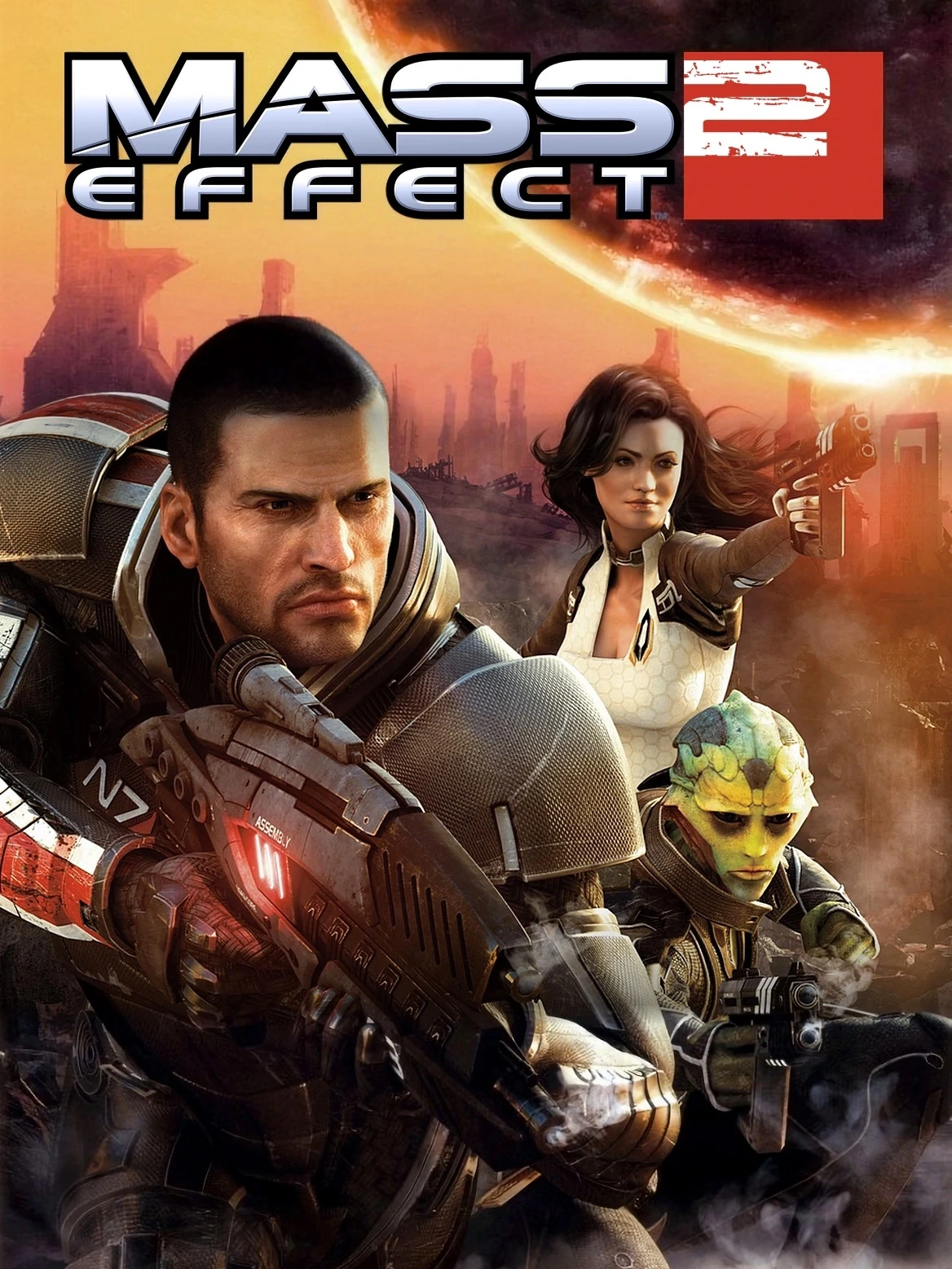
Sometimes, a game can be fairly flawed, but do enough things incredibly well that it becomes one of your favorite games of all time. Mass Effect 2 fixes a lot of the problems in its buggy, clunky predecessor, but it also overcompensates to its detriment. Still, what it does well, it does very well.
If the combat in Mass Effect was slow, clunky, and awkward, Mass Effect 2 corrects that with a more action-oriented combat style. Moving from a soft cover system, players pop in and out of designated cover areas by hitting a button. There are still a few issues that arise from that, but it is a lot more reliable. The avatar controls better, allies are a bit more responsive, powers are a tad more important, more enemies are thrown at you, and the guns are sturdier. Granted, they sacrifice two of the most interesting elements of the previous game: the overheating system (replaced here with traditional "ammo" that you need to pick up) and leveling up your weapons skill set (replaced here with just a default set of weapons that you're equally good at). Still, the end result is a much more competent-feeling game.
Not all is perfect, of course. Level designs are still a bit weak, with little apparent order given to things. Cover in Mass Effect has always been a bit strange in that it doesn't ever feel like they put too much thought into how to lay it around the small maps, and Mass Effect 2 sees a number of missions in which you may wonder why they placed cover where they did. And while your squad mates listen to you substantially more accurately than in the first game, there is still a wonkiness to their control. Directing a team mate is as simple as pointing the reticle, than hitting the directional key corresponding to that character (so if Mordin is on the left, then pressing the left directional key moves him). Simple and straight-forward; the problem is, that same key is used for the quick command of their powers. You might often find yourself trying to get Mordin to use incinerate, for example, but instead wind up ordering him to move directly into harm's way, since that one button issues both commands.
There are various little design flaws too. Scanning for minerals on planets is tedious and boring. Having to go through minute-long load screens just to go a deck below on the Normandy feels antiquated and dated. Mass Effect 2 retains a stamina bar, but it keeps it hidden away for some reason. (You can only sprint for up to five seconds, and if you go the max sprint time, you then get "winded.") It also gets a bit frustrating how any time you find a new weapon, you collect it and then automatically get equipped with it rather being given a choice (they usually compensate for this by providing a load-out locker nearby, but not always). But these are all minor things overall.
The biggest area of disappointment stems from the leveling system, which is dramatically reduced and oversimplified. Instead of having a wide array of categories to allocate your skill points into, each character only has four. Each of those also only levels up four times, though they require an additional point each time - so to level up the second time, you need two points; to level up the third time, you need three. You still earn experience points, level up, and earn a new skill point, but it feels a lot murkier than the simple "level up is one point, put it wherever ya want!" system that was in the inaugural game of the series. Many fans, even ones who adore the sequel, were critical of the game essentially taking an RPG with action elements and transitioning quickly into an action game with some RPG elements.
Overall, the game is surprisingly flawed for one that many consider an all-time great. So what is it that the game does really well? The answer has to be the characters.
Functioning essentially as The Dirty Dozen, but in space, the majority of the game's narrative is centered around recruiting a crew of assassins, mercenaries, thieves, vigilantes, and vagabonds as you prepare for what sounds like a suicide mission. Your best chances for success and survival is to recruit everyone, and to earn their loyalty. The bulk of the "main story" ultimately only takes a few hours, at most. It's all the other, character-driven stuff that requires the most time investment. It is also what really draws people into the game. There is a strangely strong connection to make with these characters, and once you've done that, the suicide mission provides an excellent source of stress!
Though it could be argued that the game might have too many squad mates (up to twelve, if you get the DLC characters of Zaaed and Kasumi), each one has something to bring to the table, whether it's the useful skill set Garrus, or the humorous commentary of Mordin, or the strategic use of Legion or Tali in areas filled with geth, it is a bit harder to just stick with a single team make up through the entire game. The best thing the developers did was give each character their own "loyalty mission." These are missions designed around the individual's story, and requires player use that character. Never use Grunt? Well, you have to for his loyalty mission. Unsure of what Legion brings to the table? You have to use him for his loyalty mission! Players who want the team to survive will have to do these missions, which means they will have to use those characters that they might have otherwise gone the entire game without adding to their load out. (This is ultimately how I learned to start loving Kasumi as a squad mate more than just as a person with fun quips.)
Not every loyalty mission is great. Samara's and Thane's do not feature any combat, which makes it hard to get to know them as squad mates to bring into the field. If you do not find Samara interesting, for example, you likely aren't going to bring her along on your missions, given that her powers appear to be some of the most useless. (Pull and throw actually open up some good, fun power combos.) These missions do function to provide more backstory (and subsequent closure to them), they are mostly used to highlight what each member offers, which is why it is disappointing to have a mission that does not highlight any combat strength of the character.
Choices are also done in a much better fashion, often providing more complexity. The paragon/renegade dynamic is still as binary as ever within the game, but the larger context is often more grey. In Zaaed's mission, for example, you are forced to either rescue workers or go after a merc group leader. The easy moral choice is to save the workers, but you risk losing Zaaed's loyalty, which the game has essentially told you that you want to earn. Everything about Mordin's story is in grey. (Mordin's addition alone would make this one superior to the first Mass Effect.) Legion's loyalty mission also includes a surprisingly difficult decision to make, ethically. The game still ultimately kind of ruins it by sorting every choice into a binary system, but the larger questions around them linger.
Mass Effect 2, story-wise, is probably the least significant of the trilogy. When you finish Mass Effect 3, you almost realize that the middle game was just a giant detour. It does set up a lot of the side stories that get conclusions in 3, but it does feel a bit out of place in the larger story. Still, the characters and their loyalty missions make it one of the more engaging of the series. All of it is in service to the final mission, which is one of the most anxiety-inducing missions you could play at the time. Many aspects of the game's design are outdated and haven't aged well, but the characters and the experience of learning about them will never go out of style. It might be the most irrelevant "Mass Effect" game, but it is the most enduring and engaging. And of course, who can complain about a game heavily featuring Martin Sheen?
(The game is also almost entirely about parenting, but I'll talk about that in a much more in-depth piece later.)
The Democratic-Republican from Virginia, and author of the Declaration of Independence, was a man of many contradictions in practice and in ideology. In many ways, that made him an interesting character to read about. Probably an under appreciated President, despite being perhaps the most quoted founder, he also managed to expand the office's authority more than his predecessors.
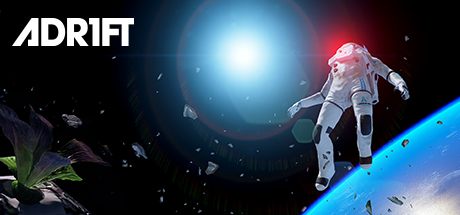
Sometimes, you do not need a ton of interactivity to recognize what kinds of experiences games can provide. A smaller game from 2016, Adr1ft provides a beautiful and engaging experience, functioning basically as an interactive version of the film Gravity. Despite some occasional technical problems, it is a great example of how less can sometimes be more.
Players control astronaut Alex Oshima, commander of an international space station that has suffered some sort of catastrophic incident. Alone in space, you must make your way from chunk to chunk in an effort to both discover what has happened as well as find a way to activate an escape pod. Scattered throughout the area are portable oxygen canisters. Navigating from point to point requires management of that oxygen, as it is used both as your "life bar" as well as the means of propelling yourself through the weightlessness of space.
In a sense, it is functionally just a "walking simulator," like The Stanley Parable or Dear Esther. Yet it does provide slightly more interactivity than those as there is a fail-state. Go to long or stray too far from the oxygen tanks, and you will suffocate to death. Additionally, the space location means there is an up and a down direction to explore, in addition to the usual front/back and left/right. It's actually pretty easy to get disoriented and turned around, and given that several large chunks of the station look the same, it can be hard to keep track of where you were going and where you just came from. Plus, the momentum of using oxygen thrusters means you are likely fidgeting with the controls on a much more frequent basis than other "walking sims."
Visually, the game is breathtaking out of the gate. It's hard not to see how much better the game might be as a virtual reality experience rather than a traditional first person game on your television. Until you realize that you can die, you can easily get lost just looking around at the Earth below. One of the creators tweeted a response to me saying that it is a meditative game, and to some extent, that is true. However, that feels a bit misleading since there is still an objective to the game. You still need to make it to certain points, and you can still get electrocuted or suffocate and die. There's still a point. It isn't just to let players experience a space walk.
For a game built to "stop and look around," they don't necessarily provide much interesting stuff to fill in the details. It is kind of easy to miss key story elements, and if you don't get those, or only get a few, you miss out on a pretty important aspect of the game. It's also a bit difficult to argue that it is meant to be simply a meditation given how stressful it can be when you find yourself desperate for oxygen. Some critics have complained that there just isn't anything to do in the game, but that isn't quite the right way to approach this game. In terms of "what to do," it's similar to the much praised Journey. The difference, however, is that Journey created a more compelling atmosphere and visual narrative that made it far more engaging than slowly drifting from place to place.
There is a lot to like aboutthe game. It's lack of hand-holding, that it tells backstory through discovery of personal computers around the station, the connection between motion and health that forces players to try and conserve oxygen, are all interesting design elements that make it solid. It's beautifully rendered, isolating, lonely environment just above the Earth makes it worth checking out.
Unfortunately, there are too many stretches where Adr1ft just sort of leaves you out to dry. For a game encouraging exploration, they could have provided some optional control feature that better points you in the right direction to the next objective. What they have in place can be infuriatingly inaccurate, causing you to spend hours just floating around doing literally nothing and ultimately going nowhere. This, also, says nothing of game breaking technical issues. (I had to restart the game three separate times because a door that was supposed to open so I could advance to the next stage would not. And I had another situation late in the third attempt wherein the game would not let me into the area that I had to activate. So I was never able to actually finish the game, which is a bit unfortunate since I did generally like it, and had to reference a walkthrough video to realize my game kept "breaking." It shouldn't take more than two or three hours to get through, but with game breaking glitches, you can be floating there for ages before you realize the game isn't letting you proceed.)
Few games build a world as deep and complete as BioWare did for their sci-fi RPG action game Mass Effect. Complete with rich written histories of each alien species, piece of technology, government agency, and even planets, it is not hard to argue that the lore and detail of its world is the strength of the first game in the trilogy.
Indeed, much of the gameplay leaves a bit to be desired. There are plenty of aspects to the combat that are great or could have been great. Issuing orders to squad mates, for example, is a good idea that never functions as it is supposed to, and instead winds up becoming the source of irritation in a firefight. Weapons that do not require ammunition, but will overheat and jam might be the single best aspect of battles, with minimal downside. The Mako, a ground vehicle used at the start of every story mission, is a solid idea, but falls far short in its execution. Even the dialogue wheel, complete with binary morality, is pretty good, yet has a number of shortcomings.
Probably the most frustrating aspect is that of exploring planets. In every star system, there are a few planets that you can land on and explore. Discovering gorgeous, realistic planets and moons goes a long way to crafting a compelling and engaging universe, but it actually is kind of bad game design. Realistic planets with realistic mountains might increase the realism of the larger game world, but it is such a slog to have to cross over in the Mako. Bad enough that the Mako handles like a cross between a crappy tank and a drunk refrigerator; having to scale steep cliffs to get to an element deposit is tedious at best. Why they thought it was a good idea to put stuff at the top of mountains is beyond my comprehension, and is one of the ways where developing the world seems to come at the cost of gameplay.
The first Mass Effect also doesn't run particularly smoothly. The controls are a bit clunky, certain functions don't work as they're supposed to, and when a lot of action is going on, there is often a noticeable drop in frame rate and rendering. Load times aren't the best (although I still actually like the long elevator rides that result in unique conversation between team mates), but they aren't necessarily the worst either. Certainly playing it today on XBox One, you can't help but notice how much the new console reduces them. The game can't handle swarming enemies well, which becomes a glaring issue when ambushed by rachni or large groups of geth or gangsters.
That, mixed with being more of an action RPG than a traditional third person shooter, can make it a hard game for new players to get into. By all means, Mass Effect is a game with an incredible world, great characters, and then almost nothing but unfulfilled potential as a game. In fact, when people ask me about it, I tend to suggest they just start with Mass Effect 2. The series eventually transitions further away from some of the better RPG elements found in the first game, but that actually does make it more palatable. Still, the leveling system - basic and simple, yet granting more freedom to the players - is an aspect that would have been nice to see get carried over in future games.
Half of the game isn't even combat, or infuriating combat with the Mako. A good chunk of the game is spent talking to people, whether it is folks on a colony planet with problems you need to solve or just shooting the breeze with your squad mates on board your ship, some of the most captivating elements of the game involve your choices in conversation. The overly simplistic, binary moral system of Paragon (good) versus Renegade (bad) is a bit bland and boring, but it actually works for the game given the story is one built on sci-fi and action tropes. Play enough times, however, and you notice how little your choices in conversation matter. In many instances, Commander Shepard will say the same exact thing with the same exact inflection regardless of which option you pick. And the choices themselves are rarely complex or difficult. In fact, probably the best, hardest decision to make comes in the "Bring Down The Sky" DLC, in which you are actually presented with a sort of lose-lose scenario. Allow the terrorist to leave, and you get to free the hostages. Stop the terrorist then and there, and the hostages will be killed.
Most of the voice actors are fine, but it isn't hard to notice that most actors are recording their dialogue in completely separate rooms at completely different times. There's a clunky sound to their rhythms. It doesn't break the game, of course, and that is often more than made up with the incredibly atmosphere, electronic and spacey soundtrack, but it does add to how dated the game seems by today's standards.
Frankly, for as much as I love Mass Effect, it really hasn't aged particularly well. Things would improve as the series continued, even despite it's final missteps, but that first game is still a little difficult to get through. If you're into really well defined and interesting characters, a super detailed world rich with lore and its own history, and that would be enough to make up for sometimes trying gameplay, then Mass Effect is a game you should have checked out by now. All the things it does amazingly - characters, world-building, et cetera - more than made up for the sloppy gameplay for me, but it likely won't be everyone's cup of tea.
In today's age of the nerd, it seemed inevitable that the kaiju genre might make an appearance in Hollywood. Sure enough, Legendary Pictures has taken up the mantle, almost entirely by themselves. They gave us Pacific Rim, then Godzilla, and now they've given us Kong: Skull Island, with the knowledge that they have acquired rights to other classic Toho monsters as they build for a cinematic kaiju universe (kaiju-verse? kaijuniverse?). Admittedly, I've never been a huge fan of Kong beside the technical aspect of it. The original 1933 film was groundbreaking and influenced an entire generation of filmmakers (including the Japanese creators who gave us the much superior film, Godzilla, in 1954). That said, there's just never been that much interesting stuff behind him. It's not that there's no substance at all; just that it's minor and not that compelling.
Kong: Skull Island suffers a lot of the same issues that have plagued the franchise overall and, frankly, the Legendary kaijuniverse too. What all films have in common is that they do the monster action incredibly well. Despite it's flaws, Godzilla produced two all-time great moments in the character's history. Pacific Rim also offered jaw-dropping action sequences, with an emphasis on scale and power. Kong: Skull Island similarly produces a number of memorable moments within the action. However, like the previous films, the characters and story leave a lot to be desired.
Lacking any real creativity, we once again focus on a group of military personnel (and a few eccentric scientists) as they search for Kong. In many ways, Kong: Skull Island has more in common with things like The Land that Time Forgot, Journey to the Center of the Earth, or even The Lost World than it does the original King Kong or any other kaiju film from yesteryears. After Kong attacks and kills much of the platoon, the survivors are separated and must reach the retrieval point. The island, however, is full of huge and deadly creatures that continue to threaten their lives. Meanwhile, commander Preston Packard (Samuel L. Jackson) is determined to kill Kong in revenge rather than bring his men to safety at the evac point.
Packard offers some substance and depth to an otherwise bland story. It is 1973 and Nixon has just announced a treaty to end the war in Vietnam. A decorated war hero, Packard is convinced that this peace treaty functions similarly to surrender; that all who died gave their lives for nothing. He harbors a grudge towards the peace activists back home, telling Brie Larson's character, "Sometimes a a camera is more dangerous than a gun!" before claiming, "We didn't lose the war; we abandoned it."
The events that unfold on Skull Island serve as a quasi-parallel to the Vietnam War. Everyone involved was under no actual threat from the creatures on this island, but John Goodman and his organization Monarch are convinced it will become a threat to the nation and the world. So, they opt to send troops and deploy bombs, which gets the attention of Kong. The giant gorilla retaliates in vicious fashion, killing a group of men that just a few days earlier, received word that they would be sent home. Meanwhile, rather than recognizing that going after Kong was resulting in additional deaths, Packard digs deeper. He wants to kill Kong just to display the power of the United States military.
Those parallels, which get brought up on a number of occasions (including a great moment wherein they discuss whether these enemies are actually enemies, or if they become enemies because we went looking for them), and that gives it a substance sorely lacking from Godzilla. Still, there's not really any getting around the fact that, for rather well defined characters, none of them really matter much. Most of them are there just to die. They give them brief moments in an attempt to get you to feel something, but at the end of the day, almost all of the soldiers are just fodder. Even more, Tom Hiddleston is completely wasted as the generic white action hero man, who isn't even that important to the story in any capacity. Similarly, Brie Larson is there as an anti-war photographer. She makes a momentary connection with Kong (as is tradition for a white woman to do), but otherwise, she also doesn't have any real impact on anything.
Quite literally, the only characters who matter are Kong and Packard, which makes it hard to care when the monsters start picking off the soldiers and scientists left and right. The story is ultimately better than that of Godzilla, it still leaves much to be desired. John C. Reilly is the only one whose talents they fully realized, but even then, his comedic relief often feels forced, and creates a strange tonal clash. The dialogue is a bit all over the place as well, with a few too many wall-breaking jokes. The very first line of dialogue, as Goodman tries to secure funding from a Senator, is a silly, "Mark my words: there will never be a more dysfunctional time in Washington." Har har har. GET IT?!?
The film also serves as "world building." The entire beginning of the film serves almost exclusively to connect to Godzilla, so that they can build the "cinematic kaijuniverse." The post credits scene even goes all Iron Man in the way it spells out there is a larger world of monsters. It ends with Godzilla's roar, and I don't entirely get it. For starters, if ever a genre of film did not need "world building" and "continuity," it's the kaiju genre. Just play with the toys! If you argue that the lack of interesting human characters or drama is irrelevant because people just want to see monsters fight each other, then explore that! Use that to your advantage. (Granted, they appeared to have heard criticism of not enough Godzilla in Godzilla, and they do the complete opposite of "teasing" Kong. He is on full display within minutes of the film.) It also just seems strange to tease a movie that came out three years ago.
To be sure, there is much to like and appreciate about the film. Kong: Skull Island goes out of its way to avoid too many similarities with the previous remakes. There is no return to civilization, nor climbing New York's skyline. There are some, of course, most notably his affection for the central female character. The story also makes it seem more like an anti-war film than a generic monster movie. And at the end of the day, the action is still great. (Though I find it disappointing that these Western kaiju films continue to be very military-centric, and that they are almost entirely CGI with no discernible practical effects - part of the charm of the genre - it's hard to ignore that these films do have good monster battles.)
Still, it drags throughout - a result of splitting up the group into three for a bit. The writing isn't bad, but it's not particularly great either. Many of the complaints levied at Godzilla easily apply here. Like with Godzilla and Pacific Rim, there is something truly great just under the surface, but the writers just can't quite get there. While the Legendary kaijuniverse is not the train wreck of a cinematic universe that, say, DC's is, there are plenty of reasons to be concerned. Godzilla 2 is supposed to come out in 2019, and then King Kong vs. Godzilla will release in 2020. Given how none of their kaiju films have been especially huge box office hits, it wouldn't be at all surprising to see the entire enterprise collapse before that point. Godzilla 2 has already seen a director step down and the release date get pushed back a full year. I'm not sure Kong: Skull Island will really drive up enthusiasm for the larger universe.
That said, it's still a fun experience worth seeing in theaters. I'd just maybe suggest going on discount day, or to the matinee.
As an aside: I really wish more directors would shoot in the 1.85 aspect ratio. Guillermo del Toro did for Pacific Rim, and it's great because it maximizes the height of the screen. This helps increase the scale of the giant monsters. The anamorphic 2.40 ratio (cinematic widescreen) is a commonly used format for the "epic, action blockbuster," but there's something a bit disappointing about seeing a giant gorilla fighting a giant lizard creature with the image not taking up the entire height. Feels like an easy way to push the sense of size with these super tall beings. Both Godzilla and Kong: Skull Island use the scope 2.40 ratio.