Wednesday, December 28, 2016

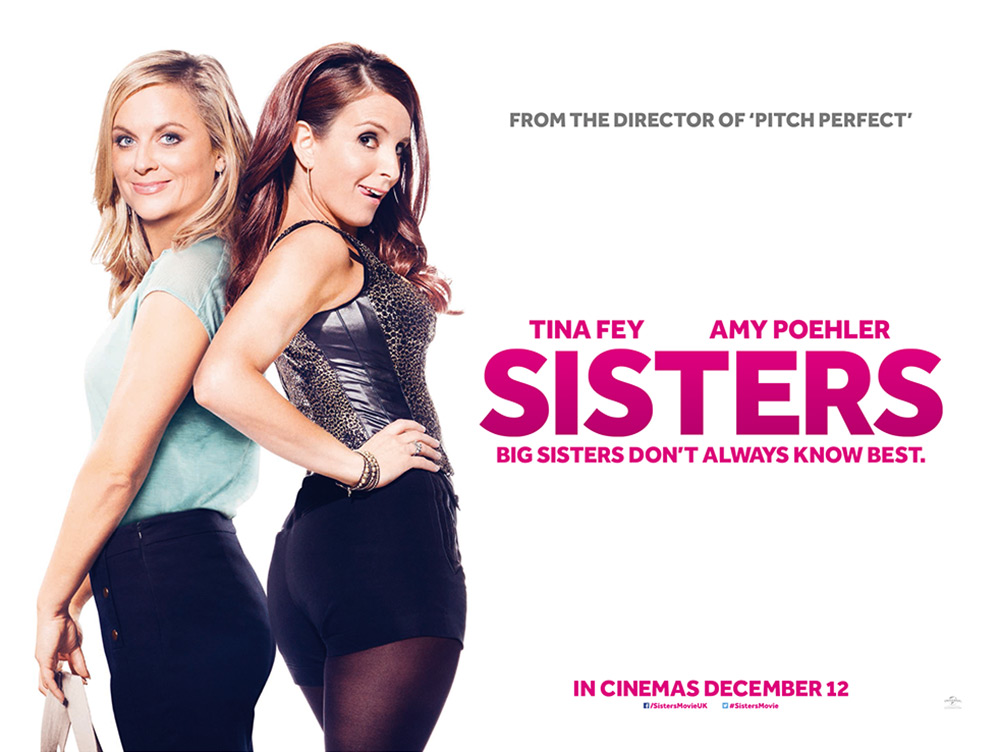
Sisters (2015)


Few comedy duos have such instant chemistry as Amy Poehler and Tina Fey. Fan favorites from their days at Saturday Night Live, both went onto bigger and better things. Fey created the infinitely watchable 30 Rock while Poehler went on to help craft one of the best comedies ever in Parks & Rec. And they made a very enjoyable, quotable film together in Baby Mama back in 2008. The pair of fatally funny female comics return in Sisters, a comedy that sees them essentially reverse roles.

In this case, Poehler takes on the role of mature adult. As Maura Ellis, she starts off as the relatively uptight one. She has a steady job, a home of her own, and has been helping her parents and her niece. Her diary entries read more like historical logs, and she frets over anything out of place. Confrontation is not her strong suit, but neither is flirting - in which she is categorically awkward about. On the flip side, Fey as Kate Ellis is the kid who never grew up. Selfish, bold, confrontational, and loud, she lacks all of those things Maura has. She can't keep a job, she is essentially homeless, she can barely take adequate care of her daughter - who is independent in her own right by now.

The essential premise of the narrative is role reversal. There is the meta-reversal in Poehler playing the mature one while Fey plays the immature character. Then in context of the story, the plot itself calls for a reversal, in which Kate has to be "party mom" while Maura gets to cut loose, get drunk, and score with the hot guy next door.

Of course, the core of the comedy is in adults having a high school rager. Back at home as their parents try to sell their beloved house, the Ellis sisters decide to throw one last killer party like the ones they were famous for in high school. They invite all of their friends, who have aged equally. On the surface, it would be easy to interpret this as seeming like just another Hangover clone: a crazy party held by those you'd least suspect of having one, and you can't believe the things they do! Absolutely, that is a major aspect of the film. From drenching the house in soap bubbles to over-filling the pool to the point of creating a sinkhole, to destruction of walls, ceilings, and the huge tree in the backyard, it does have that aspect to it.

Yet it twists it a bit to make it more compelling and interesting. Instead of just making the joke, "these older people are acting like teenagers!" they instead play into something more meaningful. The reason these people are doing this is to remember life before they were miserable. At the start of the party, acting as adults, they engage in boring conversations that even the people doing the bulk of talking are clearly not interested in. By the end, they have all cut loose and got to be more their "true selves." It comments on the nature of "growing up," playing around with the line and balance of being "mature" and being "child-like." It essentially argues that people need to find that line to be truly happy. That abandoning everything you enjoyed doing in your youth just because society tells you to "grow up" isn't really that great. There aren't too many of these types of films that even start to explore any such concepts. (Consider The Hangover: what did it explore at all in the film?)

The jokes are solid, with a script from Paula Pell - a great writer from some good years at SNL and a frequent contributor to award shows. The ultimate strength of the film is its cast, however. While not terribly directed at all, it simply would not work without the central characters played by Fey and Poehler. (I'd argue that Amy Poehler is a substantially better actor than she gets credit for, simply nailing the humorous moments as expected as well as the emotional beats perfectly.) Their reputation as a duo enhances the film. It kind of rushes the connection between the sisters, but the moment they are together, we immediately feel a bond, in part because we know the actors have one in real life. It clicks immediately.

It is the cast of secondary characters that deserve a lot of praise as well. Maya Rudolph as the shunned Brinda is a pure joy to watch. Bobby Moynihan is memorably hilarious as the coked out lonely guy trying way too hard to be funny. Samantha Bee as the super drunk mom is great, and Kate McKinnon as the lesbian party expert is perfect (their only problems being that they aren't in it enough)! John Leguizamo's casting as the sketchy drug dealer Dave is spot on. Ike Barenholtz is surprisingly charming for a guy who is recognized for playing an idiot on TV. Greta Lee has one of the funniest gags as the nail salon Korean employee Hae-won. And Rachel Dratch will leave you wondering why she has not been in more things! (She was, without question, my favorite side character.) Shoot, even the muscle-headed drug dealer played by John Cena was good!

Some might be quick to deride the film for relying too much on a cast of established comedic actors, but that should not be considered a bad thing. Many classic comedies are built on having comic character actors knock it out of the park, and riding on them to make a great film. Sisters has more to it than, say, the new Ghostbusters film - which attempts a similar thing but doesn't quite have the quality of script or actor chemistry - but it still largely succeeds on the strength of its cast. All actors who, when all is said and done, might never actually get enough credit for their ability to create hilarious, layered, enjoyable characters.

To me, it was one of the better comedies of 2015. Doomed to fail at the box office because it opened against Star Wars: The Force Awakens, but if you like those actors, and if you liked Baby Mama, then there's no reason you wouldn't enjoy Sisters.


REDUCTIVE RATING: Pretty Good


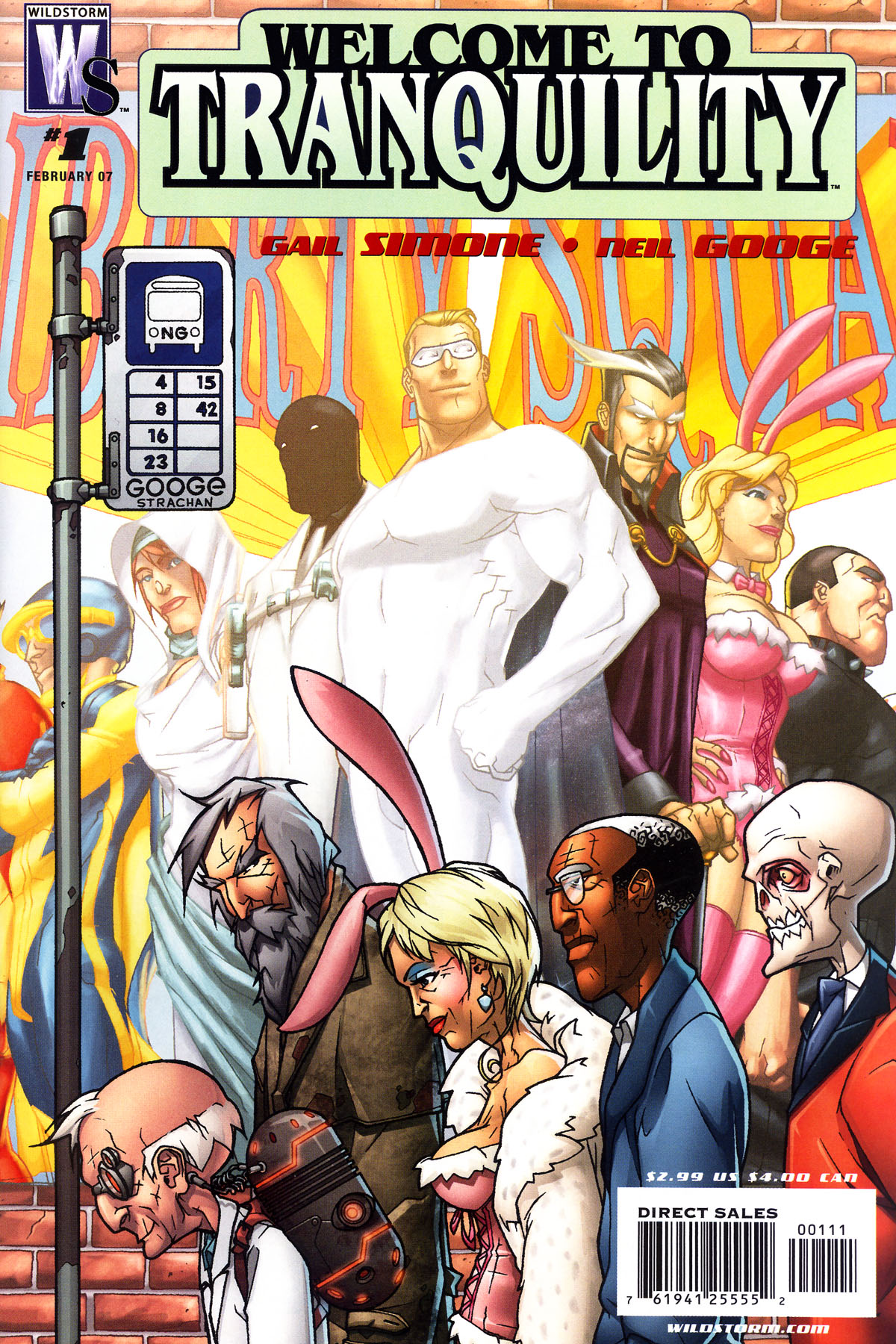
Welcome to Tranquility

The cover of the first issue #1.

If there were an ongoing comic book that had so much potential, but lost its life too soon, it's Welcome to Tranquility. A Wildstorm print written by Gail Simone and art by Neil Googe, the story centers on the peaceful town of Tranquility - home to almost nothing but retired, former superheroes and villains. Sure, some old rivals still bicker, but that's all it is. Everything gets turned upside down when Mr. Articulate - a man loved by all in town - is mysteriously murdered, and it is up to sheriff Thomasina "Tommy" Lindo to figure it out.

The story is essentially one of murder and mystery. There aren't a lot of clues that allow you, the reader, to figure it out, but it's still told in a unique and entertaining way. All throughout the series are little throwbacks to the "comics" which these characters used to star in back when they were full fledged superheroes. It's an interesting way to give a little insight into these characters' histories, though sometimes it breaks up the story in a way where you feel like maybe you'll just skip it for the sake of getting on with it. (This becomes a little more of a thing in the six-issue miniseries "One Foot in the Grave," but it's really throughout the seventeen-issue run.)

Ultimately what sells this book are the characters. Tommy is a well written character who is charged with policing a town of superpowered people (known as Maxis in this universe). Her sister also works for Minxy Minerva - a legendary fighter pilot who has lost her mind in her old age but still have a lot of leeway for her role in winning World War II. There's Mayor Alex Fury, a Superman like character who runs the town, and his wife Suzy Fury (a.k.a. The Pink Bunny) who runs the local restaurant that functions almost like a church - everyone meets up there. Mr. Articulate has a pretty substantial role despite dying early on, but his "backstory" comics are surprisingly entertaining. He is something of a Sherlock Holmes kind of character. My two favorite characters though are probably Maximum Man and Emoticon. Maximum Man is a meek, timid accountant who - in homage to Captain Marvel - could turn into the most powerful superhero if he uttered a magic word. Only thing is, in his old age he has forgotten the word. For most of the first story arc, he is just in the background reading words from the dictionary out loud. Emoticon is the son of an old villain, but he is not a bad dude himself. His eyeballs are removed by the Typist in order to bring tragedy to his life - to mold him into a better villain. But he is given an LCD plate with a sort of replacement set of eyeballs. This allows him to see, but the only way he can express emotions on his face is to use emoticons.

One of the best characters, Coyote Kid was a bit of Jonah Hex, a bit of Ghost Rider.

Through it's brief twelve issue run, the comic hit pretty much every note you can expect out of a mainstream comic - you've got your good guys, your bad guys, your old grudges, someone coming back from the dead. The town and the characters are so endearing though, it feels like no other comic. It's chalk full of homages to other classic comic book characters, but keeping everyone feeling rather original and unique. The characters that do get background can seem strange and it only ever really happens to quickly get the reader up to speed (for example, Coyoto Kid is practically a noncharacter until they need him in One Foot in the Grave, so they make it a point to spend a good chunk of an issue explaining who he is). However, the characters are so interesting (and awesome) enough that you almost just wish every character would get a one-shot background issue!

The plot of the first story arc really revolves around mystery and learning about the town, so it's a little tough to talk about it without spoilers. I'll just say that it's a great; fun story. The second story arc gets a little weird, to say the least. Where the first arc was murder/mystery, the second was all mysticism/magic based. They almost couldn't be further apart in themes. It was really neat to have such a diverse range of stories in a series that ultimately lasted a total of twenty-four issues. The final arc is a classic tale of cover-ups and revenge, mixed in with drama on an intimate level. That speaks to the strength of Gail Simone as a writer (though Wonder Woman is the only interesting book in DC's New 52, I do still kind of miss Simone's writing of Wonder Woman - I think she's still the only woman to write the most well known female superhero, though I might be mistaken on that).

The art changes from Neil Googe to Horacio  Domingues from the main series to the One Foot in the Grave miniseries, but both do a great job capturing the same feel of the town and characters. Everyone is bright and colorful. It looks like an old comic book sometimes! Both artists were also asked to change up styles dramatically when they had to include those random pages of "old, fake comic books." Honestly? These artists, with Simone writing, didn't get to showcase their talents enough. The series was canceled far too soon.

Wildstorm has had a bit of a roller coaster time in the past five, six years. When Welcome to Tranquility came out, they were gearing up to reboot everything. Though the series existed inside the Wildstorm universe, they only made occasional, unspecific references to the world outside Tranquility. Still, that book was not immune to the constant barrage of universe revamping. The book was dropped in the aftermath of Christos Gage's crossover event Armageddon, returning briefly for a six-issue miniseries (which was also awesome, even if it doesn't quite close the world of Tranquility in a particularly satisfactory way). Then, DC essentially absorbed the Wildstorm universe into their own before closing down the imprint. It has since relaunched its Wildstorm brand, but Tranquility was not lucky enough to survive the storm.

Which is a shame. Welcome to Tranquility is one of my favorite comics from the past decade. It's uniqueness while paying homage to the old traditions of the medium brought an entertaining and delightful world to life. It's definitely worth checking out, especially given how brief the series is.

TRADE INFO:

Volume 1 - Collects issues #1 through #6 of the main series
Volume 2 - collects issues #7 through #12 of the main series
One Foot in the Grave - collects all six issues of the miniseries

For some reason, there is no trade collection of the "rebooted" main series, which lasted about five issues before succumbing to the world stopping Armageddon event. It's strange, but you might be able to find them on eBay or Amazon. It's just tough though because the reboot also starts with issue #1. So essentially, there are two issue #1s through #5s. Be careful if you're looking for them.

Monday, December 26, 2016

Arkham Knight (2015)


Superheroes have historically had a bad run outside their original comic book medium. As hard as it might seem to remember today, the genre never quite took hold in cinema or in video games. Yes, there weren't shortages of either, but they never actually took off. Largely, nothing resonated with fans until the new millennium. There had been a slew of decent Spider-man games, but Rocksteady really broke new ground with 2009's Arkham Asylum. Not only the best Batman game ever made, it was immediately in the running of best superhero game. Flash forward six years, and the studio had - taking a page from Christopher Nolan, whose Batman trilogy are unquestionably the best Batman movies - decided to wrap up the Arkham series with Arkham Knight.

PC release disaster aside, the game expands on elements of Arkham City, drawing on the change to open-world gameplay instead of the linear, claustrophobic nature of Asylum. This goes a long way to creating a more "Batman feel" rather than the gamier approach to Asylum. For example, unlike the first game, Knight just starts. Players immediately take control of the Caped Crusader, complete with various gadgets. While some gadgets remain withheld until you either find them or acquire them when the story demands, the game basically just starts. There is no build up the way there was with City. There isn't the classic fetch-quest game-like nature of Asylum. On the one hand, this choice has the game taking off at 100 mph, and it rarely slows down. The urgency is present from the get-go, and if you have been a long-time fan of the series, it's nice to just start. For players with experience, that aspect mixed with the open world nature of the game means that kind of do get free reign to accomplish what you want when you want.

On the other hand, however, it does feel like Knight was not designed with new players in mind. Where City had some more tutorial elements early on, with the idea that new players might be jumping on board, Knight appears to abandon that notion. For a video game, it is a relatively bold decision. When you look at any series, there are almost always design choices made to accommodate brand new players. Yet Knight feels like it is designed with just people who have played an Arkham game before. Some might call it bad design, but it is worth noting that gaming is among the only industry in which this can be considered a problem. People don't often criticize the third film in a trilogy for lacking accessibility to new audiences, for example, because it is taken as a fact that you should have seen the preceding films first. The same thing is true of books, or comics.

The decision to commit to a finale rather than another installment is solid, although it could have used a few more areas that required brushing up of old skills. Some gadgets only get used once to solve a single puzzle, and then you can get through the rest of the game without it. It may have been better and more cohesive to include sections of the game that actually did require the batclaw or the zipline, so players shake off the rust and can more easily remember how they work and their value in combat scenarios. Knight maybe does the worst job of the trilogy integrated the gadgets on a whole.

Combat is rather unchanged, which is neither great nor awful. The fluidity of fighting was always one of the strong points of the Arkham series action. If it ain't broke, don't fix it. Still, you can only go so long without making any alterations. In this case, Rocksteady provided two key additions. The first and most satisfying - despite being a simple and minor addition - was the segments wherein you team up. Through a few side missions and a couple of story missions, you wind up overwhelmed by enemies and are joined by an ally (Robin, Nightwing, and Catwoman specifically). After building enough momentum, you can perform tag-team moves, then switch to the other character. The fighting isn't that different, but Nightwing, Robin, and Catwoman all do play a bit different than Batman, so the slight change in pace actually does a lot to freshen up the fighting.

Most controversially, however, is the addition of the Batmobile. On the surface, it isn't a bad element. Resembling the tumbler from the Nolan trilogy, the Batmobile is this rocket-propelled tank that fires various types of (nonlethal?) rounds. With the ability to launch yourself into the air and glide around, it isn't always the most efficient way to travel, but it sometimes pays to be near the ground level, as that is where you can track Riddler informants as well as find side missions. Combat in the Batmobile isn't even awful in its own right either. Sure, you are often overrun with enemy tanks, and it ultimately boils down to dodging and firing, but it actually is quite fun!

The ultimate problem with it, however, is how frequently you need to engage in tank battles, especially if you attempt to get 100% completion through all the side quests. It isn't so much an issue of it being awful as much as it is there needed to be less of it. The more tank battles you found yourself in, the less fun it became. Tedious might be better suited for Riddler quests, but it applies to tank battles as well. Additionally, tank boss battles were just the worst. Any situation in which you have to "flee" a special tank were horrendous. For starters, the camera zooms out, so you suddenly find yourself having a different angle and having to adjust your driving in just those moments. Secondly, it does not take much at all to knock you off your course, and they weirdly throw a ton of crap in your way that will knock you off your course. Not so bad when you're just driving around the city, going from mission to mission; more problematic when you're desperately fleeing a boss tank and if you miss just a beat, you get game over.

The strength of Arkham Knight is its story, though. While Rocksteady did few favors by clamoring to the idea that they created a "new character" (when they literally just gave an existent character a new name), the story itself isn't rocket science. Comic fans will recognize almost immediately who the Arkham Knight is just from the design. Players who have virtually no knowledge of Batman comic history will also be able to figure it out at a certain point well before the "reveal." Still, despite the mystery elements and some twists not working so well, it might very well be the best take on a classic Batman story. In many ways, it actually is superior to its comic book counterpart.

As an aside, one of the things Arkham games have done rather well is incorporating Batman's rogues gallery into the open world environment. Many open world games suffer from a lack of focus. There will always be a disconnect between story and game when there is a scenario in which you have to rush to do something in the story, but the game gives you the freedom to do anything you want. That is still present here, of course. (You have to hurry to save Barbara! Or, ya know, spend hours finding Riddler trophies or hunt down Man-bat.) Still, that every side mission is centered around a particular villain means each side quest has its own mini-story. Yes, it does absolutely wind up distracting from the urgency of the central narrative, but at least it feels like it contributes something. Hunting down the likes of Firefly, Two-Face, Penguin, and Deathstroke (the most disappointing boss fight, by the way) at least feels like something Batman should be doing, even with a larger, more significant story happening congruently.

While the central plot of the game from a macro-level is driven by Scarecrow and Akrham Knight, the bigger, yet more micro-level plot is driven by the Joker. Some might not be into the Joker returning for such a prominent role after having been a primary antagonist in Asylum and City, it did seem like this was how it had to end. The Joker is the quintessential Batman villain, and given how much "fear" was a part of the predominant themes of the story, he had to be heavily involved. It is not hard to blame those who found the Joker a bit tedious given he was heavily featured in the previous games, but taken as a whole, it made narrative and thematic sense.

Of course, the ending felt strangely unsatisfying. Ambiguous endings are fine, but this felt like it could have used just a couple more minutes of explanation. Things change so quickly at the end that it isn't exactly clear what is even going on. And it is only made worse when you get the 100% ending, with a super strange scene that either makes no sense at all or has horrific implications. For an otherwise great story to end with that was nothing short of disappointing. In some sense, it might have actually been more satisfying to get the clear death of Bruce Wayne. At least then, we'd have a clear conclusion. Elements of "passing the torch" are scattered throughout the game, but they don't pay off. And then there is the return of the Arkham Knight at the end that comes out of nowhere. It all felt rather rushed. Adding great music didn't make it suddenly feel more bittersweet, as they intended.

As far as superhero games go, few do it better than the Arkham series. As far as Batman stories go - and I am aware I am the only person who doesn't really find Batman stories all that great - this is among the better. That he is written to be intimidating, but have this underlying anxiety that makes him feel completely human is among the best writing for the character in any medium. Arkham Knight is still fun to play, and completely engaging. I happened to prefer it better than Arkham City, but it is not without glaring flaws. Granted, it the game barely technically works on PC, but it's probably worth picking up at this point if you are a console owner.

REDUCTIVE RATING:  Pretty Good!


Wednesday, November 30, 2016

Fantastic Beasts and Where to Find Them (2016)


It would be easy to dismiss Fantastic Beasts and Where to Find Them as little more than a misguided studio attempt to drag out a very profitable franchise that by all means concluded. Can't blame anyone for looking at this and imagining something akin to the disastrously stretched out Hobbit trilogy. And yet, with the strength of J.K. Rowling writing the screen play and long time Potter director David Yates at the helm, this sort of prequel might actually be one of the best films in the series.

What is a bit refreshing about it is that as a prequel, it does not connect in any sort of substantial way to the events of the original octalogy. There are passing references to Hogwarts. Albus Dumbledore's name gets dropped. There are Easter eggs that the die-hard Potter nerd will catch, but none of them matter to the plot of this film. Instead, Fantastic Beasts really just expands the world and makes it surprisingly more interesting than it already was, all by simply expanding into America.

Yes, this makes it sound like a very American-centric view, but one of the problems with the other Potter films is that they all take place in pretty much the same places. It was almost always Hogwarts, which as a location became a bit of a drag. Otherwise, it was just a few London locations and then random small towns and forests in Britain. Expanding to America really gave the world a more global feel. Goblet of Fire is the first real hint at the idea of a magic world that extends across the planet, but Fantastic Beasts gives us our first actual look at it.

1920s New York is just inherently a more unique setting, but having the film take place there also allows organic ways to explore the mystical world. The American magic society is not entirely the same as the British one, and it goes beyond what terms they use. (What Brits call "muggles," Yanks call "nomags," and I still wish Rowling had workshopped both a little bit more.) Interestingly in America, wizards need a permit to carry their wands. They have also banned the breeding of magical creatures. There also seems to be more conservative rules regarding wizard and nomag mingling (as in, it is against the law to do so). Characters touch upon this a bit in dialogue, hinting at the history of "witches in America" as a reason. It was actually really clever to see them use actual US history, referring to things like the Salem trials without ever explicitly spelling it out, to establish the lore. Finally, it is interesting to note the magical governmental differences. Where in Britain, there is more of a parliamentary system headed by a prime minister, the United States has a Congress, lead by a President. Actually seeing differences between the British and American magical worlds goes a long way to making it all feel legitimately global.

The story is also rather dark. Instead of starting as something for children and maturing as its base readers aged, Fantastic Beasts simply starts with more mature themes and tones. There are even aspects of the film that are legitimately creepy. That meshes with the more murky color palette used by David Yates, who used a similar visual style when he directed The Order of the Phoenix all the way through The Deathly Hallows Pt. 2. There's a graphical consistency to Yates' Potter films, which really helps connect the worlds despite not actually connecting the central stories. The film itself touches upon several intriguing themes. Though Rowling denied intentionally paralleling World War II and the rise of Adolf Hitler with her Harry Potter story, it is hard not to notice the similarities. Here, where the story occurs in the Roaring Twenties, there seems to be a similar parallel. All in all, the motivation of the central villain (and the set up for the larger threat) isn't ultimately that different from the other Potter films, but it seems to fit more with the time period.

(As an aside: the story of a wizard supremacist trying to destroy the comparatively progressive magic society has some more power to it given recent political events. The central villain's motto very much could be, "Make magic great again.")

Some might complain that the "big reveal" at the end - showing who the villain truly is - was disappointing, since they made it pretty clear from the start who you should assume is the villain, but that misses the point they were going for. While our ragtag group of heroes doesn't know the truth, the audience has been given a pretty clear indication of what to suspect the truth is. It isn't about maintaining a mystery, nor is it about building to some big twist. Instead, this creates a tension with the audience. We are in on the secret while we watch. It makes viewers pay close attention to see through all the intrigue, and increases a sense of concern as we see where things are headed before the characters do. While Kowalski, a nomag, functions to serve as a surrogate for the audience (allowing reasonable exposition dumps), the structure of the film isn't to get movie-goers to feel similarly to the characters.

What also makes Fantastic Beasts stand out is that for a Hollywood blockbuster, they appear to let actors...well...act! Eddie Redmayne's character Newt is such an oddball, and he plays it with a ton of nuance and subtlety that it actually feels like he was playing an actual character that he helped bring to the screen. Ezra Miller's Credence similarly uses body language very efficiently to define his character. In fact, he probably doesn't get more than a dozen lines of dialogue. The acting was a bit spotty in the early Potter films due to so many cast members being literal children. Daniel Radcliffe has grown into one of the best actors working today (with the most amazing and unusual resume). Emma Watson emerged as a solid actor and a powerhouse of a person overall, too. It can be a little brutal watching some of those Potter films though. Here, it is a cast of entirely adults, doing entirely adult things, in an entirely adult world, and they allow the actors to actually play characters rather than simply fulfill narrative functions. Even Dan Fogle's goofball, every-man Kowalski is surprisingly entertaining for such a relatively simple character.

In many ways, Fantastic Beasts feels a bit like a much better version of Sorcerer's Stone, wherein the larger, over-arching story is only just touched upon a bit while the world-building is its primary focus. Yet here, that wider narrative gets more attention, and the world-building is actually more interesting. The lack of blatant connectivity to the other Potter films, save some passing references, actually makes it very accessible. One does not need to have seen any other installment to fully enjoy this one.

Of course, it isn't perfect. There are some holes, and the ending is a bit contrived for the sake of extending melodramatic beats. One of the problems with a world wherein magic exists that can achieve anything is that unless a character dies, they have a default means to essentially "retcon" the entire final act. In this case, so much of the film is about wizards worrying that they will be exposed to the non-wizards, and this results in a crazy finale that does. That is, until they use a convenient magic spell to wipe all their memories and put everything back to normal, so, no harm no foul, I guess? Still, slightly disappointing ending to the film doesn't quite ruin what is otherwise a surprisingly captivating story that is building for more films. I'm not sure if this cast of characters will be center stage for the rest of it. Part of me thinks it isn't strong enough to carry an entire series! Newt was a refreshing lead because he wasn't part of some prophesy, nor was he just inherently a super wizard. He's ok at magic because he is an adult who has long since graduated from Hogwarts. It would be tough to go four more films centered around him, though. While I hope these characters remain present, it doesn't exactly seem set up for them to carry an entire series' arc.

I was admittedly unsure going into this film. I always thought it was the characters that made me like the world of Harry Potter, not the world itself. And yet, Fantastic Beasts and Where to Find Them was one of the best Hollywood films of the year, and successfully captured my interest in the world itself. It helps to have Rowling writing the script. The franchise itself has largely been one of the better movie series from Hollywood because of her ability to write well-structured narratives, entertaining and lovable characters, inject parallels to the real world, and sets things up really well.  They also do a great job making sure to include moments where characters actually stop to smell the roses, as it were. In the initial octalogy, no matter how much he sees or how dark the story gets, Harry always has a couple of moments to stare and smile at new wonders he witnesses. It is important to have these moments, to remind the audience of the same thing. These are some of the most visually interesting films coming from Hollywood. Even though they get dark, and we've seen a lot of this before, we should not forget that, and should embrace the joy this world provides as well. With Rowling writing, the spin-off "prequel" is poised to do some great things.


Wednesday, November 23, 2016

Xenosaga Episode 1: Die Wille zur Macht (2002)


The spiritual successor to the flawed, but interesting Xenogears on the original Playstation, Xenosaga Episode 1 kicked off one of the more interesting JRPGs of the Playstation 2 era. Sometimes ambitious to a fault, like its predecessor, it still largely succeeds in crafting an intriguing universe with fun mechanics for a turn-based RPG.

Thing is, however, if a convoluted and incredibly cryptic story is not your thing, then the story and world of Xenosaga is going to be a huge turn-off, almost instantaneously. While maybe not as confusing and mysterious as Xenogears, that still is the bulk of its drama. References to things not yet explained, character connections that mean something but they don't tell you what yet, motives still vague and unclear: all of these contribute to one of the harder stories to grasp in a genre that is not short of confounding tales. The environments make it a tad more interesting than others, with the galactic setting giving it a space opera vibe that is a little more conducive for the muddled narrative.

The strength of the game is really it's relatively unique combat system. It's similar to its predecessor in that "combo" moves are a big part of it, but there are enough elements within to make it feel fresh. For example, a "boost" bar fills up as characters damage enemies. When it fills all the way, that character can than "boost," essentially skipping ahead for an earlier turn in a genuinely turn-based game (so none of the ATB stuff common in Final Fantasy). Characters also get two moves per turn, but if you "pass" on the second, you can perform three moves on their next turn. These two systems work well and allow for some gambles during combat. Each battle also has a rotating element that each character can take advantage of when it is their turn. There is an element that increases critical hits, one that increases the amount of boost, and one that increases the points earned. Much of the battles, then, involve players figuring out how they want to capitalize on those enhancements, as well as how to utilize their boosts.

Perhaps the biggest flaw in the entire game, however, is that not all of the rules apply to the enemies. In the instance of boosting, characters can only gain the ability by inflicting damage. That causes the bar to fill, and when it fills, then players can use that ability. With enemies, there is no rhyme or reason to when they can cast boost. They don't even need to attack you to boost. This results in battles that often feel unfair and cheap, since you can't predict at all when the game is going to decide that your enemies actually deserve six turns in a row. It's especially problematic in boss battles and late in the game, where there risk-taking might become more a part of your strategy.

The use of A.W.G.S. - this game's version of "gears" - is done in a way that is either terrible or perfect depending on how you liked them in Xenogears. For me, I hated the sections of the earlier game where you had to fight in the gears, so when Xenosaga basically allows a player to get through without actually using it at all, it was perfect! A bit strange that they included it but didn't put any attention into encouraging players to use it. Of course, if you liked fighting with the giant mech suits, then the game handles it poorly, offering no real incentive to use them. Keeping them upgraded can be expensive, and you don't get a lot of money throughout the game.

Character upgrades are a bit complex, but nothing too difficult to handle. Party members obtain skill, ether, and tech points which can then be used to upgrade traits, magic, and combo attacks. Skill points can be used to "extract" abilities from weapons and armor, but they don't go into much detail about how exactly it works. There is a "skill level," but they don't bother to explain how that increases. As a result, skill points will build up quickly, while much needed ether and tech points are both slower to accumulate and more valuable. Those will be exhausted rather quickly.

There's a lot about the game that feels influenced by anime, which makes it only fitting that it spun off into an anime series afterwards. The cryptic nature of the story might offset its unresolved arc to bring players in for the sequel. It's got a fun combat system for what is a purely turn-based game, and it provides some intriguing leveling mechanics. While I happen to like Xenosaga much more than I do Xenogears, it's hard to call it "great." Interesting, yes, but the cheap aspects of the game hold it back. It doesn't help either that it can take up to two hours to finish it when you get to the last save point. I'm not sure I will ever understand why RPGs tend to design their final stretches to be so time consuming. It makes it so that if you die on the final boss (or more like the second or third form of the final boss - because they can never just have it be one - it's wasted so much time that it's hard to convince yourself it's even worth it.

Not sure Xenosaga fits in the upper echelon of JRPGs, particularly of the '90s and early aughts, but it's worth checking out. (As an aside: I really, really wish Namco would release this to the Playstation Store. I found that my copy on PS2 would only work on the original fat PS2, and not the newer slim models. Make this game accessible, Namco! C'mon!)

REDUCTIVE RATING: Pretty Good


Tuesday, November 22, 2016

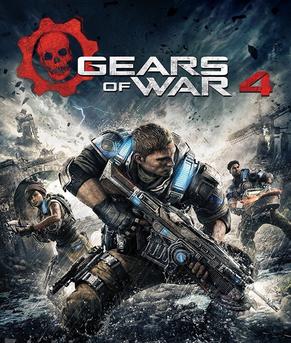
Gears of War 4 (2016)


The original Gears of War was one of the games that helped launch Microsoft's XBox 360 way back when. It is only fitting that Gears of War 4 is one of the bigger games in the early stages of the next generation XBox One. However, it doesn't have nearly the kick that the original game did.

One of the problems with any game series that goes on longer than three or four games is that it will almost always struggle to feel fresh. Gears of War 4 suffers from this regularly throughout the game. While the combat of the series is still fun, it does feel a bit dated at this point. The first two games set the tone of run through a linear level, hide behind waist-high objects, pop up and shoot. Gears of War 3 did a good job changing up the gameplay a bit, including enemies that can hit you behind cover which forced players to keep moving rather than hunkering down as in earlier games. Gears 4 attempts to replicate that, with various degrees of success.

Several new enemy types do encourage players to move from cover to cover, including carriers, snatchers, and pouncers. Some of them, however, actually overcompensate. You won't spend much time in cover at all when fighting a snatcher or carrier, and there's actually an advantage to staying exposed against pouncers. Instead of hunkering down, you can find yourself struggling to stay out of cover - something not always easy given how frequently you will run in areas loaded with cover. Early game robot enemies function similarly to the new Locust creatures, with sniper equivalents, scion equivalents, and juvie equivalents. (Think of juvies/trackers as tickers/lambent wretches.) There's a lot of "masking" for new things here; meaning, they redesign a bunch of stuff to make it look new, but actually functions almost identically to enemies in past games.

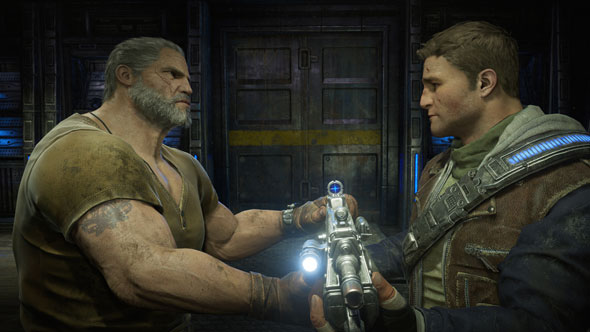
The weapons are sort of the same way. While there are a few new additions, a number of them are just re-tooled weapons of the past. The dropshot, for example, is functionally the same as digger launcher of Gears 3. Even more, the story is pretty much more of the same as well. It's essentially an amalgamation of Gears 1 (isolation on a mission) and Gears 2 (the mission turns into finding a loved one). The only thing really new about the game is that it is a bit more colorful, openly humorous, and has a neat soundtrack. Much of the game feels a bit like they were playing Naughty Dog games for a while before pitching concepts. Marcus's son JD, who is the character you play as, is basically Nathan Drake, and the environments appear a bit influenced by The Last of Us.

It also suffers from the same mediocre boss design problem that has long plagued the series. Bosses have never been especially challenging to begin with. It doesn't help that they constantly hold your hand the entire way through. Maybe next game, we can skip the characters yelling directions on how you should fight the monster? It's slightly condescending.

The character design is top notch, and can easily be one of the things Gears of War as a franchise doesn't get enough credit for. The characters here are genuinely likable as well. However, that is not enough to make up for its narrative shortcomings. In Gears 1 sees the parameters of your mission constantly changing, the time jumps and new objectives acquired by Anya further enhance the isolation of their mission. Here, the entire thing just feels like one giant fetch quest. Sure, it is functionally the same, but because the entire game has a singular focus, everything just feels dragged out. The act in which you have to chase down a snatcher that nabbed Marcus goes on for far too long.


Interestingly, the best parts of the story were in the early stages. We get to see a post-Locust world, and it is one that deserved more attention. The COG have become tools in a dystopian sci-fi environment with an authoritarian government. There is division growing among the human population. Unfortunately, this intriguing story element is brief, and overloaded with robotic enemies that aren't particularly fun to fight. Eventually, the story changes to be about the return of the Locust. Locust make better enemies, but a less interesting story. Throughout the game, it seems like the main story should be about Marcus and JD reconnecting as family. While it's there in a very, very subtle manner, that too does not get the attention it should.

Additionally, it embraces the Force Awakens thing wherein to capitalize in fan nostalgia, they undermine their previous work. Gears 3 had a great ending, concluding a subtle, but poignant character arc for lead Marcus Fenix. With all he had been through - with all the people of Sera had been through - peace was earned. Marcus concludes the series by tossing away his weapon and looking forward to a future of planting tomatoes and starting a family. The ultimate irony of the franchise is that the lead protagonist was a "gear of war" who did not, turns out, actually like fighting.

While Gears 4 does continue with the concept that he will fight if he has to, it just felt like it took away from Gears 3's conclusion. It didn't help either that when Cole says that he kind of missed the Locust, Marcus says something to indicate a similar position. This betrays the central, most compelling aspect of the character. Plus, all the horrible things that he's endured - the loss of his wife, estrangement from his son, disconnection from the world, and then the loss of his home - it all just changed the sense of satisfactory ending of the last game. Playing as JD was fine (even if he was a bit too "quippy"). For my money, I'd rather they have just left him out of it and allowed him to actually have the peace he earned in the original trilogy.

Still a fun game, Gears of War 4 doesn't exactly provide anything discernibly new. Yet it delivers on what you would expect from the franchise. Many design elements feel dated, but the combat is as enjoyable as it was before.

REDUCTIVE RATING:  It's Fine


Thursday, November 3, 2016

Doctor Strange (2016)


Sometimes it feels like every other Marvel movie is "Marvel's biggest risk yet!" We said that about Thor back in 2011. We said it about Guardians of the Galaxy in 2014. Some said it about Ant-Man in 2015. And we said it again for Doctor Strange here in 2016. The difference here is that much of the content within Doctor Strange requires the filmmakers to "break" the cinematic universe we have become familiar with. It could go really well, or it could quite possibly go very poorly!

But Marvel Studios has some intelligent folks in charge. The way they get around their weirder properties is by making them rather similar to the other popular ones. Doctor Strange is visually very different from everything we have seen yet, but structurally almost identical to everything else (especially Iron Man). There's a lot to like about this installment, but I suspect that this is one where people will see the visuals and say, "This is great because it's so different!" while in reality, in terms of substance, it is not different at all.

Perhaps the first problem with the film is that it is your very traditional superhero origin story. Dr. Stephen Strange is your typically arrogant (white) man who comes from a place of relative privilege. He is kind of unlikable, but then he screws up and suffers a personal tragedy. While losing his mind trying to recover from his position of sudden disadvantage (something he is not accustomed to), he stumbles upon an even greater power. Inheriting this power forces the character to learn to become less arrogant and more responsible. It's literally nothing you haven't seen before.

The first ten minutes of the film drag as a result. Fifteen movies into the Marvel Cinematic Universe, it's starting to feel like they can, at some point, just start their movies. These constant "origins" lifted from the comics as much as possible are starting to slow everything down. In this particular case, it feels a lot like they could have just started with Strange searching for a healer, with maybe a training sequence resulting in a flashback that showcases his personal tragedy. We literally don't need anything from the opening ten minutes - and yes, that includes the quasi-love interest in Rachel McAdams. At this point, viewers are familiar with entire alien civilizations, other realms, gods, robot armies, Hulks, and dudes with arrows. Are we really still at a point where to introduce a new power or concept, we need to "ground it in reality" for the audience? 

Once Strange finds the Ancient One, however, the film gets on the right track. Yes, I know, I'm supposed to be outraged that the Ancient One - one of the few comic book characters that was specifically created as an Asian person - was instead cast as a white person, but Tilda Swinton is just great, and she is predictably perfect here. (The real problem, by the way, is that Marvel is too obsessed with casting "according to the characters' origins," ignoring that almost all of these characters were created in the 1960s and '70s, when racism was much more in the open. But this is another topic.) Additionally, Chiwetel Ejiofor's Mordo is one of the most interesting "side characters" in any of the Marvel movies. His development felt, in many ways, more natural and clear than even Strange's. It is even possible that this film laid the groundwork for a Marvel movie to finally get an interesting villain in the future.

Oh, that's right. If you're looking for Doctor Strange to finally break the drought of bad Marvel villains, you'll have to keep searching. Mads Mikkelsen's Kaecilius is actually one of the better Marvel movie villains. Unfortunately, that doesn't actually mean anything. One of the other problems clearly plaguing the MCU is that their films don't really build with villains as part of the foundation for the story and themes. Instead, the villains serve a very pragmatic purpose; to introduce a world threatening scenario for the titular hero to stop. 

The visuals are likely to be the lasting legacy of the film. In terms of the action, it would be fair to say that Doctor Strange is  not like any superhero flick you have seen. There's alternate dimensions, magic shields and weapons, realities folding in on itself, warping, demons, and astral projections. This isn't like Iron Man or Captain America when it comes to the action. It isn't even like Guardians of the Galaxy when it comes to the visual style. A lot of this is what makes it so interesting to view. There is indeed no shortage of strange things that occur on screen, and there's plenty of potential "favorite moments" to discuss post credits.

Still, you could shoot some interesting stuff in Fantastic Four, it's still going to be a crap movie. This is not, of course, to suggest Doctor Strange is bad (and it's probably unfair to even mention Fantastic Four). It is more to say that while it is visually different from everything else, it is actually a very by-the-numbers film when it comes to its plot and structure. 

When the Ancient One starts to teach Strange about the world of mysticism, Strange makes a comment about how it "doesn't make sense." The Ancient one replies, "Not everything does. Not everything has to."

The writers seem aware that she is not just addressing Stephen Strange; she is also talking to the audience. This scene is great in that it functions to get the audience on the same page as the filmmakers. As she chides Strange for trying too hard to "make sense of the world" and that he should just "go with it; surrender to its power," she is essentially encouraging viewers to do the same. Let go of logic. Stop trying to make sense of everything. We don't need to know all the ins and outs of magic. Just ride along and enjoy the show! If you can do that, you will enjoy the film a lot more! It's handled very well!

But about half an hour later, we enter yet another exposition dump wherein the film gets very "talky" and "explainy." Much of the dialogue is explanation and exposition. It's a lot of holding the audience's hand and walking them through things - many of which don't even actually matter much. It feels a little counterproductive to their opening statement that "things don't have to make sense," when the spend much of the film trying to explain things to the audience so it all "makes sense."  This rotation of training/studying sequences filled with lots of spelling things out, to crazy, awesome, wild action sequence where who even knows what the heck is happening gives the film a rather inconsistent pace throughout.  For a film that has a lot of visually interesting and exciting moments, it does have a few bits where it's downright boring. This, of course, is not helped by it's completely formulaic structure.

Yet for all that, they actually found a rather clever way to conclude the film. Without going into specifics, the filmmakers actually did come up with a unique, creative, and rather humorous way for Strange to save the day. Think along the lines of Guardians' dance-off distraction and hand-holding friend circle, only better. The solution to the threat is made even better by the fact that Strange was specifically told he lacked imagination. It can be really difficult to figure out a new, interesting, memorable way to have heroes save the day from yet another global threat. Doctor Strange manages to provide one of the best examples of it. 

It does seem like the distinct visuals and the "universe-altering" introduction of magic will make many feel that Doctor Strange is one of the more refreshing and unique Marvel installments. Of course when it comes to art and judging it, we all live in our own realities. In mine, it fits rather squarely in the middle of the pack. For you nerds, it's worth seeing on the big screen, but it lacks anything of substance to really stand out above the rest.

REDUCTIVE RATING: It's Fine