Saturday, May 21, 2016

Splinter Cell: Double Agent (2006)


Things took an interesting turn in the fourth installment of the popular stealth series. Not all of them were particularly great either. One notable thing about Double Agent is that it came out around that time that console generations were switching over. As a result, two different versions of the game were developed - one for the Playstation 2/XBox generation, and another for the PS3/XBox360. They're almost completely different. (For the sake of prosperity, I replayed both and will just discuss both here. Additionally, for clarity, I will simply refer to the versions as the "PS2 version" and the "XBox360 version.")

Obviously, the XBox360 version looks noticeably better. The graphics are greatly improved. The PS2 version does look a little better than previous PS2 Splinter Cell games, but it isn't as big a leap. This, of course, is due to the technical improvements of the console the former version was built for. However, being a better looking game does not make it a better game overall.

It's perhaps unsurprising that the PS2 version plays very similarly to the previous games. The controls are almost identical, which really helps for long time fans of the franchise. Though the series had been playing with things like natural lighting in their mission designs, darkness is still your best friend. Sticking to the shadows continues to be surest way to success on a mission. Grabbing guys can still be a bit clunky, relying on quickly tapping a menu option, but if you've played any other Splinter Cell game, you're already familiar with this. The XBox360 version doesn't really improve on this, however. Grabbing enemies still requires quickly tapping a menu; it just changes what the menu layout looks like.

The controls aren't radically different between the two versions, but there are a few alterations. The two that stuck out to me vary drastically in significance, though. First, how to open doors stealthy is changed. In all of the PS2 games, you select the "Open door stealth" option. Sam Fisher quietly turns the door knob, which then causes a second menu prompt that just says, "Open door." Essentially, you have to hit two menu options in a row. Not exactly the most streamline control scheme, but that's what you're used to. In the XBox360 version, it starts off the same. You select "Open door stealth" from the list of menu options when at a door. Except instead of hitting the second prompt, you move the left analog stick - the one responsible for character movement. To be fair, this system is better. Players can control the speed at which they open a door. You can glance around corners as you do so as well. The ultimate problem is that they never actually tell you that's how it works. If you're used to the other Splinter Cell games, then you may find yourself constantly bashing doors very loudly while meaning to open them in stealth mode. Apart from the fact that they never tell you how to quietly open doors, there's still a menu prompt after you select "Open door stealth." In the XBox360 version, the menus don't have words, instead being changed to pictures. Early in the game, you will likely find yourself selecting "Open door stealth," then immediately hitting "Bash door" next, because that prompt comes on screen.


So that might seem kind of petty, I know. It doesn't ultimately take long to figure out how it all works. It's just annoying to be left in the dark with how the game works, and having it result in a bunch of early game mistakes. The second change, I find, is much, much more detrimental. I'm admittedly not crazy about the redesign of the visibility meter. The PS2 version gets away from the typical meter (with darkness on the left and brightness on the right). Instead, it uses a photo of Fisher in gear that gets progressively more illuminated when in lights, and darker when in shadows. It can be a bit tricky figuring out how likely you are to be seen when you don't have a marker indicating where exactly you fall on the spectrum, but it's still - more or less - functionally the same as the meter in past games. You've also still got the sound meter, which is pretty much the same as well.

The XBox360 version uses a completely different system. Instead of giving you a visibility meter, it uses an oversimplified HUD system. Usually placed on Fisher's shoulder is a device that lights up one of three colors: green, yellow, and red. The basic idea is that when the light is green, you won't be seen. Light turns yellow, you're visible. Naturally, a red light means you've been spotted. This system is incredibly frustrating as it's nearly impossible to tell just how visible you actually are in a given moment. This light doesn't tell how visible you actually are; rather, it tells how likely you are to be seen. For an overwhelming majority of the game, you can't get out of the yellow, which essentially renders that indicator useless. Making matters worse, there's a sound cue that plays whenever it changes, which only helps so much when it goes off seemingly randomly sometimes. Plus, there's no sound meter or indicator at all, and some of the enemies have a supernatural level of hearing!

Perhaps making it worse is that the XBox360 version doesn't often give you the opportunity to use darkness to your advantage. You're constantly going on missions out in the middle of the daylight. There are maybe just two missions that actually take place at night. There are some moments of natural light in the PS2 version, of course, but it doesn't often build the level around it, allowing players to use Fisher the way we've been taught to use him for three entire games prior to this. Since there's a pretty good probability you're going to regularly be spotted and shot at more in the XBox360 version, they've also removed the health bar, replacing it with that traditional blood splatter/color fad HUD system popularized by the likes of Call of Duty or Gears of War. All of this gives this "updated version" more of a third person shooter feel than a stealth game.

You'll still have to sneak, of course. Not even the 360 version builds itself around running and gunning, even if it seems like that's what it wants you to do at times. It's just that the PS2 version has you sticking to the shadows and playing to your strengths, while the XBox360 version generally requires you be quick and hide behind things.

Both games are a shining example of how to not do your tutorials. The PS2 version kind of has one in the form of watchable videos in the opening mission. It doesn't exactly have you perform the action the way that the previous three did, nor do they give you a ton of room to practice what they just taught you. Video walkthroughs aren't the best way to handle teaching someone how to play the game, but at least it's something, and to advance in the video, you do at least have to press the button (which they seem to think is the same thing as having the player perform the action, but it's really not). For some reason, the XBox360 version foregoes a tutorial altogether. Yep, there are no tutorials in the campaign at all, which is actually kind of annoying because it plays very differently from the previous three. A lack of tutorial hurts both new fans jumping onto the franchise, as well as old fans who don't need the tutorial because they've played three games before. There is a separate "training" option from the Start Menu, but even that isn't particularly helpful. They teach you some stuff, but not everything. It's just weird that they chose to not even bother trying to integrate the tutorial into the game, like literally every game ever.
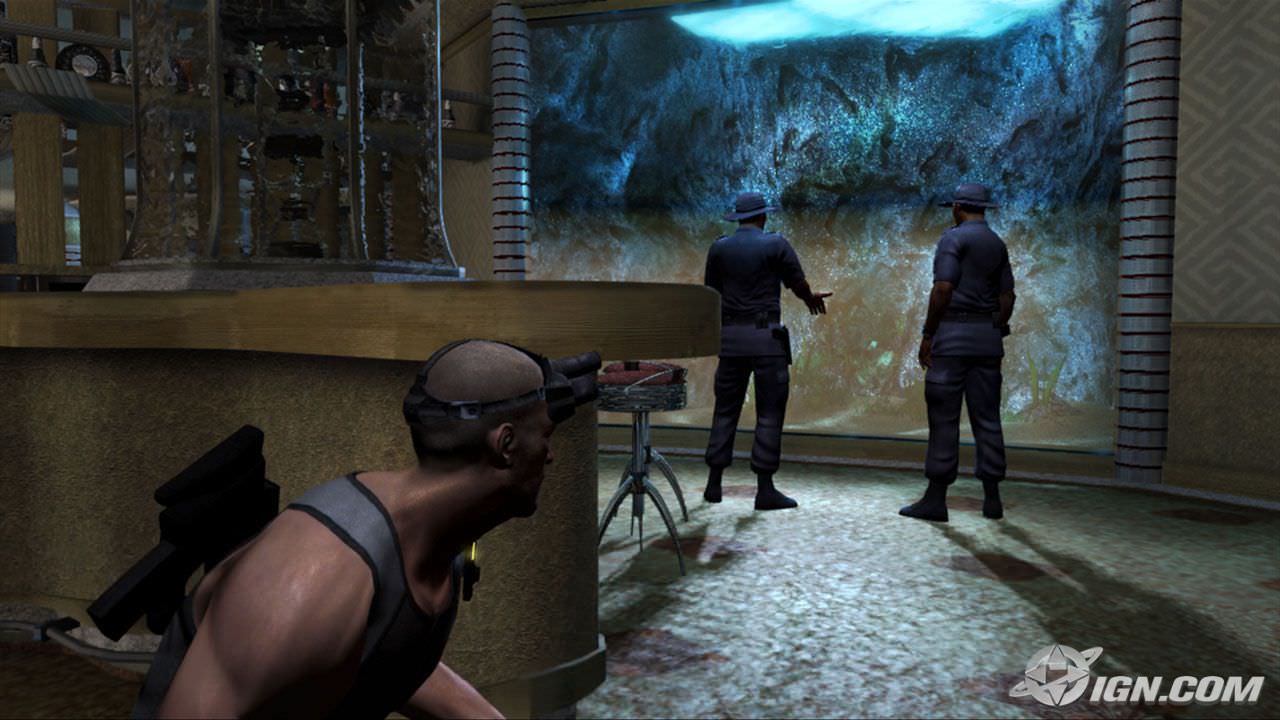


In terms of story, it's a mixed bag. Both have weaknesses and strengths over one another. The overall narrative is the same. After Sam Fisher's daughter is reported killed in a freak car accident, he spirals into depression and takes an extremely dangerous mission to infiltrate John Brown's Army, a terrorist organization based in New Orleans that has been popping up on Third Echelon's radar. Fisher must become - as the title suggests - a double agent, earning trust from the JBA, while retaining trust with the NSA, who is undergoing their own internal command issues. Sometimes, the player must make a choice that impacts who they gain trust from. For example, early on you're given the order from Emile Dusfraine - leader of the JBA - to kill Cole Yeager (who is either the pilot of a helicopter you stole or a member of the JBA plotting to take over the organization, depending on which version you play). The NSA expects you to not murder someone in cold blood, so depending on what you decide, you will either gain trust from the JBA while losing trust from the NSA, or you will lose trust from the JBA while gaining more from the NSA.

In terms of the choices, the PS2 version handles them a lot better. For starters, there is only one trust meter. The JBA sits on the left. NSA sits on the right. There's a sweet spot in the middle where you've got enough trust from both sides to continue. The nice thing about this system is that every bit of trust you earn from one side inherently removes trust from the other. Balancing this is actually a bit tricky, especially given that the choices aren't exactly presented as one of moral ambiguity. A lot of games feature choices in a pretty black and white, binary fashion. You've got the "good guy" option, and you've got the "bad guy" option. The morality here isn't blurry. The JBA will almost always ask you to do things that are clearly wrong on the ethical scale. Yet the game doesn't frame these as "moral choices." Instead, it pits the options against one another in terms of what you might need to do for the long term success of the mission. At one point, another double agent is found out, prompting Dusfraine to demand you kill him while Lambert orders you to help him escape. The moral choice is easy. Obviously, you help him. Except if you're anything like me, you haven't exactly done the best job balancing trust, and now you're in a position where saving the double agent could be too costly on that front. What's good for the mission is often what isn't morally right.

Of course, it doesn't help that eventually you realize the punishment for losing too much trust either way isn't that great. This fact undermines the interesting dynamic established by this choice system. Still, in many ways, it's better than how the XBox360 version handles it. There are optional objectives that earn you trust for either the JBA or NSA, but both organizations have separate bars. This means that you only gain or lose trust from one side at a time. When you fill your JBA bar, it doesn't come at the cost of the NSA. If you do all of your side objectives, it's actually kind of difficult to not have both meters filled for most of the game. You do lose trust with the JBA over little things like showing up late, but overall, you won't ever really find yourself pondering what to do for the sake of the mission. Some of the biggest choices aren't even actually choices either. That double agent you can help or kill in the PS2 version? Not an option in the XBox360 version. You have to help him. Trust be damned.

Though to be fair to the XBox360 version, they handle some of the narrative moments a lot better. Hisham, the double agent with blown cover, might not be a choice, but it makes sense. The PS2 version has you either kill him or help him. If you help him, you report back to Dusfraine that he's gone into hiding. In the XBox360 version, Fisher uses explosions to deceive the JBA leader, lying to him about the status of the traitor. (I actually wondered out loud why Fisher doesn't just lie to Dusfraine in the PS2 version, so it was nice to see that happen in the XBox360 one.) Similarly, there's an entire subplot with Enrica, a specialist of the JBA who Fisher kind of develops a thing for, in part because she's been doubting Dusfraine's tactics. This is handled a lot better in the XBox360 version, as Enrica is regularly involved on missions, acting as the JBA's version of Lambert and constantly speaking directives into Sam's ear. There's really only one mission in the PS2 edition that sees the two really interact with each other, and that happens very early on. So the finale wherein other Splinter Cells shoot her down against Fisher's comments, causing him to go rogue feels like it comes out of nowhere on PS2.


In past Splinter Cell reviews, I refer to the idea that the story starts going off the rails a little bit, resulting in an almost comic book-like story. That's at full force here. The entire subplot of Sarah Fisher is random and unnecessary to the world of Splinter Cell. Where the villains had been previously motivated by understandable geo-political or power hungry motives, the JBA is presented as little more than your typical, oversimplified, evil terrorist organization. Dusfraine and company sometimes suggest that their motivations are to stop a government that they find inherently corrupt. (That certainly would be the indication given they're named after John Brown.) Yet, it's completely unclear what exactly setting off three nukes in the US will do to "stick it to the government." Shoot, even the bastard Timothy McVeigh at least hit a federal government complex while nonchalantly murdering innocent people. It's a little unclear why Dusfraine wants to specifically blow up Los Angeles, New York, and Nashville (and not, you'll note, Washington DC, or even historically significant cities like Boston or Philadelphia).

Ultimately, they're presented with no complexities or actual motivations, at least, none that make any sense. It's not enough that blowing up that private cruise ship has virtually nothing to do with the US government. They're not "sticking it to them" or "making a point." It's not like Bane shooting up Wall Street in The Dark Knight Rises, full of any sort of thematic relevance. No, these people actively rejoice in killing innocent people who, with any shred of thought, they'd realize had nothing to do with anything. The Splinter Cell franchise isn't exactly noted for having great villains or anything, but the "bad guys" here are somehow even more shallow and pointless than ever.

While I thought the XBox360 version handled more story elements better, I ultimately couldn't stand playing it. The level designs and control schemes just make it feel completely unstable, with the latter often clashing with the former, making it unclear how the game wants you to think of this game and how to play it. Fisher operating out of the shadows isn't particularly fun, and it feels too different from the older games while trying to act like it's basically the same. (To their credit, Conviction succeeds by being unapologetic with how different it is from the original trilogy.)

This is not to say there's nothing good or promising in that shinier version. It has its moments. The missions at the JBA headquarters are an interesting idea. Every couple of missions, you wind up back at the JBA base. Certain members of the terrorist group ask you to do a bunch of things while Lambert radios you to issue new orders as well. You then get X-amount of time (usually 30 minutes) to roam around the base and complete the main objectives along with whatever optional ones you wish to. There are areas where you are free to walk openly, but most of your objectives take you into restricted areas where, if caught, you lose a substantial amount of trust. It can be a bit frustrating given that the map isn't exactly the best or easiest to read, but it's cool to essentially be given a laundry list of goals, then you have the freedom to do them as you see fit.

Still, there's no question in my mind that the PS2 version is the superior game overall. It's probably true that that older style of play couldn't go on much longer, and the change of pace brought in by Conviction was actually appreciated. But it succeeded by committing to a different style. The XBox360 version of Double Agent doesn't.

And of course, the story of Sam Fisher has officially, completely gone off the rails by the end of the game.

RATING: It's Fine (PS2 version) and Pretty Bad (XBox360 version)

(Ratings scale from worst to best: God Awful, Pretty Bad, It's Fine, Pretty Damn Good, Incredible!)


Saturday, May 7, 2016

Break Up Mix CD.


The other day at work, a bunch of us were talking about what we typically listen to during a break up. We threw some of the classics around, of course. Bright Eyes or Elliott Smith or The Cure. Then we started talking about making our own break up mix CDs. So, I figured I'd try my hand. There aren't really any rules other than that it has to fit onto one CD (so about 16-19 songs), but I figured for mine, I would try and build it entirely out of songs on my iTunes library. End result: songs that I would have normally included didn't make it because I don't actually have them. I know it's the internet age and downloading songs is easier than ever; I just wanted to come up with a playlist that I could slap together really quickly on my phone if ever I were in a break up and needed sad tunes.

Except I kind of screwed that up, actually. What I wound up with wasn't exactly a mix CD comprised of sad tunes to consume when feeling like continuing that downward spiral. Apparently, I really like trying to use a playlist to "tell a story," of sorts. What I wound up creating was a mix CD in three parts. Part I (tracks 1 through 8) speak of the early days of the break up. They're sad and dreary and very emotional. Most of "the feels" are in that section. 

But Part II (tracks 9 through 14) tell of a different part of the break up. In this section, there's still some lingering sadness, but there's also a developing bitterness. Anger starts to take root here. As that happens, the individual's self-assurance starts to grow out of that as well. This is essentially the "I'm sad, but fuck you and it's your loss!" phase of the break up. Clearly, it's still negatively impacting the person, but something positive is starting to emerge from the flames of the dead relationship. This section transitions pretty quickly from, "I'm so lonely!" to "What even happened? Give me answers!" to "Hey! Fuck you!" to "Ya know what? I'm awesome, and I'm gonna come out of this even better!" 

Part III (tracks 15 through 17) might be the shortest, but probably because it's the least interesting. However, it is the most important part. This is where the anger has subsided and the hurt feelings start to dissipate. These songs focus a bit on more melancholic emotions. At this point, the character represented by the playlist can reflect and recognize that, ya know what? They probably weren't that good of a match anyway. Relationships fizzle out and change too. This is probably for the best. And there's still residual sadness, but instead of anger, there's a more mature reaction. Though there's still some pain seeded in there, enough time has passed that they can look back and take away the positives. Their relationship wasn't pointless just because it ended, nor was it inherently terrible. There were many positive moments, and while the characters probably don't speak much anymore, they probably do both have fond memories of each other. 

I'm not totally sure if any of that even gets across, but I think that's what I was going for. I don't know, I make weird mix CDs. 

One thing that's kind of interesting that I noticed was that when you look at Part I - the "woe is me, I'm so miserable and sad and I'm going to make everyone around me feel miserable and sad" part - is almost entirely male vocalists (sans that one Enya song, although The Weepies do have a woman splitting vocals on most of their stuff). Conversely, Part II - the "I'm confused and hurt and angry, and also fuck you; I'm awesome and just going to get more awesome after this" part - is almost entirely female vocalists (except that one Foals song). The last part is only three songs, one of which is a male and female vocalist together, but it's not enough to really notice a trend. 

Now, I don't really know what that means, exactly. Do I just find men whinier than women? Do women strike me as angrier? I honestly have no idea. There was literally no conscientious thought process to that. I only noticed it when I was examining it at the end. 

So, here's the list:

Part I - The Early Hours

1. "Lose You" - pete yorn
2. "Consequence" - the notwist
3. "Come Around" - rhett miller
4. "The Predatory Wasp of the Palisades is Out to Get Us!" - sufjan stevens
5. "I Just Don't Think I'll Ever Get Over You" - colin hay
6. "The World Spins Madly On" - the weepies
7. "Obstacles" - syd matters
8. "Only Time" - enya

Part II - The Storm

9. "Spanish Sahara" - foals
10. "Dancing On My Own" - robyn
11. "How Come You Don't Want Me" - tegan & sara
12. "I Love It" - icona pop
13. "A Better Son/Daughter" - rilo kiley
14. "In My Mind" - amanda palmer

Part III - Hindsight

15. "Your Ex-Lover Is Dead" - stars
16. "Heartbeats" - jose gonzalez
17. "The Trapeze Swinger" - iron & win


So now, if I do this right, you can listen to a YouTube playlist below, in sequential order.


And that's that! What would your playlist be?

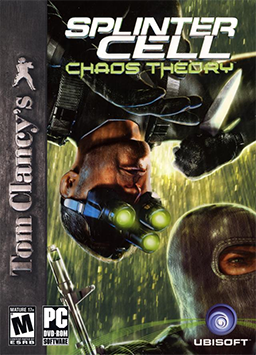
Splinter Cell: Chaos Theory (2005)


Each Splinter Cell installment seemed to get better for a few years there. The jump from Splinter Cell to Pandora Tomorrow was pretty noticeable and really turned the franchise into something great. Chaos Theory tightens the ship even more, though it's perhaps not as big a leap forward. Still, there are a few additions and some better design elements that do make the third game a tad better.

One of the things Pandora Tomorrow did was expand the routes a player can take. Instead of one very linear level layout, the designers gave players a few options. It was still ultimately Point A to Point B, but they masked it much better by providing a variety of approaches to advance. The same thing is true in Chaos Theory. Here, they also try their hand at a larger map. Players can typically backtrack as much as they want, or go in any direction of the map that they should choose. The map itself can sometimes be difficult to read or figure out, but it's a decent way to make players feel more like they're in an actual area of operations.

All of this is improved by the addition of optional objectives. At the start of each level, Fisher receives mission briefings. You get your critical missions that are built around the story of the game. At times throughout the games, depending on how you approach the levels and what you wind up doing and finding, Fisher may wind up taking on optional side missions from other members of the intelligence team. It's actually a pretty smart addition that really goes a long way, for something so relatively minor. Each mission concludes with a score, which doesn't ultimately make any difference outside of the player's ego and pride. Completing optional objectives increases your score. However, the fact that you may receive mid-level tasks that don't have the benefit of way points on the map when you get them, really spices things up. You'll really wind up feeling like a super spy in the actual field, especially with how big and fluid the maps are. Gone are the days of loading screens mid-mission. You no longer step into a new room only to find the game taking you to that screen while the game loads the next section of the level. Optional missions really gives you more to do during a mission, makes it feel a bit less linear, gives incentive for exploring new areas that aren't directly on the path to your main objective, and at times,, provides a bit of a new challenge to the level.

Each mission begins with a series of briefings from part of the intelligence team, like Lambert, Grimsdottir, or Redding. It feels a bit Metal Gear Solid-inspired, but it doesn't make that much of a difference. In a sort of failed attempt to introduce customization to your character each level, you choose what you want your load out to be. It's rather simplified, however, with the Assault option leaning heavier on ammunition and lethal gadgets, Stealth leaning on less ammo and more non-lethal gadgets, and Redding's Recommendation basically splitting the difference. Sure, depending on how you play and if you care about your score, the balanced load out is actually too balanced and itself discourages using different tactics. You also never really know when you will have to go through the majority of a mission without the benefit of Fifth Freedom rights, so it doesn't make much sense to go with an Assault load out when you might not even be allowed to kill anyone without getting game over.

It would have been nice if they could have figured out a way to connect your mission score to your load out. Maybe higher scores unlock additional gadgets, weapons, or armor. Maybe it unlocked a few add-ons to the guns. Or, maybe higher scores contributed to unlocking more you can equip in a load out. Instead, these are just disjointed elements that don't ultimately feel cohesive and connected; instead give it something of an arcade-like feel.

There's also the addition to the sound meter. In previous games, all you had to worry about was how much light was hitting you. A meter in the corner let you know how visible you were. The higher the marker was on the scale, the more visible you were. The more visible you are, the more likely a guard is to see you. The same thing applies here, except now there's an audio meter as well. It functions the same way: the more noise you make, the higher your noise indicator jumps. The higher it jumps, the more likely a guard is to hear you moving around in the dark. Additionally, there's always a little indicator on the scale to let you know how much ambient noise is in your location. How much leeway you have in noise creation depends on where you are and what's in your environment. In an area with loud machinery? You have more wiggle room. In the dead of night in an office building? Need to keep it down. It's a pretty well-executed addition to the gameplay, and makes sneaking a little trickier. No, it doesn't really make it much harder, but it does give you one more thing to pay attention to when stealthily making your way through levels.

Levels themselves, apart from being more open, also tend to include more civilians as well. They touched a little on this during Pandora Tomorrow, but they expand a bit more in Chaos Theory. Given the political betrayal at the heart of the story, you'll wind up spending a good chunk of time fighting allies like the National Guard or the Japanese defense forces. Thus, you can't really rely on quickly killing targets off in the distant. Certainly, there is no shortage of Fifth Freedom sections, but the game does a better job pushing players down that stealthy track. You often can't just run and gun in the game. You have to become comfortable sneaking and silently taking down enemies with non-lethal means; they way the game is essentially meant to be played. They don't disrupt that with big shootouts, the way the original game sometimes did.

The environments are great, with plenty of ambient noise and light that you can't get rid of. As for the story, well, it's kind of well getting on the tracks of that almost comic book-esque story. The entire game has you hunting down Douglas Shetland, the founder of a private security firm. Shetland, you may recall, was in Pandora Tomorrow, working with Fisher at times. They have a history, so the conclusion is supposed to have some resonance. Meanwhile, a Japanese admiral is seeking to spark a war between North and South Korea as a means to allow Japan to expand their military (something he could have just waited a few years for, really, given the Japanese have the right to do so at this point in time). Between this and Pandora Tomorrow, the more grounded political thrillers of the first game are starting to get a little off the tracks. Still, it could be argued that that makes for a more interesting game. Certainly, it's not a problem in the first three games.

The jump from Splinter Cell to Pandora Tomorrow might have been much greater than the leap from Pandora Tomorrow to Chaos Theory, but there's enough new stuff in the third installment that it does feel like an improvement. Not everything is great. (The SC-20K is back, fully automatic, and has terrible zoom, making it worse to handle and use.) Still, the optional objectives and the more open-ended maps give the game a freshness that they only just scratched in the previous game.

And again, don't buy the Splinter Cell HD Collection. It's buggy as all hell. The audio issues in Chaos Theory are especially annoying given that it's helpful to actually be able to hear the ambient noise around you, not just see the marker. But, if you're like me and get a weird bug wherein a helicopter on the roof sounds like it's right next to you for the entire duration of the mission, that gets a tad trickier. Save yourself some trouble and just try and get the original games.


Thursday, May 5, 2016

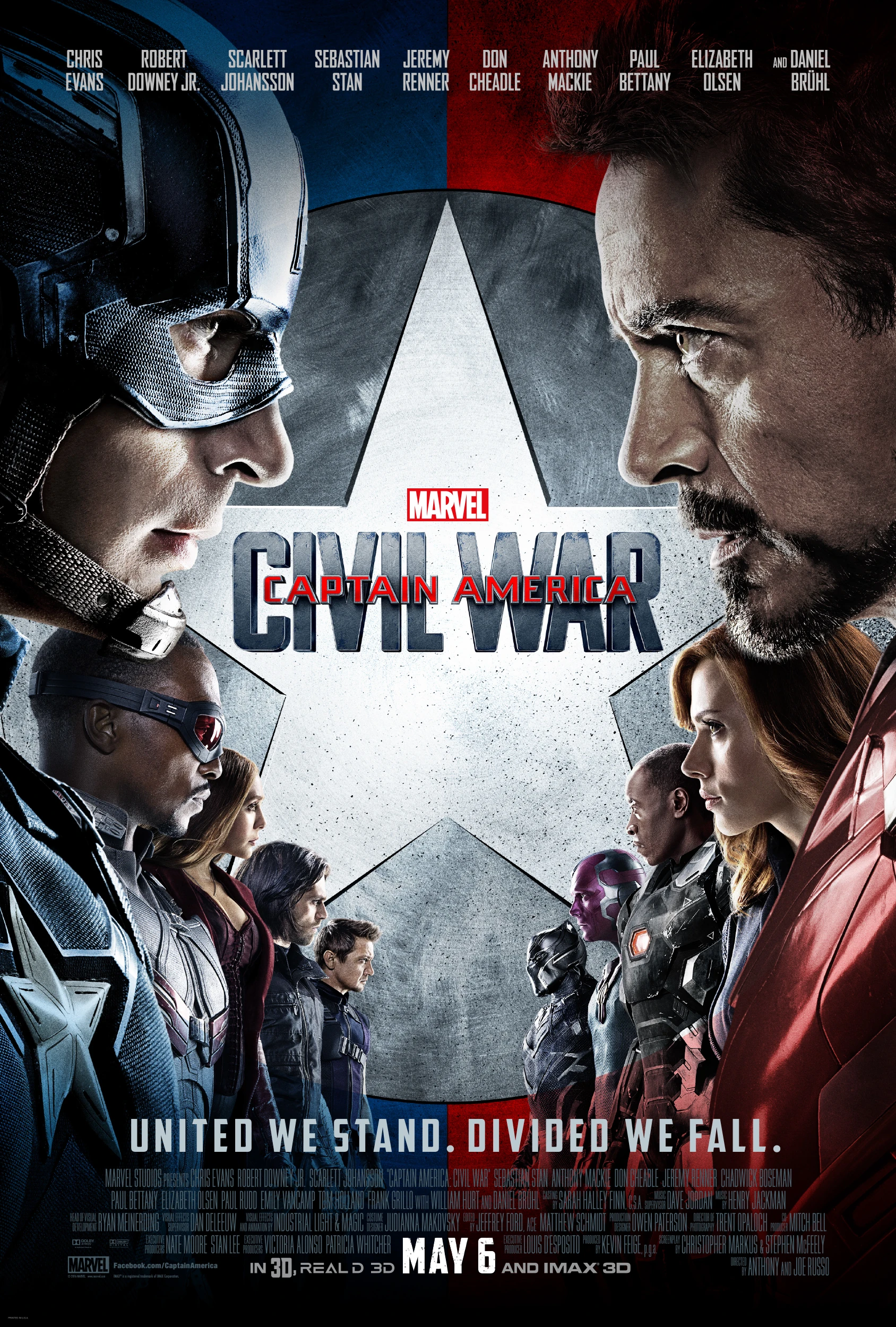
Captain America: Civil War (2016)


NOTE: THERE WILL BE SPOILERS! WHILE I PERSONALLY BELIEVE THAT IT'S PRETTY HARD TO SPOIL A SUPERHERO COMIC BOOK MOVIE (since they're typically predictable), NOT EVERYONE FEELS THAT WAY. I DON'T NECESSARILY SPOIL *THAT* MUCH, BUT I DO REVEAL SOME KEY PLOT ELEMENTS AND MOMENTS. SO IF YOU DON'T WANT ANY SPOILERS....


STOP READING!

IF YOU'VE SEEN IT, OR ARE TOTALLY FINE WITH SPOILERS WITH YOUR COMIC BOOK MOVIE, THEN PROCEED!


After the disaster that was Batman v. Superman: Dawn of Justice, it would be hard to blame anyone for worrying that Captain America: Civil War might wind up being equally bloated. However, it’s hard to forget that it’s Marvel, and they generally know what they’re doing. Where Batman v. Superman was a hot mess of completely disjointed and confusing ideas, CIvil War is actually pretty focused. It’s certainly not perfect, but it might very well be the best superhero movie to date.

The first thing I might suggest, though, is that people re-watch The Winter Soldier before going into it. There are a few things that don’t get a recap here. For example, Cap has a few moments with Sharon Carter, which appears to come out of nowhere. In the theater, I could hear people ask what the heck was happening because they were confused. Sharon and Cap share some chemistry in the previous film, of course, and the Russo brothers clearly want you to remember that since they don’t do that much to really further establish that.

It also admittedly feels a bit strange that the film is essentially a bigger, crazier - albeit far more fun - retread of The Winter Soldier. Let’s get up to speed with that. During World War II, Steve Rogers saw his best friend Bucky Barnes get knocked off a train and apparently killed. The Soviets, however, recover his body and turn him into the most accomplished assassin in history. They essentially give him tons of additional training (on top of his already extensive special forces training from the US) and a powerful metal arm. Then, they put him into deep sleep before awakening him and programming his brain through mind control.

In The Winter Soldier, Cap finds out that Bucky is alive and that the US government is after him. So, he essentially defies the authorities, going against the law, in order to find his friend. He builds a mini-team of Falcon and Black Widow as they uncover a plot wherien SHIELD and the US government have been infiltrated by Hydra agents, thus vindicating Cap’s actions.

So, what is the basic plot of Civil War? It becomes public knowledge that the Winter Soldier is still alive, causing the US and world governments to want to track him down. Captain America goes against the law in order to try and find his friend. He builds a larger team of Falcon, Hawkeye, Ant-Man, and Scarlett Witch (and kind of Black Widow, sort of - she’s thankfully a bit complex) as they uncover a plot wherein the government has been infiltrated by Zemo as he attempts to frame Bucky as a means to tear the Avengers apart.

In essence, it really is just a retread. But it’s hard to argue that Civil War is a lot more fun, largely because of all the other stuff it has going on. It definitely lacks an alternative sub-genre the way that Winter Soldier was a political thriller on top of being a superhero film; that’s not inherently a bad thing though.

What’s nice and different about Civil War is that it doesn’t exactly have a large scale disaster. The world isn’t in peril here. Sure, Vision and Tony Stark occasionally refer to something bigger possibly coming down the pipeline, but largely, this is just about these heroes sorting themselves out. And yeah, there are large, global consequences to everything that occurs, yet it never feels like the world is in grave peril. It’s not. For as huge as some of the action sequences are, this is rather surprising and, frankly, super refreshing.

One of the big knocks on Marvel movies - and absolutely can apply here as well - is that their features haven’t exactly showcased strong, compelling, or interesting villains. Crossbones is essentially a nonfactor, other than as an early villain for the team to take down. Zemo, however, is the driving conspirator. He doesn’t get that much screen time, and he’s definitely not great, but there are elements to him that make him kind of intriguing. For starters, he isn’t totally behind everything. While his plot is ultimately behind the bombing at the UN, he wasn’t behind growing gobal discontent at the behavior of the Avengers. Instead, previous Marvel films set up the atmosphere of the world and Zemo just wisely captured the moment to his advantage. Smart. Additionally, he wasn’t initially behind the Sokovia Accords either, so there was already a wedge growing between Cap and Stark organically anyway. Again, he just capitalized on the moment.


The most interesting thing is his goal. Zemo isn’t out to destroy the Avengers. “Stronger men than me have tried and failed,” he tells T’Challa at the end. No, his objective was not about killing them. It was just about tearing them apart. He wanted them to fight each other, possibily even killing each other. Either way, death is not the only winning condition for him. The team is broken up with half of them imprisoned in the Raft at that point. Even more, the US and world governments are growing even more anxious about them as a result of their little war.

Still, Zemo’s motivation is a bit confusingly explained. Apparently, he seeks vengence for losing his family during the Age of Ultron events in Sokovia. Ok, makes sense. Except that when Cap asks him, “You’re from Sokovia. Is that what this is about?” Zemo answers something along the lines of, “Sokovia was a dead nation before you destroyed it.” It’s a tad confusing because that implies his motivation isn’t connected to Sokovia. Later when Zemo is talking to Black Panther, it’s revealed that it is about Sokovia. With reflection, it seems that Cap was asking if it was about their essentially ruining Sokovia as a nation, but that isn’t exactly clear. This motivation is also undermined a bit by the lack of adequate screen time for the villain. There are a couple of moments where he is listening to the last voicemail his wife ever left. It could have been touching, but feels a bit hollow since we know nothing about him.

Other than that, it’s hard to complain about much else throughout the course of the film. As has become the norm of Captain America movies, the action is awesome and fun to watch. It’s clever and creative and captures a lot of the comic book spirit. The standouts and things people might be talking most about afterwards are Black Panther and Spider-man, who both make their Marvel Cinematic Universe debut. Spider-man has a minor, but memorable role. If you were anything like me and were a bit nervous about the new guy, you’ll might very well walk out like me thinking that the new guy is totally fine. He was very funny, with totally natural dialogue. And, of course, he had very, very awesome Spidey action moments. The future is bright for Spider-man (also, it’s probably no coincidence that one of the phrases used for mind controlling Winter Soldier is “homecoming,” which is the subtitle of the upcoming Spider-man movie).

To me, Black Panther was the standout newcomer. His action was every bit as awesome as I expected it to be, and T’Challa is just as smart and badass. It could be argued that his character is the only one that truly goes through a complete arc, starting the film seeking vegence for the murder of his father, while ending with the realization that vengence is too short-sighted and itself dangerous. What’s nice is that he wasn’t just randomly thrown in there. Black Panther actually plays a fairly substantial role. He’s even the one that captures Zemo (since Stark and Cap are too busy punching each other in the face).

Perhaps the biggest takeaway for me, and the best thing I can say about the film, is that it’s surprisingly well balanced for a movie that features a dozen superheroes. (Zack Snyder and Warner Brothers should take note.) Yes, most of the characters - like Ant-Man, Hawkeye, and War Machine - all have minor roles and basically just show up for the big fight sequence, but each one gets their moment. While Iron Man gets a good chunk of significance, the Russo brothers do a good job keeping the focus on Cap and his team. What’s pretty funny is that where Batman v. Superman featured hyper-contrived reasons for the two to fight, and featured just two seconds of Superman trying to talk to Batman, Captain America actually tries several times to explain what’s really going on to Stark. He even gets it out several times, but Stark is so wrapped up in his ego that he doesn’t listen.


Balance doesn’t just apply to character focus either. The tone of the film is also well thought out. Most of the film is actually pretty serious, with Cap himself moping like we’ve come to expect. At the same time, they are careful to never let it get too serious. Civil War features some of the most genuinely hilarious lines and moments in any Marvel movie. (Paul Rudd as Ant-Man is an even more perfect casting here, and Spidey offers some of the funniest Spider-man dialogue to date, perhaps including the comics!) I’ve been a bit critical of Marvel’s overreliance on comic relief, but it was almost perfectly executed here. All of the jokes came at exactly the right time, and they came when needed and applicable. Nothing really felt that forced or shoved in there because there needs to be X-number of jokes per minute.

Without question, the biggest gripe I have with the film is with the end. It’s not necessarily that it’s a “bad” ending; it’s more that it felt rather unsatisfactory. I’m not entirely sure what exactly was concluded by the end. The last two movies were all about saving Bucky and bringing him back to the brink. They finally accomplish that, only for Bucky to decide he’s going to put himself in deep sleep again, removing him from the picture entirely. Then, there’s voice over narration from Cap, reading a letter he wrote to Stark, about how the Avengers are Stark’s now, and that Cap will be in the shadows, showing up only when needed. It’s a neat way to basically say, “No more Captain America solo movies,” but it’s a bit confusing when it ends with Steve Rogers - sans costume and shield - freeing the imprisoned Avengers from the Raft. Meanwhile, Stark is god knows how far away, doing his own thing. Plus, his last moment of the film is him essentially giving the middle finger to Thunderbolt Ross (who, by the way, it’s really nice to see him back in the fold).

Then there’s the matter of Stark’s feelings towards Bucky. Zemo’s ultimate plan is to frame Bucky for the bombing of the UN, further pushing the Sokovia Accords and dividing the Avengers. Then, he would reveal that he was behind it all - not Bucky - in order to bring Cap, Bucky, and Iron Man to his lair, where he would then reveal that a mind controlled Bucky was responsible for killing Stark’s parents. This further divided the parties. So, we’re left thinking that Stark and Cap are now beyond repair. Yet the final sequence with Cap’s letter indicates that maybe Stark is starting to come to on the idea that Bucky was mind controlled and not really responsible. But there’s no reason for him to actually feel that way at that point. They could have easily worked something in wherein maybe it’s explained that Bucky was essentially a weapon, no different than a gun or a missile, and that after his initial emotional outburst, Stark is starting to realize that’s true. He is super intelligent, after all.

So I’m not totally sure what gets concluded here. Bucky is now out of the picture entirely, not included back in it. Cap also tells Stark that he’ll always be there to help him if he needs it, so they’re not actually beyond fixing. Overall, the ending feels a bit rushed and, to some extent, a tad pointless.

Still, that hardly derails the previous two plus hours. Captain America: Civil War succeeds in ways that Batman v Superman: Dawn of Justice completely fails. Each character gets the appropriate amount of attention and focus, complete with tonal balance. It never really feels bloated despite having almost a dozen superheroes, though there are some moments that feel a bit sidetracked.

Captain America: Civil War - in my opinion - is without question the most well balanced and fun team superhero movie I’ve seen. This includes those X-Men movies or earlier Avengers movies. It sees an awesome introduction to Spider-man and Black Panther. It features extremely fun action. And most importanly (at least, to me as a comic nerd), it feels the most like a comic book, with each character feeling accurate to the comics. That’s all I want. This was obviously never going to be like the Civil War comic, and that’s totally fine! I don’t want straight up, shot-for-shot adaptations of existent stories (*cough* Snyder…). I just want the characters to feel close enough, and the action to be fun.

The Russo brothers nail it. This is the first time in a while that I actually can’t wait to watch it again on the big screen. (Plus, more Community cameos.)


Thursday, April 14, 2016

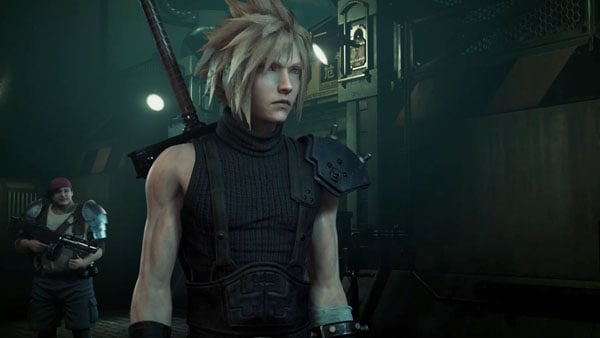
Dan Solo #11 : Final Fantasy VII: Retake Money, Again, and Again, and Again.


This week's Dan Solo features a lot of thoughts about all this strange news regarding Final Fantasy VII: Remake. Going into things like the completely re-worked gameplay, the confusing meaning of an "episodic" release, and how the news that they're making multiple full-scale games and say to think of it like Final Fantasy XIII doesn't exactly fill me with enthusiasm. Plus, I sidetrack a bit into why I think it's a bit off-base to think that people don't like those early Final Fantasy games for the gameplay.

Run time: 40:19


What do you think? Has your enthusiasm for the remake died down at all? A lot? Are you more interested in it? Is this all a good idea, or does it just feel like a bigger money grab than it would have inherently been?

Thursday, April 7, 2016

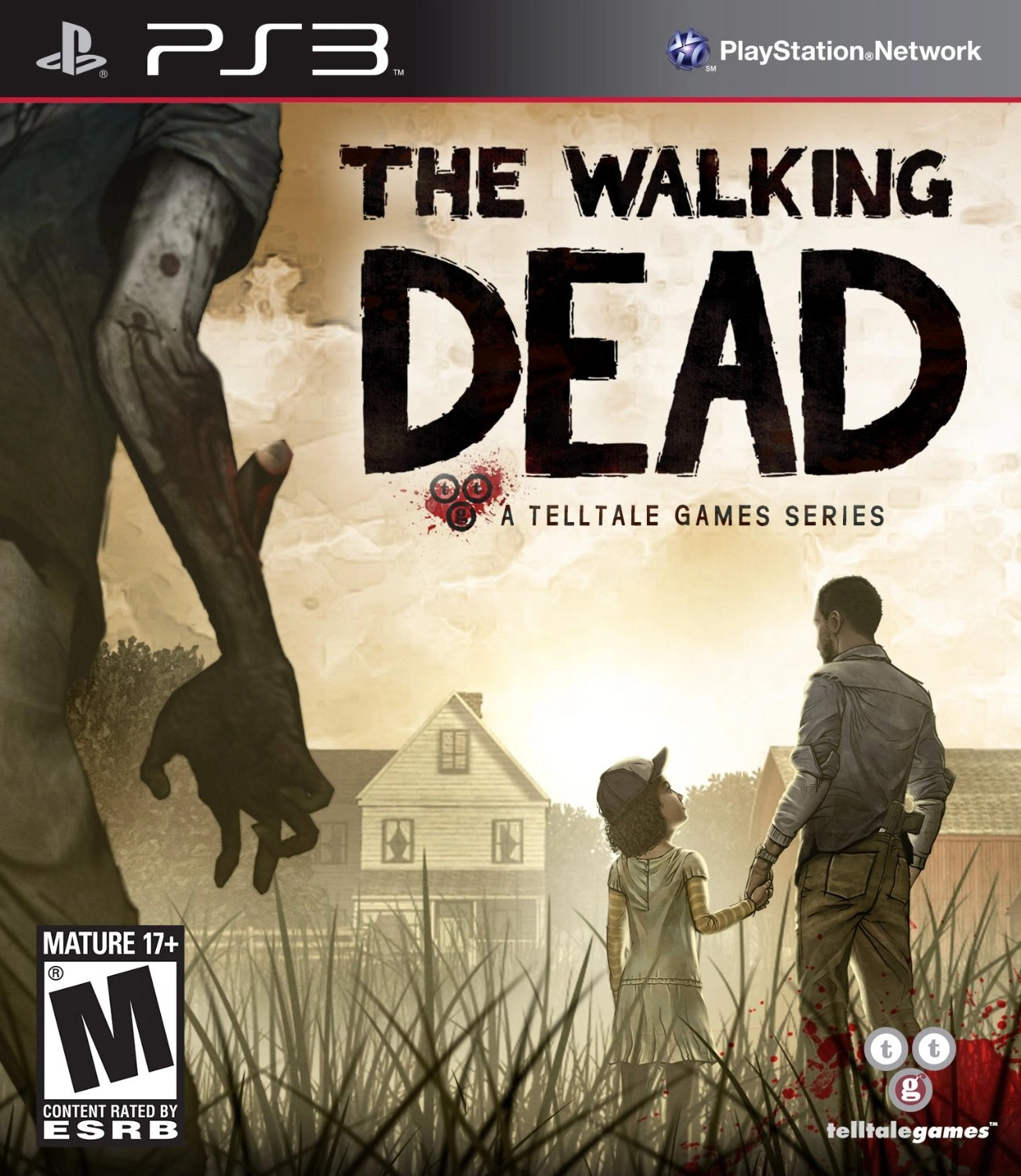
Telltale's The Walking Dead: Season 1


With so many series under their belt, it isn't hard to see why some may feel that the Telltale style of game - with it's limited gameplay options - have gotten a little stale. The strength of the games has been and continues to be in their ability to tell a compelling story with interesting characters. Even if you find Tales from Borderlands boring to actually play from a mechanics standpoint, it turned out to be one of the better written and more enjoyable in their repertoire. They clearly still have something to offer players, but it's actually a bit difficult going back and playing their true breakthrough game: The Walking Dead.

The thing about Telltale's first season of their episodic game based off of the Robert Kirkman/Tony Moore/Charlie Adlard comic is that it doesn't ultimately hold much replay value. It's difficult taking a second look at it because you already know what's coming and what your choices ultimately amount to. All you see are the cracks and holes in the writing, and how foolish you were if you actually believed you had any real agency in the game. This is, of course, true of many games. Mass Effect isn't the same when you know what's going to happen, and the choices you make feel less critical by the end of the trilogy. Replays are fundamentally different with all games though, including ones not built on choice. The Last of Us is a great game, but it does lose a bit of its narrative luster on second or third playthroughs. It's to be expect. Same thing happens with movies. You can never experience Star Wars for the first time again.

However, the big difference between Mass Effect and The Walking Dead is that the former at least provides plenty of additional enjoyment. There's action-packed combat, the ability to explore new planets, character and equipment leveling, and more complex and intriguing characters you can converse with. While the end might be the functionally the same each playthrough, there are enough different ways to actually go through and play it that it's still fun to play. The same thing is not exactly true of Telltale's narrative-focused, choice-driven games. Thus, looking back is tricky.

Personally, I was exposed to The Walking Dead's big conceit early on: choices are illusions. One of the very first decisions you are forced to confront is which character to save at the farm. You have a moment to decide between two people - neither of which you're particularly attached to at this point (it's still early) - and in the end, it's irrelevant. The same character dies, regardless of who you choose. You lose points with some people in your party if you help one, but you don't gain points from other people if you help the other. Either way, that character ends up dead and you move on from the farm. (It's not Walking Dead if the characters are constantly finding a place to stay before blowing it and having to migrate, right?)

There could be something to do that if the choice branches truly lead to different points, but they don't. In another moment, you have to decide between another couple of people. Who you pick makes a difference (sort of) for about an episode and a half before, again, that person bites it regardless. Not only that, but they die in the exact same spot and exact same manner.


That's ultimately the issue with these games. Unless your choices branch off into noticeably different and varying paths, then they don't feel like they mean anything. You can typically compensate for that in bigger games by including fun gameplay or exploration options. With a game like The Walking Dead, there isn't any real gameplay or exploration. Sure, you can kind of walk around an area and look at certain objects, but that's extremely limited. The conversations you can have are interesting, but equally limited. There just isn't much that can make up for the dead-end branches.

Funny thing about choice-based games too is that there's almost a second playthrough inherently built in. You play once, then play it a second time doing all the opposite things of what you did before to see what happens. The Walking Dead, however, is at its best when you are fully embraced by the smoke and mirrors. Unfortunately for me, I caught on very quickly to the fact that your choices don't matter, and that made the entire playthrough drag. I couldn't help but notice, as a result, how boring it all truly was. Without the mirage of meaningful decisions, it was just crappy characters with inconsistent (although most often terrible) dialogue doing completely illogical things and overreacting to every tiny thing. So, really, it was The Walking Dead. (The other problem is, if you're familiar with the comic and the show, then most things in this game are just more of the same.) The first season has moments, but it doesn't wind up doing the best job with its writing. More importantly, they don't do a great job masking that your choices are pointless. And if that is in itself the metaphor, then it's a tired one at that.

All that said, the one thing Telltale has injected into the inaugural season of The Walking Dead is arguably the strongest emotional core of anything in the license. The central relationship between Clementine and Lee is one of the most touching and well-written within the Walking Dead property. It's, frankly, better than anything in the comics, and it's absolutely better than anything in the show. The result is an emotionally charged finale that is nearly perfect, contrived points and all.

It's tempting to say that the end is so damn strong that it makes up for all of the problems within the game, but I'm not so sure it is. To my mind, it is one of the better, more compelling, and more emotional endings to any game I've played, but I'm not convinced it makes up for the fact that it took four and a half episodes of poorly written plot and deceptive gameplay.

I suppose, though, that if The Walking Dead is your thing and you think the show is amazing and haven't gotten tired of the comic yet, I don't see why you wouldn't be super into this.


Tuesday, April 5, 2016

Splinter Cell: Pandora Tomorrow (2004)


The first thing you might notice about Pandora Tomorrow, the sequel to the breakout stealth game Splinter Cell, is that it plays a lot smoother than the first. Makes sense. This is pretty typical of follow up games. There are plenty of other ways that Pandora Tomorrow builds and improves upon the original game. Sure, the ability to lure enemies with whistling is a nice improvement, and being able to draw your pistol while hanging from a pipe or in the splits, but it's far from the only thing.

One of the more interesting things to notice about the game is how frequently they put you outdoors and in light conditions. The tutorial mission starting the game sees super spy Sam Fisher at dusk trying to make way through a village to rescue hostages. After the first game trained players to shoot out all the lights they could, the second forces players to find alternative ways to sneak through levels. There's almost always going to be some shadowy areas to hide in, but there may also be stretches where dark cover is very limited. At another point in the game, you must make your way through another base outdoors. It's still dusk, but it's brighter. Other levels feature plenty of neon signs or other, farther away light sources that can't be shot out. This forces players to move a bit more quickly and decisively, as they plan their moves.

Another interesting thing is the number of levels where civilians are thrown into the fray. In Splinter Cell, there were people that you could not kill, but pretty much everyone was available to knock out. In Pandora Tomorrow, there are scenarios in which you can't even be spotted. There aren't just "terrorists" and "security guards" or "CIA agents." Now, there are full blown civilians that you must completely avoid. This first occurs early on when you must sneak your way through a passenger train, careful to avoid civilian attention. Then, there's a mission in Jerusalem where you must stick to the shadows completely. The final mission puts you in an airport full of civilians who you can't get spotted by at all, security guards and employees who you can knock out, and terrorists who you must kill. It adds a lot and forces the player to approach each level a bit differently.

Speaking of levels, level design is also improved upon. Splinter Cell saw very linear maps. You simply moved from point A to point B and had to maneuver around the in-game obstacles, whether it were a door you had to pick or guards in your way. This can easily be forgiven for a game released in 2002, where linear levels were the norm and technological limitations prevents much expansion. Pandora Tomorrow doesn't exactly open it up completely. None of the games in the franchise play as open world, nor should they really. Yet here, the designers present players with multiple routes. Your starting point is always the same. Your end point is always the same. There isn't too much deviation from the linear approach, but they do provide occasionally divergent pathways. In some ways, this calls do mind the difference between Uncharted and Uncharted 2. Still linear, but the fact that players have choices in how they approach a rather linear level makes the maps feel bigger than they are.

The on screen information is also streamlined and upgraded. The menus for swapping gadgets and weapons is cleaner, and it just looks nicer. The health bar and visibility meters are clearer and more helpful, which is required given the amount of "natural light" you must contend with in some levels. The pistol is still woefully inaccurate, sometimes even at close range, but odds are that you'll spend most of the game relying on your rifle anyway. Ammo isn't particularly scarce, and with enough patience, headshots and one-shot kills are easy.

As I mentioned in my Splinter Cell review, I've been playing the first three games on the PS3. There is an HD Remaster collection on the PS3 store (if you can access it - seriously, how has the PS Store gotten so incredibly terrible on the PS3?). Like the first game, Pandora Tomorrow is also disappointingly buggy. The first time I started it up, I got all of twenty minutes into the game before frame rate issues popped up and rendered the game completely unplayable. I switched to my PS2 copy to compare, just to make sure this wasn't just some strange thing with the original game. (It's not.) I did think to try it again on PS3 after exiting the game. That seemed to help. Barring a few brief moments, the only frame rate issues that came up again were late in the game and only when I looked through the rifle scope. That in and of itself is problematic, given if the frame rate isn't smooth, it is extraordinarily tricky to shoot accurately, but at that point, I was proficient in other styles of play. I compensated for those bugs by approaching the levels differently. Other than that, the audio bugs are far fewer between. There was only one moment where an audio bug really screwed me over (there's a mission late in the game where you have to listen to a conversation, but the dialogue audio dropped out completely so I had to wing it; it took a few tries). With the HD remaster of Pandora Tomorrow being a bit less buggy than Splinter Cell, I can only hope this means they figured it out by the third game.

In many ways, the second installment is a big improvement. The story and characters begin to move away from their more grounded, political thriller, Tom Clancy nature, instead detouring a tad more into typical action super spy stuff. Global politics aren't as much a factor in this game. Instead, Fisher and Third Echelon are hunting down these almost Bond-like villains. It's still grounded enough that it isn't super different. The devolution of the story and characters would come a little later in the franchise.