Archived Link:
Monday, September 7, 2015
Solo Features Episode 2: Volume
The topic for this episode of Solo Features is the new game from Mike Bithell. VOLUME, a top-down stealth game that's a futuristic Robin Hood retelling is the follow up to the great indie puzzle game THOMAS WAS ALONE. How does it stand up to its predecessor? Is it just as great? (Spoiler: Yes, yes it is.)
Archived Link:
Archived Link:

Friday, September 4, 2015
The Commercialism is Strong With This One...
Today is Force Friday. Have you heard of it? Just kidding, of course you have. You're on the internet right now. Force Friday is a new quasi-holiday for nerds all about showcasing Star Wars toys. Actually, that's not quite right. Force Friday is a new quasi-holiday for businesses to sell nerds Star Wars toys, because apparently people aren't buying enough already. Never mind the presumable spike in sales around Christmas (which will increase more with the new feature-length Star Wars commercial set to release then), or on May the 4th. No, we need a new Star Wars day specifically about selling Star Wars toys to nerds who would buy it eventually just the same.
This is sort of the problem with modern mainstream nerd fandom though .We've become less fans and more a market than ever before. Sure, that's always been the case. That will always be the case. The very existence of the Star Wars extended universe - filled with comics and books and video games - tells the tale of how commercially viable Star Wars is, even when they're not making movies. After all, Star Wars is perhaps the biggest movie franchise in history, despite having only made six movies in the span of 38 years! How has it stayed relevant so long? More to the point, how has it stayed so financially successful?
Even more, there hasn't even been a good Star Wars movie in 35 years! Return of the Jedi is fine and fun, especially for children, but let's not pretend it's something it's not - and that's a "good movie." When The Phantom Menace released, people were struck with how dumb it was. Collectively, we probably liked it at that time more than we do now, but it was still widely considered a disappointment. Yet a few years later, we rushed out again to see yet another crappy Star Wars movie in Attack of the Clones which, on Rotten Tomatoes, indicates that 59% liked. And it grossed almost $340 million worldwide.
Then, of course, despite getting two disappointing (and frankly, crappy) movies, we did it again a few years later with Revenge of the Sith which grossed almost $470 million worldwide. It somehow has an 80% rating on Rotten Tomatoes with 65% liking it. Yes, it's the best reviewed and most liked of the prequels, but still pales in comparison to the original trilogy. Even Return of the Jedi - which has a 79% rating on Rotten Tomatoes - was liked by 95% in addition. And that wasn't even that good of a movie! (I still maintain the reason people were ok with Sith is that it was the darkest of the three. People often conflate darkness for maturity, and by default, quality. In reality, Sith was still a pretty bad movie that lacked any of the maturity - in themes or film making - that the darkest of the original trilogy, The Empire Strikes Back, had.)
Here's the Rotten Tomatoes breakdown:
A New Hope - 94% fresh rating, 96% liked.
The Empire Strikes Back - 95% fresh rating, 97% liked
The Return of the Jedi - 79% fresh rating, 95% liked
The Phantom Menace - 57% fresh rating, 60% liked
Attack of the Clones - 67% fresh rating, 59% liked
Revenge of the Sith - 80% fresh rating, 65% liked
How can a film series that has objectively gotten worse and has been widely disdained and disliked still be this successful and financially viable? Well, it's because Star Wars nerds are nothing if not loyal. Sure, there hasn't been a legitimately good Star Wars movie since before most of us were born, but there were some great video games! And those books? Never mind that the books also turned to shit, but hey, they had a good run. For a long time, Star Wars books actually were pretty good and enjoyable. Eventually (and inevitably), the universe got so big and full of itself that it ultimately collapsed under its own bloated weight. Or alternatively, it stuck its head so far up its ass that it couldn't hit the side of a sandcrawler!
To be clear here, I actually am kind of excited for The Force Awakens. I am concerned it is going to go the route of Sith and take itself far too seriously for its own good, but that last trailer still looked like a lot of fun. And don't get me wrong: I love the original trilogy. Yes, even Jedi, which might very well be prequel-level stupid (even though it really hasn't aged well - it's a lot like Phantom Menace in many ways).
As a nerd though, I find all of this a bit problematic though. I didn't take to Star Wars because it was cool science fiction. I loved it because it was good science fiction. All those books and video games? Again, I didn't take to them because it was Star Wars, but rather because they were good. There still is good Star Wars stuff that gets made. Lest anyone accuse me of allowing nostalgia to take precedence in this argument, I'd point out that I've generally enjoyed most Star Wars video games (and let's be honest: Battlefront 3 is going to be awesome!) I enjoyed some of the comics for a little while. And I was reading some of the books into the early aughts. The Clone Wars television show was also quite good and enjoyable. And I have hope that the upcoming films will be good. No, I'm not just a grumpy old man who thinks things are just generally worse now than they were "back in my day."
This is the thing though: what other business or brand do you let get away with producing so much crap, and you actively reward them for it? I'm not even sure the Cult of Apple would let them get away with regularly producing crappy iPhones and iPods and iWhatevers for 15 years. Yet we as nerds just suck everything up. We buy everything. We reward poor creative decisions.
The recent events with the Fant4stic movie are a little hopeful. Word was that movie was terrible (and boy was it terrible), but no one went to see it. For a moment, we seemed to have learned our lesson. We've been burnt by bad Fantastic Four movies before, so we avoided the new one. Except Fantastic Four doesn't have nearly the same fanbase as something like Star Wars, or even other Marvel movie properties. How different would things have been if Fant4stic had the full backing of the Marvel Studios brand? Even Ant-Man did fairly well, grossing almost $200 million worldwide. (Though Ant-Man was actually a lot of fun, unlike Fant4stic, so it isn't exactly a fair comparison. However, it's hard to argue that as a property, Ant-Man has more name recognition than Fantastic Four.)
Warner Brothers seems hellbent on giving us joyless, pretentious comic book movies. They still haven't given us a good Superman movie in 37 movies, but they're going to making the same mistakes, and we're going to keep seeing it and rewarding them financially. Man of Steel wasn't the worst movie ever, and it even did some things well, but it lacked focus and general awareness of what it was doing. It suffered character and pacing issues and had so many plot holes that you'd think it was a New England street in the winter. And that did almost $300 million domestically.
Point being, on this day of acknowledging how easy we nerds are to market to: we seem to be very patient people. (Well, except when someone has a different opinion than we do, in which case we'll rage and harass and exclude.) Why did we become fans in the first place? Was it because something was just mindlessly "cool"? Or was it because we got good comics and watched good movies?
This nerd culture thing? It might as well be a cult or religion. We buy things almost mindlessly because it has the label of the thing we love, but we don't seem to care about the quality anymore. Disney is already planning a Star Wars movie every year for the next five or six years, and we haven't even gotten to see if the first one is any good. But ya know what? It doesn't matter. The Force Awakens could be complete garbage, and we'll still go out in droves to see Rogue One. And even if that is also garbage, we'll still rush to see Episode VIII. And even if that is garbage...et cetera, et cetera.
It's a bit frustrating to be a fan and to want legitimately good materials, but to see the primary focus is on selling toys and other marketing things. If everyone were honest, why do you think A New Hope and The Empire Strikes Back were clearly the best Star Wars movies? Well, first, they're actually well written and directed movies. And second, they were the movies that seemed the least concerned with selling toys.
So on this Force Friday, buy whatever Star Wars toys you want. It's fine. Your money is what they're after, and little else actually matters. It isn't about quality, it's about sales. And you're doing the work for them.
This is sort of the problem with modern mainstream nerd fandom though .We've become less fans and more a market than ever before. Sure, that's always been the case. That will always be the case. The very existence of the Star Wars extended universe - filled with comics and books and video games - tells the tale of how commercially viable Star Wars is, even when they're not making movies. After all, Star Wars is perhaps the biggest movie franchise in history, despite having only made six movies in the span of 38 years! How has it stayed relevant so long? More to the point, how has it stayed so financially successful?
Even more, there hasn't even been a good Star Wars movie in 35 years! Return of the Jedi is fine and fun, especially for children, but let's not pretend it's something it's not - and that's a "good movie." When The Phantom Menace released, people were struck with how dumb it was. Collectively, we probably liked it at that time more than we do now, but it was still widely considered a disappointment. Yet a few years later, we rushed out again to see yet another crappy Star Wars movie in Attack of the Clones which, on Rotten Tomatoes, indicates that 59% liked. And it grossed almost $340 million worldwide.
Then, of course, despite getting two disappointing (and frankly, crappy) movies, we did it again a few years later with Revenge of the Sith which grossed almost $470 million worldwide. It somehow has an 80% rating on Rotten Tomatoes with 65% liking it. Yes, it's the best reviewed and most liked of the prequels, but still pales in comparison to the original trilogy. Even Return of the Jedi - which has a 79% rating on Rotten Tomatoes - was liked by 95% in addition. And that wasn't even that good of a movie! (I still maintain the reason people were ok with Sith is that it was the darkest of the three. People often conflate darkness for maturity, and by default, quality. In reality, Sith was still a pretty bad movie that lacked any of the maturity - in themes or film making - that the darkest of the original trilogy, The Empire Strikes Back, had.)
Here's the Rotten Tomatoes breakdown:
A New Hope - 94% fresh rating, 96% liked.
The Empire Strikes Back - 95% fresh rating, 97% liked
The Return of the Jedi - 79% fresh rating, 95% liked
The Phantom Menace - 57% fresh rating, 60% liked
Attack of the Clones - 67% fresh rating, 59% liked
Revenge of the Sith - 80% fresh rating, 65% liked
How can a film series that has objectively gotten worse and has been widely disdained and disliked still be this successful and financially viable? Well, it's because Star Wars nerds are nothing if not loyal. Sure, there hasn't been a legitimately good Star Wars movie since before most of us were born, but there were some great video games! And those books? Never mind that the books also turned to shit, but hey, they had a good run. For a long time, Star Wars books actually were pretty good and enjoyable. Eventually (and inevitably), the universe got so big and full of itself that it ultimately collapsed under its own bloated weight. Or alternatively, it stuck its head so far up its ass that it couldn't hit the side of a sandcrawler!
To be clear here, I actually am kind of excited for The Force Awakens. I am concerned it is going to go the route of Sith and take itself far too seriously for its own good, but that last trailer still looked like a lot of fun. And don't get me wrong: I love the original trilogy. Yes, even Jedi, which might very well be prequel-level stupid (even though it really hasn't aged well - it's a lot like Phantom Menace in many ways).
As a nerd though, I find all of this a bit problematic though. I didn't take to Star Wars because it was cool science fiction. I loved it because it was good science fiction. All those books and video games? Again, I didn't take to them because it was Star Wars, but rather because they were good. There still is good Star Wars stuff that gets made. Lest anyone accuse me of allowing nostalgia to take precedence in this argument, I'd point out that I've generally enjoyed most Star Wars video games (and let's be honest: Battlefront 3 is going to be awesome!) I enjoyed some of the comics for a little while. And I was reading some of the books into the early aughts. The Clone Wars television show was also quite good and enjoyable. And I have hope that the upcoming films will be good. No, I'm not just a grumpy old man who thinks things are just generally worse now than they were "back in my day."
This is the thing though: what other business or brand do you let get away with producing so much crap, and you actively reward them for it? I'm not even sure the Cult of Apple would let them get away with regularly producing crappy iPhones and iPods and iWhatevers for 15 years. Yet we as nerds just suck everything up. We buy everything. We reward poor creative decisions.
The recent events with the Fant4stic movie are a little hopeful. Word was that movie was terrible (and boy was it terrible), but no one went to see it. For a moment, we seemed to have learned our lesson. We've been burnt by bad Fantastic Four movies before, so we avoided the new one. Except Fantastic Four doesn't have nearly the same fanbase as something like Star Wars, or even other Marvel movie properties. How different would things have been if Fant4stic had the full backing of the Marvel Studios brand? Even Ant-Man did fairly well, grossing almost $200 million worldwide. (Though Ant-Man was actually a lot of fun, unlike Fant4stic, so it isn't exactly a fair comparison. However, it's hard to argue that as a property, Ant-Man has more name recognition than Fantastic Four.)
Warner Brothers seems hellbent on giving us joyless, pretentious comic book movies. They still haven't given us a good Superman movie in 37 movies, but they're going to making the same mistakes, and we're going to keep seeing it and rewarding them financially. Man of Steel wasn't the worst movie ever, and it even did some things well, but it lacked focus and general awareness of what it was doing. It suffered character and pacing issues and had so many plot holes that you'd think it was a New England street in the winter. And that did almost $300 million domestically.
Point being, on this day of acknowledging how easy we nerds are to market to: we seem to be very patient people. (Well, except when someone has a different opinion than we do, in which case we'll rage and harass and exclude.) Why did we become fans in the first place? Was it because something was just mindlessly "cool"? Or was it because we got good comics and watched good movies?
This nerd culture thing? It might as well be a cult or religion. We buy things almost mindlessly because it has the label of the thing we love, but we don't seem to care about the quality anymore. Disney is already planning a Star Wars movie every year for the next five or six years, and we haven't even gotten to see if the first one is any good. But ya know what? It doesn't matter. The Force Awakens could be complete garbage, and we'll still go out in droves to see Rogue One. And even if that is also garbage, we'll still rush to see Episode VIII. And even if that is garbage...et cetera, et cetera.
It's a bit frustrating to be a fan and to want legitimately good materials, but to see the primary focus is on selling toys and other marketing things. If everyone were honest, why do you think A New Hope and The Empire Strikes Back were clearly the best Star Wars movies? Well, first, they're actually well written and directed movies. And second, they were the movies that seemed the least concerned with selling toys.
So on this Force Friday, buy whatever Star Wars toys you want. It's fine. Your money is what they're after, and little else actually matters. It isn't about quality, it's about sales. And you're doing the work for them.
Tuesday, September 1, 2015
JAWS - It's All About the Indianapolis
Recently, I had the privilege to watch Steven Spielberg's classic blockbuster Jaws on the big screen in glorious 4k. It was beautiful, but it the clarify of image wasn't the only thing I saw. On top of that, I noticed copious amounts of foreshadowing (the machete, the scuba tank, the picture of the shark destroying the boat, the life vests, Quint checking Hooper's hands but not Brody's - and I'm pretty sure Hooper was originally supposed to get eaten like in the book, which would explain Mrs. Brody's poorly worded, "I hear you're in sharks?" comment way earlier). And I also noticed something that caused the entire way I looked at the movie to change, or at least, opened up a new interpretation of the film I'd never considered before.
To start off, I should say that I'm no film critic, nor am I a particularly intelligent or creative person. As such, all of these thoughts should be taken with a grain of salt. I'm probably stretching on most of things, reading too deeply into some things, and probably just wrong about everything. It should also be noted that this isn't the only thing I think Jaws is really about. It's just one layer.
The theory I put forth is simple: Jaws is actually all about the USS Indianapolis and Quint finally dying the death he should have in the war.
Yes, despite being largely absent from the first half of the movie, Quint's story might very well just be the emotional core of the film. It's all very subtle, and because he isn't in the entire thing, can seem like just a back burner type of story.
Here's what we know about Quint. He was a sailor during World War II and was a crew member of the USS Indianapolis. This was the ship that transported key components of the atomic bomb to the Pacific, which allowed for the first bomb on Hiroshima to be dropped effectively and as quickly as possible. On its return voyage, it was sunk by a Japanese submarine. The mission was so top secret that no one knew that ship was out there, and it wasn't even reported missing for over a week after it should have returned.
Most of the men were killed during the attack or drowned. Many of the initial survivors, however, were methodically taken out by sharks. Quint was one of the lucky ones to be rescued, but he didn't escape unscathed.
We learn this from the scene wherein Quint and Hooper are comparing physical wounds. It's all fun and games - a friendly competition - until Brody asks about one scar on Quint's arm. Turns out, it was from a tattoo removal. That tattoo in question was from his time in the Navy; more specifically, it was related to the Indianapolis. Of all the scars, this was the one that wasn't a laughing matter. Sure, the story was inherently grave and serious, but it wasn't ultimately about the Indianapolis. The story highlights that Quint left the experience (understandably) scarred mentally.
He tried to remove the memories when he had the tattoo removed, and perhaps his career choice was also an effort to exercise his demons. His profession? Shark hunter. Having survived but witnessed a huge number of shark attacks, he spent his life killing sharks himself. Rather than staying as far away from the ocean as possible, he went on some sort of revenge motif. Or maybe he hunts sharks because he knows it can be dangerous and he might finally suffer the fate he feels he should have suffered during the war. He seems to know right away how dangerous the shark in Jaws actually is, as evident by his asking price.
When Quint tells his horrible tale, he makes mention of the fact that he was most scared "waitin' for (his) turn." Basically, he had accepted his death back when he was stranded in the water with all those sharks. At one point, he talks about a friend of his he bumped into after the Indianapolis sunk. Thinking his friend was asleep, he went over to him, only to find he had been bitten in half below the waist. It's not much of a stretch to assume Quint suffered from PTSD. He also probably has a case of survivor's guilt, and he probably felt like he should have been one of the sharks' victims during the Indianapolis incident.
After it's clear this shark means business and the ship is going to sink, Quint accepts his fate. He grabs a couple of life jackets and throws them to Hooper and Brody, but he refuses to wear one himself. This was also alluded to in his story. "I'll never put on a life jacket again," he says near the end.
Quint was most scared waiting to be killed by the sharks. He won't wear the life jacket because it's either they kill the shark here, or he dies. He refuses to be subjected to death toying with him. If the ship goes down, he'll finally meet the fate he thought he should have met in 1945. And yet, the situation is quite similar.
They all felt in control for quite some time, but by the end it's clear the shark was messing with them. It was teasing them with their deaths. It eventually got to the point where Quint lost his cool. He started driving toward shore in a moment of desperation, and despite warnings to slow down, he pushed the throttle and killed the engine. Basically, he started getting panicky and scared after he realized they were going to die, killed by the shark, and he was now just "waitin' his turn."
His fate also parallels his friend's from the story. The person he saw dead in the water back in 1945 was bitten in half at the waist. The last time we see Quint - before he's pulled down into the water and devoured - the entire lower half of his body is in the shark's mouth. He is effectively bitten in half at the waist. This was the exact death he should have suffered in 1945, but somehow escaped.
Plus, Quint's theme was "Spanish Ladies," a traditional sailor's song. "Farewell and adieu to you fair Spanish ladies," he'd sing frequently. "Farewell and adieu to you ladies of Spain. For we've received orders for to sail back to Boston. And so nevermore shall we see you again."
Though Quint is a fisherman who makes money killing sharks, it often seems as though he does it on his own. It's his job because he makes it his. He does it because he wants to. Brody approaches him and contracts him to do a specific job. In some ways, Brody represents the government/Navy during World War II, and killing the shark represents delivering the bomb. He's "received orders" to sail again, basically. His story about the Indianapolis is all about the people who were eaten by sharks, but he ends in with, "anyway, we delivered the bomb." They did the job.
So if he received his orders, nevermore shall we see him again. His death is pretty well telegraphed in the film.
One might even consider earlier events in the film to parallel the events of the Indianapolis story too. One by one, people start getting attacked. And yet the mayor of Amity doesn't do anything for quite some time. People get attacked and killed in the span of about a week, about the time it took before the mayor finally allowed Brody to act. "They didn't even list us as overdue for a week!" Quint explains regarding the Indianapolis. One of the victims was even attacked on June 29th, as evident by the reward notice. (June 29th was - incorrectly - listed as the date in which the Indianapolis went down, although it was only off by a day.)
Overall, the entire film is ultimately about events that vaguely parallel the Indianapolis story, only this time resulting in Quint's death. Quint maybe even wanted the gig because he knew he might finally meet that fate he narrowly avoided thirty years prior. He might have actively wanted to die by the shark, given that he blew the engines which caused them to sink, and he smashed the radio as Brody was attempting to call the Coast Guard ("our bomb mission had been so secret, no distress signal had been sent.")
In fact, Quint had probably even set off with all intentions of dying. I know this is a bit contradicted by the fact he demanded $10,000 for his services, but I'd just argue that he's an erratic man suffering from post-traumatic stress and feelings of guilt having survived. We never really see him with the general public outside his introduction. Perhaps he's just putting on a face he thinks is relatively normal. Expecting to die might explain why he was insistent on going out alone to try and catch a deadly great white shark.
Or, it's all just about trying to hunt down a shark that's been methodically killing swimmers. (Although to be fair, this "monstrous shark" also might have gone away - as theorized by Hooper with his territorial theory - so perhaps everything could have been avoided if the mayor had just closed the beaches for a week or two and the shark lost its food supply. By and large, the shark doesn't really do anything "evil" or "monstrous" up until it weirdly starts stalking the Orca. Before that though, it's just being a shark.)
But what fun is it to not try and read too deeply into a movie?
To start off, I should say that I'm no film critic, nor am I a particularly intelligent or creative person. As such, all of these thoughts should be taken with a grain of salt. I'm probably stretching on most of things, reading too deeply into some things, and probably just wrong about everything. It should also be noted that this isn't the only thing I think Jaws is really about. It's just one layer.
The theory I put forth is simple: Jaws is actually all about the USS Indianapolis and Quint finally dying the death he should have in the war.
Yes, despite being largely absent from the first half of the movie, Quint's story might very well just be the emotional core of the film. It's all very subtle, and because he isn't in the entire thing, can seem like just a back burner type of story.
Here's what we know about Quint. He was a sailor during World War II and was a crew member of the USS Indianapolis. This was the ship that transported key components of the atomic bomb to the Pacific, which allowed for the first bomb on Hiroshima to be dropped effectively and as quickly as possible. On its return voyage, it was sunk by a Japanese submarine. The mission was so top secret that no one knew that ship was out there, and it wasn't even reported missing for over a week after it should have returned.
Most of the men were killed during the attack or drowned. Many of the initial survivors, however, were methodically taken out by sharks. Quint was one of the lucky ones to be rescued, but he didn't escape unscathed.
We learn this from the scene wherein Quint and Hooper are comparing physical wounds. It's all fun and games - a friendly competition - until Brody asks about one scar on Quint's arm. Turns out, it was from a tattoo removal. That tattoo in question was from his time in the Navy; more specifically, it was related to the Indianapolis. Of all the scars, this was the one that wasn't a laughing matter. Sure, the story was inherently grave and serious, but it wasn't ultimately about the Indianapolis. The story highlights that Quint left the experience (understandably) scarred mentally.
He tried to remove the memories when he had the tattoo removed, and perhaps his career choice was also an effort to exercise his demons. His profession? Shark hunter. Having survived but witnessed a huge number of shark attacks, he spent his life killing sharks himself. Rather than staying as far away from the ocean as possible, he went on some sort of revenge motif. Or maybe he hunts sharks because he knows it can be dangerous and he might finally suffer the fate he feels he should have suffered during the war. He seems to know right away how dangerous the shark in Jaws actually is, as evident by his asking price.
When Quint tells his horrible tale, he makes mention of the fact that he was most scared "waitin' for (his) turn." Basically, he had accepted his death back when he was stranded in the water with all those sharks. At one point, he talks about a friend of his he bumped into after the Indianapolis sunk. Thinking his friend was asleep, he went over to him, only to find he had been bitten in half below the waist. It's not much of a stretch to assume Quint suffered from PTSD. He also probably has a case of survivor's guilt, and he probably felt like he should have been one of the sharks' victims during the Indianapolis incident.
After it's clear this shark means business and the ship is going to sink, Quint accepts his fate. He grabs a couple of life jackets and throws them to Hooper and Brody, but he refuses to wear one himself. This was also alluded to in his story. "I'll never put on a life jacket again," he says near the end.
Quint was most scared waiting to be killed by the sharks. He won't wear the life jacket because it's either they kill the shark here, or he dies. He refuses to be subjected to death toying with him. If the ship goes down, he'll finally meet the fate he thought he should have met in 1945. And yet, the situation is quite similar.
They all felt in control for quite some time, but by the end it's clear the shark was messing with them. It was teasing them with their deaths. It eventually got to the point where Quint lost his cool. He started driving toward shore in a moment of desperation, and despite warnings to slow down, he pushed the throttle and killed the engine. Basically, he started getting panicky and scared after he realized they were going to die, killed by the shark, and he was now just "waitin' his turn."
His fate also parallels his friend's from the story. The person he saw dead in the water back in 1945 was bitten in half at the waist. The last time we see Quint - before he's pulled down into the water and devoured - the entire lower half of his body is in the shark's mouth. He is effectively bitten in half at the waist. This was the exact death he should have suffered in 1945, but somehow escaped.
Plus, Quint's theme was "Spanish Ladies," a traditional sailor's song. "Farewell and adieu to you fair Spanish ladies," he'd sing frequently. "Farewell and adieu to you ladies of Spain. For we've received orders for to sail back to Boston. And so nevermore shall we see you again."
Though Quint is a fisherman who makes money killing sharks, it often seems as though he does it on his own. It's his job because he makes it his. He does it because he wants to. Brody approaches him and contracts him to do a specific job. In some ways, Brody represents the government/Navy during World War II, and killing the shark represents delivering the bomb. He's "received orders" to sail again, basically. His story about the Indianapolis is all about the people who were eaten by sharks, but he ends in with, "anyway, we delivered the bomb." They did the job.
So if he received his orders, nevermore shall we see him again. His death is pretty well telegraphed in the film.
One might even consider earlier events in the film to parallel the events of the Indianapolis story too. One by one, people start getting attacked. And yet the mayor of Amity doesn't do anything for quite some time. People get attacked and killed in the span of about a week, about the time it took before the mayor finally allowed Brody to act. "They didn't even list us as overdue for a week!" Quint explains regarding the Indianapolis. One of the victims was even attacked on June 29th, as evident by the reward notice. (June 29th was - incorrectly - listed as the date in which the Indianapolis went down, although it was only off by a day.)
Overall, the entire film is ultimately about events that vaguely parallel the Indianapolis story, only this time resulting in Quint's death. Quint maybe even wanted the gig because he knew he might finally meet that fate he narrowly avoided thirty years prior. He might have actively wanted to die by the shark, given that he blew the engines which caused them to sink, and he smashed the radio as Brody was attempting to call the Coast Guard ("our bomb mission had been so secret, no distress signal had been sent.")
In fact, Quint had probably even set off with all intentions of dying. I know this is a bit contradicted by the fact he demanded $10,000 for his services, but I'd just argue that he's an erratic man suffering from post-traumatic stress and feelings of guilt having survived. We never really see him with the general public outside his introduction. Perhaps he's just putting on a face he thinks is relatively normal. Expecting to die might explain why he was insistent on going out alone to try and catch a deadly great white shark.
Or, it's all just about trying to hunt down a shark that's been methodically killing swimmers. (Although to be fair, this "monstrous shark" also might have gone away - as theorized by Hooper with his territorial theory - so perhaps everything could have been avoided if the mayor had just closed the beaches for a week or two and the shark lost its food supply. By and large, the shark doesn't really do anything "evil" or "monstrous" up until it weirdly starts stalking the Orca. Before that though, it's just being a shark.)
But what fun is it to not try and read too deeply into a movie?
Wednesday, August 26, 2015
Inside Out & "Lava"
The mind blowing INSIDE OUT.

Pixar has been on something of a strange trajectory in recent years. The studio that constantly set the standard for Western animated films was constantly topping itself. There was a four year period where it went from Ratatouille to Wall-E to Up to Toy Story 3. Yet almost ten years since Disney bought out the studio, it's been a little touch and go. It's sort of been a rotation of unnecessary sequels and slightly underwhelming original titles. Looking on the horizon as well and it's hard to not notice franchising has become a staple of Pixar's model. Toy Story 4, The Incredibles 2, Finding Dory, and - somehow - a third Cars film are all on the docket.
Despite an incredibly strong start to the Disney era, Pixar has since fallen into the trappings of modern Hollywood fare, often to the detriment of its films. I must admit that the initial trailers for Inside Out made it look pretty much in the same vein. Working for it was the cast, namely starring Amy Poehler. The animation style looked generic and uninteresting, and it seemed like the plot wouldn't work for the type of epic adventures the best Pixar movies are known for.
I was quite impressed though! Inside Out might very well be one of the best entries to date. All Pixar movies are touching, but few feel as personal as this one did. For starters, it deftly balances the epic adventures happening inside Riley's head with the emotionally challenging real world issues she deals with outside it. This perfectly blends the two elements together. The somewhat boring real world stuff feels more epic because of the internal action, while the epic adventures inside feels far more personal because of the familiar real world stuff.
Outside, young Riley has to deal with moving from her beloved Minnesota - where she spent all of her childhood so far - to San Francisco. Though perhaps not everyone has experienced such a dramatic move in their lives, everyone can relate to that basic premise. It's always tough going from what you've always known to something completely new and scary. You have to make all new friends and learn the town all over again to find what you enjoy. It is a difficult transition that will bring out a lot of mixed emotions.
And that is the cause of action Inside. Taking place in Riley's brain, five key emotions are responsible for driving the ship, as it were. Joy (Poehler) is the head honcho. She's the dominant emotion here. Also present is Fear (Bill Hader), Anger (Lewis Black), Disgust (Mindy Kaling), and Sadness (Phyllis Smith, who straight up nails the voice acting here, possibly even upstaging Poehler!) Joy attempts to keep things together during the move, but Sadness begins take center stage. Most of this is by accident, which makes total sense. No one really wants to be sad. It just sort of happens.
After some shenanigans, Joy and Sadness are launched out of the control center and must hurry to find their way back, or poor Riley will become basically emotionally stunted, unable to balance emotions in a healthy manner, and destined to become adrift.
The adventure of Sadness and Joy making their way back isn't perfect. Though they do a good job creating that adventurous feeling, it ultimately does all take place in a relatively limited area. At times, the road blocks feel a bit forced. Perhaps there's just one too many moments of the characters being all set to return, only to have something crazy happen out of nowhere at the last minute.
Still, what the pacing maybe lacks is more than made up for in pure entertainment value. The action is fun, but more importantly, the world is highly intelligent and clever. Apart from obvious gags like the Train of Thought or the Abstract Zone, but there's a good amount of legitimate psychological science in the cracks as well. I'll just guide you to this article explaining what they got right, rather than listing it all myself. Suffice it to say, for the adults in attendance who have studied - to some extent - psychology and the human brain, it's really fun to watch.
At the end of the day, Inside Out is so great because of how relatable it is. We are all just a giant mixed bag of emotions, and sometimes we don't know how to handle them. Inside Out tells us that we need them all. Sadness saves the day, not Joy, which contradicts what we always hear about how we should just "be happy." Sometimes you can't, and sometimes that's not what you need. Quite literally, the message is simple, "it's ok to be sad." We're bombarded by images of happiness and pleasantries in our daily lives. We are often taught at a young age that no one likes sad people, which can be kind of damaging.
It's a great message for all in the audience. Helping matters is that the movie is entertaining, funny, and extremely touching. (In the spirit of the film, I'll admit that I teared up a little bit.) It's also very clever, and the animation style is actually a lot less generic than it may appear in the previews. It has to go on the short list of best movies of the year so far.
What I didn't "lava" about "Lava."
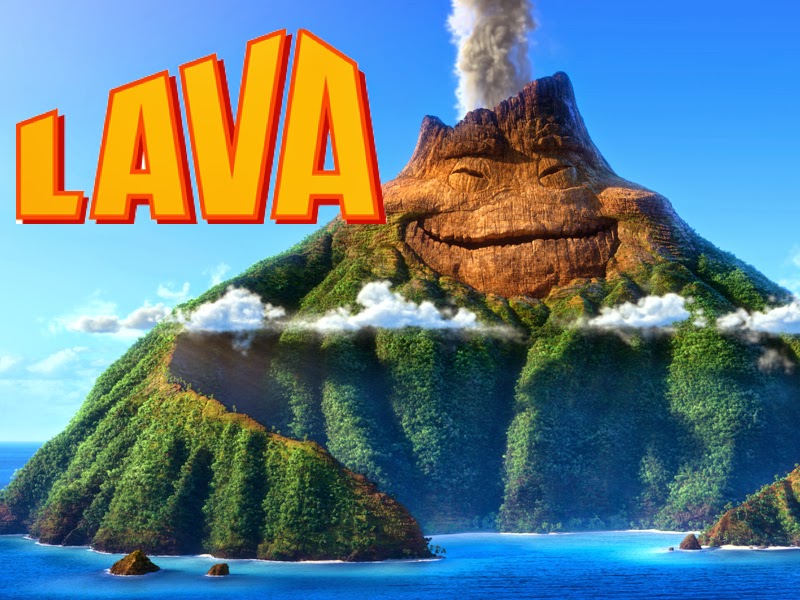
If Inside Out was a great tale with a worthwhile message, the preceding short feature "Lava" was the opposite. Admittedly, I can't totally remember all of the shorts before every single Pixar film, but "Lava" has to be one of the worst.
"Lava" tells the story of a male volcano in the sea as he just sits there, doing his volcano thing, watching all these couples around him. Basically, he's jealous that everyone around him is part of a couple, but he's just by himself. As a result, he literally prays for the Heavens to send him someone to love. ("Lava," in this case, because oh man they're so witty!)
Things get a little dark as time goes on and the sea levels rise. Unbeknownst to him, there's a lady volcano just in front of him, but hidden in under the surface. She can hear his prayer song and desperately wants to rise above the water to meet him. Yet as he is slowly sinking and becoming less active, she is rising and becoming more so. By the time she's finally able to sprout up over the water, he has sunken below it. It appears as though they have missed each other, and both volcanoes are destined to be alone.
Of course, this being a thing for children, the he-volcano manages one last eruption that is strong enough to lift him back to where he was, and the two volcanoes embrace to form an island. They're now a couple, finally happy to be part of the couples club around them.
Ok, so listen: I totally understand they were never ever going to make a short all-ages movie wherein the romantic characters just miss each other and it's all sad and dreary. Just because that's how I like my movies doesn't mean they're going to do that here - or really, ever. But maybe you can see where my problem might lie with the message of this one.
Let's just think about this for a second: the he-volcano has no idea the she-volcano even exists until the very end. And then POOF! They're in love? Quite literally, they're only together because they don't have any other volcano dating options. They're together because they hate the idea of being single. I put forth the idea that neither volcano is actually in love with the other; rather, they're both in love with the idea of being in love.
Think about it. The he-volcano just sits around watching all these other creatures in pairs. He's a single person in a world full of couples. Even though he's surrounded by potential friends, he still feels lonely. That itself seems to cause him to re-evaluate his self-worth. It's literally at the point where he's praying for a deity to send him someone to love. He's not praying "to meet someone." He's praying for them to "send him someone."
Meanwhile, the she-volcano sits below the surface, listening to his prayers. She doesn't know who this guy is, or if he's a good volcano or a jerk of a volcano. For all she knows, he could be the next Mount Tambora. Yet she desperately wants to rise to the surface to meet him. Why? She can't possibly have feelings for him. No, she's in love with the idea of being the object of someone's affection. All she knows about this guy is that he wants to really love someone.
On that matter, for all he knows, she didn't put her energy into meeting him. The gods sent her. Both of those mentalities seem totally healthy and like a good foundation for a completely reasonable romantic relationship...
Ok, again, I totally get that I'm probably the only one reading - well, anything really - into this, but just hear me out. As a perpetually single person who sometimes struggles feeling worthwhile in a world constantly telling you something's wrong with you if you aren't in a relationship, I find it tiresome and problematic that we're constantly bombarded by an overvalue in romantic relationships. Couldn't that he-volcano been totally happy being the only volcano in the area and having tons of whale and bird friends? Why was he an incomplete volcano until he found his she-volcano? What kind of message is that to send to people? Whether you read into it or not, the premise of the film is quite literally that this volcano is incomplete on his own. And it's only until he finds his romantic partner that he is complete.
But that's incredibly flawed, because as corny as it sounds, it is still true that if you can't love yourself, how can you possibly truly love someone else? If he can't be happy on his own, how will he be happy with another person, never mind make the other person happy?
It's a crappy message, and it's damaging. And it had no place as the short film preceding a film that teaches a great and healthy message.
Oh, and that song got pretty bad. It started off fine, but halfway through, it lyrically started falling apart and sounded pretty clunky. My sister tends to sing the first verse (or rather, the opening), and that's about as good as the song gets. It's fine for a while, but then the novelty runs off and the lyrics get messy for the sake of singing the story.

Pixar has been on something of a strange trajectory in recent years. The studio that constantly set the standard for Western animated films was constantly topping itself. There was a four year period where it went from Ratatouille to Wall-E to Up to Toy Story 3. Yet almost ten years since Disney bought out the studio, it's been a little touch and go. It's sort of been a rotation of unnecessary sequels and slightly underwhelming original titles. Looking on the horizon as well and it's hard to not notice franchising has become a staple of Pixar's model. Toy Story 4, The Incredibles 2, Finding Dory, and - somehow - a third Cars film are all on the docket.
Despite an incredibly strong start to the Disney era, Pixar has since fallen into the trappings of modern Hollywood fare, often to the detriment of its films. I must admit that the initial trailers for Inside Out made it look pretty much in the same vein. Working for it was the cast, namely starring Amy Poehler. The animation style looked generic and uninteresting, and it seemed like the plot wouldn't work for the type of epic adventures the best Pixar movies are known for.
I was quite impressed though! Inside Out might very well be one of the best entries to date. All Pixar movies are touching, but few feel as personal as this one did. For starters, it deftly balances the epic adventures happening inside Riley's head with the emotionally challenging real world issues she deals with outside it. This perfectly blends the two elements together. The somewhat boring real world stuff feels more epic because of the internal action, while the epic adventures inside feels far more personal because of the familiar real world stuff.
Outside, young Riley has to deal with moving from her beloved Minnesota - where she spent all of her childhood so far - to San Francisco. Though perhaps not everyone has experienced such a dramatic move in their lives, everyone can relate to that basic premise. It's always tough going from what you've always known to something completely new and scary. You have to make all new friends and learn the town all over again to find what you enjoy. It is a difficult transition that will bring out a lot of mixed emotions.
And that is the cause of action Inside. Taking place in Riley's brain, five key emotions are responsible for driving the ship, as it were. Joy (Poehler) is the head honcho. She's the dominant emotion here. Also present is Fear (Bill Hader), Anger (Lewis Black), Disgust (Mindy Kaling), and Sadness (Phyllis Smith, who straight up nails the voice acting here, possibly even upstaging Poehler!) Joy attempts to keep things together during the move, but Sadness begins take center stage. Most of this is by accident, which makes total sense. No one really wants to be sad. It just sort of happens.
After some shenanigans, Joy and Sadness are launched out of the control center and must hurry to find their way back, or poor Riley will become basically emotionally stunted, unable to balance emotions in a healthy manner, and destined to become adrift.
The adventure of Sadness and Joy making their way back isn't perfect. Though they do a good job creating that adventurous feeling, it ultimately does all take place in a relatively limited area. At times, the road blocks feel a bit forced. Perhaps there's just one too many moments of the characters being all set to return, only to have something crazy happen out of nowhere at the last minute.
Still, what the pacing maybe lacks is more than made up for in pure entertainment value. The action is fun, but more importantly, the world is highly intelligent and clever. Apart from obvious gags like the Train of Thought or the Abstract Zone, but there's a good amount of legitimate psychological science in the cracks as well. I'll just guide you to this article explaining what they got right, rather than listing it all myself. Suffice it to say, for the adults in attendance who have studied - to some extent - psychology and the human brain, it's really fun to watch.
At the end of the day, Inside Out is so great because of how relatable it is. We are all just a giant mixed bag of emotions, and sometimes we don't know how to handle them. Inside Out tells us that we need them all. Sadness saves the day, not Joy, which contradicts what we always hear about how we should just "be happy." Sometimes you can't, and sometimes that's not what you need. Quite literally, the message is simple, "it's ok to be sad." We're bombarded by images of happiness and pleasantries in our daily lives. We are often taught at a young age that no one likes sad people, which can be kind of damaging.
It's a great message for all in the audience. Helping matters is that the movie is entertaining, funny, and extremely touching. (In the spirit of the film, I'll admit that I teared up a little bit.) It's also very clever, and the animation style is actually a lot less generic than it may appear in the previews. It has to go on the short list of best movies of the year so far.
What I didn't "lava" about "Lava."
If Inside Out was a great tale with a worthwhile message, the preceding short feature "Lava" was the opposite. Admittedly, I can't totally remember all of the shorts before every single Pixar film, but "Lava" has to be one of the worst.
"Lava" tells the story of a male volcano in the sea as he just sits there, doing his volcano thing, watching all these couples around him. Basically, he's jealous that everyone around him is part of a couple, but he's just by himself. As a result, he literally prays for the Heavens to send him someone to love. ("Lava," in this case, because oh man they're so witty!)
Things get a little dark as time goes on and the sea levels rise. Unbeknownst to him, there's a lady volcano just in front of him, but hidden in under the surface. She can hear his prayer song and desperately wants to rise above the water to meet him. Yet as he is slowly sinking and becoming less active, she is rising and becoming more so. By the time she's finally able to sprout up over the water, he has sunken below it. It appears as though they have missed each other, and both volcanoes are destined to be alone.
Of course, this being a thing for children, the he-volcano manages one last eruption that is strong enough to lift him back to where he was, and the two volcanoes embrace to form an island. They're now a couple, finally happy to be part of the couples club around them.
Ok, so listen: I totally understand they were never ever going to make a short all-ages movie wherein the romantic characters just miss each other and it's all sad and dreary. Just because that's how I like my movies doesn't mean they're going to do that here - or really, ever. But maybe you can see where my problem might lie with the message of this one.
Let's just think about this for a second: the he-volcano has no idea the she-volcano even exists until the very end. And then POOF! They're in love? Quite literally, they're only together because they don't have any other volcano dating options. They're together because they hate the idea of being single. I put forth the idea that neither volcano is actually in love with the other; rather, they're both in love with the idea of being in love.
Think about it. The he-volcano just sits around watching all these other creatures in pairs. He's a single person in a world full of couples. Even though he's surrounded by potential friends, he still feels lonely. That itself seems to cause him to re-evaluate his self-worth. It's literally at the point where he's praying for a deity to send him someone to love. He's not praying "to meet someone." He's praying for them to "send him someone."
Meanwhile, the she-volcano sits below the surface, listening to his prayers. She doesn't know who this guy is, or if he's a good volcano or a jerk of a volcano. For all she knows, he could be the next Mount Tambora. Yet she desperately wants to rise to the surface to meet him. Why? She can't possibly have feelings for him. No, she's in love with the idea of being the object of someone's affection. All she knows about this guy is that he wants to really love someone.
On that matter, for all he knows, she didn't put her energy into meeting him. The gods sent her. Both of those mentalities seem totally healthy and like a good foundation for a completely reasonable romantic relationship...
Ok, again, I totally get that I'm probably the only one reading - well, anything really - into this, but just hear me out. As a perpetually single person who sometimes struggles feeling worthwhile in a world constantly telling you something's wrong with you if you aren't in a relationship, I find it tiresome and problematic that we're constantly bombarded by an overvalue in romantic relationships. Couldn't that he-volcano been totally happy being the only volcano in the area and having tons of whale and bird friends? Why was he an incomplete volcano until he found his she-volcano? What kind of message is that to send to people? Whether you read into it or not, the premise of the film is quite literally that this volcano is incomplete on his own. And it's only until he finds his romantic partner that he is complete.
But that's incredibly flawed, because as corny as it sounds, it is still true that if you can't love yourself, how can you possibly truly love someone else? If he can't be happy on his own, how will he be happy with another person, never mind make the other person happy?
It's a crappy message, and it's damaging. And it had no place as the short film preceding a film that teaches a great and healthy message.
Oh, and that song got pretty bad. It started off fine, but halfway through, it lyrically started falling apart and sounded pretty clunky. My sister tends to sing the first verse (or rather, the opening), and that's about as good as the song gets. It's fine for a while, but then the novelty runs off and the lyrics get messy for the sake of singing the story.
Tuesday, August 25, 2015
Solo Features - Episode 1: Kingdom Hearts
Kicking off a new bi-weekly series talking about just one thing. This week, I look back at the first Kingdom Hearts for the Playstation 2. How does it stand up? Is it worth checking out now, nearly thirteen years after its release? Is the Disney thing enough of a put-off for perhaps some older folks?
Archived Link:
Archived Link:
Fantastic Four (2015)
I'd say the following video adequately sums up the feeling of watching Fantastic Four while simultaneously being far more entertaining:
Although I can only think of one other movie in the past few years that I thought was far worse. And that was Teenage Mutant Ninja Turtles, which I would sum up with this Michael Scott video (make of it what you will):
Although I can only think of one other movie in the past few years that I thought was far worse. And that was Teenage Mutant Ninja Turtles, which I would sum up with this Michael Scott video (make of it what you will):
Kingdom Hearts (2002)
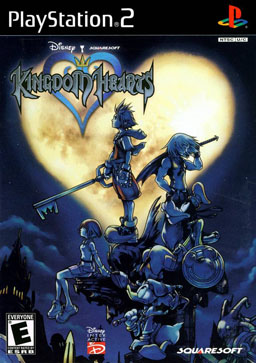
You ever play a Squaresoft RPG and think to yourself, "I really enjoyed this, but ya know what this game could have used? Disney characters." No? Fair enough, but someone clearly did. Kingdom Hearts was one of the more memorable games released on the PS2, combining original, Squaresoft-y elements with classic Disney characters and worlds. Now a bit removed, and with Kingdom Hearts III on the horizon, it seemed like a good time to revisit the original game and see how it stands up.
The graphics are a bit dated, but actually don't look too bad. This is largely because of the stylized world everything takes place in. It's cartoonish and unique, foregoing realism for more of a Disney aesthetic. You control Sora, a young boy stuck on an island with his best friends Riku and Kairi, where everyone dreams of visiting other worlds. One night, the island is attacked by mysterious dark beings called "Heartless," and before you know it, you're exploring other worlds.
Kingdom Hearts has a fairly complex story in all, but for most of this game, it's pretty straight forward. A group of Disney villains are trying to steal the hearts of each world so they can open the door to the darkness. Teamed up with King Mickey's noble (and annoying) knights Donald and Goofy, you go to each world to lock their hearts up with your keyblade (a sword that is just a giant key - you have to be ok with silliness going into this game). Yadda yadda princesses are the key to opening the door. Yadda yadda, you have to save the princesses. Yadda yadda, you're strong because your heart is good.
The strength of the game is not its narrative, really. It's the worlds you visit. Most of the worlds you visit are from Disney movies. There's Wonderland and Atlantis and Halloween Town and more. Each world allows you to team up with a character as well. In Neverland, for example, you can team up with Peter Pan. In Agrabah, you team up with Aladdin. There ultimately isn't that much diversity though, as each character it pairs you with tends to lean more toward the physical power side. Some worlds even have their own unique dynamics, such as Atlantis allowing you to ascend and descend on top of your typical forward/back, left/right movements, or Neverland allows you to fly around as well.
Not all the worlds are great. Atlantis is such a drag, and if your television isn't that great, Halloween Town is pretty dark. Still, most of the worlds are as colorful and fun as their film counterparts. What's cool is that for a PS2 game, it feels fairly big. Ultimately, each world is small, but you don't just go from corridor to corridor. Sometimes, things connect. When you fall off a balcony that took you several screens to get to, you wind up where you landed. It doesn't often go through load screens to bring you back. As annoying as it can get to keep falling off of higher areas, it is pretty cool to see that these "screens" are connected in-game.
As for the game play, it's pretty much your general hack and slash kind of RPG. The combat is fun, and most bosses are designed well so that you develop skill (you won't be able to just overpower yourself and then hack away mindlessly to victory). It takes a little getting used to using magic and items and special attacks though. It's still a menu-based system, which is kind of strange. X isn't the "attack button." It just selects the Attack option from your menu. To use other skills, like magic, you have to select a different menu option using the right analog stick or the arrow keys. It's mostly fine, but when you're engaged in a battle against tons of Heartless, it can get tricky to run around, move the camera, and select a new menu item all at the same time.
Really though, the only part of the game play I found to be incredibly irritating was the camera and lock-on function. You control the camera with R2 and L2, which feels a bit clunky by today's standards, but it's mostly fine. It just gets kind of hectic when in the middle of a big battle with a number of enemies. Accuracy seems a bit off too. Often, enemies will somehow avoid your attack, even when they seem dead to sight. Locking on doesn't seem to increase your aim much, and often causes the camera to tweak. All of that could be ironed out a bit, but it rarely gets to the point where you feel overwhelmingly frustrated.
Overall, the game is fun and visually interesting. The only thing that ever starts to become unbearable is Donald's voice. The level and boss designs are pretty great, and the story is just intriguing enough to keep driving you. It's maybe less incredible than some people make it out to be, but it's still good.
Subscribe to:
Posts (Atom)